The green comet is already around the corner! Between February 1 and 2, we will have the opportunity to see how a comet will cross the skies. With the name of C/2022 E3 (ZTF), the celestial body will touch our planet, passing almost 42 million kilometers from our atmosphere and allowing us to see with our own eyes its particular green halo. You can also follow its trajectory with Sky Map.
The comet (not an asteroid) is one of the thousands of atmospheric objects that are close to Earth and that, at any given moment, could hit our planet. While there are scientists who investigate asteroids that fly over outer space, others study the craters of those that hit the Earth. Are you curious to know which are the largest craters on the planet? Here we list them.
Wilkes Land
At 300 miles in diameter, the Wilkes Earth crater (the “king” of terrestrial craters) is hidden behind a layer of ice more than a kilometer thick. where, you say? Well, in Antarctica, where else but? Its age, 250 million years, coincides with the mass extinction of the Permian-Triassic, considered the greatest extinction in the history of our planet, so it could be the cause.
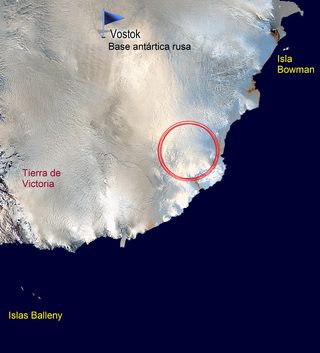
The asteroid that hit this glacial area would measure approximately 48 kilometers in diameter. Its impact with the earth could have been devastating, with a collision of 8 billion megatons, a fireball 130 times brighter than the Sun itself, winds of 5,000 kilometers per hour and earthquakes of more than 11 degrees on the Richter scale.
Vredefort
The Vredefort crater, 300 kilometers in diameter, is located in South Africa. Produced by the impact of an asteroid around 2,020 years ago, it is considered the oldest visible terrestrial crater on Earth, and it has been a World Heritage Site since 2005.
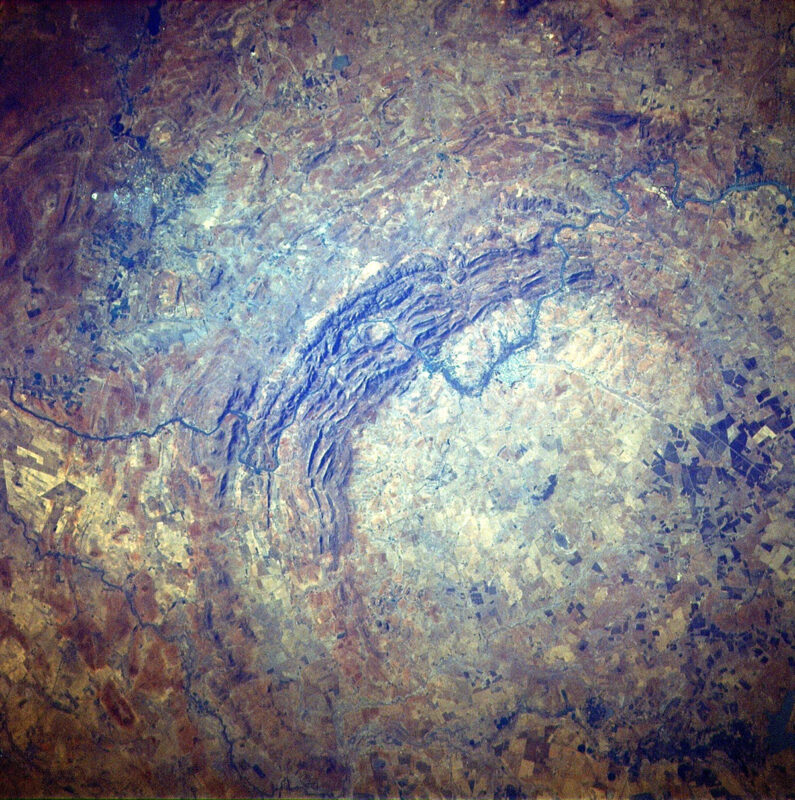
It is estimated that the meteorite responsible for such a crater would be between 5 and 10 kilometers in diameter, and the force of its collision was 100 million megatons, displacing up to 70,000 cubic kilometers of rock.
Sudbury
The Sudbury Basin is the third largest impact crater on Earth, at 250 kilometers in diameter, as well as one of the oldest (1,850 million years). It is considered one of the most important geological structures in Ontario, Canada, located in the Canadian Shield.

The meteorite that caused the crater must have been approximately 10 to 15 kilometers in diameter, and its impact was so powerful that it scattered debris over an area of 1,600,000 square kilometers. Such a large impact is believed to have scattered debris globally.
Chicxulub
The Chicxulub crater is one of the best-known craters in the world, measuring 180 kilometers in diameter. Its name in the Mayan language means “devil flea”, and its age is dated at more than 66 million years.

The meteorite that caused the crater must have measured between 10 and 18 kilometers in diameter, and released an amount of energy equivalent to 100 teratons of TNT. An impact of such magnitude that it would have caused some of the largest megatsunamis in the history of planet Earth, and that could be the main cause of the extinction of the dinosaurs.
These are just some of the largest meteor craters on Earth, but there are many more. If you are interested in knowing if you live near one, take a look at the full list. And, don’t worry, the green comet won’t hit us, so it won’t form any craters.
How can I see the comet? Do we have to worry about its brightness?
Next February 1 will be the day the comet is at its closest point to Earth. This will happen around 1:11 pm in the US (EST).
As for the brightness that the comet will give off, there will be nothing to worry about. NASA has reported that the star can be observed with the naked eye without the need to use other gadgets. When we have chosen a point to see the comet, it is convenient to wait for half an hour for our eyes to adapt to the light.
To get the best possible glimpse of the comet, you will first need to have a pair of binoculars or, instead, a small telescope. You should keep in mind that the best time to see it will be at dusk. The comet will leave behind an unmistakable green halo, which will help you to easily identify it.