Astro Bot, EA Sports FC 25, Call of Duty… The video games you can’t go wrong with.
If just a few hours before the Three Wise Men arrive you still don’t know what their majesties are going to give, with this article you will clear up any doubts. At Softonic, we take up the sack and fill it with gifts so you can go straight to the point. Here, there are no doubts anymore.
Here are 7 must-have video games of 2024 to gift on Three Kings Day. With this, you won’t go wrong.
The one that never fails, the one that’s always there to get you out of any trouble: EA Sports FC 25, in other words, the classic FIFA. If that person likes football, the EA Sports video game is a gift that is usually a sure hit. Moreover, during Christmas, it is often discounted as it is a common gift for these holidays. Naturally, of course, since every good football fan likes to have a little Christmas match.
Astro Bot
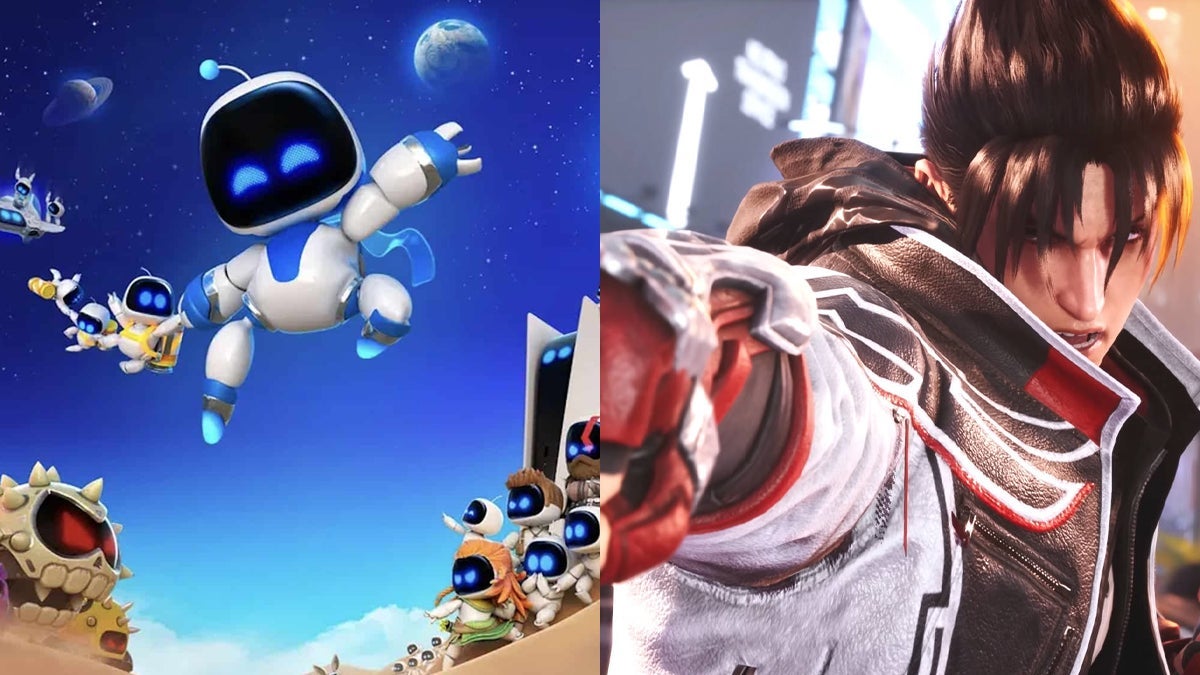
The best video game of 2024 at the The Game Awards is a perfect gift for any lover of the industry. Astro Bot has been a surprise – quite literally – thanks to its fun proposal, where through a classic genre like platformers, we need to find all the bots. If the person is a regular gamer, you’re sure to bring a smile to their face, as there are dozens and dozens of nods to very famous video games, especially from PlayStation’s history.
The Legend of Zelda: Echoes of Wisdom
A light, charming adventure with which that person will have a very pleasant time. The Legend of Zelda: Echoes of Wisdom puts us in the role of Zelda and not Link, and it also has a particularity: we will have to “create” various objects to overcome the obstacles that arise along the way. Different and original. One of the must-haves for Switch in 2024.
Call of Duty: Black Ops 6
Just like with “FIFA”, another great gift for Three Kings Day is Call of Duty: Black Ops 6. The annual installment of Activision Blizzard’s shooter features an interesting campaign, along with a signature multiplayer mode that leaves no doubt. We include the fail-proof condition: if the person you’re gifting enjoys shooting in video games, this title won’t disappoint.
Dragon Ball Sparking! ZERO
It is far from being the best of 2024 – and even from being among the best – but Dragon Ball Sparking! ZERO recaptures the classic essence of the Budokai Tenkaichi in a new installment. Any Dragon Ball lover will crack a wide smile when they have dozens and dozens of fighters from the entire history of the manga/anime at their disposal. The rest, you know: Kame Hame Ha.
Tekken 8
A classic fighting game perfect for anyone who enjoys a good brawl: Tekken 8. After years and years of development, Bandai Namco has delivered an outstanding game with the eighth numbered installment of its fighting game. It’s important to note that the studio continuously provides updates, so you can rest assured in that regard. Considering that Tekken 7 had almost a year of support, we expect almost the same with this one.
Metaphor: ReFantazio
Do you know if that person likes role-playing games? If the answer is yes, give them this: Metaphor: ReFantazio. The creators of Persona 3, 4, and 5 have embarked on this new production, one that captures the best of current Japanese role-playing with its turn-based combat system, a very interesting story, and dozens of hours ahead. The rest, enjoy!
Here are 7 video games that you won’t go wrong with this Christmas if you give them as gifts – as long as the recipient likes the genre, of course. May their majesties have it a bit easier.
The Finder is the cornerstone of our Mac usage. We use it to navigate our folders, organize documents, and quickly access everything we need in our daily lives. Fortunately for us, it hides many more resources than it seems at first glance. Behind its seemingly simple options, there are settings that, with just one click, can very substantially change the way we work. Remembering that the Finder’s quick actions can make us much more productive, let’s talk about 7 of these resources that, when configured correctly, will help us make the most of the Finder […]
The Finder is the cornerstone of our Mac usage. We use it to navigate through our folders, organize documents, and quickly access everything we need in our daily lives. Fortunately for us, it hides many more resources than it seems at first glance. Behind its seemingly simple options, there are settings that, with just one click, can substantially change the way we work. Remembering that the Finder’s quick actions can make us much more productive, let’s talk about 7 of these resources that, when configured correctly, will help us make the most of the Finder and increase our productivity.
If we usually connect USB drives, external disks, or SD cards, having them visible as soon as they are connected is a change that greatly simplifies file management. We can activate this feature from the Finder > Settings menu, in the General tab. This way, every time we connect a device, it will appear directly on the Desktop, ready for us to drag files or access its content.
This feature, ideal for those of us who frequently work with external storage, allows us to interact with these devices more quickly and directly, but also improves their management. From the desktop, ejecting a device to safely unplug it from the computer is as easy as dragging it to the trash.
2. Choose a default folder for new Finder windows
Opening Finder always in the default “Recents” folder may not be the most useful for our workflow. Fortunately, we can set Finder to automatically open a specific folder, such as “Documents” or “Downloads”. To do this, simply go to the Finder > Settings menu and, in the General tab, select our preferred folder in “New Finder windows show”.
In this way, every time we open a new window, whether with the mouse or with a simple Command (⌘) + N, we will be exactly where we need to be. A small adjustment, but one that saves us from repeating steps and, in the long run, significantly reduces the time to access our most frequent files.
3. Open folders in tabs and not in windows
Those of us who work with multiple folders open at once know how quickly our Desktop can become a small visual chaos. An effective way to avoid this is to enable the option to open new folders in tabs instead of windows. Thus, just as we can quickly merge two folders with the same name, we can organize everything in a much cleaner and more orderly single workspace.
To perform this opening, we hold down the Command (⌘) key while double-clicking on a folder, and it will open in a tab within the same window. This reduces clutter, but also makes it easier for us to switch between open folders, something we can do with Control (⌃) + Tab, without losing sight of the context of our work.
4. Use tags to organize and access our files
Tags in Finder are one of those tools that, if we set them up well, allow us to find and classify our files faster than any other system. We can assign tags of different colors to any file or folder and then access these tags from the Finder sidebar.
For greater productivity and simplicity, we can customize which tags appear in the quick menu when right-clicking on a file. This gives us the ability to tag and untag files, thereby organizing large amounts of information with a very visual and intuitive system.
5. Show file extensions to quickly identify formats
Although Finder hides file extensions by default, making them visible can be useful when working with various types of documents. From the Finder > Settings menu, within Advanced, we can check the option “Show all file extensions”.
Thus, we instantly identify if a file is a PDF, a JPEG, or an editable file, like a .docx. This simple change prevents us from opening incorrect files or conducting unnecessary searches.
6. Keep folders always at the top
When we organize files and folders in the same view, it can be somewhat uncomfortable to search between both types. With the “Keep folders on top” option, available in the Finder > Settings menu within the Advanced tab, we can ensure that folders always remain visible at the top of any list.
7. Set up automatic deletion of files from the trash
Do we leave the trash bin full of files for weeks or even months? Activating the option “Remove items from the trash after 30 days” in the Finder > Settings menu, and then within Advanced, ensures that those files we no longer need disappear automatically after a month. A setting that frees up space and also saves us from having to remember to empty it manually.
These seven resources are just a sample of how we can customize the Finder to better suit our needs. With a few changes, we will transform our way of organizing and managing files, achieving a much more efficient and productive workflow.
After creating NASA in 1958, the American administration in charge of space research took only 10 years to conquer the Moon, an achievement so great that we have not managed to do it again. But from the year 2000 to 2024, we have achieved other milestones. The emergence of private companies and the liberalization of space programs have allowed the space exploration business, which seemed to be at a standstill, to shift into a higher gear. Today we are going to select what we consider to be the 7 most important milestones in the aerospace industry that have happened in the […]
After creating NASA in 1958, the American administration in charge of space research took only 10 years to conquer the Moon, an achievement so great that we have not achieved it again. But from the year 2000 to 2024, we have achieved other milestones.
Subscribe to the Softonic newsletter and get the latest in tech, gaming, entertainment and deals right in your inbox.
The emergence of private companies and the liberalization of space programs have accelerated the business of space exploration, which seemed to be at a standstill.
Today we are going to select what we consider the 7 most important milestones in the aerospace industry that have occurred in the last 24 years. If you feel that an important moment is missing, don’t take it personally: To select 7 moments, many more had to be left out of the list.
Artemis I
Everyone has forgotten that the program to conquer the Moon again began with Artemis I, a mission in which an uncrewed Orion spacecraft flew around the Moon at the end of 2022.
NASA has invested more money in the Artemis Program than in any other space mission in the last 24 years. With the Artemis I mission, NASA will mark a milestone in the program that will finally return humans to deep space after more than half a century—even if we are delayed.
The Dragon capsule crew
The retirement of the space shuttle in 2011 marked a painful moment for NASA. The space agency had to spend several years convincing Americans that the space program was not shutting down. NASA leaders also had to go to the Russian space corporation to ask them to take their astronauts to the International Space Station.
Then in 2020, SpaceX and its Dragon spacecraft arrived. The return of the United States to manned space flights was a significant technical achievement for SpaceX, which became the first private company to put humans into orbit, and allowed NASA to send more astronauts to the space station and make the most of the research capabilities of that facility.
Detection of gravitational waves
Although he theorized about their existence a century ago, physicist Albert Einstein was not sure that humans would be able to detect the faint echoes of gravitational waves traveling through the vastness of space.
However, experimental physicists struggled to achieve it for decades. Then, in February 2016, two LIGO observatories announced that they had detected gravitational waves from two merging black holes. This marked a triumphant moment for experimental physics and confirmed a key principle of Einstein’s general relativity.
The rise of space tourism
It wasn’t until the summer of 2021 that space tourism “took off.” First with the spacecraft VSS Unity from Virgin Galactic and then with Blue Origin’s New Shepard vehicle that took private citizens to suborbital space.
Shortly after, in September 2021, businessman Jared Isaacman commanded the first private orbital mission, Inspiration4, aboard the Crew Dragon. In December of that same year, the daughter of the first American, Laura Shepard-Churchley, followed in her father’s footsteps by flying on a similar trajectory aboard a spacecraft that bore her name. Private space travel is not yet commonplace, but the door has been opened.
China fully enters the space race
One of the main stories of this century is the rise of the Chinese space program and its efforts to challenge the preeminence of the United States. This has been most evident in the country’s efforts to study and land on the Moon with its Chang’e project. In 2007, China flew its first orbiter to the Moon, and in 2013, the Chang’e 3 spacecraft successfully landed on the Moon and deployed the small Yutu rover.
These initial successes laid the groundwork for even more ambitious missions. In 2019, the Chang’e 4 mission landed on the far side of the Moon, the first time anyone had achieved this. Subsequently, the country’s space program embarked on robotic sample return missions, including the Chang’e 6 mission at the Moon’s South Pole this year. China aims to send humans to the Moon by 2030, competing with NASA and the United States.
The SpaceX rockets that are captured
On October 13 of this year, SpaceX launched its massive Starship rocket for the fifth time, but the profile of this flight was different, as the company intended to recover the first stage of the rocket, the so-called Super Heavy.
Surprisingly, the rocket returned to the launch site, stopped next to the launch tower, and was caught in the air by a pair of hooks to be placed back on the launch stand.
This technical achievement demonstrates several important things, including the verification of the radical approach to catching a rocket and also allows SpaceX to accelerate the development and testing of Starship.
The launch of SpaceX’s Falcon Heavy
This February 2018 mission is very important. The visual effects were irresistible. The rocket launch itself was impressive, with the combination of 27 Merlin rocket engines. Next, the twin rockets separated and returned to Earth, landing like a pair of synchronized swimmers. Finally, the stunning vision of a cherry red Tesla (and Starman) moving away from Earth towards Mars.
It was a spectacle that captured the public’s attention. But the new rocket was more than a spectacle. By designing, building, and launching the Falcon Heavy, SpaceX demonstrated that a private company could independently finance and fly the largest and most powerful rocket in the world.
This demonstrated that commercial heavy-lift rockets were possible. By competing with the Delta IV Heavy, the Falcon Heavy saved billions for the U.S. government. This means that it is likely the U.S. government will never again design and develop a rocket.
More than 2,000 years ago, Greek physicists, mathematicians, and scientists discovered that the Earth was round. Despite their rudimentary experiments, the mathematics left no room for doubt: the Earth was round. For some reason, since the advent of the internet, the flat Earth movement has gained followers. Because, as you know, ignorance is bold. A group of flat-earthers, people from the world of denial and conspiracy, recently traveled to Antarctica hoping to prove once and for all that our planet is flat (despite all the evidence collected […]
More than 2,000 years ago, Greek physicists, mathematicians, and scientists discovered that the Earth was round. Despite their rudimentary experiments, the mathematics left no room for doubt: the Earth was round. For some reason, since the advent of the internet, the flat Earth movement has gained followers. Because, as you know, ignorance is bold.
Subscribe to the Softonic newsletter and get the latest in tech, gaming, entertainment and deals right in your inbox.
A group of flat-earthers, people from the world of denialism and conspiracy, recently traveled to Antarctica hoping to prove once and for all that our planet is flat (despite all the evidence gathered by humans over the past 2,000 years pointing the other way).
Unfortunately for them, the journey seems to have confirmed what scientists and geologists have been saying to everyone for a long time, along with videos from NASA, ESA, and other international agencies along with the astronauts we have up there: our planet is round.
The Final Experiment
The expedition in question was organized by Will Duffy, the pastor of a small church on the outskirts of Denver (Colorado). On a website dedicated to the expedition, Duffy explains that the trip includes 24 flat Earth supporters and 24 round Earth supporters who were chosen as “representatives of their respective sides”.
The objective of the expedition, which has been named “The Final Experiment”, was to investigate if there is a 24-hour sun in Antarctica.
“The Final Experiment is a way to settle the debate about the shape of the Earth,” states the organization’s website. “Both the flat Earth side and the globe side agree that whether or not there is a 24-hour sun in Antarctica will confirm if we live on a flat planet or a globe.”
At the South Pole, there's basically a single sunrise and a single sunset over the course of a year.
The Sun rises at the September equinox and then stays above the horizon (as the Midnight Sun) until it sets six months later on the March equinox.pic.twitter.com/y1JlTcz5Nq
The midnight sun, as it is known, is the result of the Earth’s axial tilt and the position of the Arctic Circle in relation to the sun’s rays. It is not clear why flat Earth supporters decided that the presence of the Sun would prove or refute their own beliefs.
In any case, when the expedition members arrived in Antarctica, they confirmed, as expected, that there was indeed a 24-hour sun.
“Sometimes you make mistakes in life,” said Flat Earth influencer Jeran Campanella, in a video posted by Duffy after the team had reached their destination. “I thought there wasn’t a 24-hour Sun. In fact, I was quite sure of it.” Luckily for science, today is a good day.
Since December 2023, Google has not stopped surprising us with its commitment to artificial intelligence. The company launched Gemini in December of that year, an AI model that, over time, has become the backbone of almost all of Google’s intelligent tools. The AI first replaced Bard, Google’s original chatbot, and later was integrated into Android Assistant, Google Docs, Gmail, and many more of the company’s apps. However, the big leap came in December 2024 with the presentation of Gemini 2.0, which Sundar Pichai, CEO […]
However, the big leap came in December 2024 with the presentation of Gemini 2.0, which Sundar Pichai, CEO of Google, called the beginning of the “agentic era”. This new phase implies that AI models can carry out complex tasks based on initial instructions, something that is revolutionizing the way we interact with technology.
Although Gemini’s trajectory has had its ups and downs, with moments of confusion due to numerous launches and variations, the truth is that, currently, Google has committed to consolidating this brand as its identity in AI. If you want to better understand what Gemini is, how it works, and why it is so important, keep reading. We are going to break down its universe into different areas.
More than just a “pretty face”
Chatbots are at the forefront of many AI applications, and Google is no exception. The Gemini chatbot was born as an evolution of Bard and Duet AI, combining the best of both worlds. Now, this system is integrated into products as varied as Android Assistant, the Chrome browser, and Google Workspace. Google also launched Gemini Live at the end of September, an alternative to OpenAI’s “Advanced Voice Mode” that functions as a virtual assistant.
The idea is clear: make interaction with devices increasingly smooth. In this way, you can ask Gemini to search for information, organize your calendar, or even edit photos in Google Photos. A strategy with which Google aims to establish itself as the queen of the AI sector, where the competition is increasingly greater and more fierce if possible.
The AI Revolution in Your Pocket
While the chatbot is impressive, where Gemini truly shines is on mobile devices. The Gemini app is available for both iPhone and Android, but its true strength lies in its integration with the Android operating system. This combination allows for advanced tasks to be performed directly from the mobile, such as activating system functions or playing music using voice commands through Gemini Live.
In this regard, Gemini Nano stands out, a lightweight version of the model that developers can use in their own applications without the need to resort to cloud solutions. This, of course, opens up a world of possibilities, especially for tasks that require a lot of speed and efficiency.
Gemini is not just a model that understands text. It is a multimodal AI capable of processing images, videos, audio, and even code. With version 2.0, launched in December 2024, it can also generate content in these modalities, making it a much more versatile tool than many of its competitors.
Google has taken a somewhat discreet approach in the development of Gemini, but the results speak for themselves. With more than 50,000 variants available on Hugging Face, Gemini covers a wide range of languages and use cases, combining different technologies and applications under one name.
The Gemini Family: From Nano to Ultra
The story of Gemini begins with DeepMind, the AI laboratory founded in London in 2010. This team brought legendary models like LaMDA and PaLM to life before reaching Gemini. The first version of the model was launched in three variants: Ultra, Pro, and Nano. Each one has a specific purpose, from high-power tasks to uses in compact devices.
In recent years, Google has faced the following dilemma: should it prioritize search or AI? This internal debate has led to some quite controversial decisions, such as the launch of experimental models and the foray into open models with the Gemma line. However, with Gemini 2.0, it seems that the company has finally found its way.
A Promising Future
Gemini 2.0 marks the beginning of a new era, in which AIs not only answer questions but also act as agents capable of executing complex tasks. With tools like the Flash Experimental version, which allows generating code and using Google search in an integrated way, the company is paving the way towards a future where AI is a natural extension of our capabilities.
Although there are still many doubts in the air about which models are definitive and which are still in the experimental phase, one thing is clear: Gemini is one of the most complete and promising AIs on the market
Samsung is currently the only Android manufacturer with an integration similar to the Apple ecosystem, offering a seamless connection between its Galaxy devices. Through tools like Quick Share and the ability to copy and paste text between devices, users enjoy a unified experience. Now, with the arrival of One UI 7, this connection will be deepened thanks to a new “Camera Continuity” feature. One UI 7 will include support for the so-called Camera Continuity, which will allow using the Galaxy phone to take photos or scan documents and use them directly in Samsung Notes or […]
Samsung is currently the only Android manufacturer with an integration similar to the Apple ecosystem, offering a seamless connection between its Galaxy devices. Through tools like Quick Share and the ability to copy and paste text between devices, users enjoy a unified experience. Now, with the arrival of One UI 7, this connection will deepen thanks to a new “Camera Continuity” feature.
Subscribe to the Softonic newsletter and get the latest in tech, gaming, entertainment and deals right in your inbox.
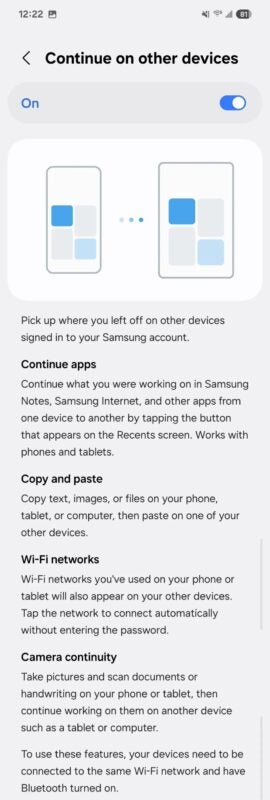
One UI 7 will include support for the so-called Camera Continuity which will allow using the Galaxy phone to take photos or scan documents and use them directly in Samsung Notes or Samsung Internet on another linked device. This feature is similar to Apple’s Continuity Camera, but with an important difference: Apple’s version integrates with any application, while Samsung’s seems limited to its own apps.
Mishaal Rahman, from Android Authority, discovered the Camera Continuity feature in the latest One UI 7 beta, although it is not fully operational yet. For it to work, devices must be connected to the same Wi-Fi network, within Bluetooth range, and with the same Samsung account. Although it would be expected, it is currently unknown if Samsung will extend this new functionality to more apps, as it currently only works with Samsung Notes and Samsung Internet.
The update will also bring other notable features, such as the ability to use the Galaxy mobile camera as a webcam for a Galaxy Book or a tablet. Something similar debuted in One UI 6.1.1 with the Galaxy S24 series, but it will now be extended to more devices with the new version of the system.
Another innovation could be Storage Share, which will allow wireless exploration of phone files from a Galaxy laptop or tablet. With these improvements, Samsung continues to strengthen its ecosystem and offer alternatives to compete directly with Apple.
Before the end of the year, we need to settle accounts. Do you want to know more about Nintendo Switch 2? We know some things about Nintendo Switch 2. To be fair, nothing official. We know the things that have been mentioned here and there, but that’s our job: to bring you everything in an organized and sensible way, so you don’t go crazy. And that’s what we’re going to do. Tell you everything we know so far about Nintendo Switch 2, but emphasizing an important detail: practically everything we know is speculation. A word of caution. Although it’s impossible that this […]
Before the year ends, we need to settle some accounts. Do you want to know more about Nintendo Switch 2? We know some things about Nintendo Switch 2. To be fair, nothing official. We know the things that have been mentioned here and there, but that’s our job: to bring you everything in an organized and sensible way, so you don’t go crazy. And that’s what we’re going to do. Tell you everything we know so far about Nintendo Switch 2, but emphasizing an important detail: practically everything we know is speculation.
Notice to navigators. Although it is impossible for this information to become outdated before the end of the year, as we are going to discuss, it is possible that in a couple of weeks some of these things may be confirmed or denied. We have no way of knowing. But we think it’s important to establish a point from which to have a picture of the current situation of all the information we currently have about the console. And what its possibilities are.
Nintendo Switch Online is an essential app if you want to fully enjoy the multiplayer games of Nintendo Switch like Splatoon 2, Mario Kart 8 Deluxe, ARMS, or Pokkén Tournament DX. Its main advantage: it helps you coordinate strategies with your friends through its voice chat.
What is the name of the Nintendo Switch successor?
Officially, nothing is known. Nintendo still calls it “the successor to Nintendo Switch”. For now, everyone who has leaked any kind of information refers to it as Nintendo Switch 2. And given the resounding failure that all the abrupt name changes and strange experiments of the last generations have entailed, it seems like a sensible assumption.
What kind of hardware will it have?
Again, we don’t know anything officially. What we do know from leaks is that the console will have an 8-inch screen, 12GB of RAM, 256GB of hard drive space, a microphone, built-in stereo audio, and magnetic joy-cons. Additionally, it is expected that the drifting issues present in the current joy-cons will not exist in this Nintendo Switch 2.
What we do know for sure is that the console will have a Nvidia chip. And most likely, according to Digital Foundry, it will use a Nvidia T239 chip, a reduced and customized version of the Nvidia Orin T234. How did they find out? Thanks to a hack that Nvidia suffered, where they referenced this chip in relation to Nintendo.
What would this chip specifically contribute? Without going into too much detail, we would be talking about a chip that would have power equivalent to the PlayStation 4 Pro. It wouldn’t be a generational leap like that of Microsoft or Sony, but it would have 4K capabilities, or even make use of DLSS technology, if Nintendo so desires. It would be a considerable leap compared to what we currently have with the Nintendo Switch.
What does the console look like?
We have seen many leaks, none too credible. But what we have seen that we have no reason not to believe are the leaks of accessories for Nintendo Switch 2. The impression they give is that it will be a console very similar to the original Nintendo Switch, only larger, and perhaps with small changes in the button layout. But currently, except for a render of the console itself that may or may not be indicative of the console, we do not know its actual appearance.
When will the console be released?
Nintendo Switch 2, as of the publication date of this article, does not have a release date.
Will it be possible to play Nintendo Switch games on the new console?
According to what they have said at Nintendo, yes. Although they have not confirmed whether it will only be digital games or will also include physical games, or if there will be any kind of limitation, in principle, the software will be completely backward compatible. And given the similarities between the hardware of both consoles, there should be no reason for them not to be.
Now, it is possible that we do not have to wait until the last moment. A user of the social network Weibo, named 荷姆荷姆喼, has leaked the possible presentation date of the console. According to him, using the Fibonacci sequence to make things more exciting, the presentation would take place on January 8th.
How reliable is this? This user already revealed the games that would be presented at the Nintendo Direct in June 2024, so they have some credibility. Even so, it’s better to take it with a grain of salt. It’s possible it will be presented that day, but it’s also perfectly likely that it won’t. But what is certain is that, before the end of the first quarter of the year, we will know at least the first details of the new Nintendo console.
Nintendo Switch Online is an essential app if you want to fully enjoy Nintendo Switch multiplayer games like Splatoon 2, Mario Kart 8 Deluxe, ARMS, or Pokkén Tournament DX. Its main advantage: it helps you coordinate strategies with your friends through its voice chat.
Born along the arrival of the Internet to our households, Generation Z has become one of the largest and most unique generations up to date. Currently making up 21% of the population of the US, Gen Z (people born between 1997-2012) has grown in an environment where smartphones, streaming platforms and social media are nothing out of the ordinary. Also, they endured the COVID-19 pandemic during their formative years, shaping the way they interact with society. But, how is this tech-savvy generation influencing the current market?
In today’s article we’ll analyze and share the latest Generation Z stats and trends and see how this generation is going to shape 2025.
Subscribe to the Softonic newsletter and get the latest in tech, gaming, entertainment and deals right in your inbox.
Generation Z uses social media as primary information sources.
Gen Zs value more user-generated content than traditional advertising.
Generation Z Demographics
We call Generation Z people born between 1997 and 2012, making them a very unique generation. Born in the digital era, Gen Z englobes a very varied group of people that go from high schoolers to graduated College students ready to enter the workforce or start a family. Here’s some interesting facts about them.
There’s an average of 69.31 million Generation Zs living in the United States
According to the US Census, there’s over 69 million Gen Zs in the United states only. These numbers are surprising,since it means that over 20% of the population of the US belong to this generation.
Gen Z is more racially and ethnically diverse than previous generations
According to a recent report made by Pew Research, Generation Z leads the changing racial and ethnic community of the US. A bare majority of the surveyed (52%) are non-Hispanic white, while 25% are Hispanic, 14% are Black, 6% are Asian and 3% are a mix of races.
Gen Z is reconsidering the need for higher education
Generation Z are less likely to want to go to College than Millenials were 20 years ago. Only less than half of Gen Z teens (49%) say they would like to attend to College full-time. Numbers rise to 74% if we include those who would like to attend College part-time while working. Still, this is 11% less than the results shown by Millenials.
These are the full results of the survey, with Gen Z replies compared to what Millenials answered two decades ago:
What would you like to do after leaving high school?
Attend College full-time: Gen Z (49%), Millennials (53%).
Work and go to College part-time: Gen Z (25%), Millennials (32%).
Work full time: Gen Z (11%), Millennials (4%).
Join the armed services: Gen Z (3%), Millennials (6%).
Some other activity: Gen Z (12%), Millennials (4%).
48% of Generation Z has entered the workforce
Almost half of Gen Zs have currently entered the workforce. According to the data gathered by GWI, most Generation Z in the US have either a part-time or full-time job (48%) while only 35% of them are still students. It’s also interesting to point out how only 16% of Gen Zs have children and just 10% are married.
Generation Z and Social Issues
Gen Z is known to be a generation that has strong feelings about the environment, politics as well as social justice. Here are some interesting facts and trends about them.
What is Gen Z Concerned With?
According to a survey made by Deloitte, 34% of Generation Z said that their biggest concern is currently the cost of living. This holds the biggest percentage of any other issue of the survey. In second position we find unemployment (21%), climate change (20%), mental health (19%) and personal safety (17%).
Almost 50% of Generation Z is Fighting Against Climate Change
Climate concerns are an important part of the life of a Generation Zer. The data gathered by Deloitte shows how 46% of Gen Z are currently changing the industry or have changed jobs in order to fight climate change. 54% of them are also putting pressure on their employers to take more environmental action. It is also relevant how 64% of Gen Z is willing to pay more money for environmentally sustainable products and 25% of them have ceased relationships with businesses who perform unsustainable practices.
32% of Generation Z are Involved in Activism or Social Justice Work
Nearly one-third of Gen Zers are regularly engaged in some sort of activism or social justice work. That’s 8% more than Millenials were, showing Gen Z’s commitment to societal change.
According to a survey of 1000 Americans made by United Way, 51% of Gen Zers have attended a rally of protest that supports a specific social issue. The same report states that 66% of Generation Z make most of their activism online, while only 34% take place in person. In fact, 33$ of Gen Zers have currently reached out to a politician to lobby for a specific cause or social issue. Finally, 61% of Gen Zers volunteer for a cause that is meaningful to them at least once a year.
Which Causes Are Gen Z Most Passionate About?
According to United Way, the primary causes that resonate the most with Generation Z are economic, social and environmental issues. The recent data shows how the top concern is the cost of living (57%), healthcare access (55%) and affordable housing (52%). Other significant issues include climate change (47%) and LGTQ+ rights (39%).
Here’s a breakdown of the results:
Cost of living- 57%
Healthcare access- 55%
Affordable housing- 52%
Climate change initiatives- 47%
Gun control- 42%
Income inequality- 40%
Racial equity- 39%
LGBTQ+ rights- 39%
Education access- 38%
Food insecurity- 37%
Generation Z Mental Health Stats
A recent report made by the Thriving Center of Psychology shows that almost half of Generation Z (40%) are going through mental struggles and issues. While this is an improvement from the data gathered one year ago (46%), it’s still a very high number. The data also shows that the main causes of this mental discomfort are health and finance issues. On the other end of the spectrum, only 19% of Gen Zs aged 18-26 consider themselves very happy.
It’s also relevant to point out how 55% of Gen Zs and Millennials have been to therapy in the last years and 1 in every 4 are planning to stay there forever. The top reasons to seek out treatment are stress and depression. Finally, nearly 18.8% (one in every five) Gen Z high school students have considered suicide.
Here’s a detailed view on the relationship of Gen Z and suicide.
Have considered suicide: 18.8%
Made a suicide plan: 15.7%
Attempted suicide: 8.9%
Made a suicide attempt that required medical intervention: 2.5%
Gen Z are the first generation that grew up with social media being a normal part of their everyday lives.
What Social Media Platforms Do Gen Z Use?
While TikTok is currently undergoing a popularity boost among Gen Zers, Instagram and YouTube remain the preferred platforms for this generation. If we look at the results in percentages, 65% of Generation Z used Meta’s Instagram in 2024 and 63% were using YouTube. Close behind we find TikTok, with 58% of the survey’s respondents choosing the short-form video sharing platforms.
Here’s the complete breakdown of the results:
Instagram: 65%
YouTube: 63%
TikTok: 58%
Facebook: 56%
SnapChat: 47%
X/Twitter: 28%
Pinterest: 27%
Reddit: 18%
Twitch: 15%
LinkedIn: 11%
How Much Time does Generation Z Spend on Social Media?
A recent report made by Morning Consult shows how Gen Z spends an average of 4 hours per day on social media platforms. While this time is extremely high (it’s one third of the waking hours), Gen Z is also a generation very concerned about their screen time usage. In fact, 75% of Gen Z actively monitors their screen time.
50% of Gen Zers Base their Purchases on Influencers
Social Media has become a shopping tool for most Gen Z. According to Klarna, 52% of Gen Zers decide to make a purchase based on the opinion of an influencer they follow online. That’s considerably more than the purchases they make through normal retail adverts (43%). This makes Gen Z the only generation where influencers hold a greater impact in shopping than normal retail.
TikTok is Experiencing a Meteoric Rise Among Generation Z
While Instagram is still more popular among Gen Zers, TikTok’s popularity is boosting in recent years. The short-form video platform has been attracting more and more Gen Zers and is currently being used for a wider range of purposes than just entertainment.
Since 2020, there’s been a 104% increase in Gen Z using TikTok to find out information about products and brands. But that’s not all, there’s also been a 90% increase in Gen Zers that use TikTok as their main source of news. The platform has also increased 69% in use to message friends and 38% in sharing photos and videos.
What is Gen Z’s Favorite Social Media Content?
A recent report made by Morning Consult shows how 67% of Gen Zers love watching storytime videos. This type of video usually shows the content creator explaining some situation or episode from their life, sharing their feelings and thus creating an illusion of closeness with the viewer.
Following close we have review videos, with 53% of Generation Z users watching these because they are useful to make new purchases. In a similar fashion there are haul videos (videos where influencers show the latest items they bought), with 40% of Gen Z watching them on a regular basis. In the last position we find Get Ready With Me (GRWM) videos, where the content creator shows a video or pictures with the process of getting ready for an activity. While being the least liked type of content, 37% of Gen-Z admit watching them on a daily basis.
Conclusion
Generation Z is unlike any generation that came before them. They were born in a tech-based era where the Internet was a normal part of everyday’s life and screens have been surrounding them since they were born. With social networks playing an important part in their lives, Gen Z are a diverse generation particularly concerned with social issues and climate change. Willing to use any opportunity at hand to change the world as we know it, Generation Z will reshape future generations in ways we still can’t imagine.
The privacy of our conversations is one of the fundamental pillars of any messaging application, and Telegram knows this well. With a considerable amount of personal data circulating through our daily conversations, the ability to control access to the app with a code is truly interesting. A feature that allows us to have the security that only we can access our conversations — even on devices we share with others — and that, moreover, is extremely easy to set up. How to set up a code in Telegram Telegram offers us one of the simplest configurations when it comes to protecting […]
The privacy of our conversations is one of the fundamental pillars of any messaging application, and Telegram knows this well. With a considerable amount of personal data circulating through our daily conversations, the ability to control access to the app with a code is truly interesting. A feature that allows us to have the security that only we can access our conversations —even on devices we share with others— and that, moreover, is extremely easy to set up.
Telegram offers us one of the simplest configurations when it comes to protecting access to our app. Activating a code is very quick, and we can customize it to our liking. The steps to follow are simple:
We open the Telegram app on our iPhone or iPad.
We go to Settings.
We tap on Privacy and Security.
We select Passcode & Face ID.
We choose Enable Passcode.
We create a six-digit passcode.
We repeat the passcode to confirm it.
With this, we have taken the first step. From this moment on, Telegram will ask us for the code every time we try to open the app.
Here, it is important to mention that we can further customize this level of protection. In step six, by selecting Code Options, we have the possibility to choose between a four-digit code, a six-digit code, or even an alphanumeric password —an option that combines letters and numbers to offer even greater security—.
We can also enjoy the convenience of biometric methods, such as Face ID or Touch ID. Keep in mind, however, that on a shared device this could mean that other people can access Telegram content. While the code we configured a moment ago does not have to be related to our iPhone or iPad code, Touch ID or Face ID will use the same settings we use to unlock the device.
Continuing with the customization options, we can also decide how much time should pass for the app to automatically lock and require us to enter the code again. We find this option in the Auto-lock setting, right after activating our code.
It is worth mentioning that even if we protect our app with a code, notifications of incoming messages may still appear with the iPhone or iPad unlocked. This could give access to certain information without needing to open the app. If we need to prevent this, Apple provides us with the necessary tools. From the Settings app, by going into Notifications and selecting Telegram, we can set the Show Previews option to Never instead of Only with iPhone Unlocked. This way, we will need to unlock the app to read the content of the messages, further enhancing our privacy.
With so many options available, it is clear that Telegram prioritizes the security of our conversations. In a world where information flows at all times, having good control over who can access our communications is of vital importance. Although passcodes and biometric methods are not new in messaging apps, Telegram has managed to implement these tools in a particularly comprehensive and versatile way.
With an approach that combines flexibility and simplicity, Telegram offers us an effective solution to keep our conversations secure—regardless of whether we use an iPhone, iPad, or any other device. Remembering how to find out if we have been blocked on WhatsApp or Telegram or that Microsoft’s AI is already available on Telegram, this is another reason to choose this app in our daily lives.
The board of directors of OpenAI has confirmed that there will be significant changes in the company’s structure. Through a post published on December 26, OpenAI explained that, among other things, it plans to become a for-profit company. The Board of Directors believes that this could “ensure that generative artificial intelligence benefits all of humanity.” According to the publication, the company has three objectives to achieve. The first is to choose a structure (whether for-profit or non-profit) that can ensure AI benefits humanity. […]
The board of directors of OpenAI has confirmed that there will be significant changes in the company’s structure. Through a post published on December 26, OpenAI has explained that, among other things, it plans to become a for-profit company. The Board of Directors believes that this could “ensure that generative artificial intelligence benefits all of humanity“.
According to the publication, the company has three objectives to achieve. The first is to choose a structure (whether for-profit or non-profit) that can ensure that AI benefits humanity. The second is that OpenAI wants to make the non-profit part sustainable. The third and final is to ensure that each area of the organization fulfills its purpose.
For OpenAI, this move could help attract investors and obtain money to fund its AI models. According to Bloomberg, Sam Altman, CEO of OpenAI, would receive a 7% stake in the company as part of this plan. However, Altman denied this information.
According to the Council’s plan, the non-profit part of OpenAI would receive shares of the for-profit company. This change has generated concern about the board’s control of the non-profit arm, especially after the contentious dismissal and subsequent reinstatement of Altman.
However, OpenAI’s plans have led Elon Musk to file a request to prevent OpenAI from becoming a for-profit company. On the other hand, Mark Zuckerberg has also asked California Attorney General Rob Bonta to block this transition.