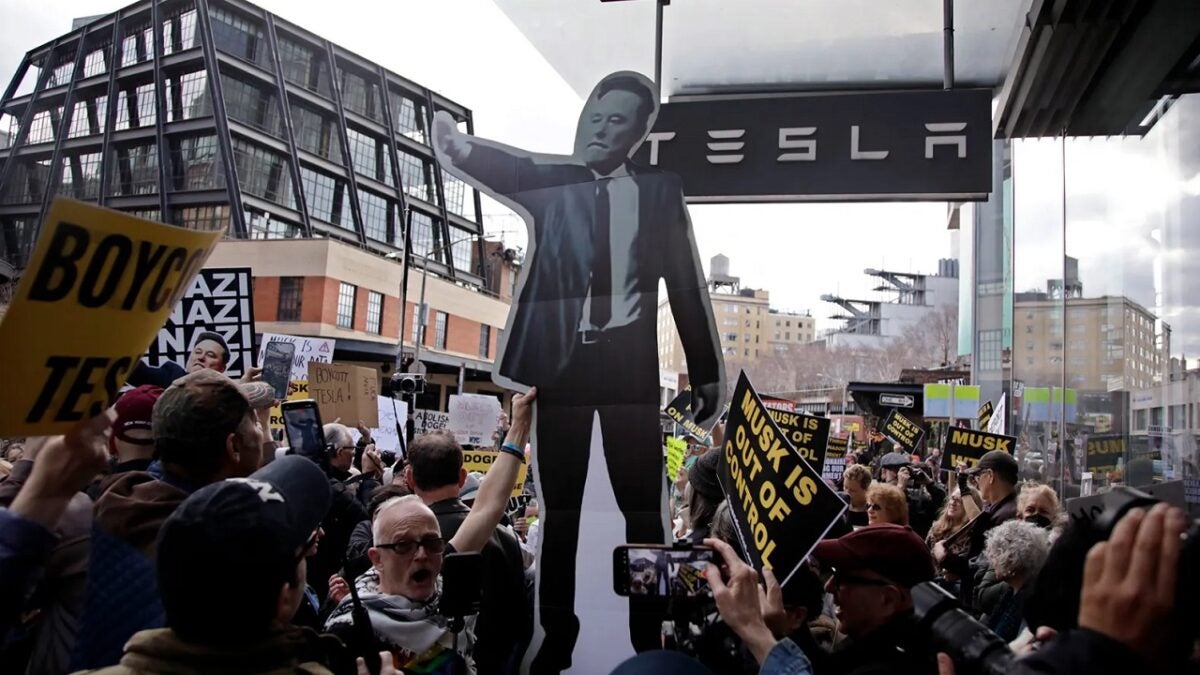
The ‘Tesla Takedown’ movement, which organizes peaceful protests against Elon Musk at Tesla stores across the U.S., has gained momentum in recent weeks.
These protests, primarily focused on advocating for accountability and transparency from the tech mogul, have been particularly prominent in locations such as Berkeley, California, where demonstrators have been active for over a month.
As anticipation builds for further protests, concerns about Tesla’s delivery issues may contribute to the heightened tensions.
The politicization of Tesla and Musk’s leadership has polarized public opinion
Among the protests last Saturday, an incident erupted in Berkeley involving Rick Fuze, a self-proclaimed Trump supporter and known counter-protester. Fuze, who owns an e-bike repair shop, was arrested after allegedly attempting to use a taser on peaceful protesters.
Eyewitness accounts confirm that a confrontation ensued, in which Fuze fired his taser at the demonstrators before being apprehended by police, who were monitoring the situation. Fuze claimed self-defense after someone pulled his hair, but video footage suggests he had already escalated the encounter with the taser.
While the majority of protests against Tesla are peaceful, reports indicate a concerning rise in violence and vandalism, including attacks on Tesla properties. Recently, a truck driver was reported to have intentionally released plumes of diesel exhaust on protesters, a tactic known as “rolling coal”, further highlighting the escalating animosity surrounding these demonstrations.
Notably, the politicization of Tesla and Musk’s leadership has polarized public opinion, making each protest a flashpoint for broader societal debate.
Looking ahead, many speculate that the impending release of Tesla’s delivery figures could impact the trajectory of these protests. If the reports indicate poor performance—attributed partly to demand issues and transitions with the Model Y—some predict that protesters might claim victory and disband, while others fear the demonstrations could grow until significant changes in leadership occur.