{
"de-DE": "",
"en-US": "Ben Bowman is an Emmy Award-winning journalist who led Softonic.com's editorial team in 2018 and 2019. Before joining Softonic, he was the Head of Content for Curiosity.com and a news producer for NBC, Fox, and CBS. He is an award-winning filmmaker and director of sketch and improv comedy, and a contributing writer for the Pitch comedy app.",
"es-ES": "",
"fr-FR": "",
"it-IT": "",
"ja-JP": "",
"nl-NL": "",
"pl-PL": "",
"pt-BR": "",
"social": {
"email": "ben.bowman@softonic.com",
"facebook": "",
"twitter": "https://twitter.com/BowmanInc",
"linkedin": "https://www.linkedin.com/in/benbowman/",
"web": "https://bowmaninc.weebly.com/"
}
}
With each successive political campaign, we see new tools being used to spread misinformation. In 2016, social networks were used to target certain groups. After seeing a constant stream of mistruths and outright lies, many voters made their choice without an accurate picture of the candidates and policies on both sides.
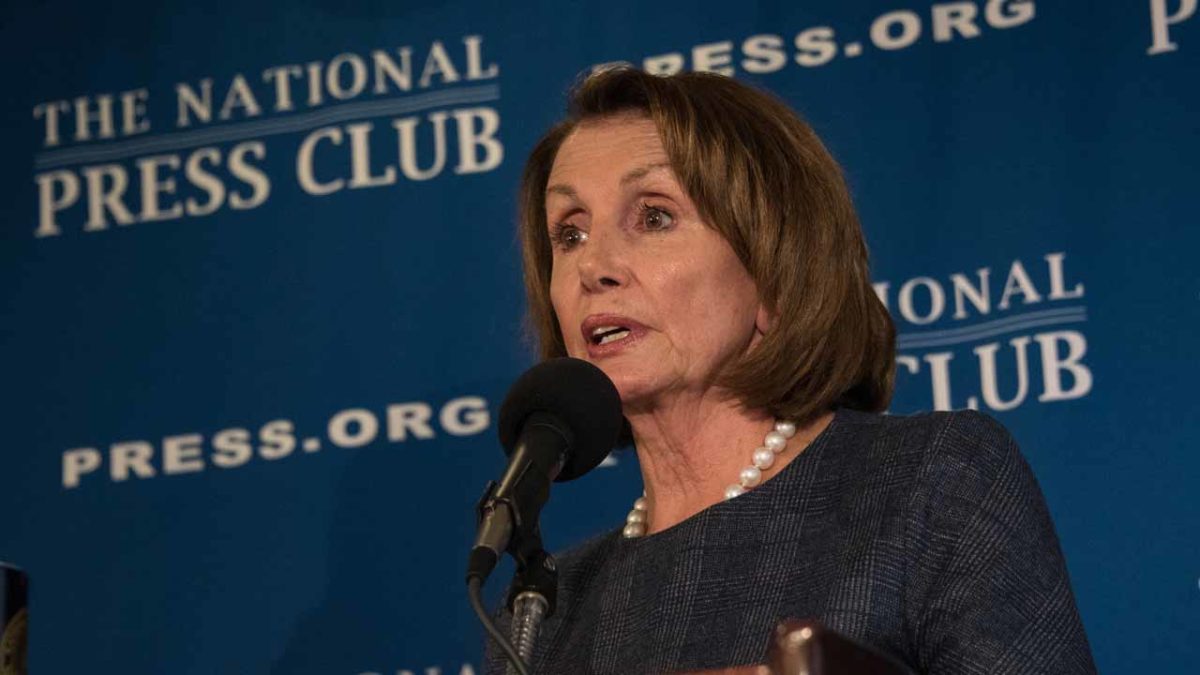
Today, the misinformation war is becoming even more heated. Doctored videos of House Speaker Nancy Pelosi are being shared on social media:
The doctored video has been viewed on Facebook more than 2.4 million times. We don’t know whether these videos are being produced by a single person, a group, or as part of some kind of larger campaign, but the effects can be devastating.
Political misinformation is nothing new, but we’re now seeing extraordinary amplification of these stories thanks to actual politicians and their social media accounts. Last night, former New York City mayor Rudy Giuliani (President Trump’s personal attorney) shared the altered video on Twitter with the message, “What is wrong with Nancy Pelosi? Her speech pattern is bizarre.” Giuliani later deleted the tweet.
The President himself shared a highly edited video to push his chosen narrative of Speaker Pelosi.
Any amount of editing can change the slant of a story. We often hear complex conversations summarized in one brief soundbite on the news. Even the selection of a specific photo can paint a positive or negative picture of a candidate. In 2004, Howard Dean’s political campaign was completely derailed because of a scream caught by a microphone:
But the thing is, the people in the room couldn’t hear Dean’s scream. It was incredibly loud in the venue. But because TV networks had access to Dean’s isolated microphone, we didn’t hear the sound in context. It didn’t matter. The die was cast.
So political narratives have been shaped from an out-of-context scream and now, doctored videos. The biggest threat, however, is yet to come. Deepfake videos can make anyone appear to say or do anything.AI can generate fake humans. Just as the computer graphics in Hollywood blockbusters become more convincing, we are quickly closing in on an era when we won’t be able to believe our eyes. And that leads us to a very dangerous place.
George Orwell called it in “1984:”
“The party told you to reject the evidence of your eyes and ears. It was their final, most essential command.”
Except in this case, the evidence being presented to our eyes and ears is being manipulated. Politicians have always lied and mischaracterized their opponents. But we are quickly moving into an era where those lies can be backed up with faked video evidence, then amplified across social media until the damage is too great to overcome.
A quote often misattributed to Mark Twain says, “A lie can travel halfway around the world while the truth is putting on its shoes.” And that’s been true since before the days when everyone in the world had immediate access to an audience of billions.
The social networks themselves aren’t helping. YouTube took down the altered Pelosi after Axios got in touch with them. Facebook said it would only reduce the video’s reach if they felt it was misleading, but they wouldn’t remove it. Twitter is allowing the altered clip to remain online. How do you fight back against global platforms and itchy clicking fingers?
It’s up to all of us to slow down before retweeting or sharing something shocking. Today, and in the years to come, the faked videos will become even more sophisticated. It’s up to our vigilance and reliable news organizations to make sure the truth isn’t twisted.
Long-haul mail deliveries are on the roads without drivers.
“Neither snow nor rain nor heat nor gloom of night stays these couriers from the swift completion of their appointed rounds.”
That’s the unofficial motto of the Post Office, and something that seems even more possible when the couriers themselves are robotic trucks that don’t need to eat, sleep, or go to the bathroom. Sure, we’re a long way off from the T-1000 showing up at our door with a bag of mail, but self-driving mail trucks are already being tested.
Starting today, the San Diego-based company TuSimple is running a two-week test of mail truck deliveries between USPS locations in Phoenix and Dallas. The self-driving semis will make five round trips, each one 45 hours long. Even if you’re the most ferocious road warrior in the world, wearing a diaper and an IV, that’s probably outside your comfortable driving range.
To keep an eye on things, the self-driving trucks will have a human driver who could jump in. An engineer will ride shotgun.
Self-driving trucks could provide incredible cost savings and efficiency. That will also come at the cost of driving jobs, however. According to Reuters, the American Trucking Associations estimates a shortage of as many as 174,500 drivers by 2024, due to an aging workforce and the difficulty of attracting younger drivers. So self-driving trucks will be great to replace any human shortfalls. The problem, however, will be the drivers who don’t want to be replaced by Robo-Driver 2000.
As technology accelerates, we’ll have to be mindful of helping those displaced by its effects. Sometimes making things cheaper comes at a higher cost than we realize.
A great beginning is hard, a great ending is nearly impossible. Why?
Credit: Helen Sloan/HBO
In the aftermath of “Game of Thrones,” fans found themselves in a familiar position, sifting through the events of a final episode, weighing whether they liked how it ended, considering whether the story as a whole was worth their time. Some of the greatest TV shows in history have stumbled horribly at the finish line, either due to fatigue, a lack of planning, or indecisiveness. While we’ve been treated to many wonderful shows, you can probably count the number of highly praised finales on one hand. Why is that?
Spoilers below…
The job of a finale
A proper finale needs to accomplish several critical tasks:
Answer any lingering important questions
Provide closure
Nod to the past
Hint to the future
Fit with the rest of the series
If a finale fails at any of those points, you can be sure the fanbase will revolt.
The best TV finales
If we’re lucky, we get one near-perfect finale per decade. “M*A*S*H” is often cited as a great ending. The comedy-drama series focused on the Korean War. Considering the frame of the war, the end of a conflict is a natural reason for our characters to part ways. Wars never end at a particular point in a character’s evolution – it’s always an abrupt and arbitrary development. The characters have a clear reason to say goodbye, bury the hatchet, or make amends. And because we know that all of these characters had lives before the war, we know they’re returning to those lives. They’ll be forever changed, but all of them will return to a version of their previous existence.
According to Joseph Campbell’s hero’s journey, we are all predisposed to anticipate that after a great battle, the hero returns home with something he or she gained, now prepared to share it with those who have not yet ventured forth for their own great battle. The hero becomes the mentor. The heroes of our stories become the leaders, and the next generation must step forward. That homecoming or return is often a tricky thing to pull off, so it’s often neglected or ignored. But it usually boils down to a simple rule: the end is in the beginning. At least one character must return to a familiar place, now changed by what has happened.
“M*A*S*H” is also notable for a real shock turn for one of the main characters. Hawkeye Pierce suffers a nervous breakdown as he remembers the extraordinary step one woman took to prevent discovery and capture by the enemy.
A war between nation-states makes it easier to pull the plug than something like a battle between good and evil. One presumes that evil never rests. At the end of “Game of Thrones,” we’re meant to believe the decisions made will put an end to generations of conflict, yet the new king points out the necessity for a Master of War. So much for utopia.
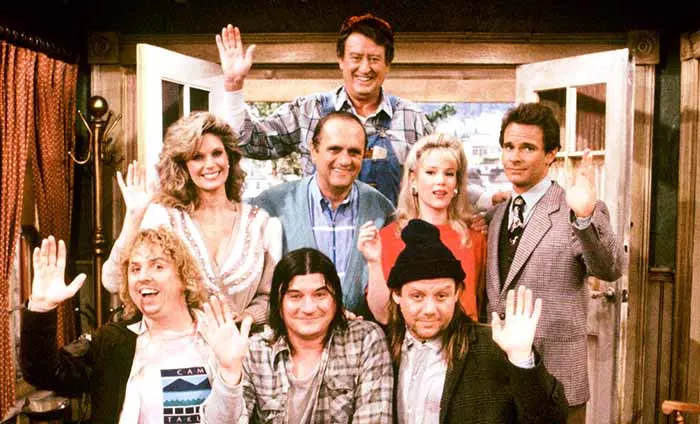
Another finale cited as one of the best is “Newhart.” Sitcoms, by their nature, have less to do with continuity and more to do with simply making us laugh. Too many sitcom finales get bogged down with sentimentality, leading our characters to behave in ways they’ve previously never behaved. A sitcom usually only functions because of its characters’ lack of growth. We crave the reliability of their flaws.
“Newhart” wisely side-stepped this pitfall. The comedy focused on a man and his wife who operated a small inn in Vermont. In the final episode, a visiting Japanese tycoon buys out the entire town. Like “M*A*S*H,” the show’s framing device is eliminated, so it provides a natural opportunity for everyone to say goodbye. Also like “M*A*S*H,” the decision is taken out of the hands of the protagonists. That’s also crucial since the finality of the development removes any scenes of characters waffling about the decision. By using an external force to close the show, fans won’t find themselves second-guessing a character’s decision to leave. The decision was forced upon them.
“Newhart” transcended all other comedy finales with an audacious stunt. When Bob Newhart’s 1990 character is whacked in the head with a golf ball, he wakes up… on the set of his beloved 1970s sitcom, “The Bob Newhart Show.” He tells his wife from that show about the crazy dream he just had. It was subversive and meta and groundbreaking and satisfying all at the same time. And, importantly, it doesn’t negate what happened. Even if all those seasons were part of one crazy dream, they were still enjoyable. By reframing the entire series as a dream from another, similar character, it plays fair.
The best TV finale in recent memory is “The Shield.” The story of a rogue cop unfolds like a perfectly laid trap. All of the secrets in the series are laid bare, and everyone is shocked. Because that show always dealt in a wide grey area between right and wrong, the 2008 finale’s last shot is a perfect fulfillment of that promise. It’s concrete enough to hint to the future, but vague enough to allow the viewer to make their own conclusions.
The ending of “The Shield” is also notable because it followed a logical path. Shakespeare tells us that Romeo & Juliet are going to die right at the beginning of the story. He then weaves a story so compelling, you forget the promise made at the outset. Either that, or the dread informs your consumption of this story of young love. Telling the hell out of a story is more important that shocks or u-turns or deus ex machina or mind-blowing revelations. Shakespeare says, “Watch me kill these young lovers.” We watch anyway and it’s great. And no one feels ripped off when they die.
The most disappointing TV finales
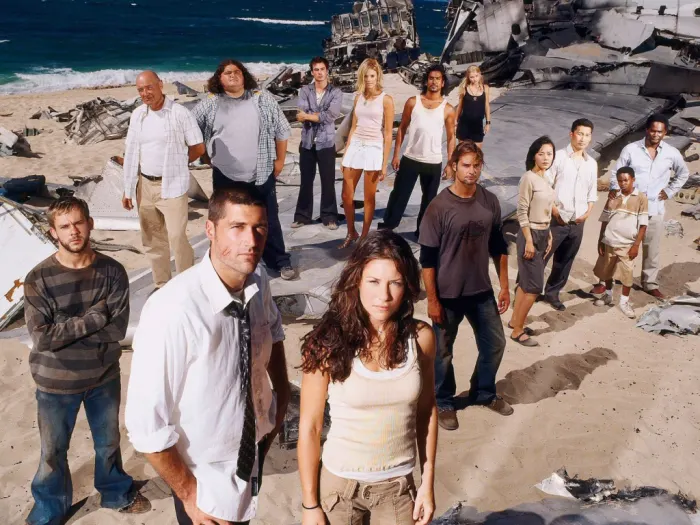
“Lost” is an example of a show that rocketed out of the gates, then stumbled, and stumbled, and stumbled some more on its way to a much-reviled ending. Where did “Lost” get, well, lost?
That show made lots of promises to the audience. If you tell us that everything is happening for a reason, you should have that reason figured out before you launch your show.
Too often, showrunners promise an equation where 2+x=4. Part of the joy, then, is giving the audience enough clues so they can eventually discover that x=2. But this often ends up overcomplicating things. Instead of doling out x in small doses, we start adding other variables: red herrings and narrative dead ends that only exist to prolong the solution of the equation. So you end up with a final equation that looks like 2+0.1+z+3-2/5+∞=4? And you, the viewer, say, “This doesn’t add up to four at all!” The showrunners fire back, “It was never supposed to add up to four.” And you say, “Look at your first season! All you talked about was four!”
Supernatural shows often fall prey to this trap. Ditto for Stephen King novels. We are so intrigued by the possible reasons for the mystery, our imaginations fire off multiple solutions, each more satisfying than whatever we’re given. Was there really any way “Lost” could pay off a polar bear on a tropical island, the magic numbers 4, 8, 15, 16, 23 and 42, the smoke monster, and The Others abducting Walt because he was “special?” No. It was all nonsense. Fans worked furiously to find one solution to these riddles, but even the showrunners had no idea what they were doing. So the solution was that the characters were dead all along and they were just puttering around in purgatory and the island was somehow a container for evil. It’s just more nonsense.
If you have a supernatural story, the most important thing you have to do is establish a set of rules. Absent these rules, anything can happen for any reason at any time: people can come back from the dead, witches can birth smoke monsters (one time only, apparently), time travel is possible. The audience will swallow a lot as long as there are some boundaries involved. The moment you toss out the rules, your show falls apart.
“Lost” could never decide on its rules and drowned itself in a sea of false starts. Nearly the entire second season focused around the survivors from the tail section of the plane, and those characters did nothing to propel the overall story. If you can skip the majority of a season and the story doesn’t seem radically altered, that’s poor storytelling.
Another much-loathed finale was “The Sopranos.” When that show was at its best, it was a strange cross between violence, comedy, and psychiatry. When that show was at its worst, it was self-important (ugh, the dream sequences!), ponderous, and pretentious. The ending was the worst example of this. In a brazen, audacious move, the screen simply cut to black. Nearly every fan had the same reaction: “Did my cable just go out? That wasn’t the end, was it?”
To this day, people argue whether that means Tony Soprano was killed or the show picked that random moment to stop. When we rewatch it, we suspect the final scene is packed with mundane details because that’s the whole point of the show: as terrifying as mob life is, you still have moments of boredom, and you’ll be looking over your shoulder for the rest of your life. You might disagree with that assessment, but that does not mean that this finale was an artistic masterstroke. It means the show failed in its duty to elicit an intended emotion. It just copped out. “Here, you decide what happens,” is incredibly lazy. The easy fallback for the creator is, “Well, maybe you don’t understand it because you’re not sophisticated enough or you didn’t pick up on the clues that I did a terrible job supplying.” Nonsense.
To be clear, “The Sopranos” and “The Shield” both have ambiguous endings. But “The Shield” presents two clear timelines. “The Sopranos” presents infinite possibilities, each equally valid. Why not end the show 10 minutes earlier or 10 minutes later? If an abrupt ending is supposed to be the point, it could happen anytime. So why then? And what are you trying to say?
“Mad Men” is another prestigious TV series that fumbled its ending. That show was always at its best when it used the frame of the advertising agency to explore social dynamics. Because the main character hit the road, separating himself from that environment, we missed out on the crackling dialogue and character-driven tension that made the show sing. Don Draper’s disappearing act would be like buying a ticket to the NBA Finals, only to learn that Steph Curry has decided he’s going to skip the game to launch his career as a forensic pathologist. Steph might be a great forensic pathologist, but we just want to watch him jack up threes, preferably alongside his teammates.
“Seinfeld” is an example of a disastrous finale in the comedy genre. Instead of leaning on its observational strengths, the final episode felt more like a glorified clip show as they brought back dozens of guest stars, and finished with the four leads stuck in prison. What? That show picked a weird time to become introspective. Again, we were robbed of what made the show great – interactions between the four main characters. Also, the episode wasn’t particularly funny.
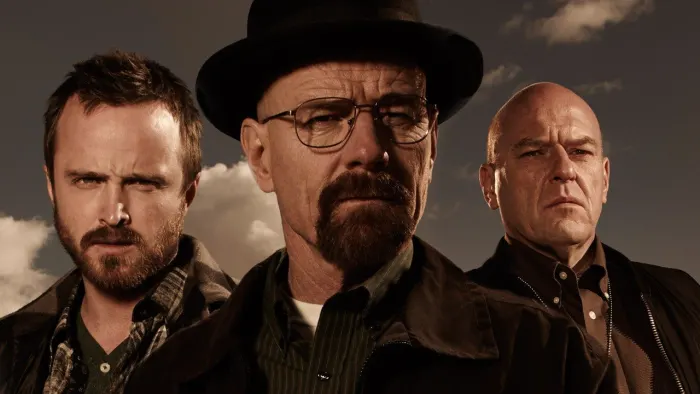
“Breaking Bad” is another series on TV’s Mount Rushmore, but the final episode had the unenviable task of coming on the heels of the third-to-last episode. “Ozymandias” is perhaps one of the most perfect hours of television ever filmed. It offered gut-wrenching payoffs to nearly every secret in the “Breaking Bad” universe. Walter White came in direct conflict with everyone he loved. So the last two episodes suffered by removing Walt from those characters. While the finale offered satisfying moments, we were starved for those rich moments of 1:1 interaction that made the series great. It also doesn’t help that a group of random Nazis can’t hold a candle to the series’ greatest villains. For that reason, something like Season 4’s “Face Off” finale against Gus Fring felt more satisfying.
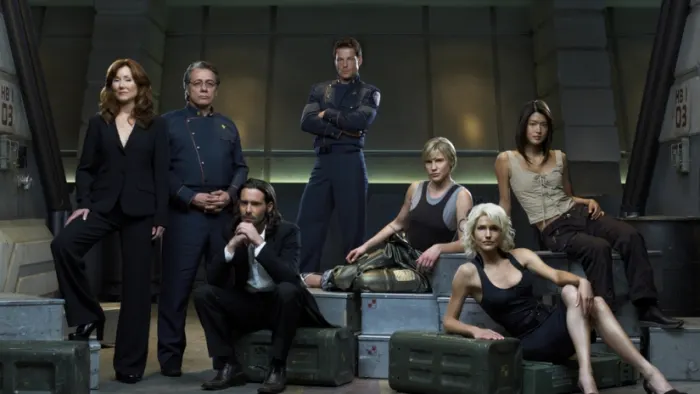
Fans tend to love or hate the end of the “Battlestar Galactica” reboot. Again, it fell into the supernatural trap, not laying out the rules by which the show would play. If you’re willing to make some pretty big leaps of faith, the series plays out like a tone poem to evolution, both personal and biological. If you insist on answers, you’re not going to get them here. Because the show always dabbled in the mystical and unexplained, we liked the ending. (Baltar’s emotional breakdown was especially powerful.) In some cases, a show is better off shrugging its shoulders and acknowledging powers beyond its understanding, rather than trying to shoehorn an unsatisfactory explanation into the mix. (Remember, we like The Force, but nobody likes Midichlorians.)
“The Wire” is probably the greatest television show of all time. Season 4 is a peerless dramatic masterclass. But Season 5 featured an uncharacteristic logical leap required because the show had made its primary villain (Marlo Stanfield) too powerful to take down fair-and-square. “The Wire” had an incredible grasp of the big picture, but its low ratings meant HBO was reluctant to greenlight a Season 5. Had the showrunners known they’d only get five seasons, it’s likely they could have orchestrated a clean landing. Since they had no assurance beyond one final season (and a shortened one, at that), they took some narrative shortcuts that show nearly always avoided before the end.
The issue with “The Wire’s” finale isn’t what happened to the characters. All of them got fitting ends. It’s the path that got them there that was so frustrating. In that way, it shares some DNA with “Game of Thrones” – you know how great that show can be, so it’s frustrating to see it underachieve in the finale.
How to ask for a movie or TV show to be added to Netflix
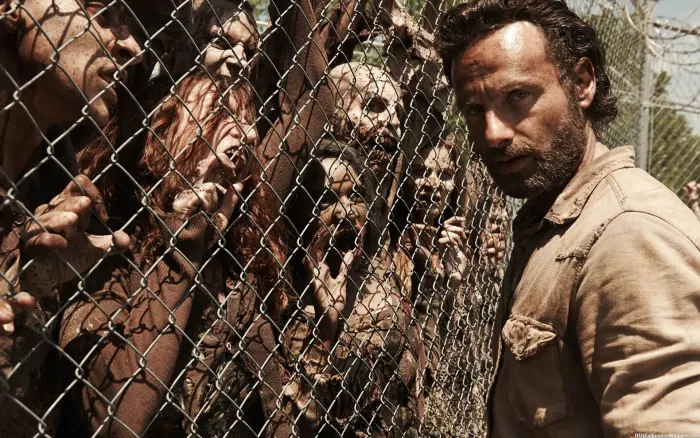
In the case of “Game of Thrones,” we watched the quality degrade as soon as the show surpassed its source novels. With most of these shows, the lack of a defined endpoint means that the showrunners have no idea how to pace the series. Just look at “The Walking Dead.” AMC has apparently commanded that it run forever. So the writers need to come up with juuuust enough threat to keep its viewers intrigued, but not the full-tilt narrative violence that a successful zombie story requires. If you can’t kill important characters in a zombie show, why even have zombies on your show? Writers are forced to saddle characters with plot armor so they don’t jeopardize the longevity of the series.
In an age of streaming, it would be great to see Netflix, Amazon, or HBO make a multi-season order and stick to it. If creators know they have 70 hours to tell a story, that allows them to build the story correctly. As it stands, showrunners might be building toward a three-act structure, only to be told they’ll have to wrap up in two acts… or extend to seven. Guessing at your story structure is an impossible feat, and only leads to the messes we’ve seen so far.
An alternative is to follow the sitcom model and make every story stand on its own. “Black Mirror” follows an anthology model to great effect. The first season of “True Detective” was great because the story was constructed in eight chapters with a definitive end. But fans crave the mythology and character growth that comes with a sustained series, told over several years.
Yes, it’s true that stories can evolve in the telling. Jesse was supposed to die at the end of the first season of “Breaking Bad,” but the showrunners were so taken by Aaron Paul’s performance, they changed course. But you should have a destination in mind before you pull out of the garage. Detours are fine as long as the scenery is worthwhile, but you always need to be driving to the end.
So here we are, friends. The end of the road. Eight seasons and 73 episodes have led us to this. Let’s be clear: the showrunners had a near-impossible task in front of them. With so many beloved characters still in play, there’s hardly a way to conclude the story in a way that would please all the fans. And this show didn’t become popular by giving the audience what it wants.
So did the finale do what it needed to do? We suppose so. Nearly every storyline got wrapped up in a bow. It was perhaps too clean an ending, considering the messiness of Westeros. A concrete ending like this is probably more crowd-pleasing than something more open-ended. And this ending was significantly happier than we would expect, given the general tone of the show. Had George R.R. Martin been at the helm, we’d expect a smattering of happiness juxtaposed with a staggering amount of grief and misfortune for nearly everyone. This cruel, misogynistic, hateful world isn’t going to change overnight because there’s a new king. Martin was a realist. The men behind the HBO series are significantly more optimistic.
Let’s dig into the episode to see what worked, what went sideways, and how all the puzzle pieces came together.
Game of Thrones Series Finale recap/review
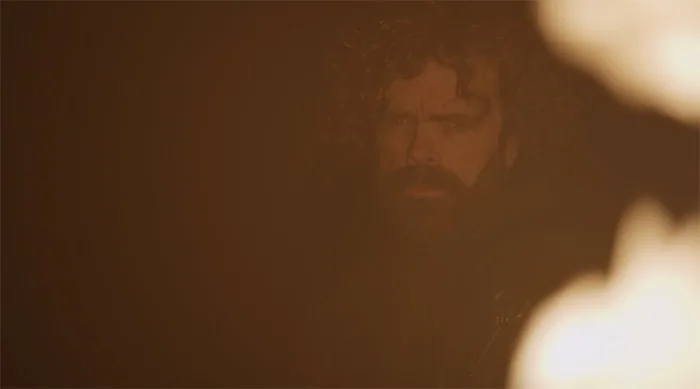
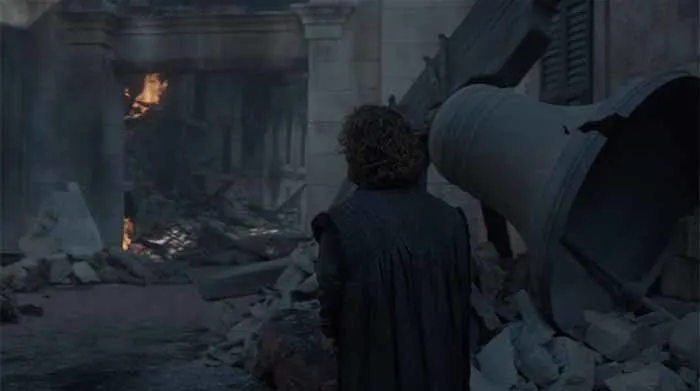
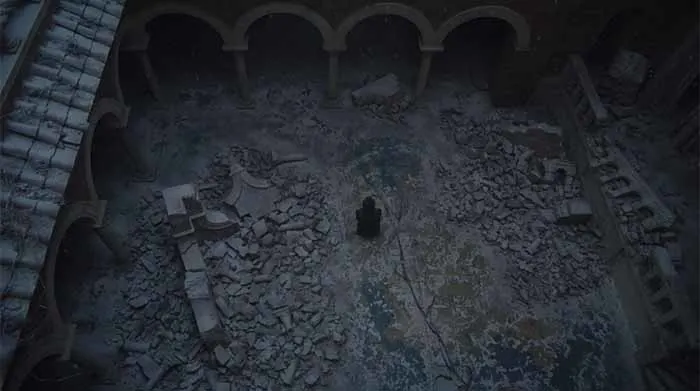
We begin with Tyrion Lannister walking through the ashes of King’s Landing. He’s intent on finding Jaime and Cersei. Jonathan Freeman, the director of photography, really outdid himself on this episode. You could almost watch the episode with the sound off and the story would still work.
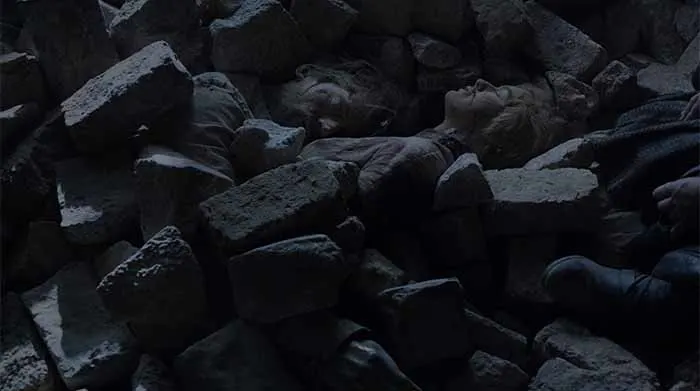
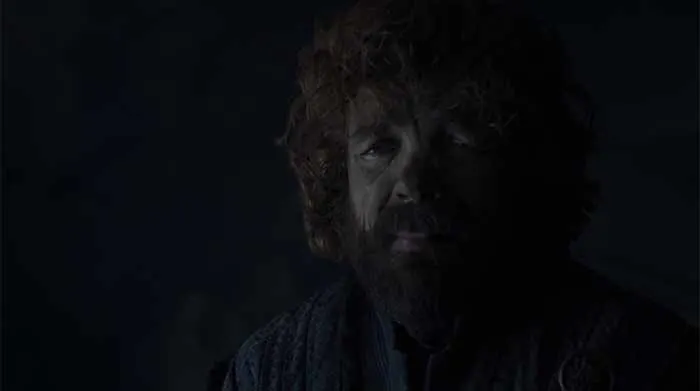
Tyrion walks past a bell – a reminder of the surrender ignored.Tyrion walks over the Westeros map, now covered in rubble.Jaime died with his hand around Cersei.Tyrion mourns his brother and sister.
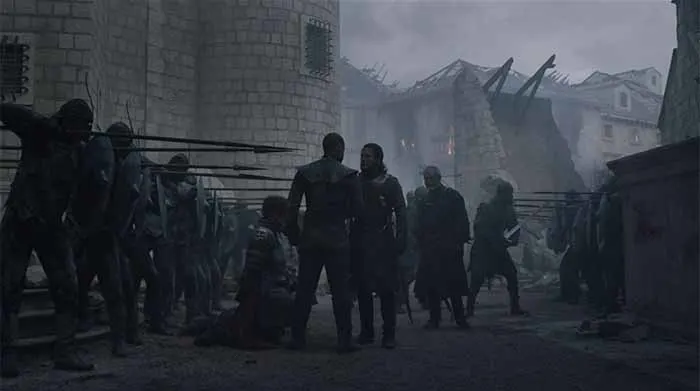
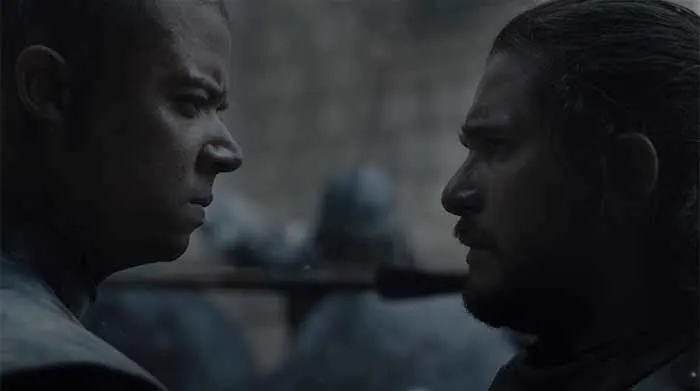
While Tyrion discovers Cersei and Jaime’s fate, Jon confronts Grey Worm about the Unsullied’s zero-tolerance policy toward Lannister troops drawing breath. Grey Worm says he’s just following orders.
Jon and Grey Worm square off.“We killed all the main villains, so I’ll need to fill in this week.”
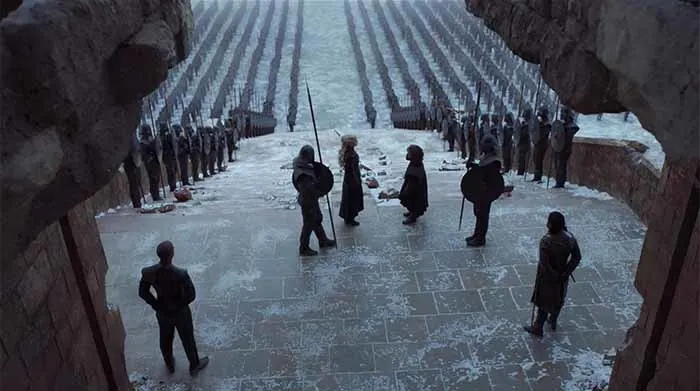
Jon continues on to find Daenerys about to address a monstrous gathering of Dothraki and Unsullied. We need to pause a moment to mention how reckless this season has been with the size of these forces. The Dothraki seemed all but extinguished in the battle against the Night King until they showed up in force in the last episode. The army standing with Dany during Missandei’s execution was significantly smaller than the one she addressed in the King’s Landing courtyard. Maybe next time, put a Post-it note with the numbers of surviving troops on the corner of your computer screen when you’re writing your complicated fantasy epic.
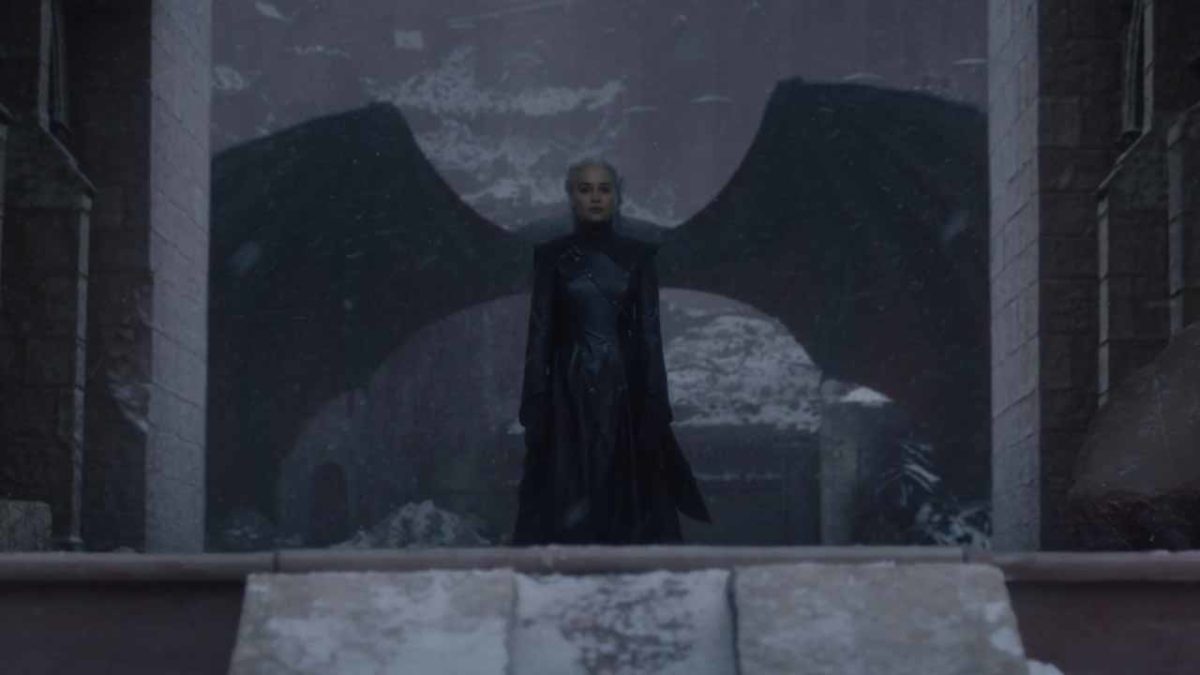
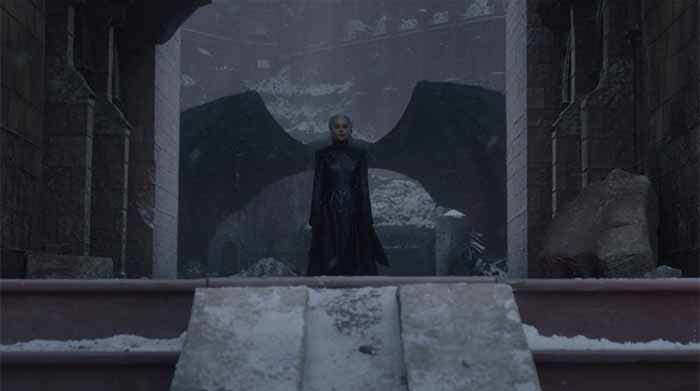
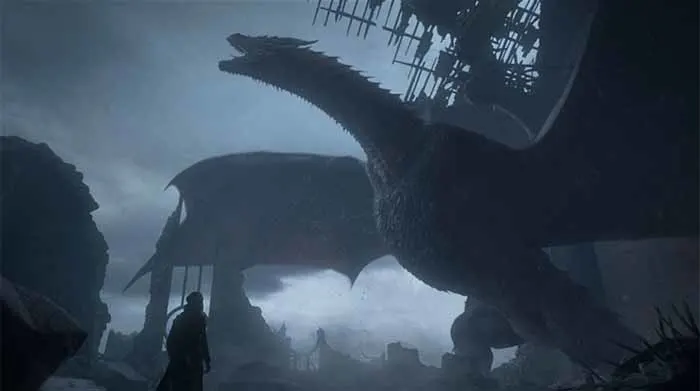
Anyway, Daenerys appears in front of her army and we get the coolest shot of the season as Drogon’s wings unfurl behind her:
Dragon queen
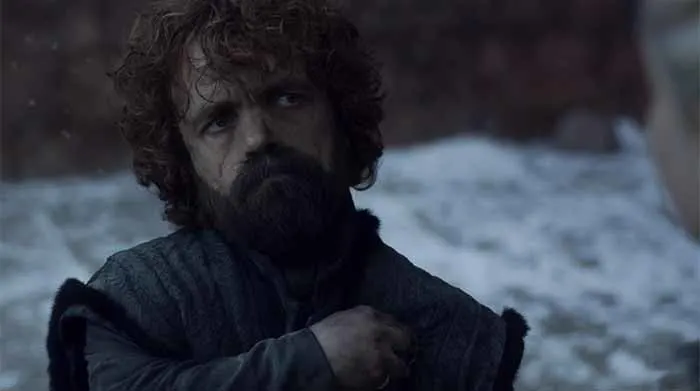
Daenerys gives off a real psycho dictator vibe during this speech. She shouts about breaking the wheel and bringing her brand of freedom to every man, woman, and child, whether they want it or not. Tyrion recognizes Daenerys for what she is, and he discards his Hand of the Queen pin.
“I’d like to deliver my two weeks’ notice.”“Take this man to HR so we can process his termination paperwork.”
Dany is understandably furious, so she orders Tyrion taken into custody. Jon watches this all go down with a lump in his throat. Arya emerges from the shadows to alert Jon that Dany is a stone-cold killer, as if watching King’s Landing immolate wasn’t his first clue.
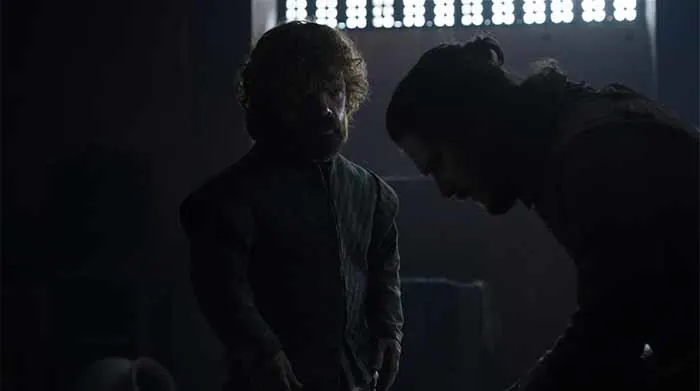
Jon visits Tyrion in his cell. Tyrion expects to be executed but tries his hand at convincing Jon to take out Daenerys. Like his Uncle Ned, Jon is a hardheaded and loyal man. He swore a vow to follow Dany, and those Stark vows are not easily broken. But Tyrion continues his plea, leaning on all of Jon’s weak spots – as a battle commander, as a leader, as a former member of the Night’s Watch, and as a brother, Jon knows Daenerys is dangerous.
“We backed the wrong horse, amigo.”
With a heavy heart, Jon heads off to confront his queen. Again, the cinematography here is phenomenal.
“I don’t see your name on the list.”
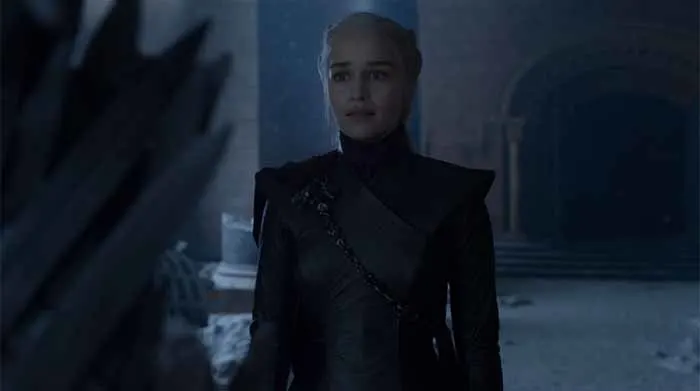
Daenerys is overjoyed to have reached the Iron Throne. Instead of sitting on it, she merely touches it. She’s been chasing this metal chair for years. Now it’s hers.
“My preciousssss.”
Jon arrives to poop in the punch bowl, reminding Dany of the whole “million corpses just outside the window” thing. Daenerys tries changing the subject. Sure, tons of innocent people died, but from now on, everything should be fine. Jon is rattled by Daenerys’ moral certainty. What if their subjects don’t agree with the queen’s rules? “They don’t get to decide,” Daenerys says.
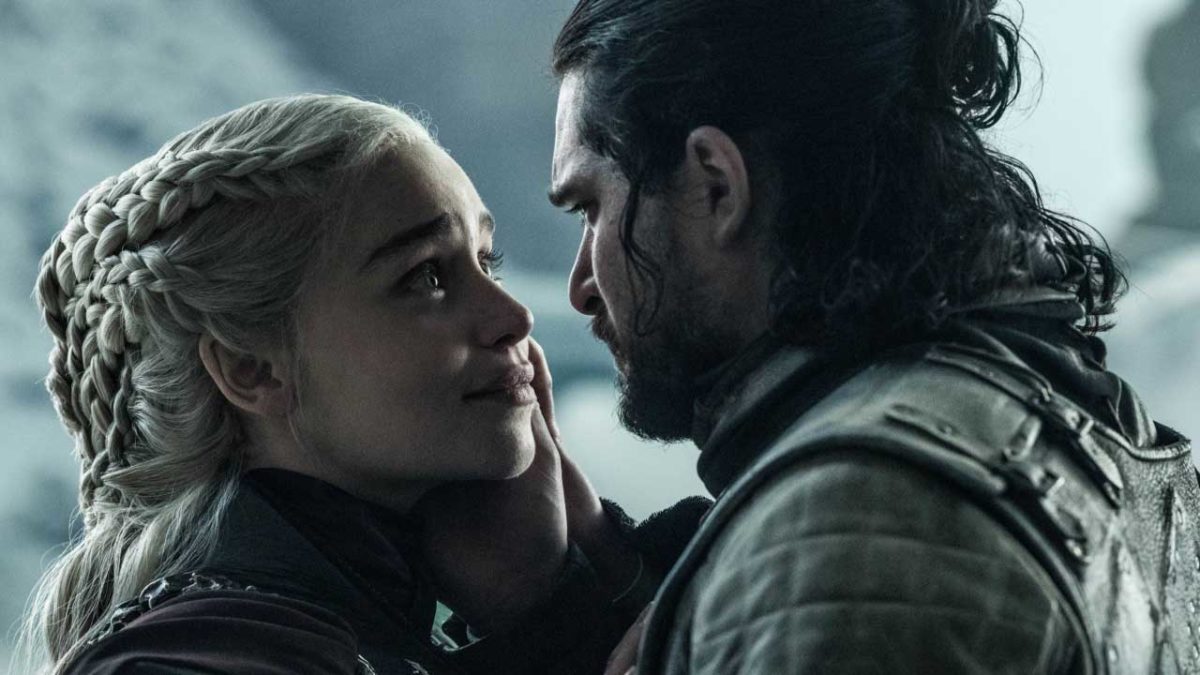
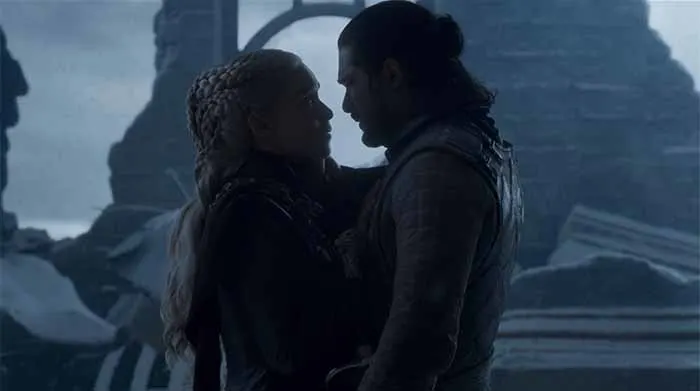
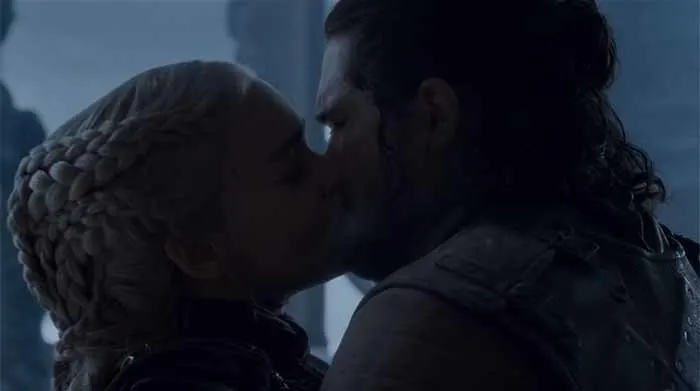
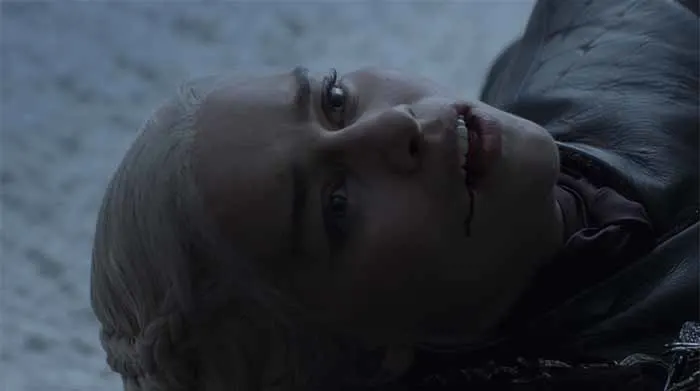
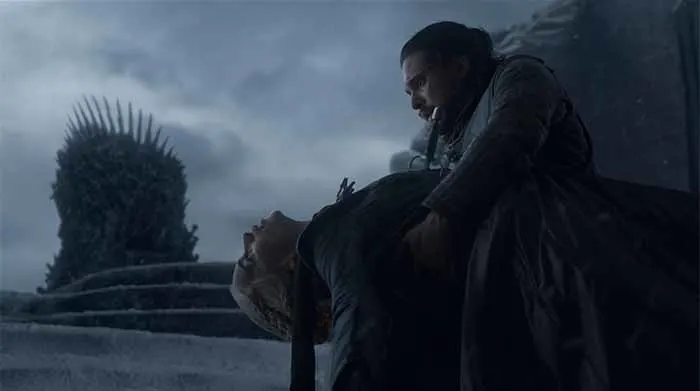
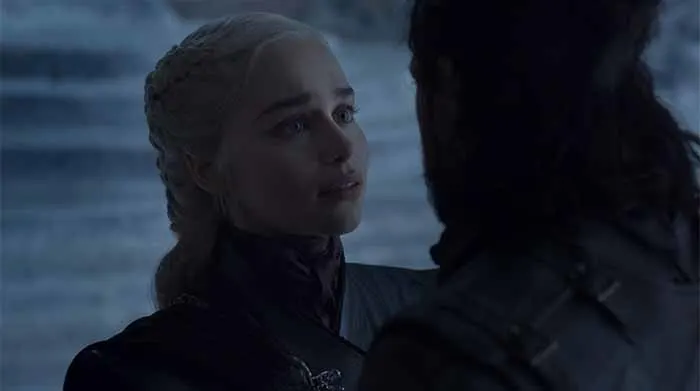
“You are my queen,” Jon says, “now and always.” They kiss. And while they’re kissing, Jon shoves a dagger through Daenerys’ heart.
“Aunt Dany, what big ambitions you have…”“Is that a knife in my ribcage or are you happy to see me?”“I should’ve stayed with Daario.”“Better hide this body before Drogon shows up…”
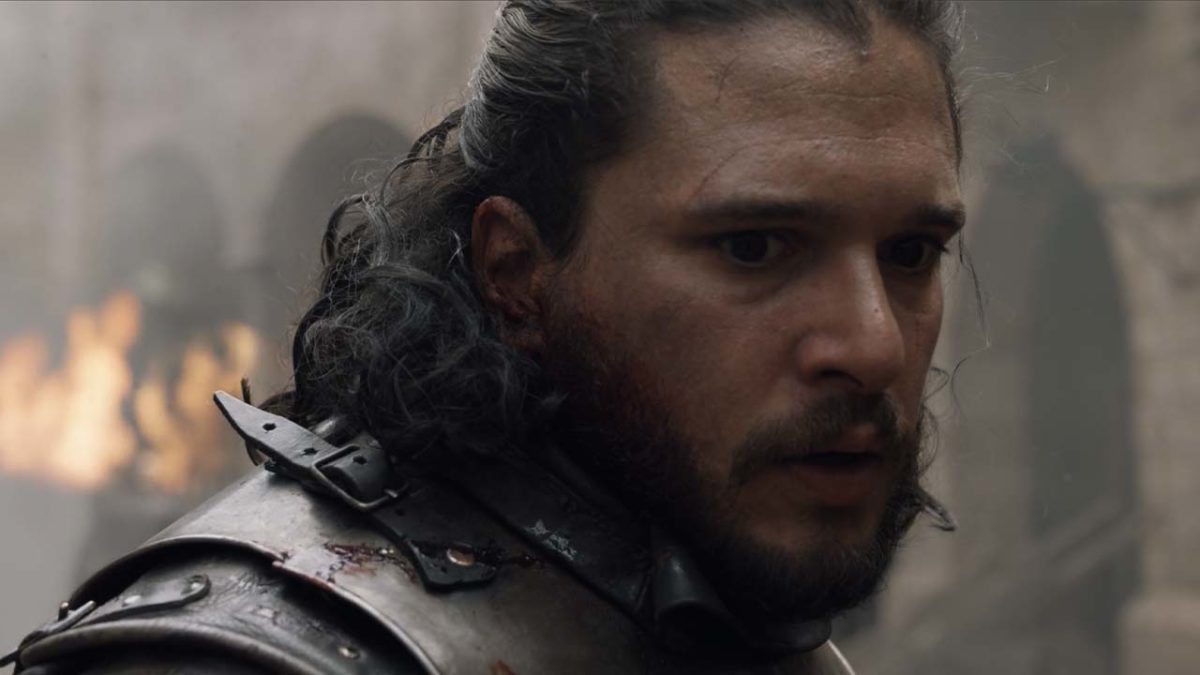
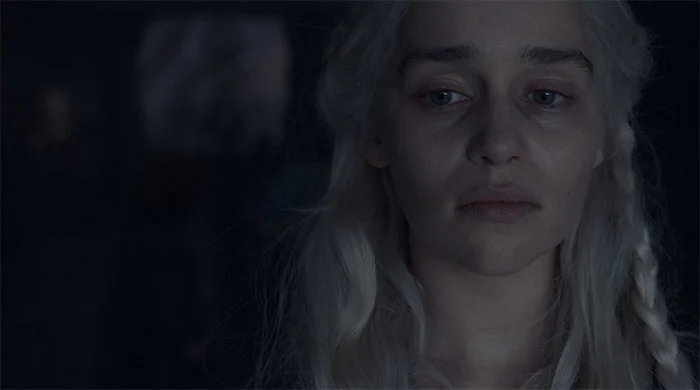
This moment was entirely predictable, but both Kit Harrington and Emilia Clarke were fantastic in this scene. The biggest issue is that we haven’t seen this version of Daenerys in a long time. This season has put the character through some rushed and confusing developments, not the least of which was her Mad Queen turn in the last episode. Even within this episode, Dany was in full foam-spitting dictator mode atop the steps. And then, in the throne room, she becomes hopeful and innocent and naive. Daenerys has always worked best when we’ve seen at least some vulnerability. When she’s been screaming platitudes to crowds of people, she’s been harder to see as human. So do we mourn our idealistic queen? Or do we cheer the death of a dictator? Both, somehow? It’s clear this is intended to be a sad moment, which would be easier to swallow if we erased our memories of the previous episode.
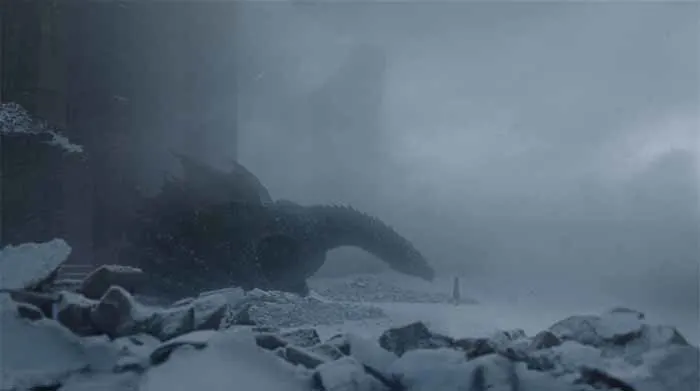
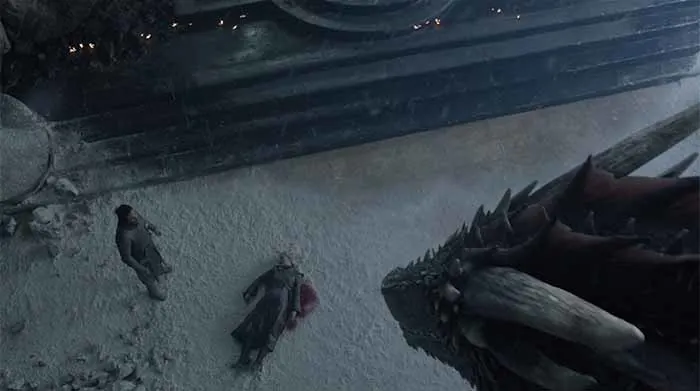
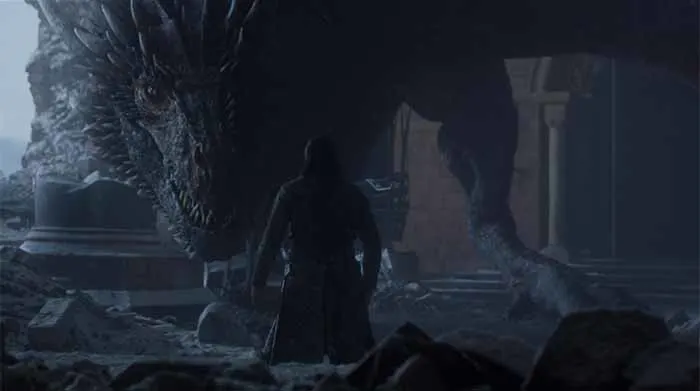
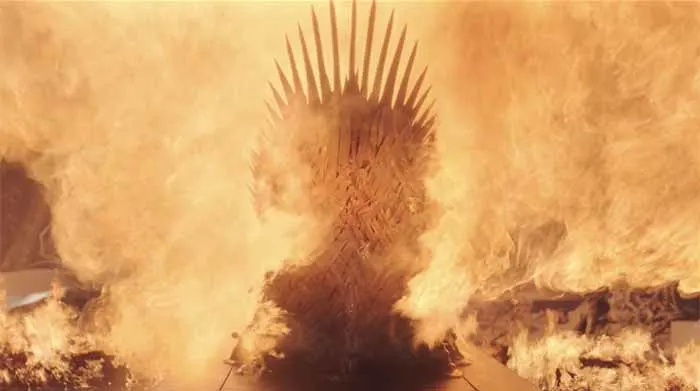
As Jon surveys his lover’s corpse, Drogon appears. He considers roasting Jon, then turns his fire on the Iron Throne itself. The coveted metal chair liquifies.
“M-mom?”“Not cool, Aegon.”“I wish to lodge a formal complaint.”“F yo chair.”
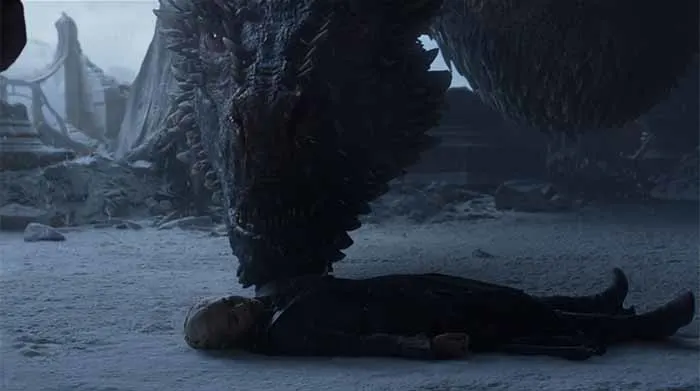
Drogon nudges Dany’s body, then picks it up and flies away. It’s the last we’ll see of the mighty beast.
“I’ll be playing the role of Bambi tonight.”
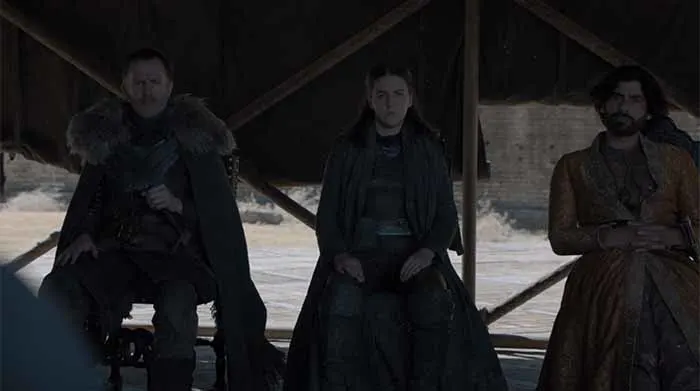
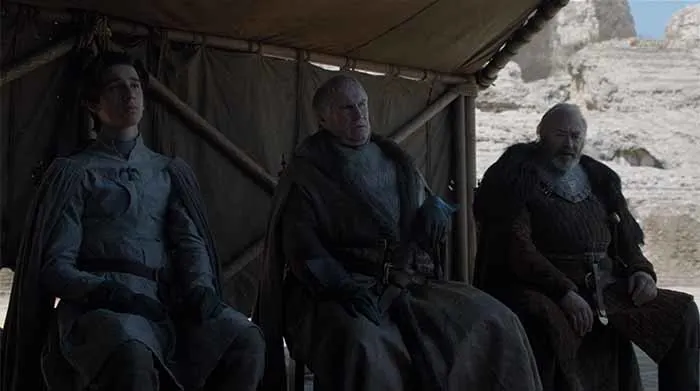
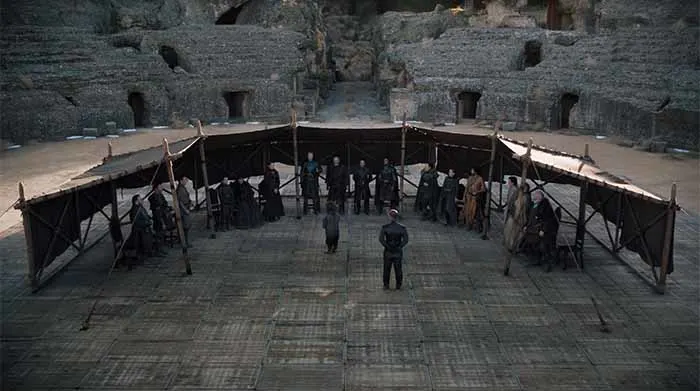
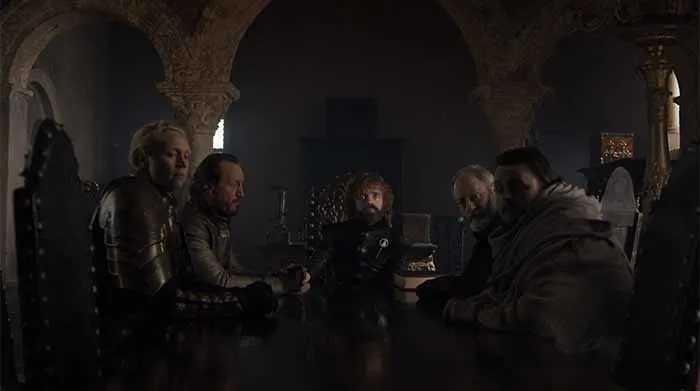
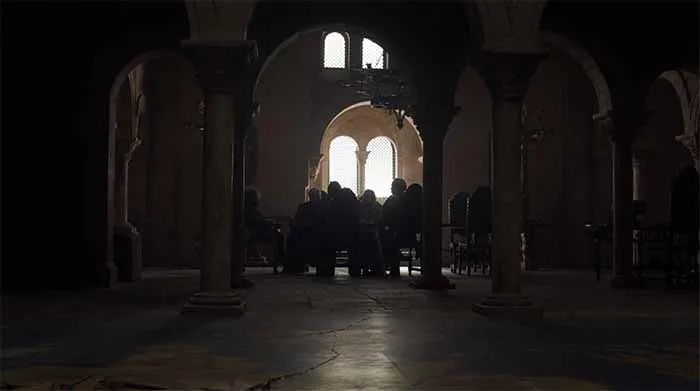
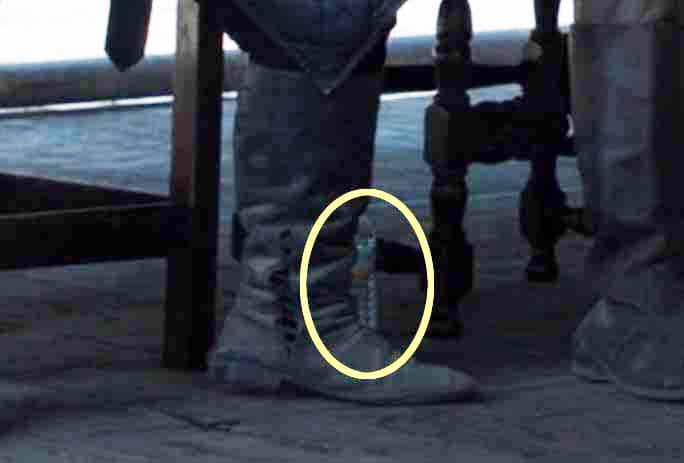
Several days, weeks, or months (?) later, Tyrion is brought to the dragon pits to face the leaders of Westeros. Grey Worm is understandably pretty irritated at the death of his queen. Now, the assembled leaders have to decide who will rule. Edmure Tully, last seen convincing Riverrun to surrender to the Lannisters, nominates himself. Sansa shuts down his campaign speech in a hurry. Sam suggests democracy and gets laughed off the stage. Sam is also sitting next to a plastic water bottle in this scene. You’re a trainwreck, Samwell! Pull it together!
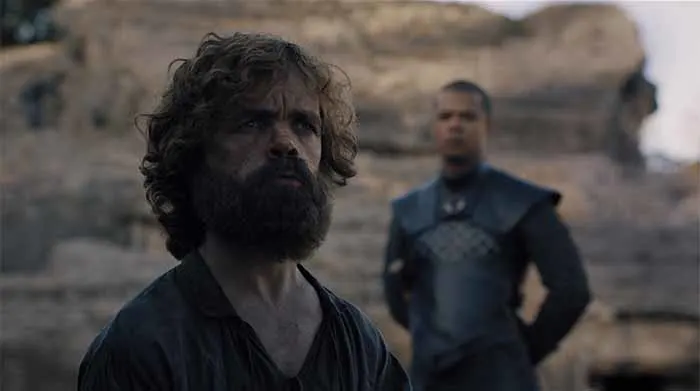
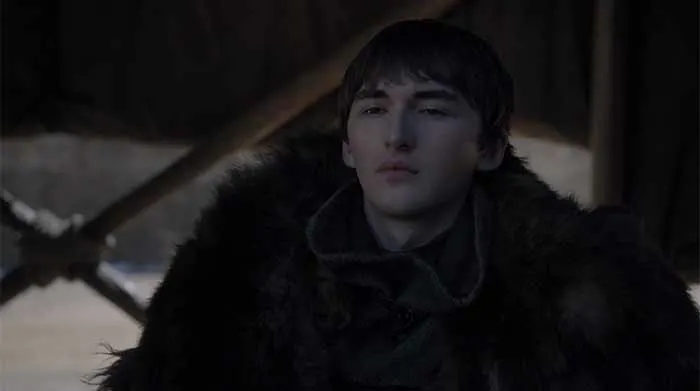
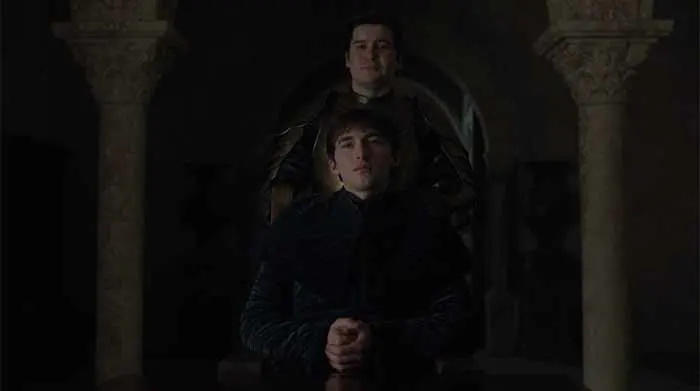
Tyrion has an idea: What about Bran? If stories can unite a people, Bran has a great story, he argues. Not to mention, Bran has access to all of Westeros’ memories. He’s a walking encyclopedia. Shockingly, everyone agrees Bran should be king. All except Sansa, who pulls a last-minute bid for northern independence and gets it.
“I’ve got a terrible idea. Hear me out.”
While this scene is supposed to be a powerful statement about the will of the people, breaking the wheel and all that, it’s the worst moment in the episode. Let’s break down why…
Start with the attendees. In many cases, we have no idea who these people are. There’s the nameless Prince of Dorne, Yara Greyjoy, Edmure Tully, Sansa Stark, Gendry, and Robin Arryn. That’s fine. They’re the leaders of great houses. What’s weird are some of the other attendees – Sam shouldn’t be there since House Tarly isn’t a big deal and he renounced his title when he joined the Night’s Watch. Brienne comes from the Sapphire Isle, but is House Tarth suddenly important? Davos even admits he has no idea why he might get a vote on this thing. Yohn Royce serves Robin Arryn, so why does he get a vote? Arya has no claim to House Stark, so her attendance doesn’t make sense. There are also some lords we’ve never met before, so that lessens the impact of their attendance. In reality, this assembled group seems super-random, and not technically empowered to choose a king.
L to R: Nobody, Yara, Unknown Dornish PrinceL to R: Robin Arryn, Yohn Royce, Some Nobody“Did you guys know my mom killed my dad and framed the Lannisters which kicked off this whole thing and then my stepdad killed my mom and I could go for some breast milk right now?”
We’ll also examine Tyrion’s argument. Bran has a great story, sure. But what about virtually everyone else? Jon came back from the dead, which is more impressive than falling out of a tower. Sansa has survived calamity that would have crushed most other people. Arya saved the entire world by stabbing the Night King. Pretty compelling story there. Sam also has a great story – rejected by his father, he’s the first man alive to kill a White Walker. Gendry has a claim to the Iron Throne by virtue of his bloodline, and his story is also great: the king’s bastard who survived a purge, armed the humans against the Army of the Dead, and became Lord of Storm’s End. Tyrion also has a fantastic story as the unwanted son of a great house, the hero of the Battle of the Blackwater, and the man who negotiated a truce that saved humanity at Winterfell.
“We unanimously sign off on this totally random plan.”
Ever since Bran went all Three-Eyed Raven, he’s become an insufferable, personality-free bore. He can travel through time, which you’d think would be a useful narrative tool, but that’s been completely discarded since the revelation of Jon’s true lineage. And he can warg into some people and animals, which, again, you would think would be useful from a storytelling sense. But that talent has been useless since the “hold the door” moment. During the battle for Winterfell, he warged into some ravens and did nothing. It’s just odd, like if you saw a Superman movie that was only about Clark Kent trying to write a front page story for the Daily Planet without any of that flying or heat vision or bulletproof nonsense. Bran has been a wasted character, so choosing him as king feels weird.
Arya cannot wait to sail away from her boring brother.
This moment also doesn’t ring particularly true to the series. The Greyjoys are notoriously independent, so after Sansa pulled her move, you’d think Yara would want a piece of that. Instead, Yara votes for Bran as her king. Remember, the Starks defeated the Greyjoys years ago, which was why Theon was serving at Winterfell. And, as Yara points out, she pledged to follow Daenerys. Supporting the “brother” of her queen’s assassin seems like an odd move.
Game of Thrones: Winter is Coming (official browser game)
Tyrion also asserts that Bran is a great choice because he can’t have children, which means the lords and ladies of Westeros would have to elect a new king or queen upon his death. But the next king or queen could easily have heirs. Regardless of the offspring, is there another vote upon the next king/queen’s death? If so, isn’t that an awesome incentive to kill the king/queen – to generate a new vote? All of these people just agreed to a new form of government without thinking through the ramifications.
All hail Bland the Broken, second of his name, king of the Andals and the first men, haver of powers he never uses anymore.
This scene could have been an opportunity to show Westeros descending into chaos. “Game of Thrones” has always been about greed and self-interest above the greater good. To see these proud leaders giving up autonomy to pick the weird mostly mute kid who claims to have magic powers doesn’t ring true. In fact, the most “Game of Thrones” twist here would be for everyone to realize that Daenerys, fearsome as she was, was the only one who could have united the seven kingdoms. Perhaps this handful of leaders can convince their people that Bran is a just and worthy king. Perhaps…
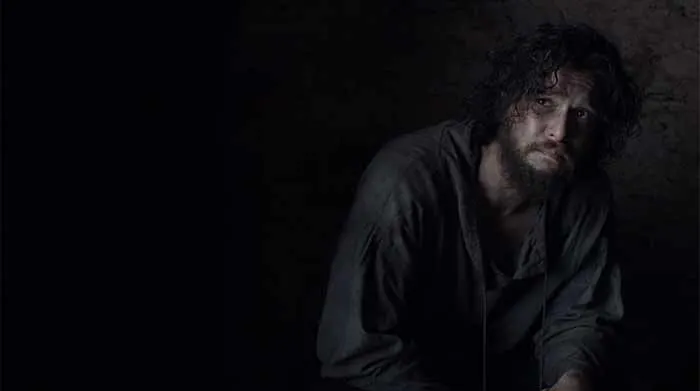
Tyrion visits Jon to deliver the news: he’s got to go back to the Night’s Watch. The Unsullied will allow Jon to live, so long as he’s stuck with a life sentence at Castle Black.
“I’m going where now?”
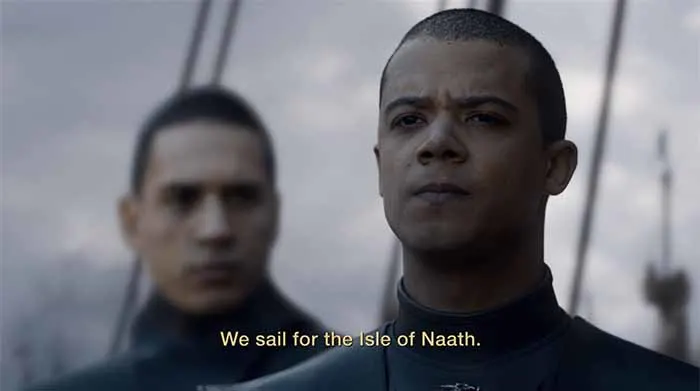
Jon prepares to take the long journey north. He passes Grey Worm, who is about to set sail for Missandei’s home of Naath.
“Maybe Missandei had a twin sister.”
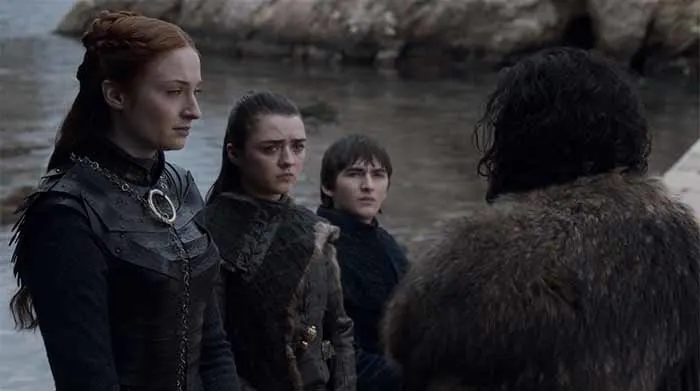
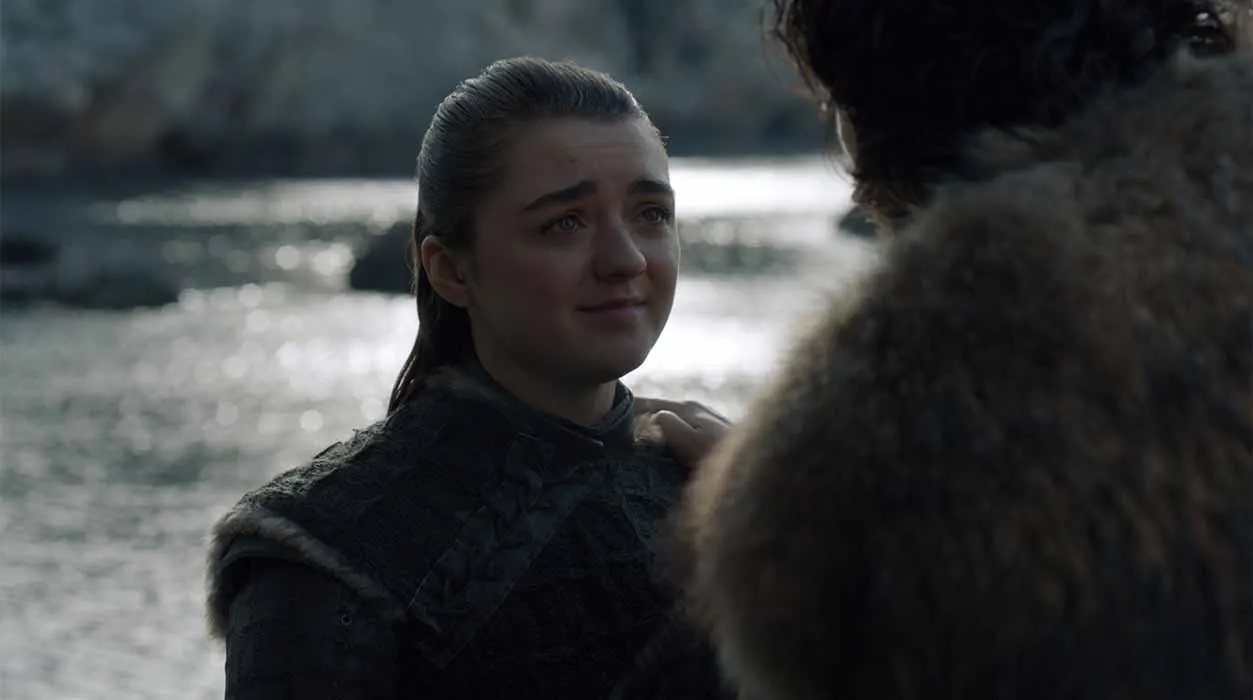
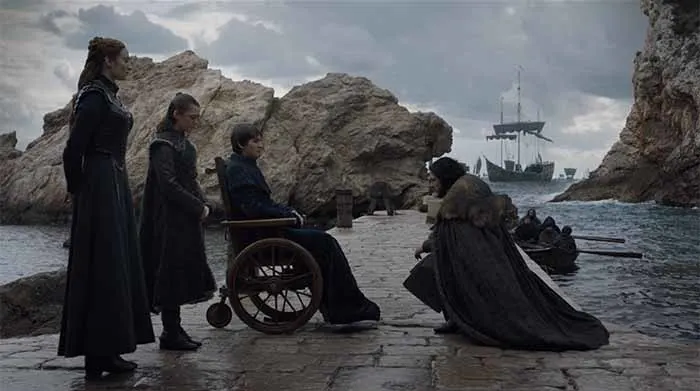
Jon shares some emotional farewells with his “siblings.” Jon’s goodbye with Arya is the biggest tear-jerker. He asks if she still has Needle. She does, of course. Arya says she plans to sail west of Westeros – beyond the edge of all the maps.
“Bye, fam.”“I’m really Jaqen H’ghar wearing Arya’s face, but I’ll miss you, Jon Snow.”“Bran, you are weird as hell. Good luck with everything.”
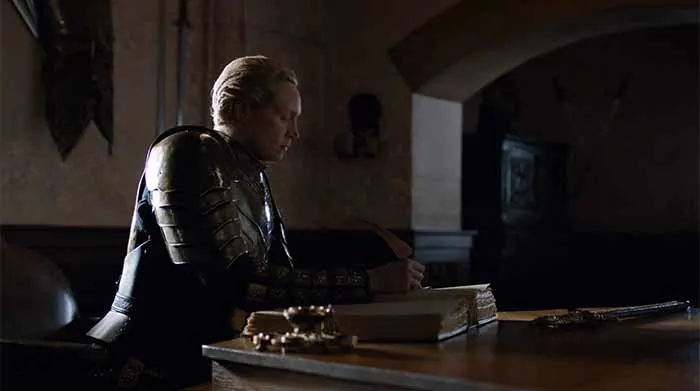
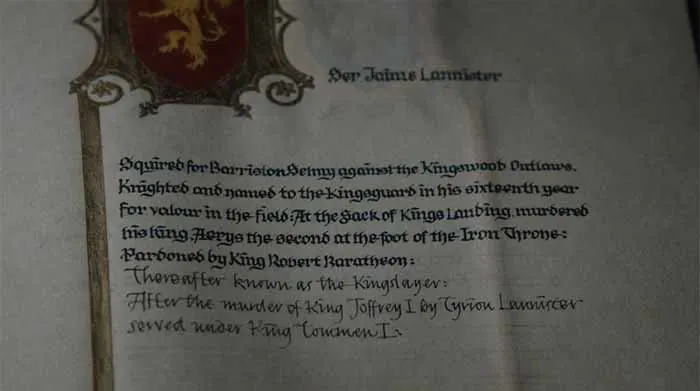
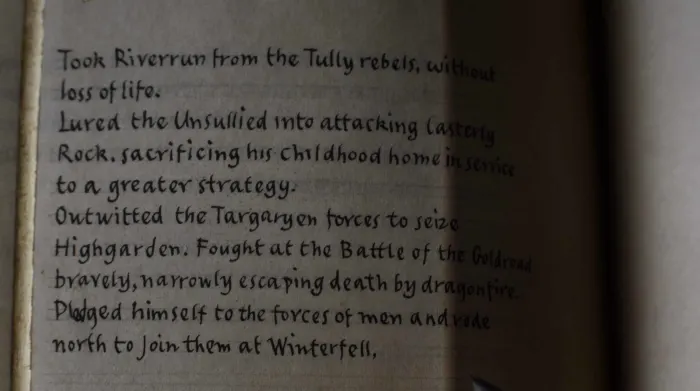
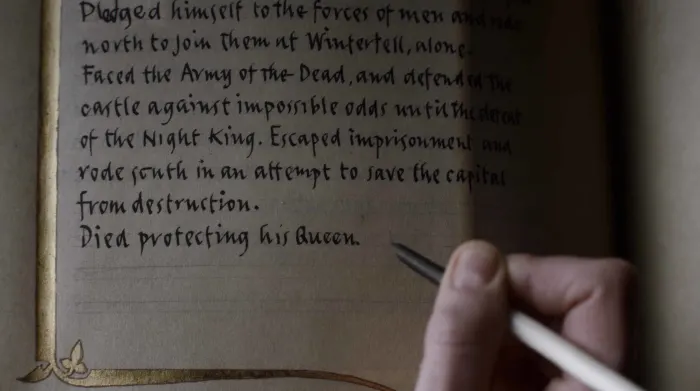
Brienne picks up a quill and opens the book about the Captains of the Kingsguard. She finishes Jaime’s story. He died “protecting his queen.” Never mind that the Jaime-Brienne sex scene added absolutely nothing to this show. Their relationship peaked when he knighted her. That, alone, would have been reason enough for Brienne to finish Jaime’s story with honor. Let’s all agree the sex scene never happened. It didn’t impact anything, so it might as well have been a horrible dream.
Who lives, who dies, who tells your story?
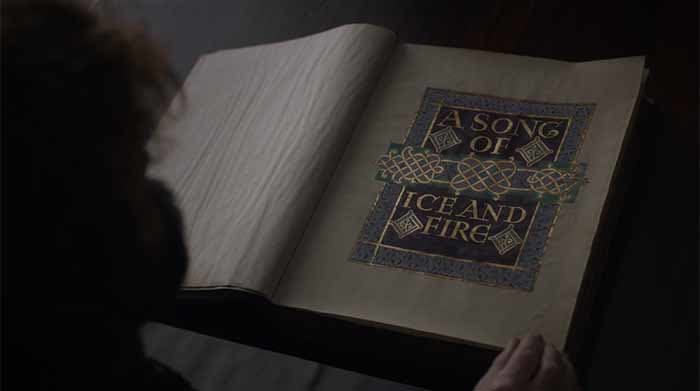
In the small council chamber, Tyrion prepares for their first meeting. Bronn shows up as the new Lord of Highgarden and Master of Coin. (Since he wasn’t at the vote, Highgarden must have been stuck with whatever the other lords decided.) Also, Bronn seems like a terrible choice for Master of Coin, but whatever. Lord Davos is now Master of Ships. Brienne appears to be Captain of the Kingsguard. Sam has become the Grand Maester. He shares “A Song of Ice and Fire” with Tyrion. Apparently, the Lannister got left out of Archmaester Ebrose’s epic history of the wars after Robert’s death.
(Record scratch) “You’re probably wondering how we got here.”
King Bran arrives at the small council meeting to note that they’re still shy one Master of Whispers, one Master of War, and one Master of Laws. Uh, isn’t Bran’s election supposed to end war? And why does the Three-Eyed Raven need a Master of Whispers. Have we seen any Masters of Laws in this entire show before now? What is happening? Doesn’t “King Bran” sound like a cereal aimed at constipated people?
Oh, Podrick is a knight now. So that’s nice.
“Podrick also votes for the brothels to be rebuilt.”
As the Small Council begins their meeting, the topic rolls around to brothels. Tyrion once again begins his joke about entering a brothel with a honeycomb and a jackass. This is the third time we’ve heard the beginning of the joke. We’ve never heard the punchline. It’s a nice callback for longtime fans.
As the camera pulls back from the Small Council, we see the map of Westeros with a big crack down the middle. Again, the director of photography doing some heavy metaphorical lifting.
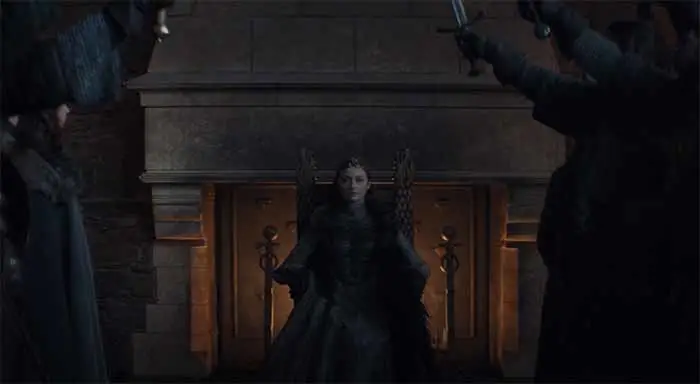
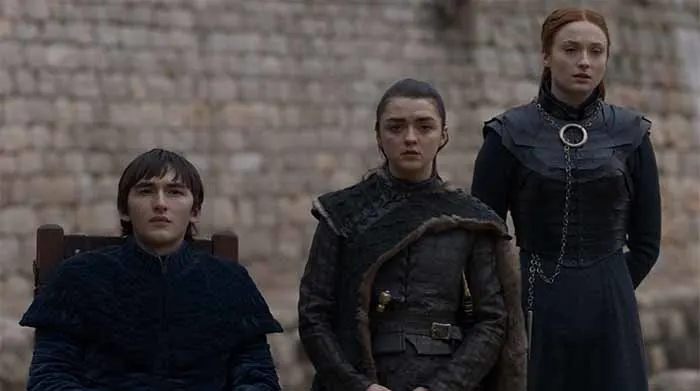
From King’s Landing, we cut between the remaining Stark siblings. Sansa is crowned Queen in the North – a fitting end for the iron-willed woman.
“Yasss qween.”
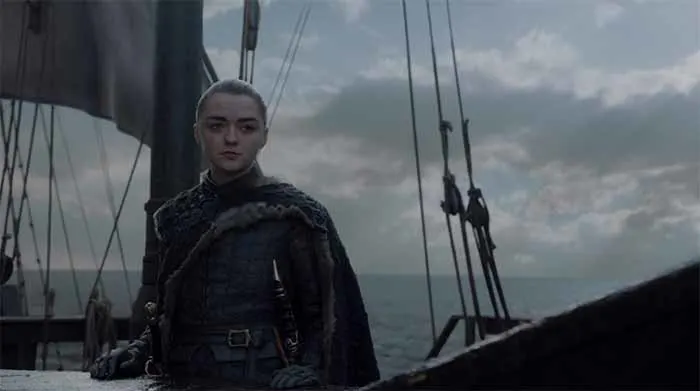
Arya is aboard a custom-made Stark ship, headed for parts unknown.
“I did nothing since killing the Night King, but thanks for watching!”
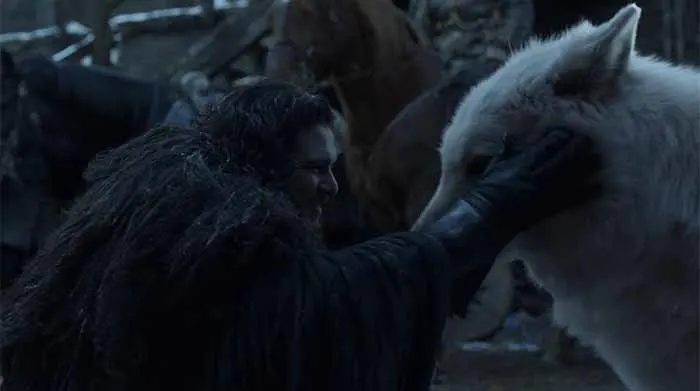
Jon is back at Castle Black, where he reunites with Tormund and finally pets Ghost. (Fans have been waiting forever for that moment.)
(Jon turns to the camera and says, “Happy now?”)
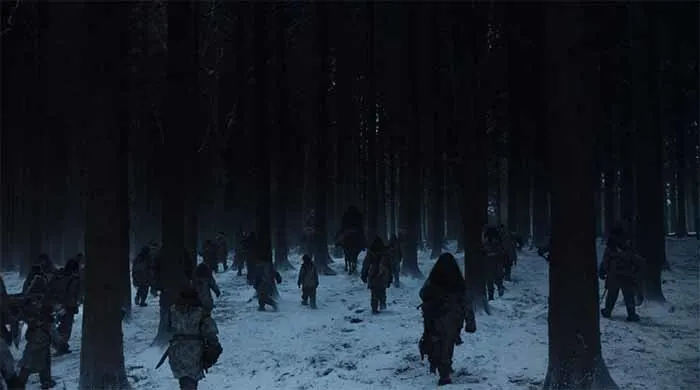
Instead of manning the Wall, Jon and all the wildlings open the gate and head north. The last shot of the series shows Jon and the freefolk disappearing into the woods.
The End.
So did this episode work? At times, yes. At times, no. You can’t fault the actors. They were uniformly good. The cinematography and music and special effects were top notch. The script had some moments of brilliance, but more than a few head-scratchers. If the story ends with Jon headed north as an exile, Daenerys dead, Sansa as the Queen in the North, and Arya off to adventure, we buy all of that.
The choice of Bland the Broken as king is a real weird development. If he was always the choice, you’d think they would have invested more time on his scenes. He basically has superpowers, but the show doesn’t seem to care. Also, didn’t he turn down his claim on Winterfell because he had Three-Eyed Ravening to do? But his schedule cleared up in time for him to rule the Six Kingdoms?
You know Bran is a bad choice because his own sisters don’t even bother with a goodbye scene to him. There’s no, “Gee, Mom and Dad would be so thrilled to see you on the throne,” or, “Rule well, little brother.” They make a big deal about Jon’s departure, but the Stark girls bounced out of King’s Landing without so much as an “atta boy” for their broken brother.
Yes, of these three stories, Bran’s seems the most interesting.
It seems clear that other than the dragons, David Benioff and D.B. Weiss didn’t care for the mystical elements of George R.R. Martin’s world. Characters would be alarmed by the White Walkers one episode, then forget about them for eight straight episodes in favor of mortal matters. The fact that an army of the dead was dispatched with three episodes remaining was incredibly anticlimactic.
The pacing of this entire season was a mess. Virtually nothing happened in the first episode. The second episode was a gem of a character study. The third episode was a nonsensical battle with some awesome visuals often obscured by darkness. The fourth episode showed all our characters being dumb for the sake of plot contrivance. The fifth episode was a one-note slog. And the finale tried to make up for wasting the Night King and Cersei by putting all its chips on the Dany-Jon murder kiss.
“Why did you just ask me to look at the rabbits?”
On the first watch through, this episode seemed fine enough. The Bran choice really stuck out as odd, but the images, music, and the performances really elevated the story. Upon a rewatch, however, it feels like the showrunners were gasping for air, having used up all their energy in an earlier sprint. This might be a good episode for most shows on television, but for an epic series like “Game of Thrones,” the story did not meet or surpass its previous highs. It felt like fan fiction.
Ramsay Bolton once told Theon, “If you think this has a happy ending, you haven’t been paying attention.” Well, we ended up with a mostly happy ending. So maybe Benioff and Weiss weren’t paying attention to their previous work.
We will miss “Game of Thrones.” At its best, it was unlike anything on television. And even in its worst moments, we kept rooting for those old thrills to return. And now our watch is ended.
After catching all sorts of hell for letting a Starbucks cup invade an episode this season, “Game of Thrones” botched things yet again in the series finale.
Eagle-eyed viewers noticed that Samwell Tarly snuck a plastic water bottle into Westeros.
Look near Sam’s left foot. Enhance!
See it? No? Enhance!
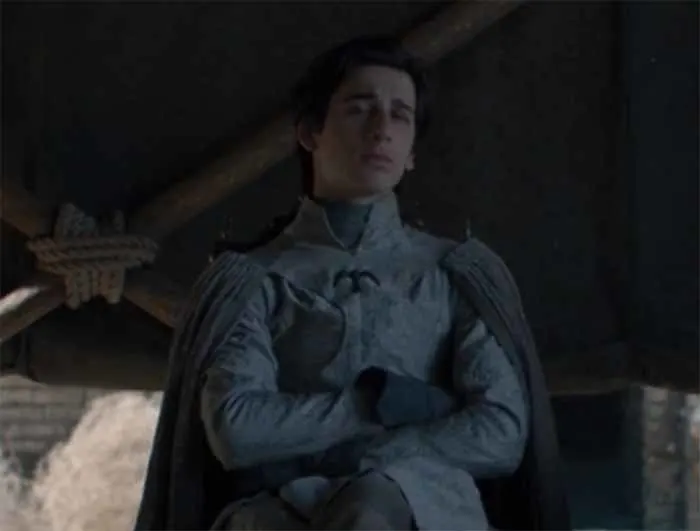
Not bright enough? Enhance!
Picking a new king is thirsty business. Congrats to Sam for staying hydrated.
The man running Marvel’s movie empire gives clues about the future of the films.
Yesterday, Marvel Studios president Kevin Feige visited Reddit to answer some questions from fans. His responses give us a closer look at the creative process of the films and where the superhero blockbusters might go from here. These are the biggest things we learned during that Q&A.
Captain America was always worthy
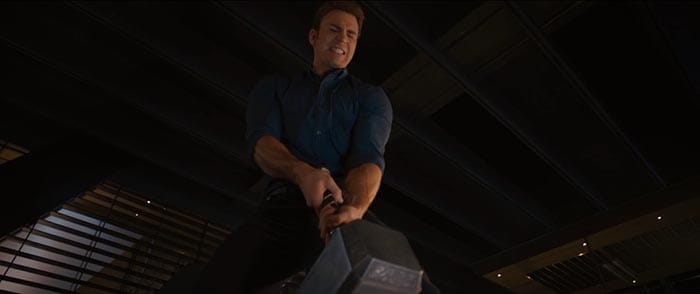
Remember the scene in “Age of Ultron” when everyone’s trying to lift Thor’s hammer? Steve Rogers manages to make it budge. Feige says he believes Cap was worthy then, but just being polite by not lifting Mjolnir at the time.
Hulk has been a notoriously problematic character for Marvel. After two actors, it seems they may have cracked the code with Mark Ruffalo. “Many years ago, Mark came in for a meeting with us at Marvel Studios to discuss ways in which the Hulk could grow and evolve in upcoming films. He pitched a lot of cool ideas, some of which led to what you saw in Thor: Ragnarok, Infinity War and Endgame, and some of which would still be cool to see someday.”
Hulk saved more lives than we saw in ‘Endgame’
Many fans calculated that the orignal Thanos snap probably killed far more people than those who got dusted. Imagine the supplemental deaths caused by the disappearance of air traffic controllers, pilots, drivers, and other people responsible for keeping us alive. When Hulk put on the gauntlet and re-snapped people into existence, did those people reappear at random? No, Feige says. “We refer to the version of Hulk in Endgame as Smart Hulk,” Feige wrote. Feige explains that Smart Hulk would take care to ensure that everyone affected by his snap would end up in a safe place. Good Hulk.
Stan Lee never saw ‘Endgame’
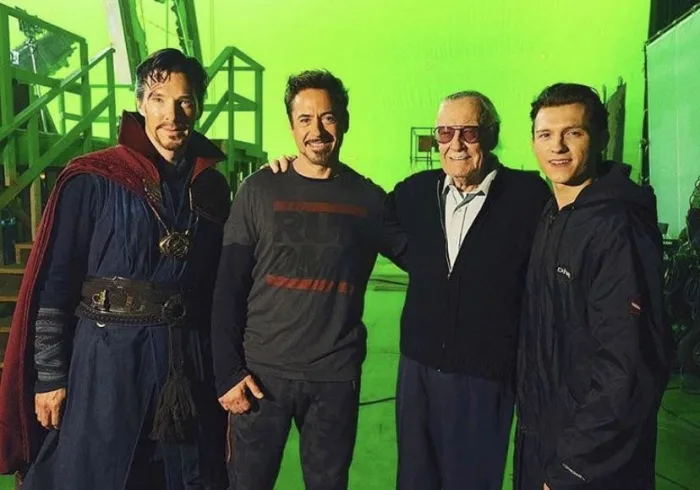
Boy, this hurts. The Marvel legend never got to see “Endgame” before he died. Feige explains, “Stan loved to wait to see the final movie at the premiere, so, unfortunately, he did not get to see the finished movie.” Feige did say that Marvel leadership did tell Stan the entire story on the day he showed up to film his cameo. We like to think he smiled when hearing that Captain America would finally tell the Avengers to assemble.
“We usually work with a specific 5 year plan at any given point but often have a general plan that extends much, much further.”
Planning for the Infinity Gauntlet series began after filming of the first Avengers film
“We started discussing how to adapt the Infinity Gauntlet comic soon after the release of the first Avengers. It was on one of our creative retreats about 5 years ago that we decided to do it as two films. We started to crack the specifics of the story during production on Civil War with Chris Markus and Stephen McFeely, Joe and Anthony Russo, in a conference room as we went back and forth between takes.”
The Disney+ shows will work with the MCU
When a franchise begins spinning off into books and comics and digital series and video games, things can get pretty messy. You know this if you read any of the Star Wars books produced between the original trilogy and the prequels. Fans argued about whether those books were canon. Starting with “Episode I” in 1999, many of the books became invalid. By the time “The Force Awakens” debuted, it made virtually all of those books irrelevant to the larger storyline.
Feige reports that the upcoming Disney+ Marvel shows will work “totally and completely” with the MCU.
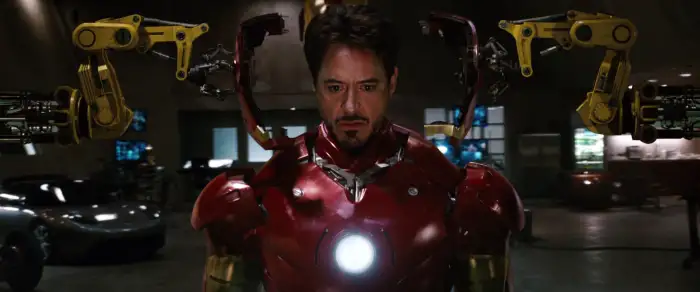
It’s easy to forget, but “Iron Man” was not a slam dunk success. Had that film failed, the entire MCU may not exist. There were two unconventional choices that ended up paying off in a big way: Jon Favreau and Robert Downey Jr. So why did they give Favreau the director’s chair? Feige wrote, “Jon Favreau is one of the best storytellers on the planet, and Elf is a stone cold classic.”
As for Tony Stark himself, Feige confirmed that Robert Downey Jr was his biggest casting fight with Disney. It seems crazy now, but you have to remember that at the time, RDJ was seen as radioactive after a string of drug-related legal problems. Had Feige not won that fight, the MCU would have been radically different.
What is Feige’s favorite DC film?
Interestingly, Feige didn’t choose one of the most recent DC films to answer this question. He says his favorite is the 1978 “Superman” with Christopher Reeve. Although the special effects are quite dated, the film features some excellent performances and moments that make the Man of Steel very human. It’s worth a watch if you’ve never seen it!
“Black Mirror” is coming back for another season on Netflix. The next round of the groundbreaking sci-fi anthology only features three episodes. Here’s the trailer!
If you’ve never seen “Black Mirror,” every episode features a different cast and a self-contained story set in the near-future. Characters often begin their stories with a slight problem that seems to be remedied by technology… until the technology backfires and leaves them far worse off. It’s darkly comic and often scary. The series’ most ambitious episode is an interactive thrill ride called “Bandersnatch,” where you control the actions of one of the characters with your remote control.
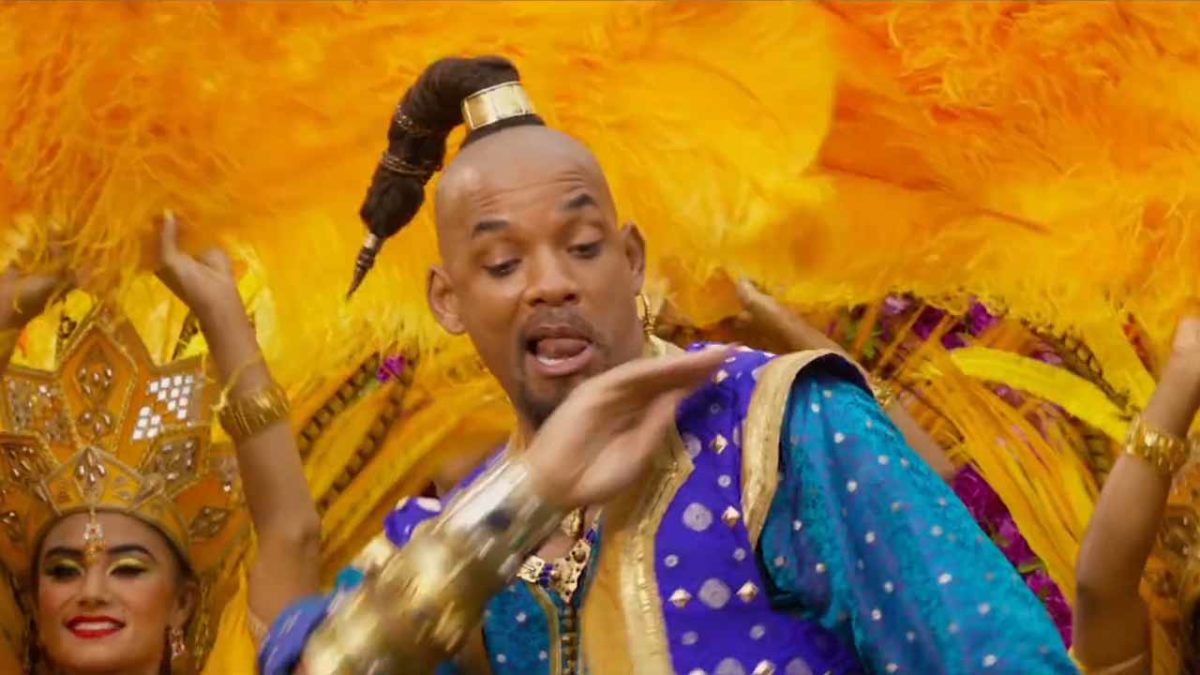
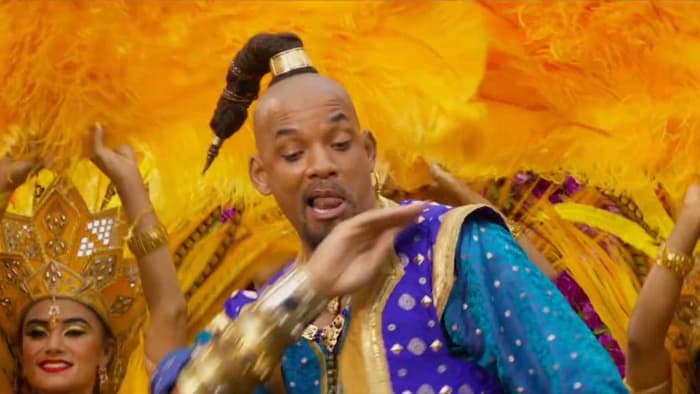
So this summer’s upcoming live-action “Aladdin” has been catching hell since the first terrifying shots of Will Smith’s genie character hit the internet. Today, we got more than a minute of this movie’s version of the song “Prince Ali.” Buckle up.
What is even going on here? As Vulture pointed out, the song is now sllloooooww. Refresh your memory of the original. It’s jaunty, it’s bombastic, it’s packed with life.
In contrast, the live-action version feels like a low-energy rehearsal for the real thing. Also weird: Smith’s trademark “ha ha” and “woo” and “uh-huh” ad-libs feel like something he’s doing just to kill time.
Also, why are we seeing ostriches during the “exotic-type mammals” line? Was no one even looking at the lyrics?
Disney’s live-action “Aladdin” arrives in theaters on May 24.
Here’s why you should wait for a TV show to end before naming your child after one of the characters.
In 2011, “Game of Thrones” debuted on HBO and the word “khaleesi” was uttered on national television for the first time. It’s the Dothraki word for “queen,” and a term of endearment and respect for Daenerys Targaryen, the then-child bride of Khal Drogo.
As the story followed Daenerys, we saw that she was much more than a victim. She was a survivor, a leader, a liberator, and a force to be reckoned with. These are all great qualities a parent might want associated with their daughter, so the name “Khaleesi” began appearing on the Social Security Administration’s list of Top 1,000 names.
Game of Thrones: Winter is Coming (official browser game)
Three years after the show debuted, 369 baby girls named “Khaleesi” were born. But more would follow…
2015: 341
2016: 373
2017: 467
2018: 560
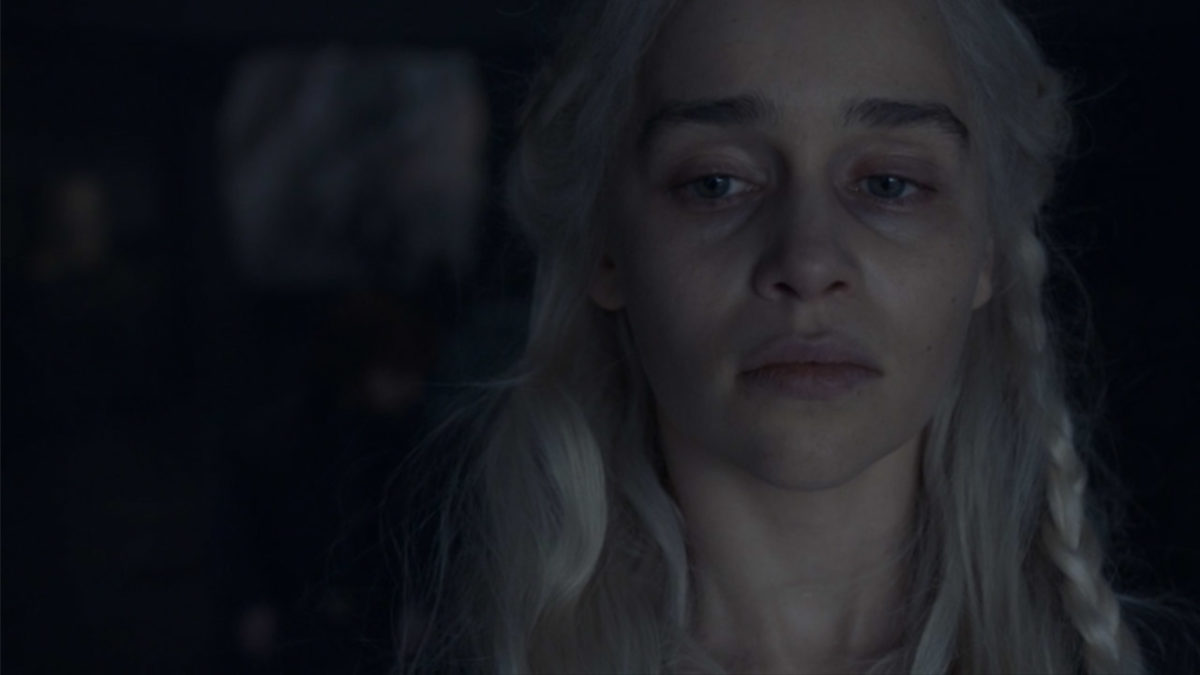
That’s right. Last year, “Khaleesi” was the 549th most popular girl name in the United States, beating out Hanna, Ivanna, Sasha, Marie, Gloria, and Anne. Kelly and Monica? Old news. All hail Khaleesi!
And it’s not like these Khaleesis, when applying for jobs, will be able to tell their future employers that they’re named after their great-aunt Khaleesi or the famous inventor, Khaleesi Mountbatten-Windsor. They are clearly and obviously named after a fictional crazy lady who boffed her nephew and burned people alive. And she could be even worse in the series finale.
Will Daenerys manage a last-second heroic turn for all those baby Khaleesis out there? Or will she somehow make things even harder for these girls? If the last episode was any indication, those 2,110 babies are in for a lifetime of deep sighs and resignation.
So there’s probably no way “Game of Thrones” could end in a way that would please everybody. It’s kind of like when you’d watch “Survivor” and your 10 favorite players are eliminated, so you’re left rooting for Backstabber #4 over Lazy Waste of Space #3. Too many exciting avenues have been closed for this show. The Night King is long dead. Cersei remained the only Big Bad. We’ve been on a collision course with something less than ideal for a while now.
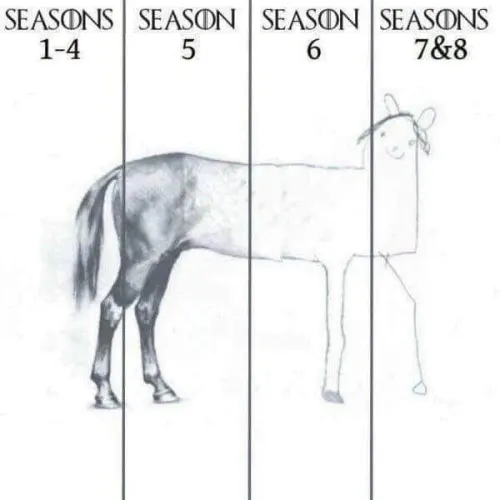
What made this show great was an array of intriguing characters, each with his or her own motivation. But now, all the characters are following straight lines as if there were a race to see who can get to their death scene first. This image, floating around the internet, pretty much sums up the show:
And the actors know what’s up, too.
In case you’ve forgotten how far this show has fallen, remember these highlights from Season 2:
Let’s run a little exercise. Let’s say you were the writer of this episode and you were instructed that the only major things that needed to happen are that Daenerys needs to go all Mad Queen and the Good Guys need to realize they backed the wrong horse. First, there’s no reason for the first 30 minutes of this episode. Dany was at the gates of King’s Landing at the end of the last episode. She could have mounted Drogon and torched the city right away. And if you were going to write an episode where that happened, you might include a few moments for the characters to talk about what’s happening. Maybe Tyrion could have devised a way to try to stop her. Maybe Jon could have tried to signal her. Maybe Jon could have commanded his army to fall back after the Lannister surrender, possibly even having to fight the Unsullied for direction of the battle.
Instead, the last hour(!) is basically just Dany burning King’s Landing to the ground unimpeded. Did Jaime and Cersei really die this way? If so, lame! Did the Cleganebowl really justify the hype? No!
Game of Thrones: Winter is Coming (official browser game)
Again, think back to when The Mountain fought Oberyn Martell. Although that was a fight scene, there were the added stakes of having Tyrion’s life on the line. The Cleganebowl was just two people fighting. It would be easy to add tension if literally anything else was at stake. Maybe defeating The Mountain would save Arya or allow Jon to get to the top of the Red Keep to flag down Dany. Instead, it’s just two guys fighting. And that’s the difference between the early seasons and whatever is happening in Season 8.
But we can complain about what might have been for hours. Instead, we must deal with what is. So here’s what happened in “The Bells.”
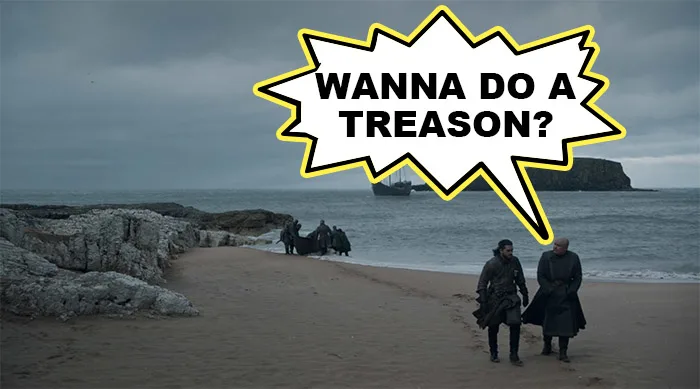
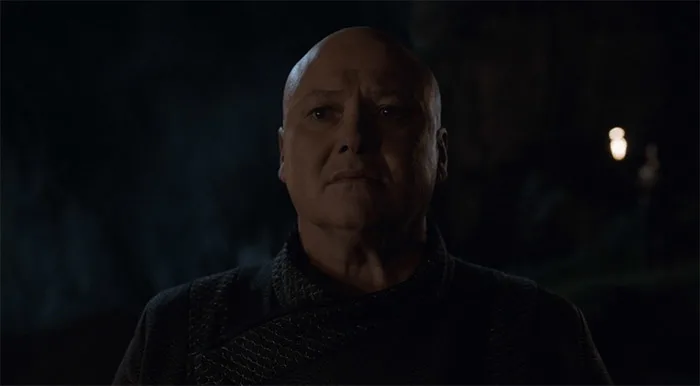
We begin with Varys, Master of Whispers, writing a scroll about how Jon is the true heir to the Iron Throne. Jon arrives and Varys becomes Master of Yells, as he stands on a beach and says his treason plans out loud. Jon says thanks, but no thanks. Tyrion, fully aware of Dany’s lack of mercy and reason, tells her about Varys anyway.
“Do I look sufficiently crazy yet?”
Varys knows what’s up. The Unsullied show up and drag him off for execution. Everyone shrugs and Drogon lights him up.
“Ah, my clever plot was undone by my loud stupidity.”“I feel like I had something to do with this.”
Daenerys hands Grey Worm Missandei’s collar and he chucks it in the fire. Jon walks in and Dany tries to put the moves on him. Jon demures and Dany is frustrated.
Tyrion tries to talk Dany out of her plan. If Cersei surrenders, he hopes Dany will pull back. As we are reminded at least four times in this episode, “If you hear the bells, that means surrender. Please stop murdering.” Dany tells Tyrion they’ve captured Jaime.
Tyrion visits Jaime in chains. Not to harp on the deteriorated writing of the series again, but remember back to when Jaime visited a condemned Tyrion in his cell:
That scene takes less than six minutes, but gives us a window into both men and their view of the world. There are no such scenes in “The Bells,” but there are plenty of scenes of beetle smashing.
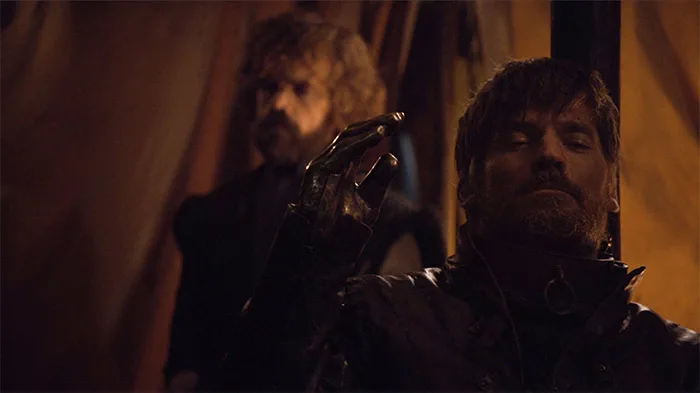
Jaime and Tyrion share a very blunt conversation. Tyrion thanks Jaime for being a solid older brother, then sets him free. Tyrion urges Jaime to convince Cersei to flee King’s Landing. If that happens, he helpfully reminds Jaime to ring the bells on his way out.
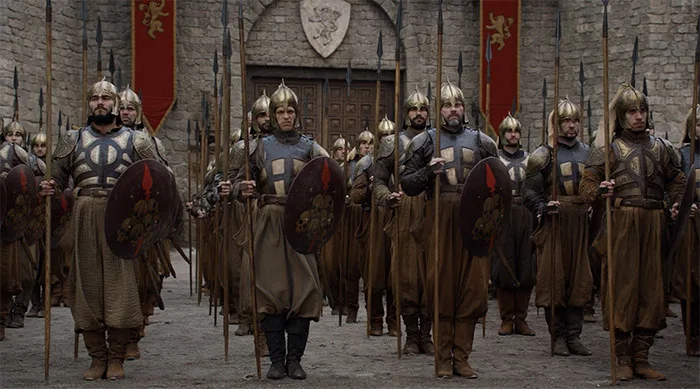
At King’s Landing, Dany is ready to throw down. She and Drogon wipe out the Iron Fleet with zero problems. (Despite the fact that every giant crossbow on water and land are aimed at the dragon, no one can hit Drogon this week.) The dragon also destroys the Golden Company without effort.
The pointless Golden Company and their high-waisted pants.
Before long, the Lannisters throw down their swords. The bells sound. The war is over. Daenerys rules with a firm, but just hand.
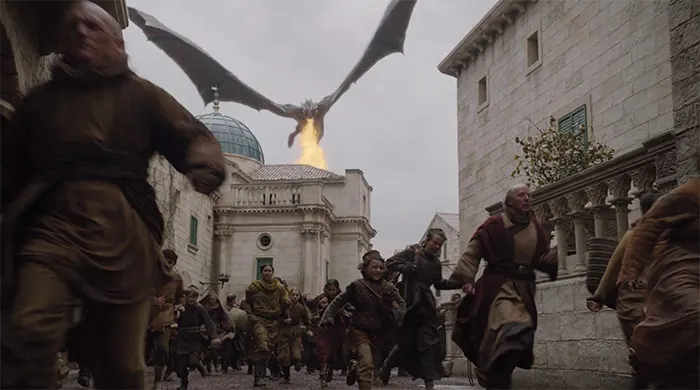
JK. Dany goes on a murder spree, deliberately torching the innocent men, women, and children of King’s Landing. This is suddenly in character because the writers committed to six episodes and a heel turn without any idea how they were going to set that up or pull it off.
“This must by the mhysa we’ve heard so much about…”“Hi. I’m Daenerys. I’ll be your liberator.”
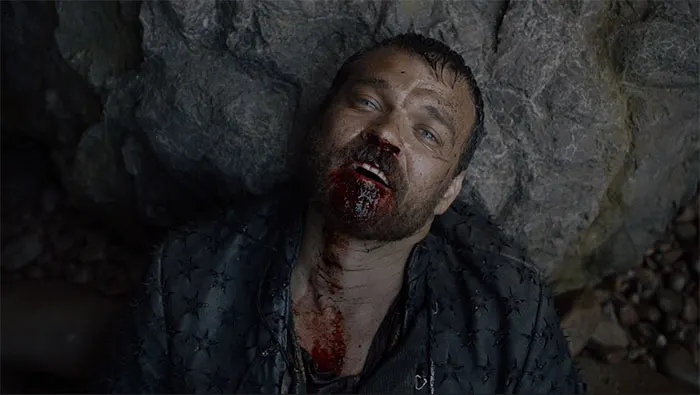
While Daenerys incinerates nearly a million people for no reason, Euron Greyjoy emerges from the water to stab Jaime in the sides a few times. Jaime shakes it off and kills Euron, but not before Euron announces to no one in particular, “I’m the man who killed Jaime Lannister!” The delivery of that line made it seem Euron was waiting for the laugh track to kick in. It was weird and unnecessary. Had Euron died aboard his boat, it wouldn’t have affected Jaime’s story at all.
“I AM BELOVED FOR MY SNAPPY DIALOGUE.”
As Arya and The Hound close in on the Queen, The Hound realizes this is all going to end badly. For the first time in a long time, Arya looks scared. The Hound convinces Arya to flee. “Sandor, thank you,” she says.
A moment of vulnerability.
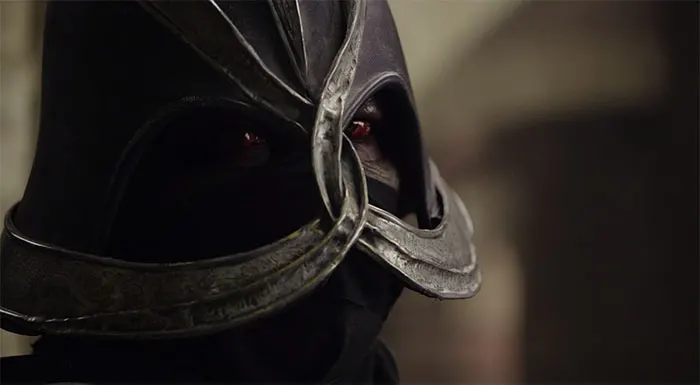
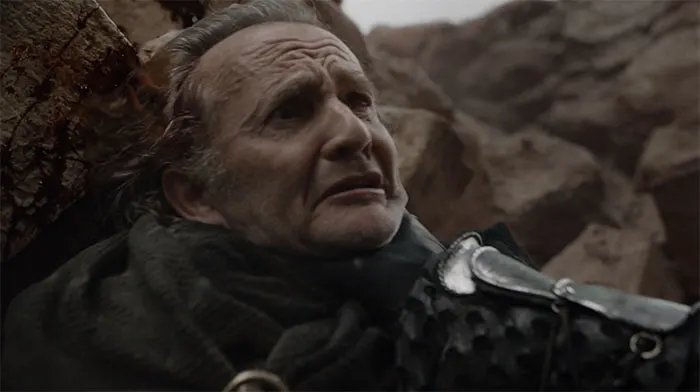
The Hound finally arrives at Cleganebowl. He faces down his undead older brother as The Mountain was escorting Cersei and Qyburn to safety. Cersei asks The Mountain not to fight. Qyburn commands it. But The Mountain is here to battle his brother. He smashes Qyburn against a rock. Cersei skitters down the stairs. It’s on.
“Grrrrr.”“Oh dear.”
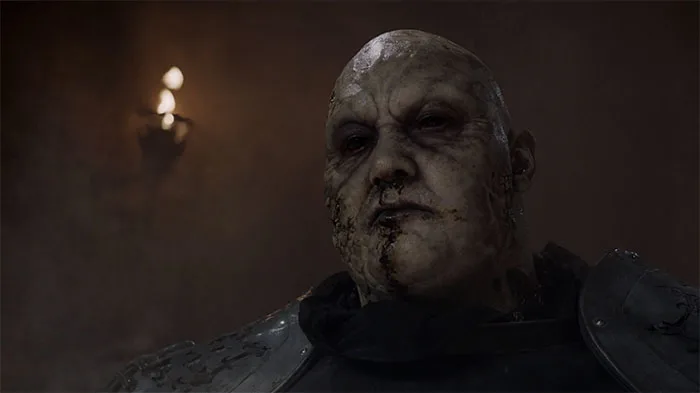
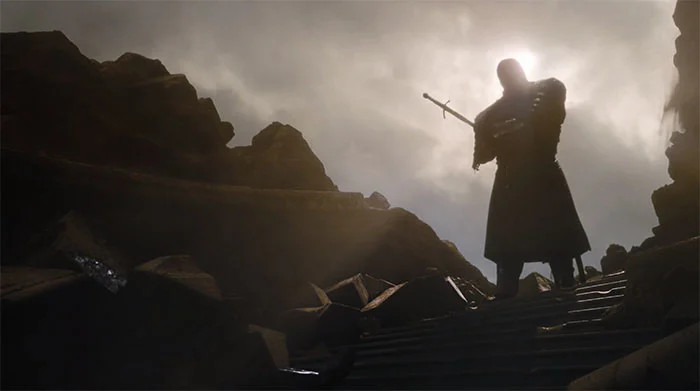
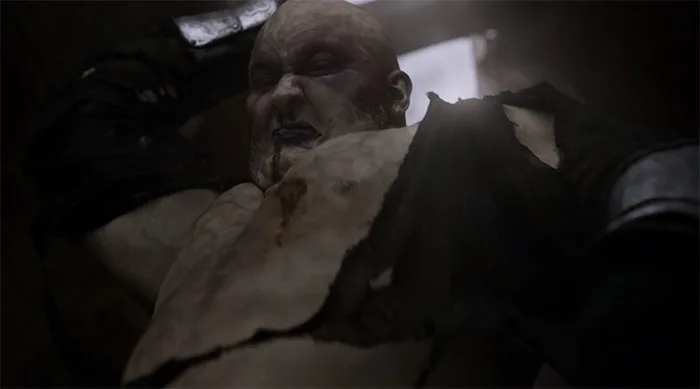
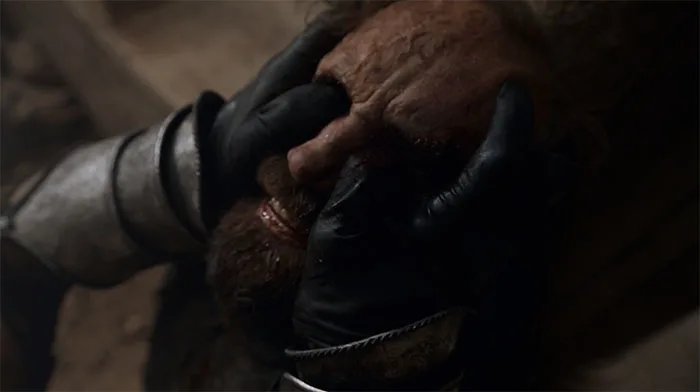
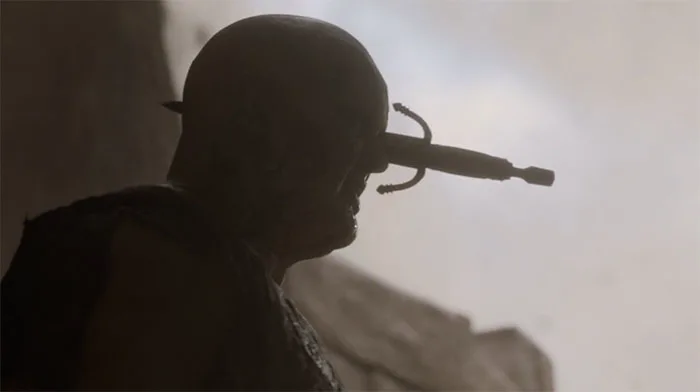
The Hound stabs The Mountain several dozen times, including once through the torso. It doesn’t work. The Mountain tries gouging out The Hound’s eyes. The Hound stabs him in the face.
Uncle Fester, no!
This fight is going nowhere, so The Hound tackles his brother and they crash through a wall, presumably to their deaths.
Cleganebowl Intermission
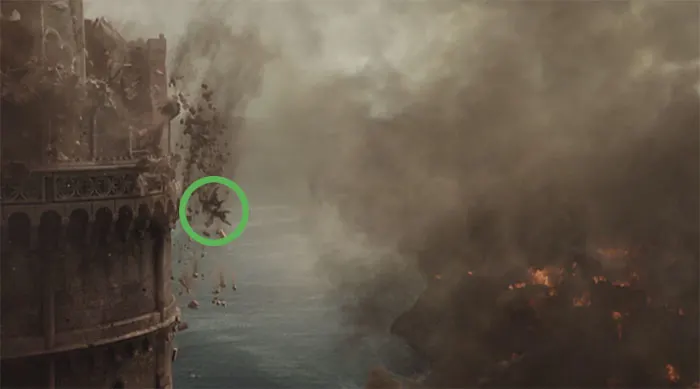
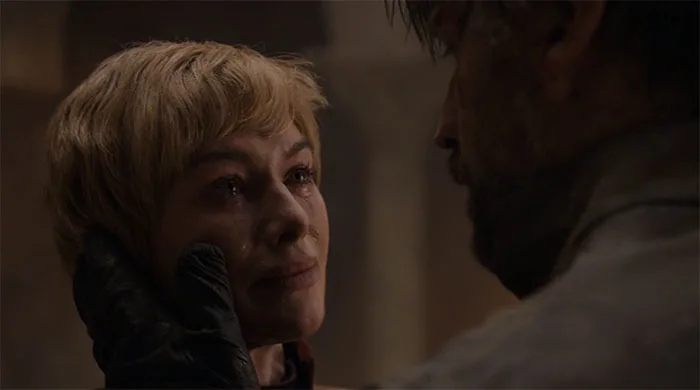
Jaime meets up with Cersei and they hustle down to the place where the old dragon skulls were kept. The way is blocked. So they stand there and die when rubble falls on them. It’s extremely unsatisfying. There’s a reason people placed money on someone actually killing Cersei. Instead, the assassin is really “a bunch of rocks and gravity.”
“Eight seasons and this is how we go out?”
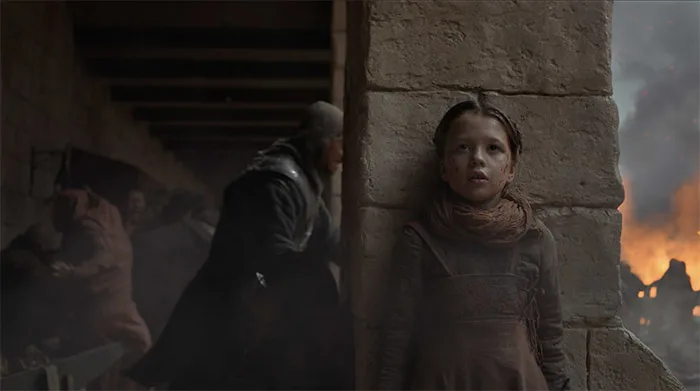
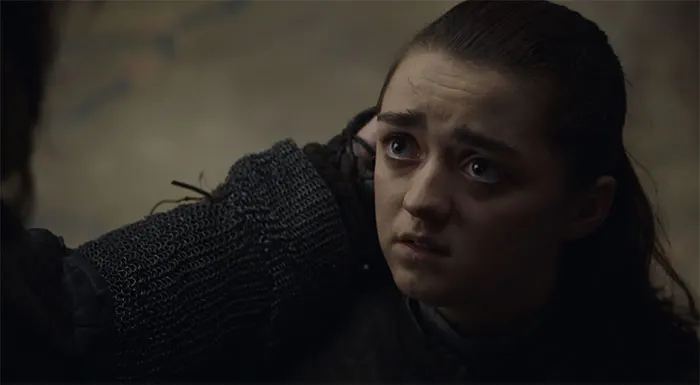
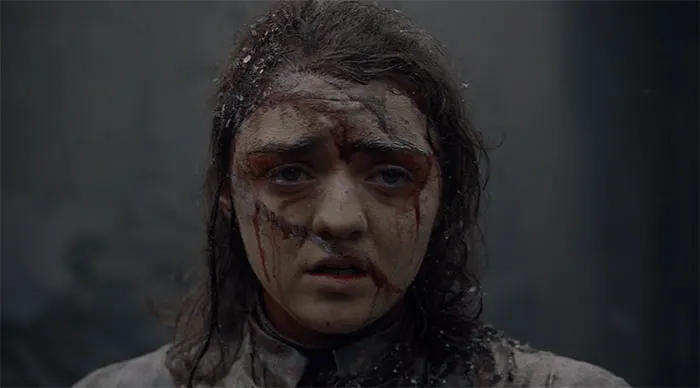
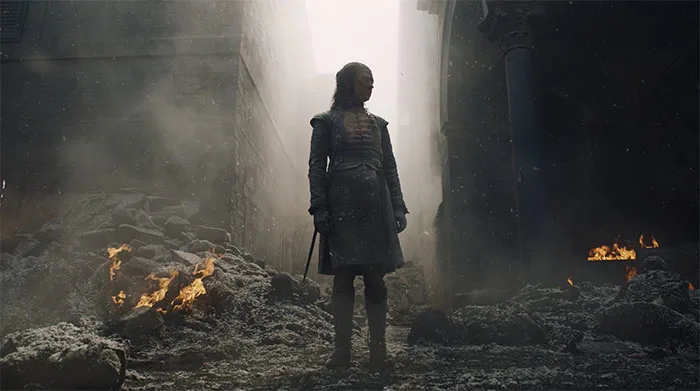
Arya spends the rest of the episode stumbling through King’s Landing as it disintegrates around her. She’s unable to save a mother and her daughter. Then a horse shows up and Arya spends an inordinately long time looking at it. She jumps on and rides off and the episode ends.
This is how we all feel, girl.Arya, surrounded by the wreckage of this season.
While this episode was technically well executed, the result left us feeling empty. The deaths for Qyburn, The Mountain, and The Hound were fitting, but Varys, Jaime, and Cersei deserved something more memorable. This episode’s events meant that last week’s tryst with Brienne was ultimately a pointless narrative u-turn. Nearly every development in this episode could have been played for greater emotional stakes. It’s this sense of tremendous missed opportunity that leaves us feeling colder than the Fist of the First Men.
Final score: 1 out of 4 stars
So what happens in the finale? Does it matter? This show is now so far from its origins, we’re setting our expectations very, very low. Gone are the intriguing conversations, political machinations, and strong rivalries. We’re probably in for something dumb and violent, like a moron smashing some beetles. We do hope we’re wrong.







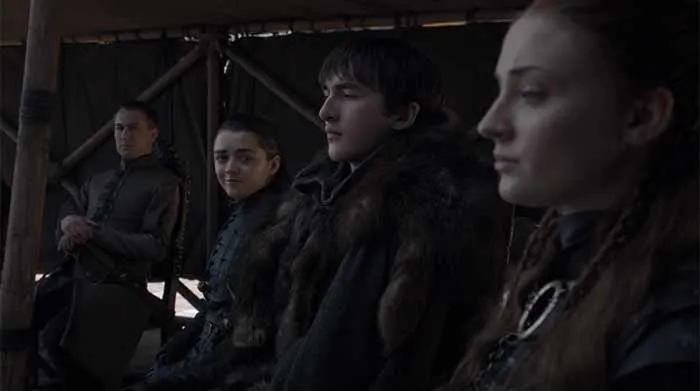
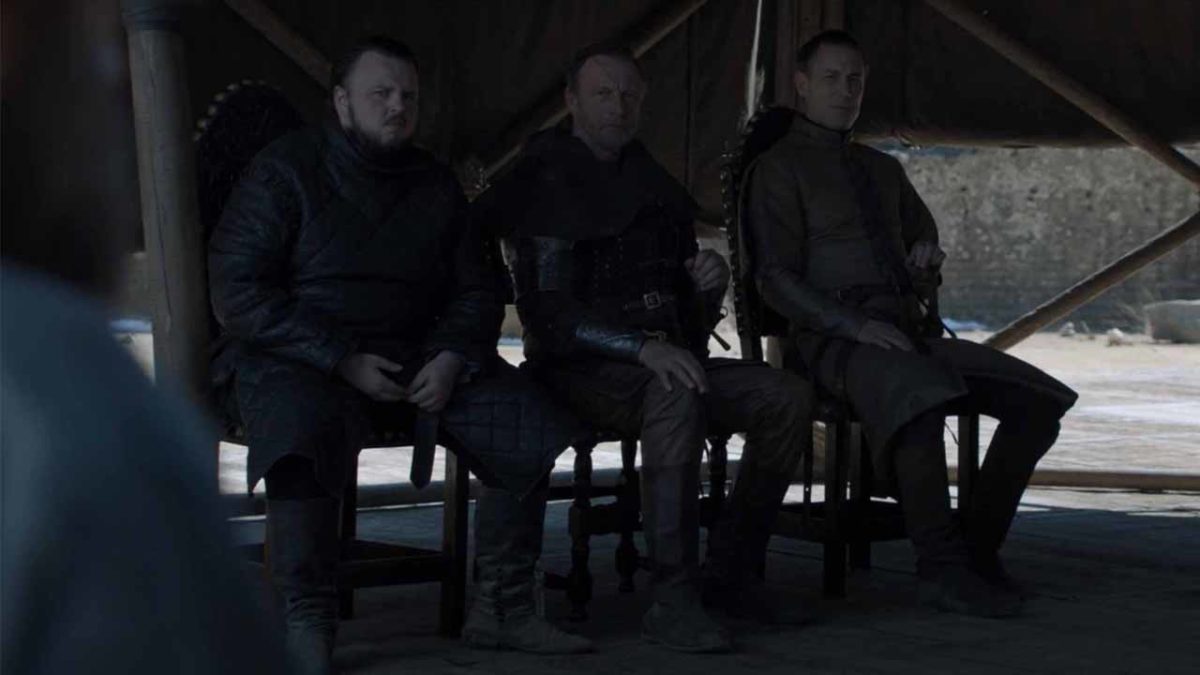
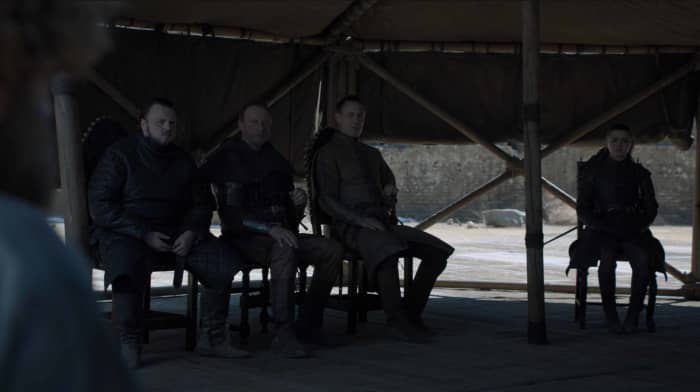 Look near Sam’s left foot. Enhance!
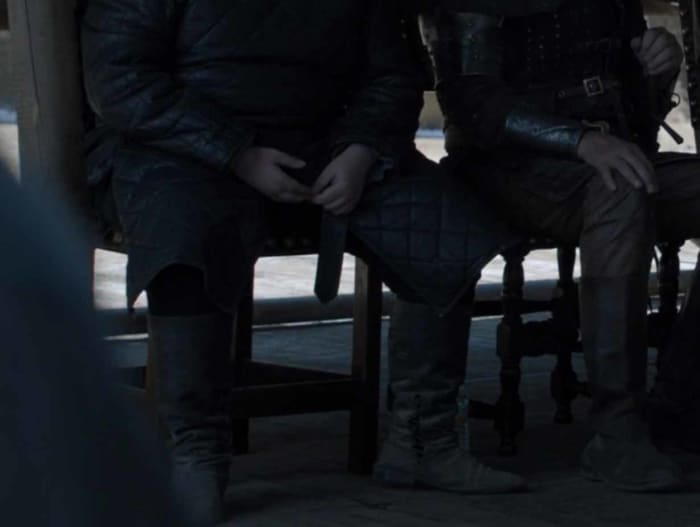 See it? No? Enhance!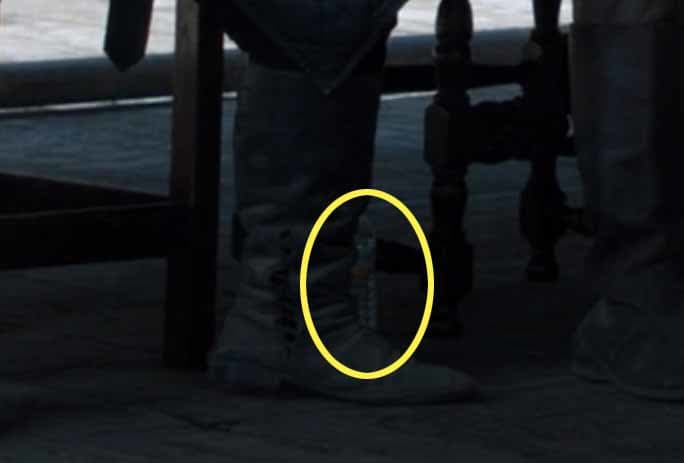

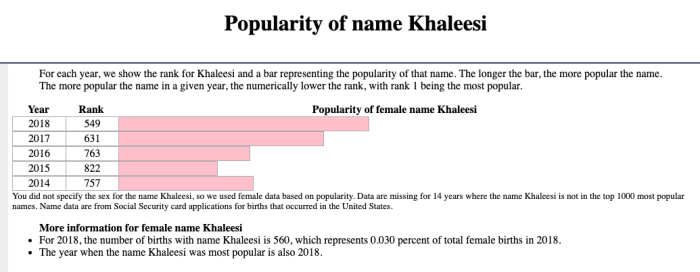 That’s right. Last year, “Khaleesi” was the 549th most popular girl name in the United States, beating out Hanna, Ivanna, Sasha, Marie, Gloria, and Anne. Kelly and Monica? Old news. All hail Khaleesi!