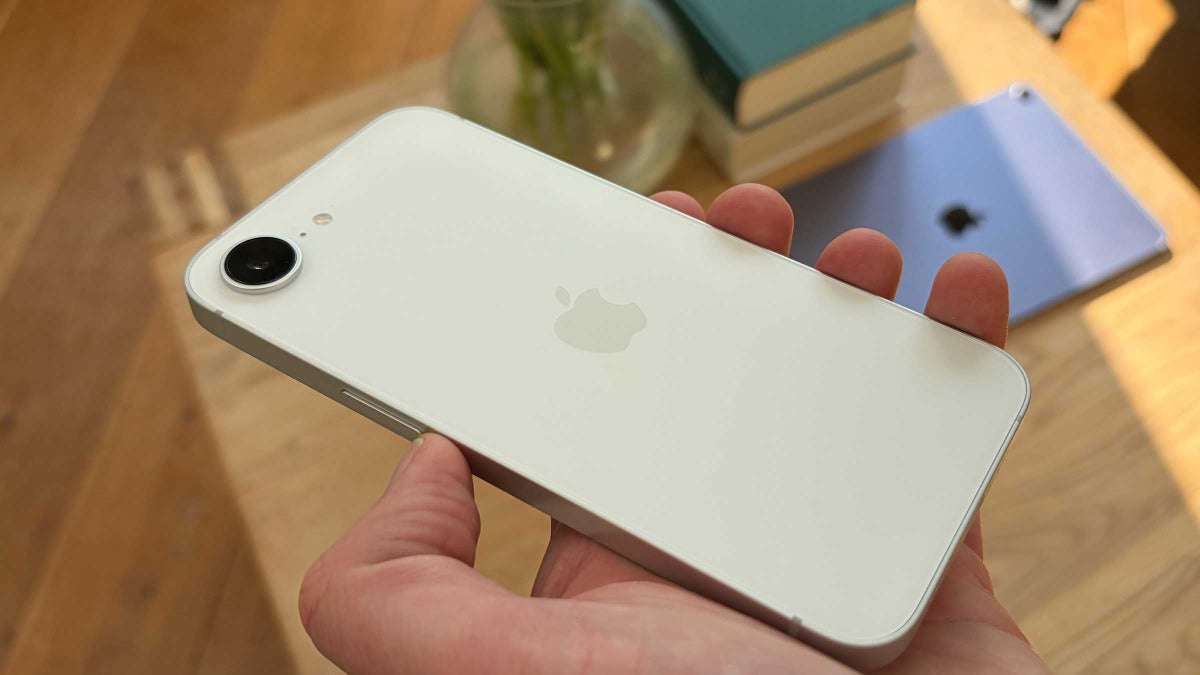
Apple iPhone 18 Pro, Watch Series 12 and AirPods 5 now available worldwide

Apple’s new lineup is officially in stores worldwide as of today, September 18. The iPhone 18 Pro and iPhone 18 Pro Max, Apple Watch Series 12, Apple Watch Ultra 4, and AirPods 5 all go on sale just over a week after Apple introduced them on September 9, and early buyers are already reporting long lines in some places.

Apple Store Download

The iPhone 18 Pro is the main draw here. It comes with the A20 Pro chip, a main camera with variable aperture, and a smaller Dynamic Island. Apple also says 40% faster graphics performance is up to 40% faster this time around. The catch is the price: in the US, the starting price is now $1,199. If battery life matters more, the iPhone 18 Pro Max may be the better pick, with Apple rating it for up to 45 hours of video playback.

On the wearable side, the Apple Watch Series 12 keeps its $399 starting price and adds the S11 chip, along with what Apple says are more frequent heart-rate checks. The Apple Watch Ultra 4 also gets the S11 chip, and Apple says it can reach up to 50 hours of battery life. AirPods 5 start at $129 and include ANC plus IP57 protection.

If you’re already planning to buy new Apple hardware, this batch looks appealing. Still, the rollout hasn’t been spotless. Users in the US, UK, and Canada have reported pre-order payment failures after September 12, and there are already scattered complaints about battery drain and overheating.

You can buy the devices in stores or online, with Apple Trade In, financing, upgrade plans, carrier deals, and Personal Setup all available. Apple is moving ahead with the launch under CEO John Ternus, while reports continue to point to October for the foldable iPhone Duo.
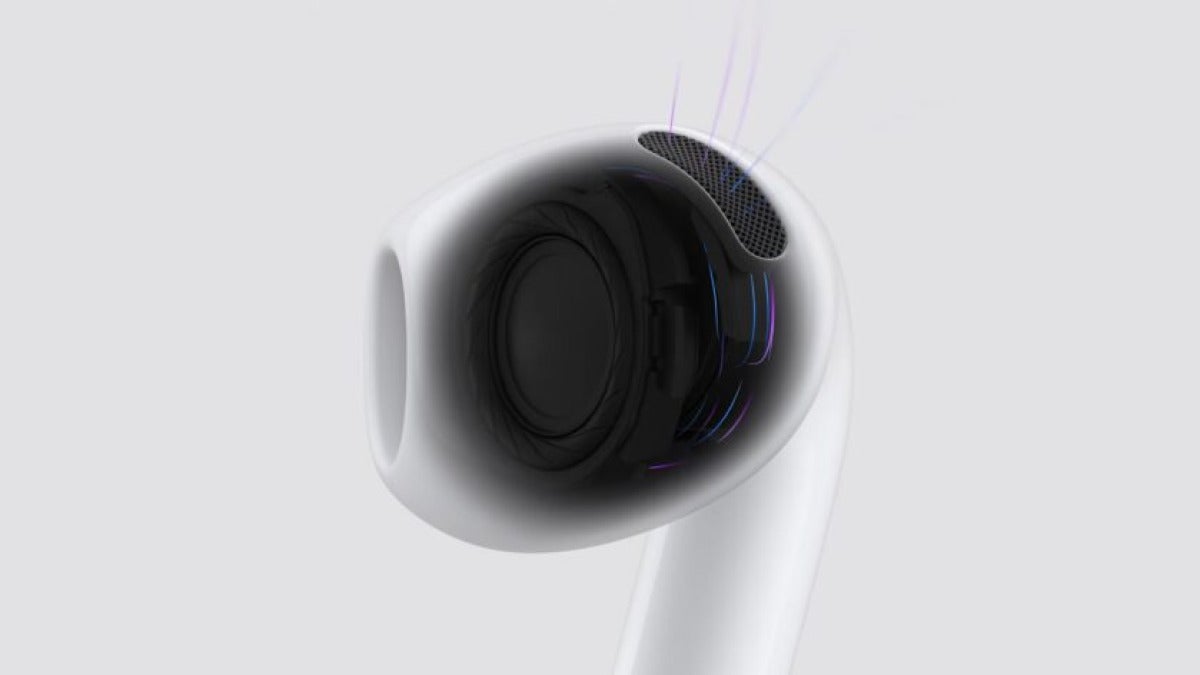

Apple, Samsung and Google now face US patent probe: AirPods, phones and TVs could be hit

The US International Trade Commission has opened Section 337 investigation 337-TA-1521 into Samsung, Apple, and Google after BoomCloud 360 filed a complaint on August 14, 2026. That moves BoomCloud 360’s spatial-audio patent dispute into a trade case that could touch phones, tablets, wireless earbuds including Apple’s AirPods, and TVs sold in the US.

Dolby Access Download

In its August 14, 2026 complaint, along with a supplemental filing from August 31, 2026, BoomCloud 360 asks the USITC for a Limited Exclusion Order and cease-and-desist orders. If it wins, some affected products could be barred from import into the US, and even certain domestic sales of inventory already here could be limited.

BoomCloud 360 says the three patents cover gain adjustment between spatial and non-spatial audio, compensation for speaker asymmetries, and crosstalk processing with spectral-defect correction.

This doesn’t mean a ban is around the corner. Opening an investigation is just the procedural starting point. A USITC administrative law judge still has to sort through the claims, the evidence, and the defenses before there’s any final ruling.

If you keep an eye on premium consumer tech, this one is worth following. Apple and Google filed declaratory judgment suits in August 2026, and Samsung did the same on September 3, 2026, according to the related federal filings. The USITC tends to move faster, which can raise the pressure. For now, the devices are still on sale, and you can follow the case through the USITC docket and the related federal filings.

Bolt and Lucid announce 25,000 robotaxis for Europe

Bolt said today that it’s teaming up with Lucid on a robotaxi push meant to put at least 25,000 autonomous ride-hailing vehicles on the streets of European cities.

The plan, Bolt says, is to own and run the fleet itself. Longer term, it’s talking about 100,000 vehicles by 2035, built around ADS-ready SAE Level 4 cars that combine Bolt’s operating data, Lucid’s software-defined platform, and NVIDIA Hyperion. Bolt also expects to have a much bigger hand in the product itself: requirements, software, safety, rider experience, charging, maintenance, mapping, customer support, and city partnerships all fall into that picture.

For anyone who follows autonomous mobility in Europe, this one stands out. Europe is a harder place to crack than the US or China: older streets, denser cities, rain, and a patchwork of rules all make deployment tougher. Even so, forecasts still put the market at $661 million in 2025 and $5.53 billion by 2035. Waymo is aiming for Germany by the end of 2027, and Uber and Pony.ai are already moving.

What you can’t do yet is book one of these rides. Bolt and Lucid still haven’t named the first launch cities or given a commercial timeline. Bolt’s announcement frames the deal as a strategic partnership, not a firm vehicle order, and the usual questions around safety, oversight, and crash investigations haven’t gone away. Still, Bolt is making one thing pretty clear: Europe is no longer being treated as a secondary market in the robotaxi race.

Samsung Gallery now adds Google Photos backup for Galaxy users

Samsung Gallery just got bumped to version 15.9.01.7, and with Gallery Cloud Sync 1.6.09.31 it finally brings Google Photos backup to Galaxy users. On supported Galaxy devices, you can turn on Google Photos backup right from Samsung Gallery as Samsung starts phasing out OneDrive sync, which ends on September 30, 2026. The rollout is expected to start around October 1.

OneDrive Download

To set it up, go to Menu > Settings, turn on “Sync photos and videos,” connect Google Photos, and back up straight from Samsung Gallery.

This will appeal to people who like Samsung Gallery but use Google Photos for cloud storage. Just don’t read it as a full Google Photos replacement. Samsung Gallery can upload your photos and videos, but it still won’t let you browse your Google Photos library inside the app. And if you only upload through Samsung Gallery, some Google Photos features, like Memories, Highlights, and search, may not fully pick up that content unless you’re also using the Google Photos app.

A couple of practical catches come with it. Uploads will count against your Google Account storage, and edits made in either Samsung Gallery or Google Photos should sync across both apps.

If you’re setting this up from scratch, keep an eye out for overlap or duplicate uploads. Xiaomi, OnePlus, and OPPO added similar integrations in 2024, so Samsung is arriving late here, even if the change lines up with its broader partnership with Google.

You can get the Samsung Gallery update through the Samsung Gallery app on supported Galaxy devices as the rollout spreads.

Google Photos Download

YouTube on Android is showing a playback bug: watch-next hides controls

Since at least April, the YouTube app on Android has been showing a strange playback bug for some people, based on reports from users on Reddit and Google’s community forums. In full-screen mode, the “watch next” recommendations can end up sitting on top of the bottom part of the player. When that happens on a phone or tablet, the progress bar, pause button, and other playback controls can disappear, which makes scrubbing through a video or making quick adjustments a lot more annoying than it should be.

YouTube Download

Those same Reddit threads and Google forum posts suggest the issue has been around since at least April. Because it can show up in one session and vanish in the next, and because people have seen it vary by device, app build, and region, it’s still hard to pin down what’s actually causing it. Right now, there’s no clear way to tell whether it’s tied to your Google account, your hardware, or some server-side interface test. Google and YouTube also haven’t publicly said anything about it.

If you use YouTube on Android a lot, keep an eye on this one.

YouTube’s public known-issues pages don’t mention the bug, even though those same pages do list other Android app problems, including picture-in-picture issues and sign-in bugs. The workaround people mention most often is pretty simple: tap one of the suggested videos, then use the back button or the previous-video arrow to go back. That can bring the normal player view back. Clearing the cache or resetting app data has helped in some cases, but results have been mixed.

You can still download the current YouTube app for Android from Google Play, but there’s no official fix yet.

GM brings CarPlay back to the 2027 Silverado and Sierra

General Motors says Apple CarPlay and Android Auto are coming back for the 2027 Chevrolet Silverado and GMC Sierra. That’s a reversal from the company’s 2023 plan to phase both smartphone projection systems out of future EVs.

Android Auto Download

On these trucks, CarPlay and Android Auto won’t take over the entire center display. They’ll sit in a dedicated window next to GM’s own apps and vehicle controls, so navigation, music, or messages can stay in view while climate settings, trailering data, camera feeds, and vehicle status are still right there too. Less menu-hopping.

It’s hard to read that as anything other than a response to demand. The numbers are pretty blunt: 55% of Apple CarPlay users see its absence as a dealbreaker, 83% of drivers who have Apple CarPlay or Android Auto use those systems, and 42% of General Motors owners say they could look at another brand if those features aren’t included. That’s happening while GM keeps backing its Google-based native software in many EVs, and while touchscreen-heavy interiors are getting more scrutiny in Europe and China.

If you use Apple CarPlay or Android Auto all the time, their return matters , even in GM’s more controlled split-screen version.

For now, the new setup is headed to the 2027 Chevrolet Silverado and GMC Sierra. GM hasn’t said whether it’ll expand past those trucks or show up more broadly across the rest of the lineup.

Apple’s 2027 iPhone prices may rise again: memory costs climb

New supply-chain reporting has changed the outlook for Apple’s 2027 iPhone pricing. The big reason is memory: Samsung’s costs are heading up, and that adds another layer of pressure to whatever Apple ends up charging for its 2027 iPhones.

According to those supply-chain reports, Apple has accepted Q1 2027 pricing of $2.00 per Gb for DRAM and $0.33 per Gb for NAND. That’s roughly 30% to 40% above current levels, with DRAM climbing from about $1.50. Put plainly, there’s more upward pressure on 2027 iPhone prices, even for something like a possible iPhone 18e. And it comes right after this year’s increases, when Apple Macs and Apple iPads went up by at least $100, at least one Apple device jumped by $1,300, Apple iPhones rose by $100 to $500, and the iPhone Duo landed at $1,999.

If you’re planning an upgrade, keep an eye on this. Datacenter and server demand is pulling supply away from phones. Memory demand is expected to grow 36.2%, while supply growth is projected at 19.3%. Shortages could stretch through H1 2028. On top of that, memory’s share of an Apple iPhone’s bill of materials may rise from 10% to 45% by 2027, and the memory cost for a 256GB handset in Q3 2026 could be nearly four times higher than it was a year earlier.

Apple is also negotiating long-term DRAM and NAND agreements, sometimes without price caps, the reports say. If Apple ends up paying these floor prices, Android rivals will probably face the same pricing, or worse. Smartphone prices are already up 15% this year, and sub-$200 phones are becoming less common. That pressure is likely to show up across Apple’s 2027 lineup, and across competing Android phones too.

Lucid and Bolt sign Europe deal: 25,000 self-driving EVs

Lucid and Bolt said today that they’ve signed a memorandum of understanding, or MOU, to put at least 25,000 SAE Level 4 autonomous EVs on Bolt’s ride-hailing platform in Europe, using Lucid vehicles.

Bolt is tying the agreement to its broader goal of reaching 100,000 autonomous vehicles by 2035 across a network that already spans more than 50 countries, 850 cities, and 200 million customers. Under the plan, Bolt Autonomous Driving Solutions would set the requirements, build out the infrastructure, lock in city partnerships, and own and operate the fleet. Lucid Technologies would provide the EV platform.

The vehicles are expected to run on Lucid’s delayed Midsize platform and NVIDIA Hyperion hardware. Beyond that, there are still some big blanks: Lucid and Bolt haven’t named the Level 4 software partner, disclosed the financial terms, or said which cities and countries would go first. So at this stage, it reads more like a framework than a product that’s actually locked in.

Lucid has already said Midsize production is now pushed to H2 2027, and the first rollout has been floated for 2028. After Uber’s July 2025 U.S. plan to deploy 20,000 Lucid Gravity robotaxis using Nuro’s Driver, along with a $300 million investment, Lucid has now announced roughly 45,000 autonomous-vehicle commitments across North America and Europe.

If you use Bolt, or just keep an eye on robotaxis, this one is worth following. Europe is a tougher, more fragmented regulatory market, Lucid is still dealing with production and financial pressure, and there are still no launch markets on the table. For now, this is still a Bolt plan.