Blendo Games ha tomado una decisión revolucionaria en el mundo del desarrollo de videojuegos al liberar el código fuente de su reciente título, Skin Deep. Este movimiento no solo permite a otros desarrolladores personalizar el juego, sino que también abre la puerta a nuevas posibilidades en el género de juegos de sigilo. El motor en el que se basa Skin Deep es una versión modificada de idTech4, conocido por ser la base de Doom 3, lanzado en 2004. Sin embargo, Blendo ha añadido una cantidad considerable de mejoras y características para cumplir con las expectativas de un videojuego moderno de […]
Blendo Games has made a revolutionary decision in the world of video game development by releasing the source code of its recent title, Skin Deep. This move not only allows other developers to customize the game, but also opens the door to new possibilities in the stealth game genre. The engine on which Skin Deep is based is a modified version of idTech4, known for being the foundation of Doom 3, released in 2004. However, Blendo has added a considerable amount of improvements and features to meet the expectations of a modern video game in 2025.
The doors open for mods
The source code published on GitHub gives developers the freedom to use it for both personal and commercial projects, as long as they publicly share any modifications they make. However, it is important to clarify that this does not make Skin Deep an open-source game, as its art, models, textures, audio, and levels remain protected.
In addition, Blendo Games has released a sample map pack aimed at helping developers better understand how Skin Deep works. These maps illustrate various game mechanics, making it easier to create custom content. Alongside this, a mods museum has been introduced that allows for analyzing the intricacies of the game from a technical perspective.
Skin Deep is available on Steam for a price of 20 euros, but it is currently available with a 20% discount due to the platform’s summer sale. With this initiative, Blendo reaffirms its commitment to the indie developer community, offering valuable resources for those who wish to delve into video game creation.
It doesn’t matter if you are dedicated to graphic design or if you are simply an enthusiast of vector drawings: if you like this world, you probably already know Adobe Illustrator very well. If you use it often, you will also know that, despite its many advantages, speed is not exactly one of them. If you have ever opened a heavy file in Illustrator and had time to make a coffee in the meantime, this update is of interest to you. Over the past few months, Adobe has released a series of updates that have significantly reduced loading times, among […]
It doesn’t matter if you are dedicated to graphic design or if you are simply an enthusiast of vector drawings: if you like this world, you probably already know all about Adobe Illustrator. If you use it often, you will also know that, despite its many virtues, speed is not exactly one of them.
If you’ve ever opened a heavy file in Illustrator and had time to make a coffee in the meantime, this update is for you. Over the past few months, Adobe has released a series of updates that have significantly reduced loading times, among many other improvements.
At this moment, the latest known update of Adobe Illustrator is 29.6, released in June. Throughout this year, we have had a series of revisions in January, March, and April, during which the program’s speed has been progressively improved.
Performance and Speed Improvements
Since the beginning of 2025, Adobe has significantly improved the performance of Adobe Illustrator. Some aspects, such as having smoother layer management and faster file exports, have been a reality since January.
During the past month of April, users who updated Illustrator were able to see how the menus, both top and contextual, open and respond more quickly. Navigation from Text and the Font menu, which has always caused a bit of “hiccup” for the program, is now also smoother and faster.
On the other hand, we can now move faster through the Links panel while it updates in real time as embedded and linked files are modified. The effects are also processed faster. Performing actions like Transform, Warp, and Merge will not take as long as it used to.
The latest known update, the June 2025 version (29.6), comes with another series of very interesting performance improvements. Notably, we have the Calligraphic Brushes and Art Brushes, which now render effects faster. You will also see that actions such as move, scale, rotate and duplicate are also much smoother within Illustrator.
Generative expansion: generate graphics in seconds
The always welcome performance improvements in Illustrator have been accompanied by another series of very striking new features, such as Generative Expand.
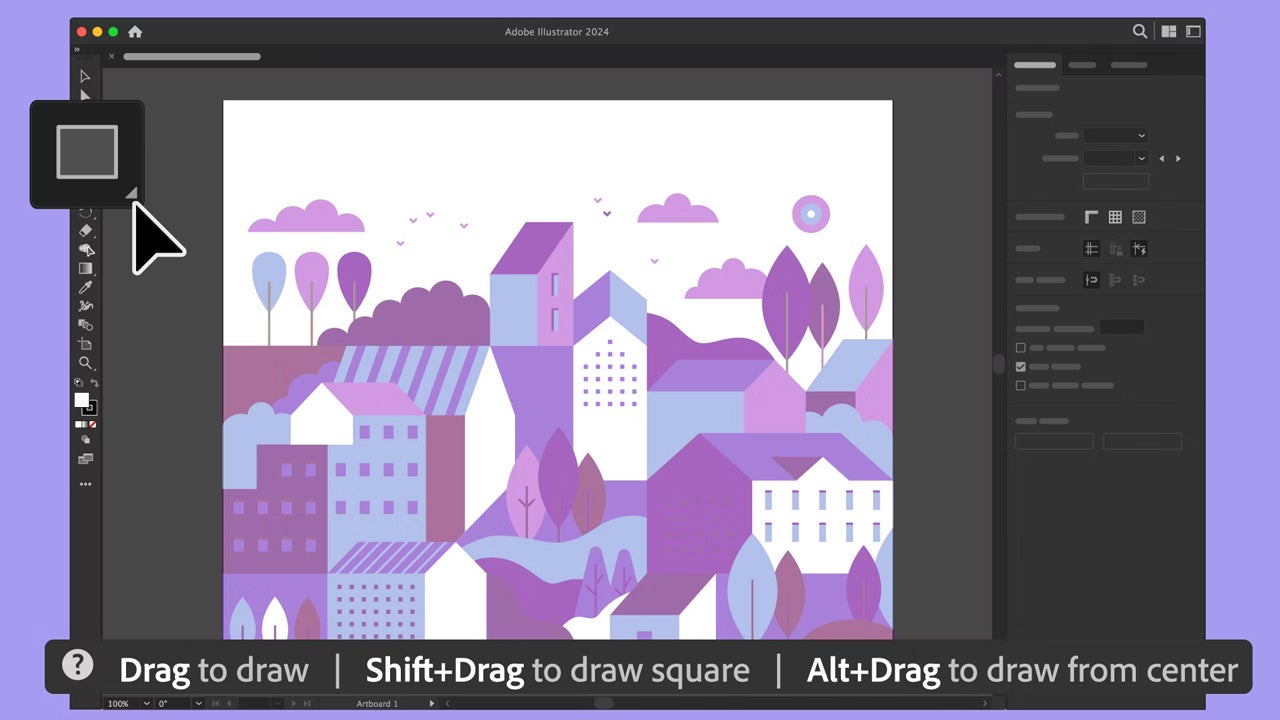
Users will be able to use this function to extend the dimensions of a vector drawing beyond its original shape. This will also be very useful when printing your projects, as you will be able to fill in the bleed areas, for example.
To use Generative Expand, you will need to do the following within Adobe Illustrator:
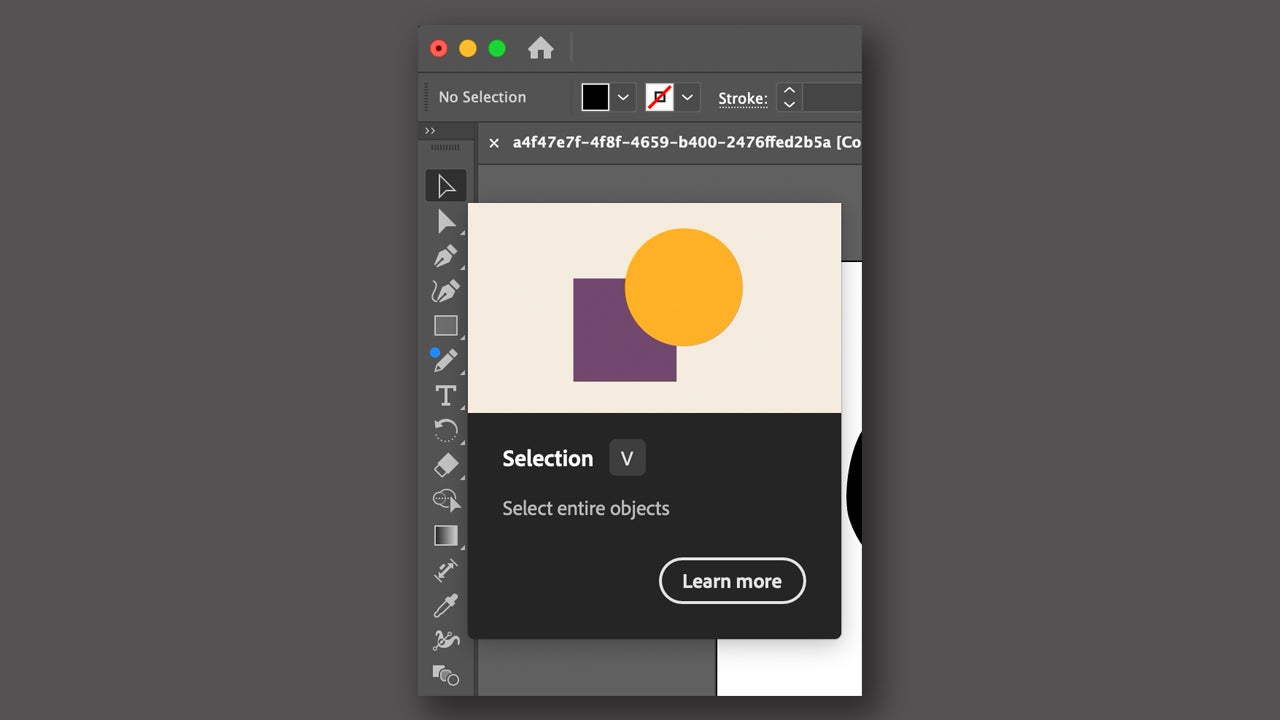
First, use the Selection (V) tool to select the vector drawings you want to enlarge. You can also select the artboard by clicking on the Artboard tool (Shift + O).
Then, select the Generative Expand option from the context menu. If the menu does not appear, go to Window > Contextual Task Bar.
You can also access the same function from Object > Generative Expand > Make.
Drag the edges of the illustration outside the frame to expand the object you want. If you wish, you can optionally write a prompt (description) to specify what you want Illustrator to generate. Remember that using the Generative Expand feature will consume generative credits.
From the Properties panel, you will see three variations of the obtained result. Choose the one that best fits your needs.
Finally, use the Pathfinder feature to combine the resulting objects.
Draw and preview in real time
As we briefly mentioned before, you will see the effects of the Pencil tool as you draw on the canvas. This will make the use of the pencil much more precise when working.
If you want to try the Pencil tool for drawing in Illustrator, here’s how you can do it:
Select Pencil (N) from the toolbar.
Draw as you like on the canvas: click and drag to create the stroke and release the mouse/pencil when you’re done. From the Appearance section, in Properties, select Stroke and adjust the stroke as you wish. If Properties does not appear, find it under Window.
You can apply effects from the Effects menu.
How can I install the latest version of Adobe Illustrator?
To stay updated on all the updates of the Adobe suite, it is essential that you install Creative Cloud, the desktop application from where you will control which programs you have installed and their versions.
This platform will be essential for having any of the Adobe programs, not just Illustrator. If you don’t have Creative Cloud, all you need to do is access the official Adobe website and download it from there.
Creative Cloud will keep you up to date and remind you if there is a new update on the horizon.
In 1992, Gary Oldman took on one of the most iconic roles of his career by playing Count Dracula in Bram Stoker’s Dracula under the direction of Francis Ford Coppola. Although he initially had no interest in the role, the director’s reputation and his promise to offer a new perspective on the classic myth motivated Oldman to accept the challenge. His performance is remembered for its intensity, elegance, and a deeply romantic approach that brought freshness to a character that has been portrayed by many figures in the history of cinema. A different script made him accept The script […]
In 1992, Gary Oldman took on one of the most iconic roles of his career by portraying Count Dracula in Bram Stoker’s Dracula under the direction of Francis Ford Coppola. Although he initially had no interest in the role, the director’s reputation and his promise to offer a new perspective on the classic myth motivated Oldman to accept the challenge. His performance is remembered for its intensity, elegance, and a deeply romantic approach that brought freshness to a character that has been portrayed by many figures in the history of cinema.
A different script made him accept
The script by James V. Hart was crucial in the portrayal of the famous vampire, as it managed to rescue elements from the original myth while emphasizing his romantic and tragic dimension. Memorable lines, such as “I have crossed oceans of time to find you,” resonated deeply with the actor and helped to portray a more human and accessible Dracula. Oldman not only delivered a dark and erotic performance but also transformed the count into a more complex figure, distancing him from the archetype of the monster.
Over the years, the character of Dracula has been recreated by numerous actors, but Oldman’s version stands out for its sensitivity and emotional depth. His portrayal of the elderly vampire in the castle, characterized by a melancholic gaze and iconic wardrobe, has left an indelible mark on the romantic horror genre. Despite the multiple adaptations of the myth, Oldman’s performance is considered one of the most memorable and favored by fans.
In a recent interview, the actor reflected on his unexpected journey to the role and the culture of cinema, noting that “everyone in this world has played Dracula”, but stating that his motivation came from the desire to collaborate with Coppola, whom he regarded as a master of cinema.
CJ ENM, the South Korean entertainment giant, has taken a bold step into the future of content creation with the launch of a comprehensive strategy based on artificial intelligence. During an event held in Seoul, the company presented its first fully AI-generated animated series, titled Cat Biggie. This event not only marks a milestone in technological innovation within the entertainment industry but also coincides with the celebration of CJ ENM’s 30th anniversary, a point of pride that reflects decades of leadership in content. The big kitty child of AI […]
CJ ENM, the South Korean entertainment giant, has taken a bold step into the future of content creation with the launch of a comprehensive strategy based on artificial intelligence. During an event held in Seoul, the company presented its first fully AI-generated animated series, titled Cat Biggie. This event not only marks a milestone in technological innovation within the entertainment industry but also coincides with the celebration of CJ ENM’s 30th anniversary, a point of pride that reflects decades of leadership in content.
The great kitten son of AI
As part of the 2025 CJ ENM Culture Talk event, titled K-Content, the company highlighted its commitment to integrating advanced technology in content production. Cat Biggie represents a bold experiment that could redefine the way we consume animated entertainment. This bet on AI not only suggests a shift in narrative but also raises questions about the future of creativity and authorship in the field of animation.
CJ ENM’s strategy includes not only the use of AI for content creation but also the possibility of optimizing media processes and improving the personalization of the content offered to users. As artificial intelligence continues to evolve, the company seems to be positioning itself at the forefront of this revolution, exploring the boundaries of what is possible in the field of audiovisual production.
With the launch of Cat Biggie, CJ ENM joins the ranks of other companies exploring the potential of AI in entertainment. However, as technology advances, concerns arise about the ethics and sustainability of these new methods of creation. Thus, the future of animation could be in the hands of both human artists and advanced algorithms, which will undoubtedly open new conversations and debates in the industry.
Tenna, the antagonist with a tube television head from chapter 3 of Deltarune, has intrigued players since his debut in the video game. This character was conceived by Toby Fox in 2016 when he bought a Kinect with the intention of capturing his movements. Although that idea was abandoned, Tenna has found his place in the world of Deltarune thanks to a collaborative effort involving a team of five developers, who brought this character to life in 3D. Tenna naked The development of Tenna highlights the community nature of independent video game design, where a creator
Tenna, the tube television-headed antagonist from chapter 3 of Deltarune, has intrigued players since his debut in the video game. This character was conceived by Toby Fox in 2016 when he bought a Kinect with the intention of capturing his movements. Although that idea was abandoned, Tenna has found his place in the world of Deltarune thanks to a collaborative effort involving a team of five developers who brought this character to life in 3D.
Tenna exposed
The development of Tenna highlights the community nature of independent video game design, where a creator can rely on other talents to bring their vision to life. Fox has shared that “Gigi polished the design,” “Clairevoire cleaned up the sprite frames,” and other collaborators contributed in areas such as editing and typography. This process emphasizes that, at times, a single developer must decide to set aside certain tasks to ensure the project’s completion.
Deltarune, since the release of chapters 3 and 4, has gained considerable recognition, reaching the top spot on Steam’s charts and accumulating a 98% positive rating with over 45,000 reviews. Players appreciate the way the game breaks with traditional RPG conventions, resulting in a unique and entertaining experience.
Interestingly, Fox had initially envisioned Tenna performing MikuMikuDance dances, a popular animation software associated with anime characters. This idea adds a humorous and distinctive tone to Tenna’s development, showcasing the kind of bizarre creativity that characterizes Fox’s work.
As fans continue to explore the world of Deltarune, it is expected that Fox has more chapters planned, promising to maintain the interest and originality that have defined this saga since its inception.
CCP Games has launched a new free trial period for its space survival MMO, EVE Frontier, which started on June 27 and will end on July 7. Interested players can register on the EVE Frontier website to participate in this unique experience focused on modulation and modifications within the game. A game with an economy that aims to be entirely real, EVE Frontier is presented as a laboratory to experiment with features and concepts that are too risky to implement in EVE Online, which has been operational for 23 years. Unlike […]
CCP Games has launched a new free trial period for its space survival MMO, EVE Frontier, which started on June 27 and will end on July 7. Interested players can register on the EVE Frontier website to participate in this unique experience focused on modulation and modifications within the game.
A game with an economy that aims to be entirely real
EVE Frontier presents itself as a laboratory to experiment with features and concepts that are too risky to implement in EVE Online, which has been operational for 23 years. Unlike other games in the genre, Frontier uses blockchain technology in its infrastructure, allowing for dynamic moderation and preventing cheats like god mode, thanks to coded rules.
One of the most notable features of EVE Frontier is its support for real-time modifications, which means that players can implement changes that affect all players simultaneously while the game is running. This has led to innovative examples, such as a PvP matchmaking system and a 4X simulator within the game itself.
Additionally, EVE Frontier is being designed to attract a broader audience, being more accessible than other modding games like Roblox. This approach aims to reduce the monetization aggressiveness associated with many current titles, allowing for a more friendly gaming experience for everyone. Future updates are anticipated, including a more cinematic camera for combat actions, which could capture players’ attention even more.
With its current early access status, EVE Frontier is constantly evolving, with multiple modifications and server changes planned before its official launch. Players who are interested in this unique MMO experiment can register without commitments until July 7 and explore a truly innovative gaming experience.
Akira, released in 1988, is considered a masterpiece that has laid the foundations of modern anime and has profoundly influenced numerous works in film and pop culture, from Ghost in the Shell to The Matrix. However, Warner Bros.’ attempts to adapt this iconic story into a live-action format have failed after more than 20 years of efforts, a sign of the challenge of maintaining the essence of such a complex and culturally specific narrative. One failed attempt after another Over the years, several directors, including Stephen Norrington and Jordan Peele, have approached […]
Akira, released in 1988, is considered a masterpiece that has laid the foundations of modern anime and has profoundly influenced numerous works in film and pop culture, from Ghost in the Shell to The Matrix. However, Warner Bros.’ attempts to adapt this iconic story into a live-action format have failed after more than 20 years of efforts, a sign of the challenge of maintaining the essence of such a complex and culturally specific narrative.
One failed attempt after another
Over the years, several directors, including Stephen Norrington and Jordan Peele, have taken on the challenging task of adapting Akira, but each attempt has resulted in a lack of a unified vision, making it difficult to create a clear and coherent approach. This lack of direction translates into the difficulty of capturing the social context of post-nuclear Japan, which is crucial for understanding the work.
Akira reflects a Japan marked by atomic trauma, institutional distrust, and technological anxiety. Attempts to change Tokyo to New York or to Eurocentrize the characters have been considered acts of cultural appropriation, provoking resistance from fans. The essence of Akira, which addresses the fear of power and dehumanization, seems unattainable in contemporary Hollywood, where concerns and values are radically different.
Despite having assigned director Taika Waititi in the last attempt, the project was suspended again, which has led Warner Bros. to finally relinquish the adaptation rights to Kodansha. The question remains whether an adaptation that honors the original material will ever be achieved. Stories like this highlight the profound influence of Akira and the difficulty of reinventing a work that has already impacted entire generations.
John Wayne, recognized as one of the greatest stars of western cinema, has left a deep mark on the self-image of the United States. His film The Man Who Shot Liberty Valance stands out as a powerful exception within his filmography, distancing itself from the simplistic conservatism that characterized many of his works. This late western, directed by John Ford, not only captures the visual essence of the genre but also addresses complex themes that resonate with the concerns of American society. A film that transcends what you might expect from a western The narrative revolves around the […]
John Wayne, recognized as one of the greatest stars of western cinema, has left a deep mark on the self-image of the United States. His film The Man Who Shot Liberty Valance stands out as a powerful exception within his filmography, distancing itself from the simplistic conservatism that characterized many of his works. This late western, directed by John Ford, not only captures the visual essence of the genre but also addresses complex themes that resonate with the concerns of American society.
A movie that transcends what you can expect from a western
The narrative revolves around Senator Stoddard, played by James Stewart, who begins to reminisce about his days in the chaotic town of Shinbone. His friend, the tough rancher Tom, brought to life by John Wayne, and Stoddard share a special connection: both have been in love with the same woman, Hallie, portrayed by Vera Miles. Together they must unite to confront the feared outlaw Liberty Valance, embodied by Lee Marvin. This blend of drama and tension among the characters offers a nuanced look at human relationships and moral dilemmas.
Ford invites reflection by presenting a critique of the simplified perception of violence and the figure of the gunslinger. The Man Who Shot Liberty Valance not only challenges the glorification of violence but also highlights the complexity of interpersonal relationships, questioning the truth in an environment where sensationalist narratives often prevail. Through picturesque cinematography and a melancholic narrative, the film establishes a dialogue between everyday life and the brutality faced by its characters, making it a masterpiece of cinema that remains relevant today.
Viewers can enjoy this remarkable film on the Movistar Plus+ platform, where one of the most impactful stories of classic cinema is brought to life.
Microsoft has strengthened its vision of “play anywhere,” but Xbox’s cross-platform strategy has reignited a debate about the future of the brand, especially among former members of the original team. Laura Fryer, one of the founders of Xbox and producer of iconic titles like Gears of War, has expressed serious concerns about the company’s direction. In a recent video on her YouTube channel, Fryer questioned the role of the ROG Xbox Ally device, created in collaboration with ASUS, which allows users to play games from external platforms like Steam. She does not understand the current […]
Microsoft has strengthened its vision of “play anywhere,” but Xbox’s cross-platform strategy has reignited a debate about the future of the brand, especially among former members of the original team. Laura Fryer, one of the founders of Xbox and producer of iconic titles like Gears of War, has expressed serious concerns about the company’s direction. In a recent video on her YouTube channel, Fryer questioned the role of the ROG Xbox Ally device, created in collaboration with ASUS, which allows users to play games from external platforms like Steam.
Does not understand the current drift of the company
Fryer believes that this initiative is a sign of Xbox’s disinterest in launching new hardware. “From my point of view, it seems that Xbox no longer wants —or cannot— launch its own hardware,” said Fryer, who criticized the “Xbox Anywhere” campaign as an empty strategy, focused more on perception than on tangible results. He also expressed concern about how the legacy of the brand built over decades is fading, questioning the future of Xbox: “What is the long-term plan? Where are the new successes?” he added.
In response to criticisms like those from Fryer, Sarah Bond, president of Xbox, has defended the company’s strategy on multiple occasions. Bond stated that they are investing in the next generation of hardware, both in consoles and portable devices and cloud services, reaffirming their commitment to allow players to enjoy their favorite titles without restrictions. However, Fryer continues to express skepticism about the clarity of Xbox’s creative direction, especially with the rise of multiplatform titles that were previously exclusive.
The celebration of Xbox’s 25th anniversary in 2026 could be a crucial moment to dispel doubts. Fryer concluded his reflection by conveying a mix of nostalgia and skepticism: “Maybe next year is when everything will make sense. But for now, we can only wait and see what remains of the original spirit of Xbox.”
The successful Netflix series, Squid Game, has reached its conclusion after three seasons, leaving an indelible mark on pop culture and sparking a debate about its impactful narrative. The South Korean production, which explores themes of social inequality and the struggle for survival, has captured the attention of global audiences since its premiere. With its ending, fans reflect on the complexities of the plot and the message that has resonated throughout the series. A similarity with which it wants to tell something One of the most interesting points that has emerged with the […]
The successful Netflix series, Squid Game, has reached its conclusion after three seasons, leaving an indelible mark on pop culture and sparking a debate about its impactful narrative. The South Korean production, which explores themes of social inequality and the struggle for survival, has captured the attention of global audiences since its premiere. With its ending, fans reflect on the complexities of the plot and the message that has resonated throughout the series.
A resemblance with a story to tell
One of the most interesting points that has emerged with the conclusion of the third season is the acknowledgment by Hwang Dong-hyuk, the creator of the series, about the similarities between the masked VIPs in Squid Game and figures from the real world, particularly Elon Musk. This comment comes in a context where the series presents wealthy and powerful characters who enjoy the suffering of others, a parallel that resonates today given Musk’s influence and status in the tech industry and beyond.
Hwang explained that, although the antagonists of the series are not directly based on Musk, his figure serves as a reflection of certain aspects of the contemporary elite that Squid Game critiques. This connection has sparked intense debate among viewers and critics, who have questioned to what extent the series is a mirror of today’s society, where the differences in power and wealth become more evident.
The conclusion of Squid Game not only marks the end of a captivating story but also invites reflection on the dynamics of power in the modern world. Fans are eager to see how the series will influence future projects in television and film, although rumors about possible spin-offs or sequels have begun to circulate, leaving the door open for more explorations of this unsettling universe.