You didn't know it, but the world of chess just suffered because of some cowboys

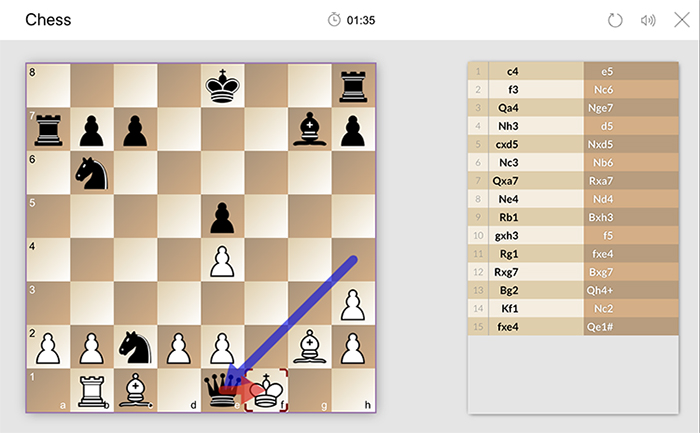
Those times when Kasparov faced off against a computer or when Bobby Fischer became an internationally prestigious figure are long gone. Chess is not experiencing its best moment, having to compete with modern board games and thousands of leisure alternatives, but it still attracts both enthusiasts and newcomers. Recently, however, the sport (intellectual, but a sport nonetheless) has been tarnished with ridiculous situations involving anal plugs and poisonings. But nothing compares to this week’s events. A good Jean Tonic I present to you Magnus Carlsen, […]

Gone are the days when Kasparov faced off against a computer or when Bobby Fischer became an internationally prestigious figure. Chess is not going through its best moment, having to compete with modern board games and thousands of leisure alternatives, but it still attracts both enthusiasts and outsiders who, in recent times, have tarnished the sport (intellectual, but a sport nonetheless) with ridiculous situations involving anal plugs and poisonings. But nothing like what happened this week.

Chess DOWNLOAD

A Good Jean Tonic

Let me introduce you to Magnus Carlsen, the great world chess champion, who has been at the center of an unprecedented controversy: he attended a New York tournament in jeans because he was coming from a meeting and didn’t have time to change. When asked to leave, buy other pants, and change, he refused to do so, was fined 200 dollars, and was later threatened with being kicked out of the competition. The world champion. Over a pair of jeans.

According to the federation, he was breaking the dress code, and it was something unbreakable and indisputable… until Carlsen threatened to withdraw from the annual tournament where he was supposed to defend his title. It was then that the federation modified the rules: “Following the official dress code is required, but minor and elegant deviations (including appropriate jeans that match the jacket) are allowed. It seems that by threatening and making moves, people understand each other.

Chess DOWNLOAD

WhatsApp collaborates with Google so you can find out the origin of any image sent to you

Meta, in collaboration with Google, is testing a new feature to curb the spread of misinformation on WhatsApp. According to the specialized portal WABetaInfo, the latest beta of WhatsApp Web includes a reverse image search tool that allows users to verify the authenticity of images shared on the platform. Thanks to this new function, called “Search the web,” users will be able to use Google’s search to analyze the images they receive, providing them with additional context and helping them identify if an image has been manipulated. By using Google’s services, WhatsApp will not have access […]

Meta, in collaboration with Google, is testing a new feature to curb the spread of misinformation on WhatsApp. According to the specialized portal WABetaInfo, the latest beta of WhatsApp Web includes a reverse image search tool that allows users to verify the authenticity of images shared on the platform.

WhatsApp DOWNLOAD

Thanks to this new feature, called “Search the web”, users will be able to use Google search to analyze the images they receive, thus providing additional context and helping them identify if an image has been manipulated. By using Google’s services, WhatsApp will not have access to the content of the images during this process, according to the report.

WhatsApp has been testing this new feature in its Android app since early November, which is located in the three-dot menu of the image viewer. The tool allows you to perform a reverse search directly from the platform, avoiding additional steps like downloading and uploading images to a browser.

Although Meta has not yet officially announced the launch of this feature, it is expected to be available to all users both on WhatsApp Web and on the Android app in the coming weeks.

WhatsApp DOWNLOAD

AI will soon arrive in dating apps

Match Group, the company behind platforms like Tinder and Hinge, has announced the introduction of an artificial intelligence assistant that promises to revolutionize the online dating experience. According to The Guardian, this new assistant will be launched in March 2025 and will offer features such as selecting the most attractive photos, suggesting profile texts, and helping to find ideal matches. Additionally, the AI will conduct interviews with users to understand their expectations and will suggest personalized messages based on shared interests. Bernard Kim, CEO of Match Group, described this advancement as the beginning of a “transformation based on […]

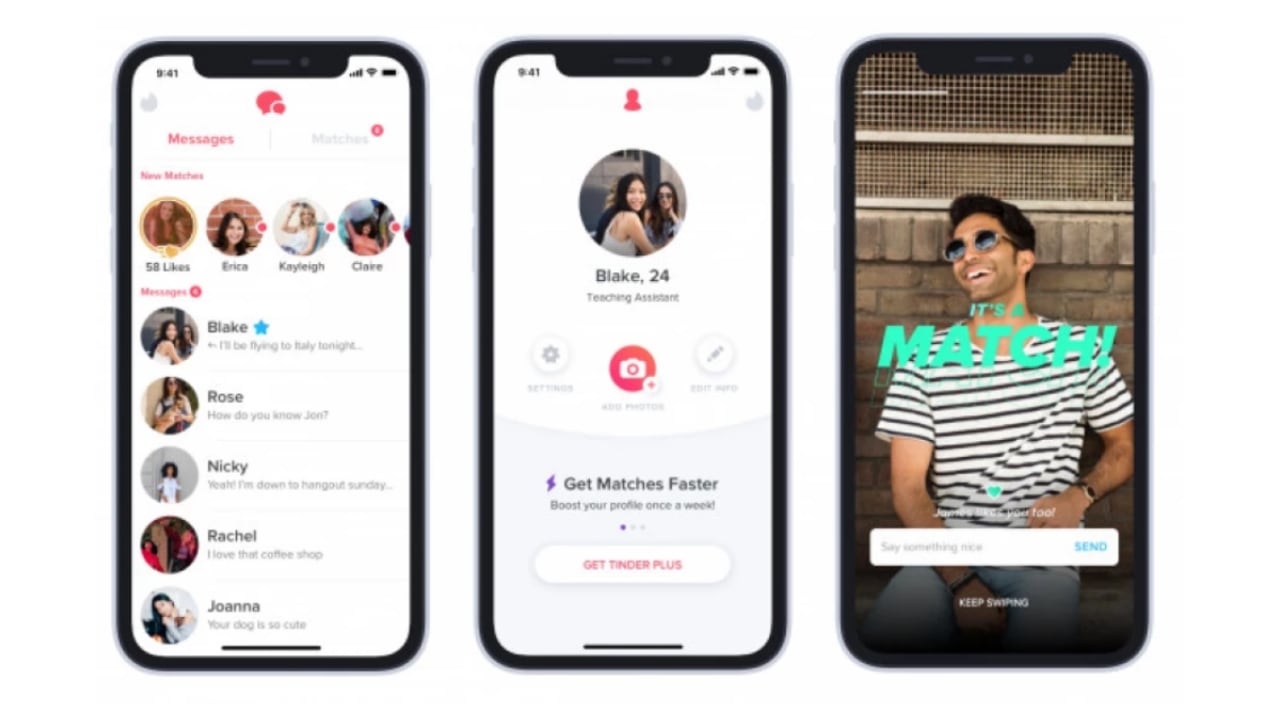
Match Group, the company behind platforms like Tinder and Hinge, has announced the introduction of an artificial intelligence assistant that promises to revolutionize the online dating experience. According to The Guardian, this new assistant will be launched in March 2025 and will offer features such as choosing the most attractive photos, suggesting texts for profiles, and helping to find ideal matches. Additionally, the AI will conduct interviews with users to understand their expectations and will suggest personalized messages based on shared interests.

Tinder DOWNLOAD

Bernard Kim, CEO of Match Group, described this advancement as the beginning of an “AI-based transformation” for the company. According to Kim, this technology will influence all aspects of the dating process, from profile creation to connecting with potential partners. “This advancement is revolutionary for dating, and we want to integrate it across our entire portfolio of platforms,” he stated. However, these innovations come at a time when the use of dating apps has declined, according to a report by Ofcom that revealed the loss of 750,000 users in the UK in the past year.

For his part, Gary Swidler, president and chief financial officer of Match Group, highlighted that AI will make the experience more efficient, simplifying processes and improving results. “AI can analyze profiles and offer suggestions that optimize both matching and subsequent interactions,” he explained. However, not everyone shares his enthusiasm. Anastasiia Babash, a researcher in Estonia, warns that relying on AI can harm people’s ability to interact authentically. “This could lead to an excessive dependence on technology and a loss of personal agency in interactions,” she opined.

Tinder IA mejores fotos

Additionally, Babash expressed concern about data privacy and the potential biases inherent in AI algorithms. “The massive collection of personal data poses security and misuse risks, in addition to perpetuating stereotypes if the biases present in AI systems are not corrected,” he warned. Meanwhile, Faye Iosotaluno, CEO of Tinder, emphasized that the company handles data with caution and is committed to using AI in an ethical and beneficial manner.

With these promises, Match Group’s bet on AI aims to redefine online dating, although the company will need to address significant ethical and privacy issues to convince both users and critics.

Tinder DOWNLOAD

They discover how the coldest objects in the solar system were formed

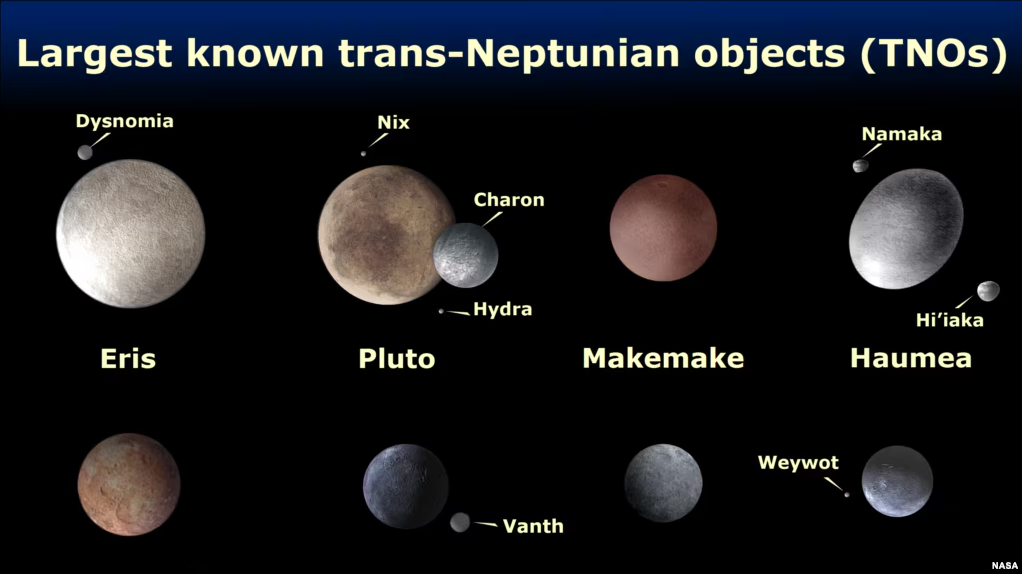
A recent study accessed by Earth.com delves deeper than ever into the understanding of icy planetesimals in the early solar system, including trans-Neptunian objects (TNOs) and centaurs. These small celestial formations, composed of dust and gas, cluster in protoplanetary disks surrounding young stars. Researchers have managed to map the distribution and evolution of these objects, offering new insights into the formation of the most distant regions of the solar system. TNOs, as their name suggests, orbit beyond Neptune in areas like the Kuiper Belt and, in some cases, in the distant Cloud […]

A recent study accessed by Earth.com delves deeper than ever into the understanding of icy planetesimals of the early solar system, including trans-Neptunian objects (TNOs) and centaurs. These small celestial formations, composed of dust and gas, cluster in protoplanetary disks surrounding young stars. Researchers have managed to map the distribution and evolution of these objects, offering new insights into the formation of the most distant regions of the solar system.

The TNOs, as their name suggests, orbit beyond Neptune in areas like the Kuiper Belt and, in some cases, in the distant Oort Cloud. These bodies, which range from chunks of ice and rock to sizes similar to dwarf planets like Pluto, hold essential clues about the early solar system. Their composition, often rich in chemical compounds called tholins, gives them reddish or dark tones. Additionally, their isolation in deep space has allowed them to maintain these characteristics intact since their formation.

A team from the University of Central Florida used the James Webb Space Telescope (JWST) to identify three distinct groups of TNOs based on ice retention lines, markers of extremely low temperatures in the protoplanetary disk. This allowed for the analysis of the molecules responsible for their varied spectra and colors, establishing a direct connection between their chemical characteristics and the conditions of their formation.

The study, published in the journal Nature Astronomy, also explored the centaurs, TNOs that have been drawn into the inner solar system after gravitational interactions with Neptune. As these bodies approach the Sun, they experience heating, develop comet-like tails, and undergo changes on their surfaces, which often feature dusty mantles. These processes highlight their unique evolution compared to the more distant TNOs.

Although key patterns in the composition of these objects have already been identified, these findings are just the beginning. Researchers plan to delve deeper into how these groupings emerged, paving the way for future discoveries about the origin and evolution of the solar system.

NASA App DOWNLOAD

USB-C is now mandatory in all electronic devices in the EU: what does this mean?

This weekend, the European Union has implemented a regulation that will force manufacturers of numerous electronic devices to include a USB-C port as standard. Starting Saturday, December 28, small and medium-sized devices sold in EU territory must incorporate this type of connection for charging. The regulation covers a wide range of devices: mobile phones, tablets, digital cameras, headphones, portable consoles, speakers, e-readers, keyboards, mice, and portable navigation systems, among others. All these devices, as long as they use a cable for recharging and operate with a power of […]

This weekend, the European Union has implemented a regulation that will force manufacturers of numerous electronic devices to include a USB-C port as standard. From Saturday, December 28, small and medium-sized devices sold in EU territory must incorporate this type of connection for charging.

The regulation covers a wide range of devices: mobile phones, tablets, digital cameras, headphones, portable consoles, speakers, e-readers, keyboards, mice, and portable navigation systems, among others. All these devices, as long as they use a cable to recharge and operate with a power of up to 100 watts, must include a USB-C port. Additionally, consumers will have the option not to receive an additional charger when purchasing a new device, a measure aimed at simplifying the market and reducing electronic waste.

According to Euro News, laptop manufacturers will have until April 28, 2026, to comply with this requirement. The measure, approved by the European Parliament and member states in 2022, aims primarily to combat waste generated by chargers and save European households about 250 million euros annually. Anna Cavazzini, Chair of the Committee on the Internal Market and Consumer Protection, stated that these rules will allow “addressing the tons of waste generated by discarded chargers each year.”

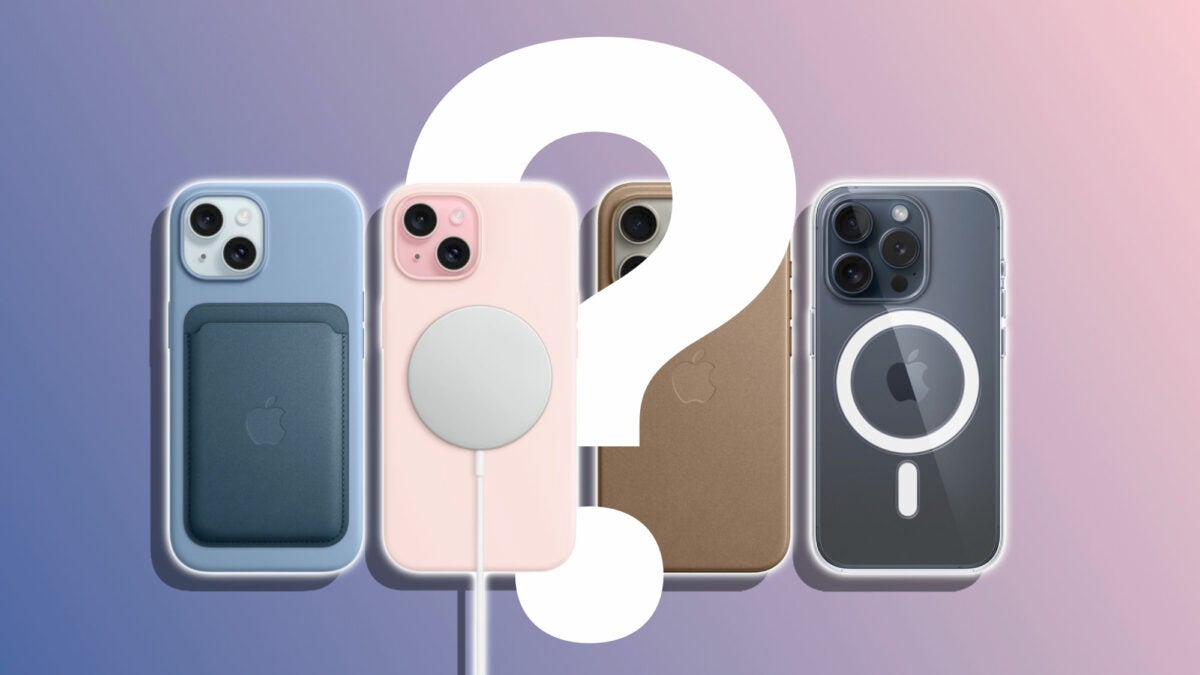
The impact of the measure has been significant for Apple, as its Lightning port will become obsolete in Europe. iPhones sold from December 28, 2024, including older models, must incorporate USB-C. Although the iPhone 15 and 16 already comply with this standard, older models like the iPhone 14 or iPhone SE still used Lightning.

For this reason, Apple withdrew these models from its stores days before the regulation came into effect in most EU countries, such as Spain, France, and Germany, and also in associated markets like Switzerland, according to MacRumors.

Apple Store DOWNLOAD