Top Second Phone Number Apps that Are a Must-Have This Year

We’ve tested a bunch of the second phone number apps to pick up the best 8 and are ready to share our experience and insights in this article. Click here.

Are you struggling with privacy concerns or unwanted calls on your primary phone number? Ever thought about exploring the world of second phone number apps?

Second phone number apps are a game-changer when it comes to maintaining your privacy and managing communication effectively. Whether you’re online dating, running a small business, or simply want a dedicated number for specific purposes, these apps offer a seamless solution.

In our quest to find the top-rated second phone number apps, we meticulously analyzed the market to present you with the cream of the crop. Each app discussed in this article boasts stellar reviews and an impressive track record of user satisfaction. Rest assured, we’ve filtered through the options to bring you apps with minimal user complaints and a high level of functionality.

Best phone number app: Quick Pick 

Here’s a succinct list of phone number apps that made it to our list: 

  1. Phoner
  2. Google Voice
  3. TextFree
  4. Line 2
  5. DialPad 
  6. Sideline
  7. Phone Burner 
  8. Grasshopper

Let’s discuss some factors we considered before choosing the apps that made it to our list: 

The Best Second Phone Number: The Selection Criteria 

When it comes to choosing a second phone number app, there are a range of criteria to consider. These criteria include: 

1. Ease of Use: Consider the app’s ease of use, its compatibility with your device’s operating system and how seamlessly it integrates with your phone app.

2. Customer Support: In case of any issues or queries, it’s essential to have reliable support to ensure a smooth experience with the app.

3. Trial Version: If available, take advantage of any trial periods or free versions to test the app’s features and performance before committing to a subscription.

4. Call Quality and Reliability: Assess the call quality and reliability of the app. Look for user feedback on call connections, clarity and any reported issues with dropped calls.

5. Storage and Backup: Consider whether the app offers storage or backup options for your call logs, messages or voicemails. This can be essential for maintaining a record of important communications. 

6. Offline Functionality: Check if the app allows for offline functionality, especially if you may be in areas with limited or no internet connectivity. 

7. Regulatory Compliance: Verify whether the app complies with relevant telecommunications regulations and privacy laws in your region. Ensuring compliance is crucial for legal and ethical use.

Without further ado, let’s discuss the top second number of applications to try out: 

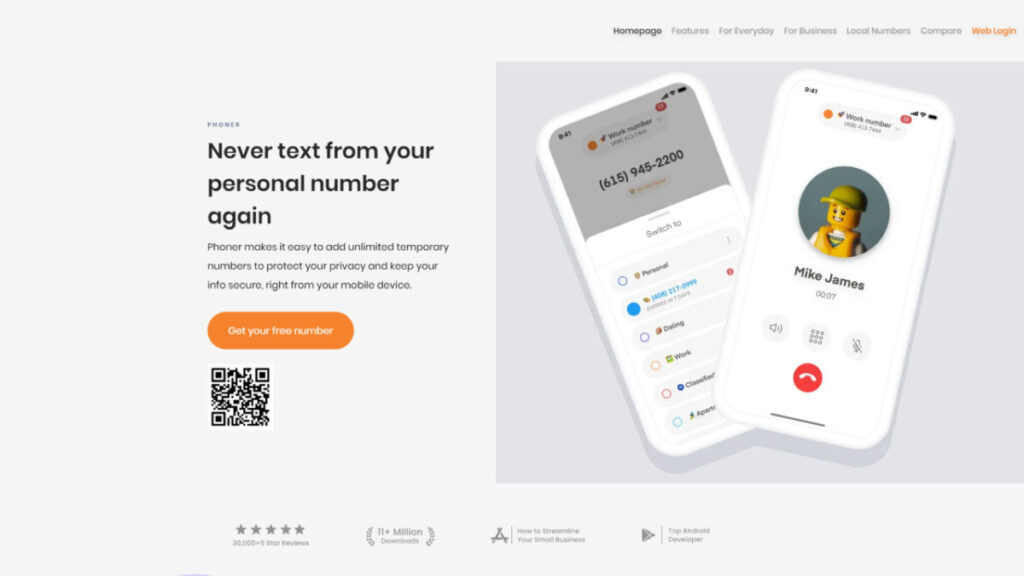
App 1: Phoner

Best Pick for: Individuals and small businesses seeking an affordable and easy-to-use second phone number solution.

Killer Feature: Intuitive Interface

Phoner stands out with its intuitive and easy-to-use interface, making it simple for anyone to set up and start using a second phone number. Even beginners can master the app in no time.

Pros and Cons 

Pros of Phonerapp: 

  • Intuitive, user-friendly interface
  • Reliable call quality
  • Ad-supported tier
  • Affordable pricing
  • Disposable numbers
  • Call recording
  • Message encryption
  • Support on Desktop, and, Android and iOS

Cons of Phonerapp:

  • Limited advanced features
  • Mostly suited for basic usage

Pricing 

Phoner has two pricing plans, these are: 

  • Monthly: $9.99/month
  • Yearly: $69.99/year

Reviews 

Trustpilot: 4.7/5 (300+ reviews)

Users highlight Phoner’s easy setup process, great value for money and versatility for both personal and business use. Some reviews mention occasional glitches but overall feedback is highly positive. Download your Phonerapp here and enjoy its numerous benefits.

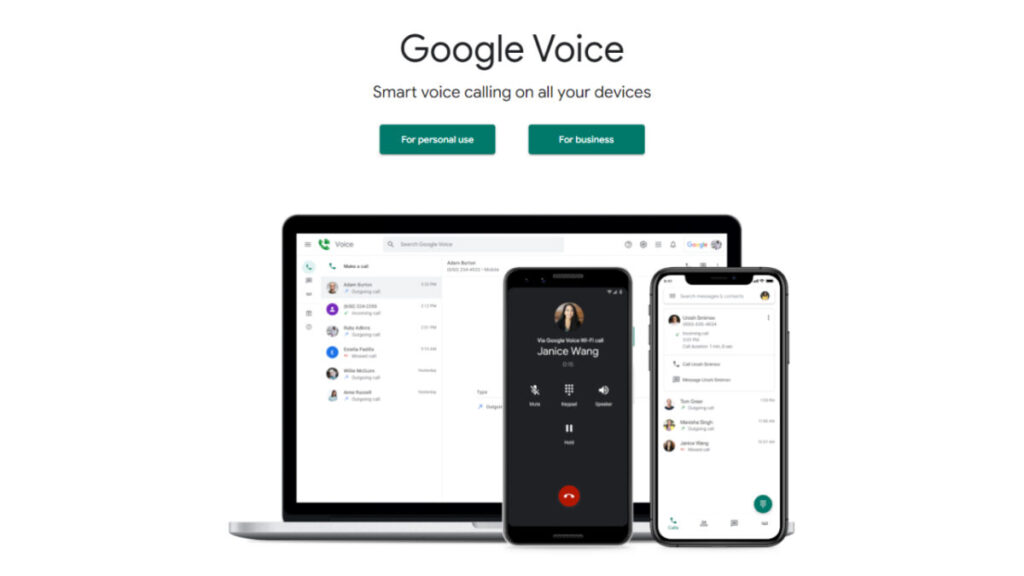
App 2: Google Voice 

Best Pick for: Individuals and small businesses seeking a versatile second phone number app that seamlessly integrates into the Google ecosystem. 

Killer Feature: Unified Communication

Google Voice’s standout feature is its ability to unify communication channels. It provides users with a single phone number that can ring on multiple devices, making it easy to stay connected across smartphones, tablets and computers. This ensures important calls and messages are never missed, offering unparalleled convenience.

Pros and Cons 

Before deciding on a preferred solution, it’s best to consider its pros and cons. 

Pros of Google Voice:  

  • Google Voice seamlessly integrates with personal Google accounts.
  • It offers free domestic calls to users in Canada and the United States.
  • Receive unlimited calls from local phone number
  • Unlimited texting on its premium versions
  • Google Voice automatically transcribes voicemail messages.

Cons of Google Voice:  

  • Google Voice relies on an existing cellular network for calls and messages, which may be a drawback in areas with poor or no data connectivity.
  • It’s not available in many countries.

Pricing 

Google Voice has 3 pricing plans, each with different accessibility to a range of features. Its plans entail: 

1. Starter: $10/ month

  • Calls between Google Voice numbers are included, 
  • Calls to most European countries from within Europe Included, 
  • Calls to the US from any Google Voice number included, 
  • Calls to Canada from a Canadian Google Voice number are included. 

2. Standard: $20/ month 

  • Unlimited number of users, 
  • Free second phone number
  • No Geographic restriction. 

3. Premier: $30/ month 

  • Unlimited international location
  • Calls between Google Voice numbers are included. 

Reviews 

Capterra: 4.5 (668 reviews)

G2: 4.1 (145 reviews)

According to reviews on G2, Capterra and, others, Google Voice consistently receives positive feedback for its user-friendly interface, integration capabilities and, reliability. Users appreciate its versatility for personal and business use, though some mention the need for expanded international features.

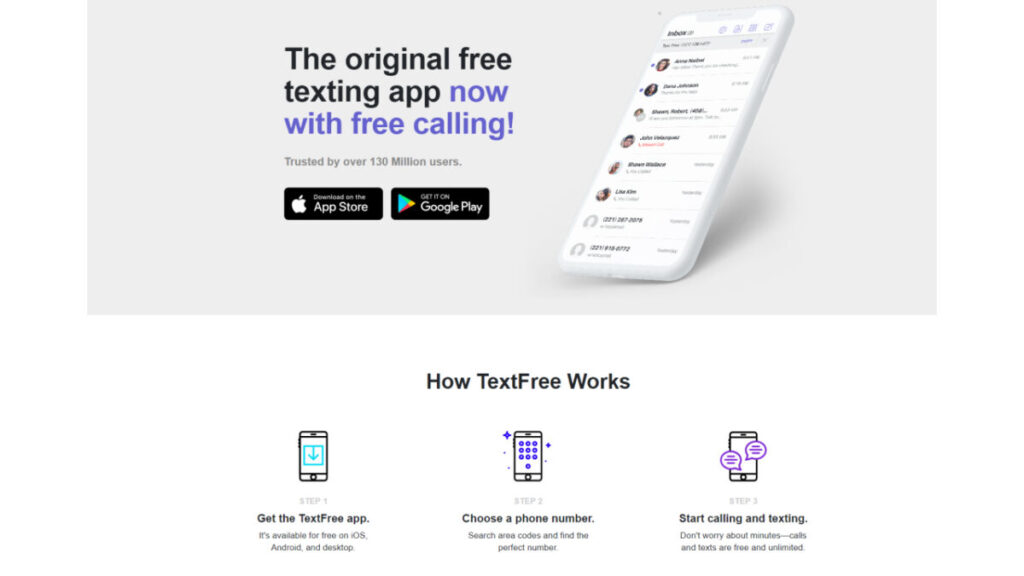
App 3: TextFree 

Best pick for: individuals seeking a cost-effective and versatile second phone number solution. It caters to budget-conscious users, including students, freelancers and those looking for an additional number without the commitment of subscription fees.

Killer Feature: Free Functional Number

Users can enjoy essential texting and calling services without any charges, making it an attractive option for those who prioritize pricing. 

Pros and Cons 

Pros of TextFree:  

  • Access to multiple phone numbers 
  • Free phone number for calling and sending text messages, 
  • User-friendly interface, 
  • Cross-platform compatibility. 

Cons of TextFree:  

  • TextFree includes ads in its free version, 
  • Limitation on viewing earlier messages. 

Pricing 

It offers both a free plan and a paid plan. The paid plan costs $10/ month and, offers the following features: 

  • Reserve your number. 
  • Block spam calls 
  • No ads, 
  • Change your TextFree number, 
  • Verification support. 

Reviews 

Capterra: 4.0 (28 reviews)

Reviews on platforms like G2 generally highlight TextFree’s positive attributes, including its simplicity, reliability and access to cheap international calling. 

Users appreciate the accessibility of the free basic services, although some mention the presence of ads as a trade-off.

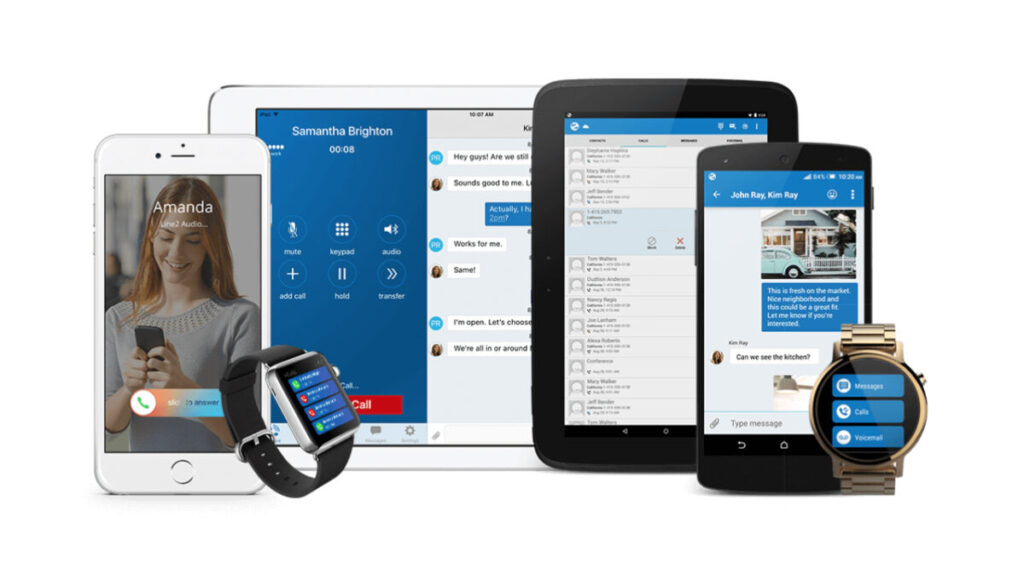
App 4: Line 2

Best pick for: professionals, entrepreneurs and small business owners who require a dedicated second phone number for business communication. 

Killer Feature: Business-oriented functionality. 

It provides tools for call handling, auto-attendants and team collaboration, making it an ideal choice for those who want to maintain a professional image and efficiently manage business communications.

Pros and Cons 

As with others on this list, Line2 also has its strengths and drawbacks. 

Pros of Line2: 

  • Due to its business-orientated design, it offers features like auto-attendants, custom caller ID, call routing, call recording, team collaboration group messaging and, call handling. 
  • Users can choose local or toll-free numbers, 
  • It provides voicemail transcription, 

Cons of Line2: 

  • It’s too complex for users without prior knowledge of advanced phone system functionalities.

Pricing 

Line2 offers only one payment package, however, you can get a discount when you pay annually. 

  • Monthly: $15/ month
  • Annual: $13/ month

Reviews

G2: 2.7/5 (14 reviews)

Capterra:  3.6/5 (35 Reviews)

Reviews on both G2 and Capterra agree with our opinion that  Line2 is strong in catering to business communication needs. Users appreciate its professional features, call management capabilities and the ability to choose local or toll-free numbers. 

App 5: Dial Pad 

Best pick for: Individuals and organizations that want a cloud and AI-powered second phone number app. 

Killer Feature: Integration of Voice Intelligence Technology 

This advanced feature uses artificial intelligence to analyze and transcribe voice conversations, providing users with valuable insights and facilitating more effective communication. The Voice Intelligence feature sets DialPad apart by offering a smarter and more data-driven approach to communication.

Pros and Cons 

Let’s delve into the strengths and weaknesses of dial pad: 

Pros of DialPad: 

  • It has a range of business-centric features.
  • It offers transcription and voice analysis for proper communication.
  • It integrates video, voice, conferencing and messaging into a single platform. 
  • DialPad offers scalable solutions to meet organizations’ evolving needs. 

Cons of DialPad: 

  • Overall pricing can be expensive to access advanced features. 

Pricing 

DialPad has 3 pricing plans, which are: 

  • Standard: $23/ month
  • Pro: $35/ month 
  • Enterprise: Based on enterprise needs. 

Reviews 

Capterra: 4.3 (503 reviews)

DialPad receives positive feedback for its user-friendly interface, advanced features and scalability. Users appreciate its seamless integration of communication tools, although some note considerations regarding the pricing structure for certain features.

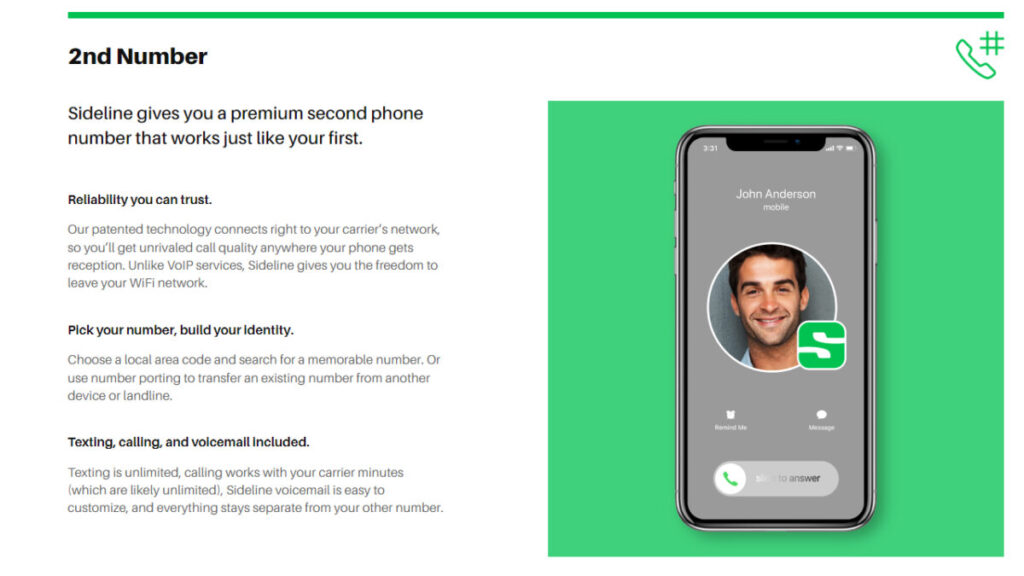
App 6: Sideline 

Best pick for: Enterprises that prioritize text marketing. 

Killer Feature: Business voicemail. 

This feature helps enterprises to efficiently handle incoming calls when employees or representatives are unable to answer. 

Pros and Cons 

Pros of Sideline:  

  • It lets users separate business and personal communication effectively.
  • It facilitates team collaboration. 

Con of Sideline:  

  • High Subscription cost.  

Pricing 

Sideline does not offer a free version; however, it offers a seven-day free trial on iOS and Android. Its paid version cost is as follows: 

  • Monthly: $14.49, 
  • 6 months: $69.99, 
  • 12 months: $129.99

Reviews 

G2: 4.4/5 (7 reviews)

Capterra: 3.9/5 (64 reviews)

Users appreciate its professional features, although some note the higher subscription cost. Sideline’s positive reception emphasizes its utility for small businesses and professionals looking to enhance their communication capabilities.

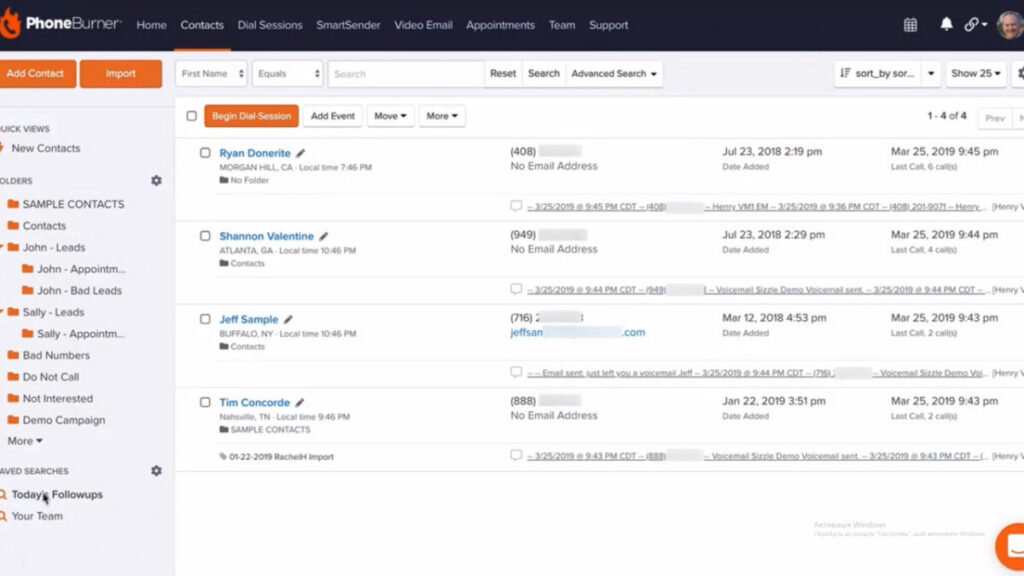
App 7: PhoneBurner 

Best pick for: Individuals seeking a temporary or disposable phone number for various purposes. 

Killer Feature: Discardable Phone Numbers 

Users can create and use these numbers for specific purposes and discard them when no longer needed. This feature enhances privacy and is particularly useful for scenarios where users want to maintain anonymity or protect their primary phone number.

Pros and Cons 

The benefits and demerits of using PhoneBurner entails: 

Pros of PhoneBurner: 

  • Availability of temporary numbers for short-time use. 
  • Top-notch flexibility for various scenarios. 

Cons of PhoneBurner:  

  • It’s not a good choice for individuals who need long-term phone numbers.

Pricing 

PhoneBurner charges a monthly subscription of $9.99/ month. It also offers a 7-day free trial. 

Reviews 

G2: 4.2/5 (183 reviews)

Capterra: 4.8/5 (170 reviews)

PhoneBurner’s strengths in providing temporary and disposable phone numbers. Users appreciate its privacy features and flexibility for short-term communication needs. 

App 8: Grasshopper

Best pick for: Businesses that want a virtual receptionist

Killer Feature: Auto-attendant Receptionist. 

The virtual receptionist can aid in directing calls, use recorded greetings and take messages.

Pros and Cons 

Pros of Grasshopper:  

  • It helps businesses create toll-free numbers.
  • It transcribes voicemail into texts. 

Cons of Grasshopper: 

  • The free trial has limitations in terms of features you can access. 

Pricing

Grasshopper offers three pricing plans, which are: 

  • Solo-: 1 Number, 3 extensions; $29/month, 
  • Partner-: 3 Numbers, 6 extensions; $49/month, 
  • Small Businesses-: 5 Numbers, extensions, $89/month. 

Reviews

Capterra: 4.4/5 (338 reviews)

G2: 4/5 (143 reviews)

Users appreciate its professional image-enhancing features, virtual phone system capabilities and toll-free number options. 

While the pricing may be a consideration, Grasshopper’s positive reception underscores its effectiveness as a comprehensive communication solution for businesses.

Summary

Second phone number apps provide users with an additional phone number separate from their primary one. These apps are versatile and serve various purposes, offering features like texting, calling, voicemail and more. 

Explore leading second phone number apps for heightened privacy and effective communication. 

Whether for personal use, business, or specialized needs, these apps redefine your phone experience. Consider factors such as ease of use, customer support, trial availability, call quality, storage options, offline functionality and regulatory compliance when selecting the most suitable solution. 

Choose wisely, based on your unique requirements and preferences. At Softonic, we tried and tested all of these apps and we recommend Phoner as the best App to use. Get a quick look at the amazing capacity of the Phoner app here

A Comprehensive Dive into Insurance Digital Transformation

Find out how to run insurance digital transformation in the most effective way in our in-depth guide. Click here to learn more.

The insurance market has always had a reputation for conservatism, but that has begun to change. A contract closing without a stack of paperwork was unthinkable to the average person. We could not envision resolving an insurance claim and obtaining compensation in several minutes or hours. The insurance sector, however, has benefited from the spread of insurance digital transformation. Today, the insurance technology industry (InsurTech) is among the most dynamic in the digital economy.

This article highlights the advantages of digital transformation for insurers, the technologies behind its adoption, and examples of successful transformation projects in action.

Understanding digital transformation in insurance 

Digital transformation in insurance involves adopting innovative digital technologies and strategies to enhance customer experiences, operational processes, data analytics, and risk factors evaluation. Digital transformation also includes shifting away from old data processing methods and traditional business practices towards modern technologies like artificial Intelligence (AI), predictive analytics, cloud computing, etc.

Digital transformation can significantly impact the insurance industry as it offers a number of benefits like:

  • Better customer experience. A fast and reliable customer support services is what we all need. Once insurance companies adopt digital channels to communicate with clients, they work more efficiently, offering their clients the necessary convenience. Companies can do almost everything digitally, like selling policies online, streamlining claims processing via mobile apps, and more. And clients love it!
  • Personalized insurance products. It’s that time to use predictive analytics and AI technologies to start creating tailored client experiences to improve customer satisfaction and loyalty and lead to more business opportunities. 
  • Better risk management processes and risk assessment. Digital platforms make customer data analysis and risk assessment more precise, giving insurance companies more accurate rates to set and anticipate losses precisely. This allows them to set rates more efficiently as well as predict losses more precisely in future loss forecasting scenarios.
  • ​​Fighting fraud. Real-time data analytics and machine learning algorithms can identify suspicious activity that indicates fraud; insurance companies can reduce losses through this practice.
  • New products and business model creation. Technologies facilitate the creation of new business models and insurance products, such as cyberattack insurance coverage or pay-as-you-go plans, making new product development possible and meeting consumer expectations.
  • Adapt to rapidly changing market conditions. Insurance industry developments occur constantly due to regulatory, economic, and climate influences; implementing digital transformation enables organizations to respond and adapt more swiftly.

Real-life Use Cases and Success Stories

Streamlining Operations with Technology

Insurance companies process vast amounts of data every day. This increases the amount of time required to perform the daily routine operations. In this case, integrating innovative technologies like cloud platforms, (IoT) sensors, and machine learning can significantly streamline business operations. Adopting new technologies simplifies streamlining operations, automates manual processes, and provides data security.

For instance, besides their traditional benefits, cloud platforms help insurance companies reduce operating costs and increase processing speed, which is already a good reason to shift data to the cloud platform.

Internet of Things (IoT) sensors are a great choice if a company wants to create a more customer-centric model. (IoT) sensors can improve underwriting choices and preventative actions, mitigate risks, and allow individualized pricing based on individual customer behavior.

Enhancing Customer Experience

Digitalization may enhance customer experiences yet also raise customer expectations. Modern customers want instantaneous information and seamless digital customer interaction paired with customized service from insurance executives – something insurers must meet by investing in easy-to-use interfaces, multichannel digital capabilities, and responsive support services that meet these customer demands. Failing to deliver satisfactory digital experiences could result in customer churn.

An effective strategy to attract more clients is using an omnichannel approach. You can create customer groups based on their interests, track behaviors and requests as well as complaints, ensure clients have multiple communication channels available to them for communication purposes and service requests, and finally, ensure customers can quickly get your products or services. Based on all this, you can make more informed decisions, making an omnichannel approach crucial for any insurance company going through digital transformation.

By giving your clients a positive digital experience, your company enhances its brand reputation and position among rivals. 

Innovative Product Development

Innovations and new technologies are precisely what can help an insurance company remain competitive and stay on top. 

Organizations that are not scared of integrating new digital tools and accepting challenges are the market’s leaders because they always prioritize clients’ needs by offering them standout and comfortable solutions. That’s exactly how you increase customer loyalty and make your clients happy with the services a company provides. Isn’t that already enough to take a risk and try a new product? 

The possibilities are endless nowadays everywhere, even in the insurance industry. Your company can benefit from tools that tailor car insurance premiums to each customer or use IoT data to launch parametric insurance for flight delays that will automatically pay out if certain conditions are satisfied.

You can even integrate an AI-powered face recognition used in medical centers to diagnose patients’ conditions to speed up the underwriting process for health insurance and improve the entire client experience. 

You can choose any technology or new tool that will benefit your company; just make sure you do it because other companies will not hesitate when deciding whether to accept the challenge and win or back up and lose clients.

Key Drivers of Digital Transformation in Insurance

Changing Customer Expectations

Many digital transformation initiatives are aimed at enhancing experiences to improve consumer relations. Global insurance consumers place a high value on digital experiences. EY survey results show that only 40 percent of genuine customers decide whether to keep their insurers based on experience quality. The increasing expectations of consumers and their willingness to change providers are forcing insurers into greater accountability, transparency, and effectiveness. These attributes are often the by-products of digital transformations.

The experience is often reliant on the simplicity of the interactions. Insurers can identify customers when they switch channels in the middle of a claim process or while they’re researching new policies. Customers want to interact with insurers through digital channels and other methods. Insurers are expected to have consistent context and information across channels to recognize their customers’ goals and understand where they are on the customer journey. Hand-offs across channels must be seamless. It’s a basic customer expectation.

Competitive Advantage

Insurance is a highly competitive industry, and new players constantly change the traditional business model. The digital transformation gives insurers the flexibility to adapt quickly to changes in market conditions, such as regulatory changes or new customer demands.

Neoinsurers offer an assortment of products and services online 24/7. This makes them particularly appealing to younger customers, such as millennials, who prefer digital services.

As part of an effective response to this new threat of neoinsurers, established players in the insurance industry should provide customers with online access to all products and services offered, in addition to offering new services and becoming sources of advice in customers’ lives. To compete effectively against newcomers like neoinsurers it will also be essential that insurers offer customers full product knowledge as part of an overall offering from established players in this space.

Companies that incorporate digital technology quickly into their core system could enjoy an edge. They can use this advantage to continuously innovate, offering products and services to meet the changing needs of their customers.

Challenges in Digital Transformation

Data Privacy and Security

Cyber attacks have increased exponentially and continue to pose an immense cybersecurity challenge to multiple insurance firms. Given the volume of collected information and its type, insurance providers must remain vigilant if they want to safeguard both customers and online platforms from threats.

Cyberattacks fall into two main categories. First are cyberattacks designed to disable systems for their victims. For instance, a company may find that its website has been temporarily disabled until payment (usually cryptocurrency) has been received from ransom thieves. Second comes malware, which invades systems to steal or modify data stored therein.

Cyber insurance providers face additional responsibilities: they must defend against hackers to manage risk and preserve customer trust. Appropriate protocols like multi-factor authentication or other identity verification technologies must be put in place by insurance firms to keep client information safe.

Personnel and processes capable of handling various risk scenarios must be deployed to respond effectively to threats and privacy issues.

Cybersecurity is one of the primary considerations when selecting an insurer or financial institution, with customers placing great value on data security as one of their criteria for choosing an insurer or bank. Data protection serves as the cornerstone of trust among customers within this sector.

Regulatory Compliance

Insurance is a highly regulated industry that must abide by numerous rules and regulations, which requires them to maintain large amounts of paperwork and data storage – making digitizing processes challenging at best. To remain compliant, insurers need to work in close conjunction with regulators.

Regulators present insurers with an enormous challenge. The insurance sector is heavily regulated, and digital transformation could bring changes that breach current relevant regulations.

Insurance carriers must cooperate closely with regulators to ensure their digital transformation projects comply with all pertinent regulations.

Solution to Run Insurance Digital transformation

Though some businesses fail to fully appreciate the advantages digital transformation brings for the insurance sector, those reading this article know its positive results are indisputable, mainly if using FuseBase (formerly Nimbus) during the transformation journey.

FuseBase is a solution built specifically around meeting client-centric businesses’ needs for digital transformation and can serve as an indispensable asset during and beyond that process. That makes Fuse Base one of the go-to solutions in its class.

FuseBase simplifies interactions between you and clients while streamlining workflows and increasing customer engagement – perfect for an insurance provider looking for a digital transformation tool!

Why FuseBase?

FuseBase

FuseBase (formerly Nimbus) stands out among digital transformation solutions because it goes beyond simple digital transformation tasks; it provides an all-inclusive toolset designed to streamline internal and external processes while supporting teamwork and keeping all employees involved during its transformation journey.

Client-first businesses are at the core of everything the platform does; its primary mission is to assist companies with keeping clients satisfied and loyal to your firm.

FuseBase provides your company with an abundance of incredible features that will enable it to take full advantage of digital transformation efforts while enjoying it as well. Let us describe some of these tools by showing how they can simplify business processes:

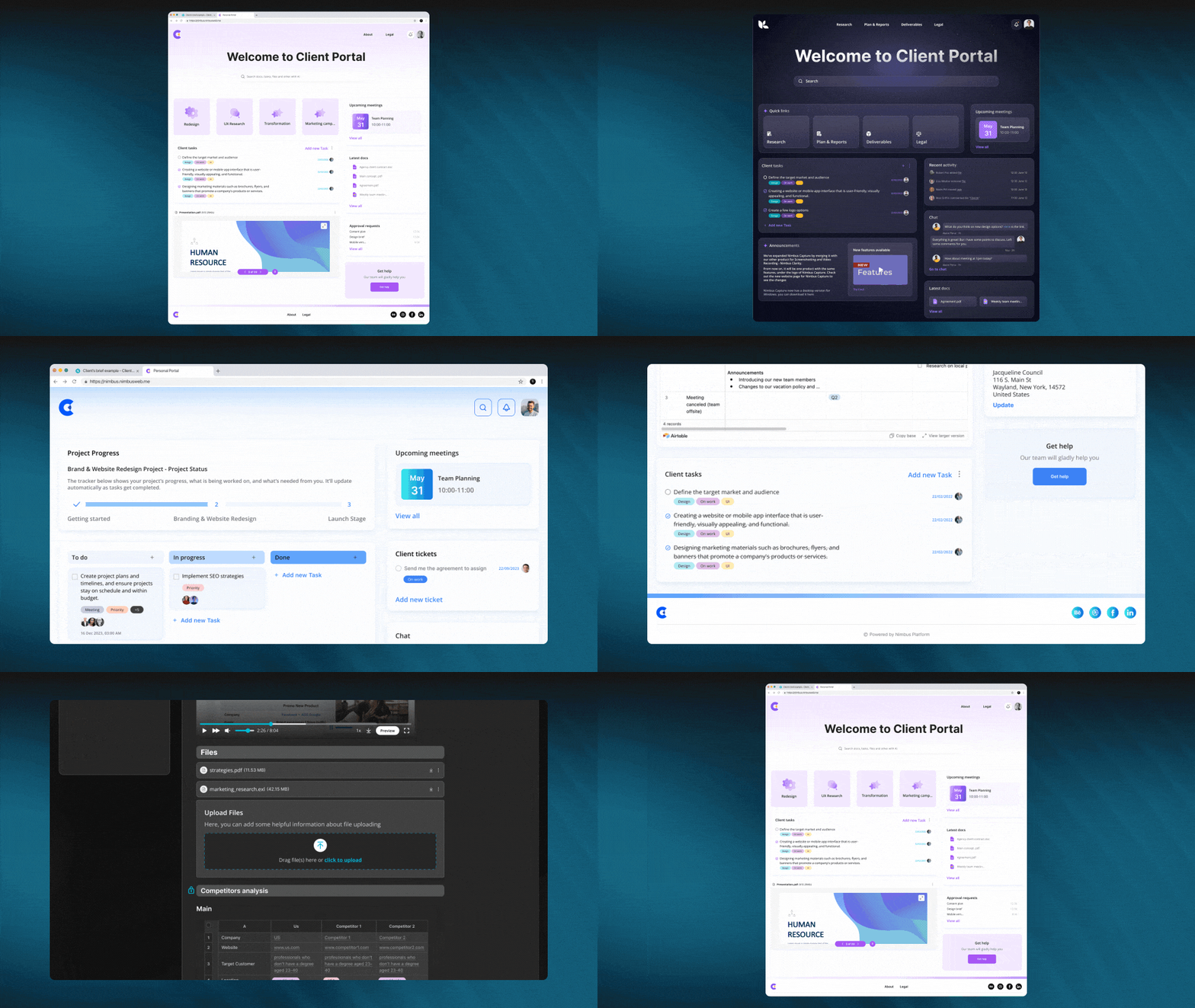
  • Client Portals. Remember when we talked about integrating new technologies? Well, this is the case. FuseBase’s client portals feature can revolutionize how your company interacts with clients. You can create branded online portals with custom styling to simply access project details, provide approvals, and collaborate seamlessly. Client Portal also offer a white-label solution and multiple external integrations (Google Docs, Calendly, etc.) So, in case your clients urgently need to update insurance policy details because of a changed address, you don’t have to waste time on countless emails or phone calls. Instead, a person goes into a branded portal, inputs new information through a user-friendly form, attaches new documents, and, after submission, the company gets this request. There are no delays or miscommunication, just a simple and fast process that ends with a great client experience. 
  • Data collection. With the data collection feature, gathering crucial client information is a breeze. You can embed forms, surveys, and analytics into pages without switching to multiple apps. A perfect digital transformation journey is all about the streamlined, user-friendly approach to collecting data and enhancing efficiency. This feature will give you exactly what you need. Imagine an insurance company claims data and feedback from clients about their experiences. How would one do all that? Sending out emails and making phone calls is time-consuming and totally unnecessary. FuseBase’s data collection feature streamlines client feedback within their portal. All clients have to do is submit feedback via an embedded survey and include customer satisfaction levels, suggestions, or complaints. A client-oriented insurance service, in turn, can use real-time notifications to deal with any concerns promptly and use integrated tools to get data about client experiences and use it to improve customer engagement.
  • Project management. Consolidate tasks, timelines, and approvals into clear project boards and workflows with a project management feature if you want to improve transparency and collaboration.  An insurance company can create task self-service, client dashboards, Kanban boards, time-tracking systems, and more to create a space where all clients and companies can track and manage progress efficiently.
    Imagine your company planning a product launch with multiple departments and stakeholders participating. Task coordination may become challenging; with this feature, however, creating an organized project board with tasks to track can become much more straightforward. Communication among project participants is enhanced via an effective project board, and real-time task dashboard updates provide real-time insight. This collaborative approach ensures all members stay on the same page while speeding up approvals and decreasing delays – the insurance company expertly manages each phase of the project lifecycle to deliver client experiences that are both transparent and structured.
  • FuseBase AI. AI capabilities continue to amaze us; FuseBase’s AI assistant is no exception! If you’re looking for a tool that will unburden your team from dealing with the manual processing of tasks and let you concentrate on more important ones, FuseBase AI is what you’ve been looking for. It will help you extract insights from large data sets, will help to generate proposals and briefs, and more!
    Now, let’s get into the details. Sometimes, when developing and marketing new insurance products takes more effort than we expect to create a compelling proposal, content generation features become invaluable tools. FuseBase’s AI assistant knows all the nuances surrounding the insurance industry and can quickly craft tailor-made proposals for each insurer or policyholder. Imagine manually dealing with vast quantities of sensitive customer data: that would be hell on Earth! Instead, FuseBase AI offers a solution: its machine learning algorithm can analyze everything from policy details and claims history, extracting insights that people might miss while making better-informed decisions with already identified patterns, technology trends, and correlations.

Summing up

Insurance digital transformation has already influenced the insurance industry and will continue as technology evolves. That is why there’s no better time than now to start your company’s digital transformation to facilitate interactions with clients and make your company a leader in the insurance sector. 

If you face this challenge and start your digital transformation with FuseBase now, your company will improve its customer-oriented approach and prosper from all the other benefits this journey will bring. 

HR Digital Transformation: Insights and Challenges

Find out what HR digital transformation is, its advantages and challenges, and more about the stages of such a transformation in our 2024 guide. Click here.

Imagine a future where companies engage employees like never before, where data drives decisions and the workplace has transformed into an engaging, efficient and highly personalized place—this is HR digital transformation. Its effects can be felt across industries, from startups to multinational corporations. But what exactly does successful HR digital transformation entail and why has it generated such hype in business circles?

In this article, we’ll reveal what HR digital transformation is. We will analyze its profound impacts, uncover rewards and obstacles associated with digital HR transformation efforts and reveal the stages that lead to success. By the end of this article, you will hold keys for unlocking an entirely new era of HR practices that reimagines how businesses and employees connect and thrive!

Now, let’s get started.

What is HR digital transformation?

Human Resource Management is currently experiencing an immense transformation due to digitalization. New policies favor eliminating manual HR processes and time-consuming paperwork processes to automate them—increasing productivity, efficiency and operational resilience due to HR digital transformation across enterprises. 

HR digital transformation represents an overall transition for any successful enterprise. Businesses can bolster operations by adopting digital tools, components, machine learning technology and systems into their operations systems to streamline them more efficiently.

Human resources (HR) digital transformation refers to moving HR functions from their current paper-based location into digital format to gain more autonomy and efficiency through cutting-edge technologies like automation, data analytics, chatbots and client and customer onboarding software, making it an ongoing process.

Why is HR digital transformation important?

HR changes must have clearly outlined goals to be effective and long-lasting. Any adjustments must be economically sensible for long-term viability and growth.

Transforming HR operations can increase productivity, decrease expenses and enhance employee experience. HR may become an active partner in driving success for any organization with automation and analytics technologies that facilitate faster decision-making processes and smooth operations.

HR digital transformation has become an indispensable element of today’s business world, empowering HR professionals to serve as strategic partners while improving employee experiences and contributing to overall business success.

Benefits of HR digital transformation

Increased employee happiness and engagement 

As your business expands, more staff are needed to handle its increased workload. The HR office, in particular, may require extra staff members like individual HR employees. HR digital transformation offers several solutions for unifying resources and streamlining interactions, contributing to increased employee and customer satisfaction. Increasing connectivity keeps workers informed and interested while encouraging faster work processes.

Better Integration of People Management With Business Strategy 

Workforce planning and human resources data can leverage HR technology to assist an organization with talent management and better aligning itself to its strategic goals. For instance, if expanding into new lines of business, data can show which employees possess the necessary expertise while others might require further training to expand successfully into said lines.

Improved deliberation based on reliable knowledge and data 

COVID-19’s situation showcased how vital data-based decisions are, giving human resource representatives access to data-rich choices that could increase staff efficiency, effectiveness and productivity, ultimately enhancing the employee experience through technology’s computing power and analytical ability.

Eliminated paper-based HR procedures

Automation makes many administrative jobs more efficient by increasing compliance control and eliminating human mistakes, freeing HR professionals to focus on more strategic projects for their companies’ benefit and ultimately improving employee productivity.

Increased workforce visibility 

Tracking employees dispersed across various locations can be challenging; technology makes this easier by connecting fragmented systems to gain full transparency over your workforce and extend it to managers for monitoring aspects like training needs and skills requirements.

Challenges of HR digital transformation

As part of our discussion about digitalization processes and issues organizations face during and after digitization efforts, we will look at several challenges companies might experience during or after digitization efforts.

Data Security and Privacy 

Privacy and data security are of utmost importance in HR digital transformation. Organizations transitioning to digital HR platforms must protect sensitive employee information against increasingly prevalent cyber-attacks. This HR transformation process entails databases, cloud storage solutions, secure transmission channels and access control measures.

Employee Resistance 

Employee resistance stems from our natural tendency as humans to resist change, particularly when new technology and work practices are involved. Employees may fear what lies beyond, feel anxious over job security concerns or require assistance adjusting to new tools and processes. Resistance can take many forms, from disengagement through passive opposition to active opposition. To overcome employee resistance, human resource professionals must implement effective change management strategies, communicating why change must happen while outlining the benefits of the HR operating model to employees as individuals and companies alike. Training employees on how to use digital tools can also reduce resistance levels.

Skill Gaps 

As organizations start implementing digital technologies and advanced HR tools, companies often experience an uneven match between the skills required to use them and those held by HR professionals implementing them. 

Organizations must provide learning and development training programs or upgrade HR staff members as a solution. offering courses like data analysis, digital HR platforms for HR automation technology or other technologies, including a digital learning platform, may help narrow this divide faster. Hiring digital HR specialists or working closely with outside consultants may also speed up the process.

Quality and Accessibility of Data 

HR digital transformation relies heavily on data quality and access, including accuracy, availability and up-to-date HR tools like HRMS. Data quality helps HR processes become more effective while leading to more intelligent decision-making. Data cleansing, validation and standardization are critical steps toward maintaining high data quality; organizations should implement data governance frameworks to clearly articulate roles, responsibilities and standards within an organization.

Change Management 

Change management is paramount in any HR digital transformation initiative as it addresses its human elements. Change management involves planning, implementing and communicating changes successfully so employees and stakeholders can adapt more quickly to digital transformation in HR. Without an effective change management strategy to support its success, its destiny could be in jeopardy.

How long does digital transformation take?

Timing of HR digital transformation varies between organizations depending on factors like size, existing IT infrastructure, scope of transformation, and commitment and acceptance for change.

Professionals estimate that once an overall concept of digital transformation in HR has been decided and agreed upon, its realization could take between 12-18 months to materialize. You can achieve a minimal viable transformation of your entire organization in 18 months. It’s best to implement HR digital transformation in phases. It allows organizations to test and adjust along the way. Some changes are relatively quick to implement, but a complete digital transformation can take several months or even years.

6 Stages of HR digital transformation when working with FuseBase (formerly Nimbus)

FuseBase (formerly Nimbus), a versatile collaboration platform explicitly designed for client-oriented businesses, plays an essential part in the HR digital transformation journey. FuseBase (formerly Nimbus) provides HR professionals with an intuitive platform that integrates communication, content management and essential tools into one streamlined package—providing HRs with the tools to successfully navigate digital transformation challenges. FuseBase (formerly Nimbus) collaboration platform excels at simplifying and improving every stage of HR digital transformation. Let’s delve into each stage of HR digital transformation and discuss how FuseBase (formerly Nimbus) can serve as an invaluable asset at each one.

Stage 1: Business as Usual 

Business as usual is the first of the six stages where your HR digital transformation journey starts. This stage shows things are stuck in the past. Traditional HR operations remain prevalent, top business leaders are uninterested in change and the HR department is using outdated approaches. Everyone appears comfortable using old methods. Everybody’s focus seems more directed on maintaining the status quo and sticking with what’s familiar than shifting towards anything different and willing to raise digital literacy in the company.

FuseBase’s (formerly Nimbus) Knowledge Base feature can be especially valuable to organizations in Stage 1, where traditional HR methods remain prevalent due to leadership’s inability or unwillingness to change outdated solutions. By building accessible knowledge bases that incorporate digital technologies, companies preserve institutional knowledge while keeping vital insights alive even when leaders resist change. Documenting HR processes and practices into one centralized knowledge base prepares your entire organization for transformation while safeguarding essential HR knowledge.

Stage 2: Present and Active

Present and Active is the second of 6 stages of the HR digital transformation journey, where HR teams start getting curious about different methods of doing things. Big bosses are beginning to see the advantages of technology in HR, creative ideas surfacing and trials conducted on new technology or processes. In this stage, HR begins testing different ideas or processes while trying small experiments in an “I wonder what will happen” phase to optimize HR work processes and practices.

FuseBase

FuseBase’s (formerly Nimbus) Client Portals feature is an ideal fit to get the most out of this stage. HR employees can utilize this digital technology tool to easily create customized project portals branded to each employee.

With FuseBase (formerly Nimbus) you can:

  • Centralize updates –  Make updates more user-friendly by creating and organizing files into folders.
  • Streamline approvals – Streamline approvals by receiving notifications directly on your dashboard when someone completes a task.
  • Enhance communication – Transform employee communication by engaging  via convenient chat channels.

This incredible feature provides users with an enhanced client experience while successfully implementing technology or process changes. FuseBase’s Client Portals provide HR departments a way of streamlining communication while creating the foundation for future transformation initiatives.

Stage 3: Formalized

Things have taken a significant turn in Stage 3: job applicants and employee data are now essential factors when making decisions. With everyone from big bosses guiding people on how best to use new systems to team members pitching in with their expertise to apply new tech across their companies—it marks an era where everyone works collaboratively to digitally transform the organization.

At Stage 3, FuseBase’s Data Collection feature is ideal when the HR team embraces data-driven decision-making and adopts new technology. This feature enables HR departments to easily embed forms, surveys and analytics into HR processes, streamlining data gathering from candidates and employees while discovering information discrepancies & formalizing data use for decision-making purposes. As executive members guide organizations into adapting new systems efficiently, Data Collection ensures each team member contributes their expertise for accurate HR data gathering & storage.

Stage 4: Strategic

Stage 4 is one of the stages of the digital HR transformation journey where things start moving rapidly. Those responsible for leading HR changes sit directly under their big boss, so convincing people of digital changes is no longer required. Now is when planning for future HR operations is key; you are building an expanded road and google map of technological solutions that spans years into the future.

FuseBase’s collaboration feature is essential in supporting digital HR transformation projects involving multidisciplinary teams and long-term planning by offering comments, chats, Video/Audio Recording capabilities and Real-time Collaboration features that facilitate successful results for organizational transformation efforts.

  • Comments provide an ideal platform for team discussions around HR transformation strategies and long-term plans.
  • Chats offer real-time communication channels for multidisciplinary teams, providing instant discussions, updates sharing and brainstorming sessions regarding HR transformation roadmaps. 
  • Video and Audio Recording help users to make sure they’ve captured important meetings, discussions and presentations related to HR transformation strategies to safeguard key dialogue for reference and future planning purposes.
  • Real-time Collaboration tools enable teams to work simultaneously on documents, plans and strategies—this feature is particularly valuable when developing HR transformation roadmaps that integrate HR across every facet of business operations.

Stage 5: Converged

Stage 5 of HR strategy development focuses on making employee lives exceptional. By engaging creative HR teams and outside help to optimize how new hires are welcomed, learning strategies implemented, goals met and achievements reached, you are looking for ways to create an incredible employee experience—moments that bring people joy while improving job performance. Hence, employees remain with your company long-term. At this stage, HR leaders guide company strategy and operations while initiating exciting changes within HR operations/strategies with more rewarding employee benefits for all staff involved.

FuseBase (formerly Nimbus) allows you to invite external experts and agencies into your client portal, giving them access to documents and resources they’ll require for specific projects—opening doors to innovation!

This feature allows you to collaborate closely with external partners, enabling them to contribute their expertise directly into specific folders or generate novel ideas. It also simplifies collaboration and innovation, ultimately leading to improved employee engagement and efficiency within HR at this stage of its journey.

Stage 6: Innovative and adaptive

Stage 6, the last one of the stages of HR digital transformation, involves testing out new things and exploring what’s possible. Your digital transformation team resembles an inventive group, working closely with other departments and testing seemingly offbeat ideas, such as HR transformation. Though experimentation doesn’t always go smoothly, they continue with it anyway! At this stage, all those within an organization start seeing things differently; digital transformation becomes part of everyday work life for employees like an entirely new world reveals itself! Digital transformation becomes the new normal—something out of science fiction that makes all other work possible!

FuseBase’s integration feature is truly game-changing for this final stage; it acts as an arsenal of gadgets you can connect to FuseBase (formerly Nimbus) seamlessly.

So, suppose one of your colleagues develops a unique feature in another tool, finds an intriguing website reference or creates an incredible design flow in Figma. In that case, you can seamlessly incorporate those innovations into FuseBase (formerly Nimbus).

FuseBase (formerly Nimbus) serves as an open doorway to new ideas, offering you a portal into all the creative and innovative experiments being performed across your organization. By harnessing FuseBase (formerly Nimbus) for these experiments, you keep digital transformation rolling forward despite some unconventional concepts; digital transformation will become a normal part of the company’s life!

HR digital transformation examples

Digital Onboarding

Thousands of people have been employed after the pandemic and never set foot inside a company’s office, which makes it harder to get started in a new company. The increasing popularity of remote and hybrid work makes this a constant challenge.

In some cases, what used to be a few anxious days while new employees got to know their colleagues and their company culture has been replaced with a feeling of disconnection from their company and its culture.

Through its digital employee onboarding process, FuseBase (formerly Nimbus) serves as a bridge that introduces new employees to their company culture and processes, whether they are working remotely, following a hybrid schedule or are office-based. Employees access documents, instructional material and essential resources through an employee portal. Widgets housing process documents, task lists and clickable checklists make onboarding procedures accessible and smooth for newcomers. With integrations like Calendly, they can seamlessly schedule meetings with mentors or colleagues without feeling disconnected from their company culture and goals. FuseBase (formerly Nimbus) turns remote onboarding from a disjointed effort to an integrated experience for employees.

Performance management

It is evident that the board representative’s execution was an HR waste, as it required manual auditing and an assortment of assessment structures. The robotization of these paper-based, monotonous cycles will increase profitability and maintainability through better critique, objective setting and more preparation opportunities.

Determining and discussing goals with representatives is critical to the execution of executives. Representatives and directors can monitor the achievements of executives in an exhibit of their framework with robotization. After implementation, the information allows HR offices to identify bottlenecks. Using automation, notifications and updates are sent to both representatives and administrators to promote the culmination and completion of important achievements.

FuseBase (formerly Nimbus) stands as an invaluable ally for HR digital transformation efforts, automating time-intensive processes like manual collection of employee feedback and review of assessment forms through FuseBase (formerly Nimbus) to increase efficiency and promote employee retention. One notable feature is HR’s Task Management system, through which employees and HR can assign tasks to new hires and monitor their completion. With the help of this important digital technology, employees then mark tasks complete, allowing HR to evaluate performance objectively and adapt training or support accordingly. FuseBase (formerly Nimbus) streamlines the onboarding process and ensures employees are actively engaging and aligning themselves with organizational goals. Furthermore, tracking and notifications features help HRs pinpoint bottlenecks within processes so important milestones are reached efficiently and smoothly.

Employee Self-Service Portals

A McKinsey report found  employees spent nearly a full day every week searching for company information, including basic human resources data. “How much time can I take off? Who do I call when I am sick? What is the best way to get my W-2 form from 2 years ago?”  

FuseBase (formerly Nimbus) makes this process simpler by offering its powerful Knowledge Base feature, enabling HRs to quickly build an employee knowledge repository containing essential info that is readily accessible for easy reference.

This is one of the best digital HR solutions that help employees quickly locate answers to common employee inquiries in this centralized knowledge base, freeing them to seek solutions independently while alleviating HR professionals of some burden. Not only is FuseBase (formerly Nimbus) efficient, but it also fosters an atmosphere of self-service and knowledge empowerment within your organization.

Summing up: HR digital transformation best practices

Human Resources Digital Transformation can have powerful positive results on business. Successful HR digital transformation depends on many factors, including strategic alignment and leadership support, data-driven decision-making and implementation, change management, user-centric design, collaboration/sustainability and continuous improvement. HR digital transformation provides a way for organizations to create environments that are employee-friendly and adaptable at the same time. This article covers the best practices that will aid your company’s transformation processes if appropriately implemented. Good luck with your transformation journey!


The revolutionary Hyperloop has died: The Simpsons were right again

Currently, there are no full-scale Hyperloops anywhere in the world. Musk’s test tunnel in California no longer exists, there’s only one for Teslas now.

It came to change mobility, the way humans moved around the Earth. A Madrid – Paris in two hours. A Barcelona – Moscow in less than four. The Hyperloop allowed us to imagine a world with hardly any airplanes. Now, this project is dead.

Netflix DOWNLOAD

While there were many companies trying, it has been Hyperloop One (formerly Virgin Hyperloop) the futuristic transportation company that promised to transport us through vacuum tubes at airplane speeds, the one that is closing down, according to Bloomberg.

The company will sell its assets, close its offices, and lay off its employees. It will formally close at the end of the year, at which point all of its intellectual property will be transferred to its majority shareholder, the major Dubai port operator DP World.

A decade chasing the dream of the Monorail of the future

Since its foundation in 2014, the company raised around 450 million dollars in venture capital funds and other investments. Although there are still a small handful of startups trying to build hyperloops, the disappearance of one of the largest hyperloop companies marks the end of the dream that originated with Elon Musk’s so-called “alpha paper” in 2013.

Musk theorized that aluminum aerodynamic capsules filled with passengers or cargo could be propelled through a nearly airless tube at speeds of up to 1,220 km/h. These tubes, elevated on pylons or buried underground, could be built within cities or between them. He referred to it as the “fifth mode of transportation” and claimed that it could help change our way of living, working, trading, and traveling.

The most striking scenario he proposed was a trip from Los Angeles to San Francisco in just 30 minutes. The idea captivated the imagination of engineers and investors around the world.

Virgin Hyperloop was originally founded as Hyperloop Technologies before changing its name to Hyperloop One in 2016 and then again to Virgin Hyperloop One after being acquired by Richard Branson’s company. The company came out strong, with tens of millions of dollars in funding and a bold vision for hyperloop systems worldwide.

In 2017, the company resolved a dispute with one of its co-founders, Brogan BamBrogan, over counterclaims of harassment and sabotage. One year later, another co-founder, Shervin Pishevar, was removed amid allegations of sexual assault and misconduct.

In addition, the company was always short of money. Branson helped secure a new $50 million investment from two existing investors, which helped meet payroll obligations. The company raised $172 million in new funds in 2019, $90 million of which came from DP World, which had previously invested $25 million in the company and already has two seats on the startup’s board of directors.

The company took several important steps, such as building a test track in Nevada to verify the safety and viability of the technology. In 2020, it conducted its first -and only- test with human passengers.

The capsule only reached a maximum speed of 160 km/h, far from the original promise of multiplying it by seven.

The hyperloop has always been a dream, not a real project

Critics claim that, although the hyperloop is technically feasible, it is nothing more than technological smoke. It has been said to be an economically impossible “utopia” to achieve. It is one of those technologies that is also “just around the corner,” according to its proponents, despite apparently still years away from completion.

During the pandemic, almost all top executives and founders left Hyperloop One, which also dropped the Virgin from its name after the company decided to prioritize cargo transportation over passenger travel.

Currently, there are no full-scale hyperloops anywhere in the world. Musk’s test tunnel in California no longer exists.

The Boring Company, Musk’s tunnel construction operation, continues to dig underground passageways in Las Vegas, but for Teslas, not for hyperloops. The future, it seems, is almost the same as the present.

Pokémon Scarlet and Purple will have one last surprise content after their DLCs

Even though it seemed they had exhausted all possibilities, Pokémon Scarlet and Purple will have new content following their DLCs in the form of an epilogue for their story.

If there’s one thing we know, it’s that Pokémon Company always has an ace up its sleeve. It’s not the kind of company that you can expect to finish a video game without already having planned and in production not only the next one, but everything that should follow. That’s why we’re not surprised when they announce expansions, DLCs or epilogues that seem to come out of nowhere. Because that’s precisely what Pokémon Company does.

Nintendo Switch Online DOWNLOAD

We said epilogue not just to say something, but because that’s what The Pokémon Company has just announced. An epilogue for the Pokémon Scarlet and Purple DLC, which will close its story with an adventure that will take us to Noroteo, a region where we will reunite with some of our adventure companions.

All of this, moreover, happens when we have relatively recent DLCs. With The Turquoise Mask having been released on September 13th and The Indigo Disc on December 14th, many people haven’t even completed them yet. Or maybe they haven’t even acquired them.

In addition, this announcement comes not without controversy. The Indigo Disk comes with an error that can block our game, forcing us to restart. This happens if we capture a particular Pokémon, Inkay, and level it up to level 30 using candies. An error that The Pokémon Company has acknowledged, but will not fix until the end of January.

This epilogue of the two DLCs, The Turquoise Mask and The Indigo Disc, will arrive on January 11th. While there is at least one game-breaking bug in these DLCs that The Pokémon Company is aware of and will not fix until two weeks after releasing this epilogue. A questionable decision that certainly does not make them look good in front of their audience. Even if it doesn’t seem to matter to them.

Nintendo Switch Online DOWNLOAD