The Pokémon franchise has been entertaining audiences since February 1996. Since the release of the original Nintendo games, there have been animated series, animated and live-action movies, mobile games, and even a popular Pokémon card game.
Collecting and trading Pokémon cards is an exciting hobby for many, but the real thrill comes from using your collected cards in a Pokémon card battle. If you’ve ever wondered how the card version of the game works, this Pokémon TCG guide will provide you with all the answers.
What Are Pokémon Cards?
The Pokémon Trading Card Game (or Pokémon TCG) is a card game based on the popular Pokémon franchise. Each card features a different Pokémon and their other stats such as health, attack power, etc. You can collect, trade or even battle with your cards.
At the top of the card, you will find the Pokémon’s name. To the left of the name, you’ll see a rectangle that states if the Pokémon is ‘Basic’ or an evolved form of the Pokémon (Stage one or two, etc.). To the top right, you’ll see how much HP (health points) your Pokémon has. To the right of your Pokémon’s HP is a circle indicating the type, i.e. electricity, water, grass etc.
Below the Pokémon image, you’ll find a list of the Pokémon’s attacks and how much damage each attack does. To the left of each attack, you’ll see the energy cost for that attack. You’ll need to equip your Pokémon with the required energy cards to use the attack. Some attacks have additional effects. Make sure to follow the instructions under the attack to see the other effects.
FAQ About Pokémon Cards
Although the Pokémon TCG is easy enough to understand and start playing, players always have a few additional questions. This next section will provide answers to a few of the most commonly asked questions about the Pokémon TCG.
How Many Pokémon Cards Are in a Pack?
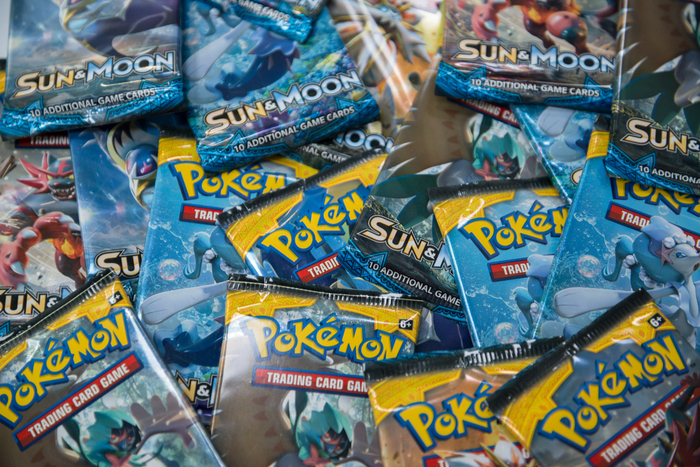
A Pokémon Booster pack contains ten cards. Of these cards, six will be common cards, three will be uncommon, and one will be rare. Along with these ten cards, you’ll also get one foil card, with the possibility of it being a rare foil card. The packs are completely randomized, so there is no knowing what you will find in a pack.
What Do Pokémon Code Cards Do?
Every Pokémon TCG product you buy, whether a booster pack or starter set, should have a code. This code can be used to unlock in-game items on the Pokémon TCG Online version. By entering the code in the online game, you will get digital cards from your booster packs and even promo cards.
How to Win the Pokémon TCG?
There are a few ways to win at Pokémon TCG. The easiest way is to knock out all six of your opponent’s Pokémon and collect the prize cards you set aside at the beginning of the match. Once you’ve picked up the sixth card, you win.
Another way to claim victory is by knocking out your opponent’s active Pokémon, and if there are no more active Pokémon on his bench, you’ll win. Finally, if your opponent runs out of cards and has no more in their deck, you’ll win by ‘decking’ your opponent.
Is There a Pokémon TCG App?
There is a new free-to-play app available that lets trainers take the POkemon TCG online. With the app, you can enjoy all your favorite aspects of the card game, such as collecting cards, building decks, and battling. The Pokémon TCG Live app is available on PCs, Mac’s and smart devices such as tablets.
What Pokémon Card Should I Buy?
When buying booster packs, you end up with ten random cards. However, now and again, you may stumble upon Pokémon cards that are for sale. You should try buying the rare cards or ones that you don’t have in your deck when this happens. Make sure you consider the energy types you have since it’s no use buying a card with a Pokémon you have no energy for. Some of the most valuable Pokémon cards to buy include Shaymin EX, Surfing Pikachu, Charizard GX, or Lysandre’s Trump card.
How to Trade Pokémon Cards?
Trading Pokémon cards is an exciting part of the game. However, it is important to know how to trade Pokémon cards to ensure that you get a fair trade and don’t end up with cards less than the value of the one you traded. In order to do this, make sure that you research trades and the value of cards beforehand.
Knowing the value of your cards is the best way to ensure that you end up with fair trade. To trade cards, you and the other trainer have to come to an agreement on which cards you are willing to trade, and if both parties feel it’s fair, you can make the trade.
How to Play Pokémon Cards? Beginner’s Guide to the Pokémon TCG
There are a few rules and steps that you need to be aware of if you’re starting to play Pokémon TCG. We will be sharing a few tips on how to play Pokémon cards for beginners.
Basic rules
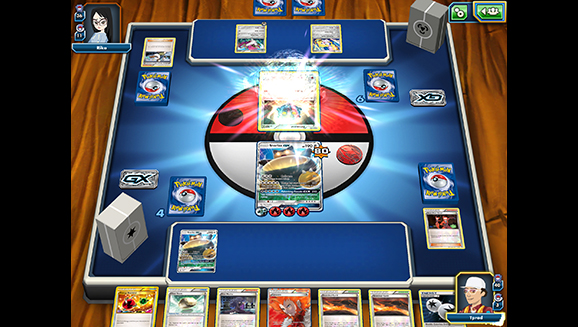
The main objective in the Pokémon TCG is to take all of your prize cards before your opponent does. Every time you defeat an enemy Pokémon you’ll receive one of your six prize cards. Additionally, you win if your opponent has no Pokémon on the field, or runs out of cards in their deck.
Each deck is comprised of 60 cards. The game begins by drawing seven cards and tossing a coin to see who goes first. You must place at least one active Pokémon onto the field before starting the game (you can also place any other basic Pokémon from your hand onto your bench, with a maximum of one active, and five bench Pokémon). Pokémon require energy cards (typically of their specific type) to use their moves. The moves themselves are self-explanatory, as they contain their own unique details.
Trainer cards can also be used by each player for a variety of effects. There are four main types of Trainer cards: Stadiums, Tools, Supporters, and Items.
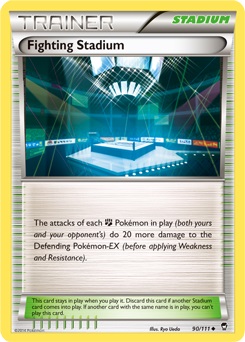
Stadiums are cards that affect both sides of the field, and only one can be in play at a time.
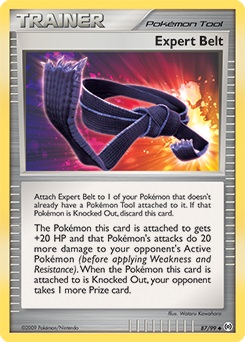
Tools attach themselves to a specific Pokémon, and only affect that Pokémon for the entire time that they are attached. They are also occasionally listed under Item cards.
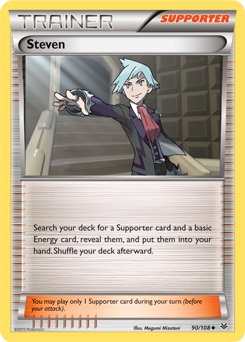
Supporters are special Trainer cards with extremely powerful abilities. As such, only one can be used per turn.
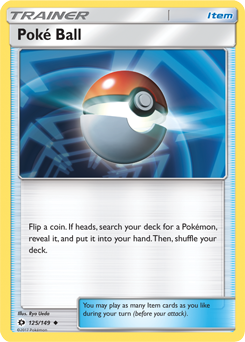
Items are standard Trainer cards, which allows you to use as many of them as you want in a turn.
Additionally, only one energy card can be played per turn (unless a card says otherwise), a Pokémon can only evolve once per turn, and the player who goes first is not allowed to attack on their beginning turn.
For more details on the rules, you can check out Pokémon.com’s guidelines for the game.
How to set up: Building your deck
As a rule of thumb, each deck should have around 20 Pokémon cards, 20 trainer cards, and 20 energy cards. Of course, you can bend these a little bit, but it should always be around those amounts. Additionally, you should avoid having any more than two types of Pokémon in one deck (other than colorless).

5 reasons to come back to Pokémon Go
Read Now ►Special Conditions
Within the TCG, there are five different conditions that Pokémon can be affected by. These are all negative effects caused by the moves or abilities of opponents. Burned and Poisoned are stackable conditions, so a Pokémon can be affected by both, along with one of the other three conditions. However, all three of the other conditions (Asleep, Confused, and Paralyzed) are mutually exclusive, so a Pokémon can only be affected one at a time. Here is how each special condition works:
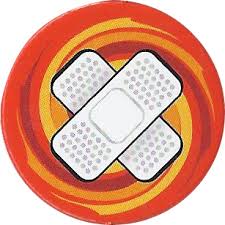
Burned – As stated above, this is one of the two special conditions that is not mutually exclusive with the rest. To represent being Burned, Pokémon with this special condition receive a “burn marker”, which is a large red circle. While Burned, a Pokémon receives two counters of damage between turns. After receiving the damage, the player then flips a coin. If heads, the Burned condition is cured.
If tails the Burned condition remains. In older versions of the TCG, Burned Pokémon would only receive the damage if the coin flip was tails, but would not be cured if the coin flip was heads (instead they would simply retain the special condition but with no damage taken).

Poisoned – A very common special condition, Poisoned Pokémon also receive a special counter. This “poison marker” is a large green circle. Poisoned Pokémon receive one damage counter between each turn.
Asleep – Pokémon that are Asleep are turned counterclockwise to the side. When affected by this special condition, they basically can’t do anything. They are unable to attack or retreat. Between each turn, the player flips a coin. If heads, the Asleep Pokémon wakes up and is no longer affected by the special condition. If tails, the Pokémon remains Asleep.
Confused – Confused Pokémon are placed upside-down. These Pokémon have to flip a coin if they want to attack. If heads, they are able to attack normally. If tails, they receive three damage counters, and the player’s turn ends. In older versions of the TCG, Confused Pokémon would only receive two damage counters on failed coin flips. Additionally, they had to flip a coin in order to retreat, and would lose their energy cards if they were unsuccessful.
Paralyzed – Paralyzed Pokémon are turned to the side, clockwise. Similar to being Asleep, a Paralyzed Pokémon is unable to attack or retreat. However, after the end of the player’s turn, the condition is automatically cured.
It is interesting to note that in addition to moves that would typically Paralyze a Pokémon in the video games, such as an Electric move, will cause this special condition, moves that would other Freeze a Pokémon in the video games will also often cause this condition.
There are other unique abilities that can affect a Pokémon’s stats or moves, however, they are not given unique counters or placements. Instead, you will just need to follow the directions of the card that inflicts the condition.
Additionally, all conditions can be removed through evolution or retreated an active Pokémon to the bench (since only active Pokémon can be affected by special conditions).
A beginner’s guide to Pokémon Quest
Get started ►The video games vs the TCG
If you’re used to playing Pokémon games or watching anime, then you may be confused about some of the terminology used within the card game. The main difference in terminology is the type names. Many of the types have been merged into different types, while others have been renamed altogether. Below is a list of the TCG types and their corresponding video game types:
- Colorless – Normal, Flying
- Water – Water, Ice
- Fire – Fire
- Grass – Grass, Bug
- Fighting – Fighting, Rock, Ground
- Lightning – Electric
- Psychic – Psychic, Ghost, Poison (old versions of the TCG have Poison types marked as Grass instead)
- Dragon – Dragon (old versions of the TCG have Dragon types marked as Colorless instead)
- Metal – Steel
- Darkness – Dark
- Fairy – Fairy
Additionally, Some Pokémon have weaknesses and resistances, but typically they only hold one. So while a Pokémon like Diglett may be weak to both water and grass in the video games, a card version may only be weak to one of them. This can lead to unique cards among the same species, with one Diglett card being weak to water, while another is weak to grass.
Moves also have their own unique names and traits within the card game, so be sure not to get hung up on some of the video game rules that you may be accustomed too.
Type Differences – Choosing your playstyle
Other than terminology and weaknesses, you may be surprised by some of the unique qualities present in the Pokémon types of card game. Each type has its own playstyle that it tends to lean towards, which is important when deciding what type to use in your deck.
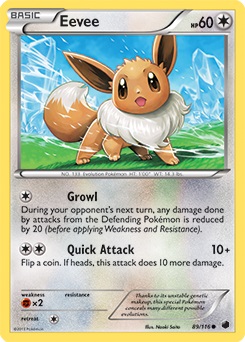
Colorless Pokémon can be used in any deck since they can use any energy type. This makes them an incredibly versatile type, which shows and in the large variety of Pokémon they have. They often tend to be on the defensive side, but you will find Colorless Pokémon to provide any number of unique traits.
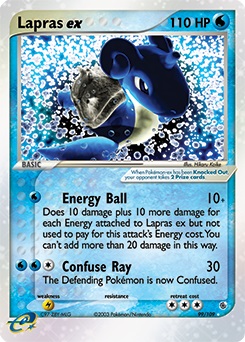
Water Pokémon cards tend to rely heavily on energy manipulation. This means that they frequently have abilities that let them draw energy cards from the deck, and may deal more damage based on how many energy cards they have attached. Water types also may have the ability to force opponents to switch Pokémon on their bench. This type is highly recommended for new players, as it isn’t as risky as many of the other types, and it has a plethora of Pokémon to choose from.
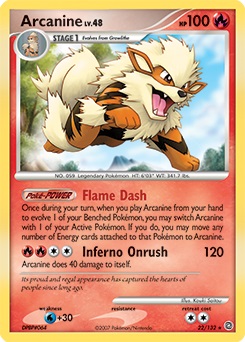
Fire types have extremely powerful attacks that can often Burn opponents, leaving them with a devastating status condition. However, they require extensive amounts of energy, since they often are forced to discard energy when using their most powerful attacks. Because of this, Fire types are somewhat of a one-hit wonder, often being able to take out powerful Pokémon instantly, and then needing to survive a few turns before they can do it again. Alternatively, these cards may deal damage to themselves instead of causing you to discard energy.
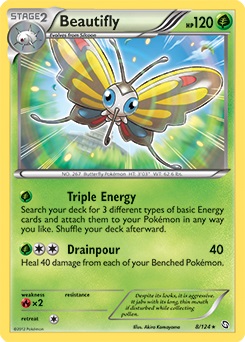
While Grass-types may be known for their frailty in video games, the TCG allows them to take advantage of a few skills in order to help them, survivor, for a while. One of the main strengths that Grass types have over the others is their ability to heal themselves whenever they attack. This can allow them to outlast their opponents long enough for their Poison abilities to slowly kill them off. It takes some strategy to pull these tricks off, but Grass is one of the best types for strategic beginners.
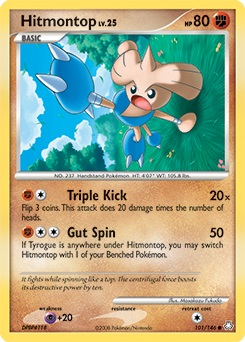
Nothing says “high-risk high-reward” like Fighting types do. Often relying on coin flips, Fighting type Pokémon can do devastatingly high amounts of damage, but are almost solely reliant on chance. Thankfully, they have some abilities and trainer cards that lower the negatives of this chance, so you’ll need to include these cards to maximize your probabilities if you choose to use this type. Despite the risk, Fighting type Pokémon can easily decide a game early with a few lucky coin tosses.
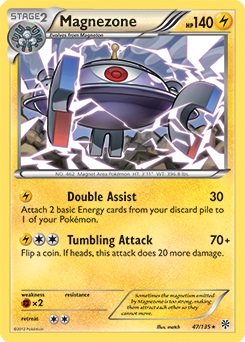
One of two energy manipulation types, Lightning Pokémon never has to worry about not being able to attack. While Water primarily manipulates energy from the deck, Lightning Pokémon are able to retrieve their cards from the graveyard. This ability works well with itself, as there are a few powerful Lightning types that must discard their energy to use their attacks. Additionally, Lightning Pokémon are known for their ability to Paralyze their opponents, as well as being able to attack benched Pokémon.
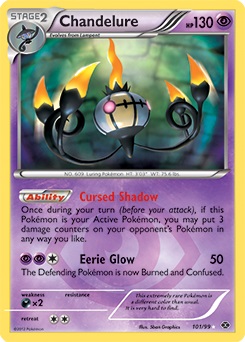
Psychic types are masters of special conditions. No matter what expansion you are playing with, it’s rare to find Psychic Pokémon that don’t inflict the opponent with Confusion, Paralysis, Poison, Sleep, or on even Burns on some occasions. They are able to use this to their advantage, as they can whittle down their opponent’s defenses, while their opponent is unable to attack back.
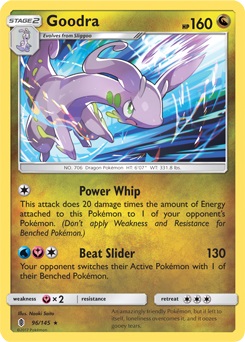
Probably the most powerful and unique type out there, Dragon Pokémon are actually the only ones without their own basic energy cards. Instead, each Dragon has two other types that they must pull from in order to be used. For example, this Goodra card requires both Water and Fairy energy to be used. Despite this requirement causing some trouble for Dragons, they have some of the most powerful moves in the game, with practically no other type resisting them.
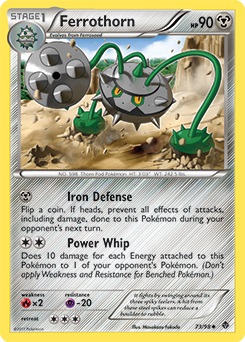
Just as its video game counterpart, Steel, is able to resist many different types, Metal Pokémon are known for their strong defensive abilities. Often they are able to increase their defenses, preventing any damage from penetrating their walls. They also have great synergy with Trainer cards, that allow them to bolster their offenses.
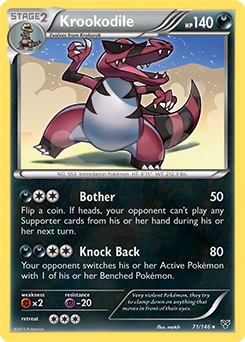
Darkness types are all about trickery, as one might expect from the name. These Pokémon are similar to rogues and thieves in other RPGs and trading card games. As such, their primary ability is being able to force their opponent to discard cards from their hand, the field, or their deck. In addition to this, they can force your opponent to switch their bench Pokémon, and deal additional damage to already weakened foes. This can disrupt any strategy your opponent may be thinking of using.
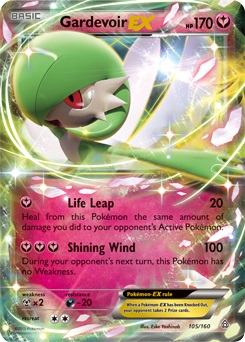
The most recent type to be added to the TCG, Fairy is also somewhat tricksters in their own right. They are known for their ability to weaken opponent attacks, and occasionally being able to prevent their opponent from attacking altogether. Fairy types require high levels of strategy to use, and are not often the best for new players to start with. However, if you’re able to successfully create a Fairy deck, you’ll be able to compete with the best decks out there.

These 4 hilarious Pokémon Go ripoffs will make you cringe
Read Now ►When deciding on multiple types to use, it’s important to think of what types would work well together. For instance, both Lightning and Water focus on energy manipulation, so they are an easy combination to make work. In contrast, you may want to look into types that make up for each other’s weakness. Since Lightning allows cards to return from the graveyard, and Fire sends energy cards to the graveyard, Lightning can help make up for Fire’s main weakness. This may be harder to make work then the synergistic Water/Lightning combination, but can yield powerful results when used correctly.
It’s important to keep in mind the main strengths of each type, and the similarities they have to other types, when deciding on what combination you want to have. Water and Lightning rely on easily managed energy manipulation; Fire, Fighting, and Dragon are risky, but provide incredibly strong moves; Grass and Metal are defensive types that wish to simply outlast their opponents; and Darkness, Psychic, and Fairy rely on messing with the opponent’s status condition and strength. Each of these can also be enhanced with Colorless Pokémon, which has its own unique abilities and play styles that mesh well with any type.
Also keep in mind that while these are the general strategies for each type, there are Pokémon within each of these types that break the norm. For example, even though Water and Lightning are known for their energy manipulation abilities, this Ribombee is also able to manipulate energy to some degree. Keep this in mind when building your decks, as you may come across a useful Pokémon that does not fit the standard mold of that type.
Tournaments – where can you play with others?
If you’re serious about getting into the Pokémon TCG, then it’s important to find places where you can play and practice. Most comic book shops that hold Magic: The Gathering tournaments, will hold some kind of Pokémon event on occasion. However, there is an easier way to find out about tournaments near you, rather than simply contacting nearby comic shops.
The Pokémon Company has its own special tournaments that are regulated through their Play! Pokémon site. These range anywhere from small get-togethers to major national championships. Often these tournaments have prizes to be won and are free to participate in, so they are worth checking out if you have the chance.
TCGO
If you prefer not to play in person or are simply looking to get better in your free time, the Trading Card Game Online app can provide an excellent source of practice. It also contains its tournaments if you want to stay competitive but aren’t able to go to Play! Pokémon’s events. The rules work the same way with the live card game, so it is the perfect way to become a TCG master.

