Isar Aerospace reaches orbit on second flight: a first for continental Europe

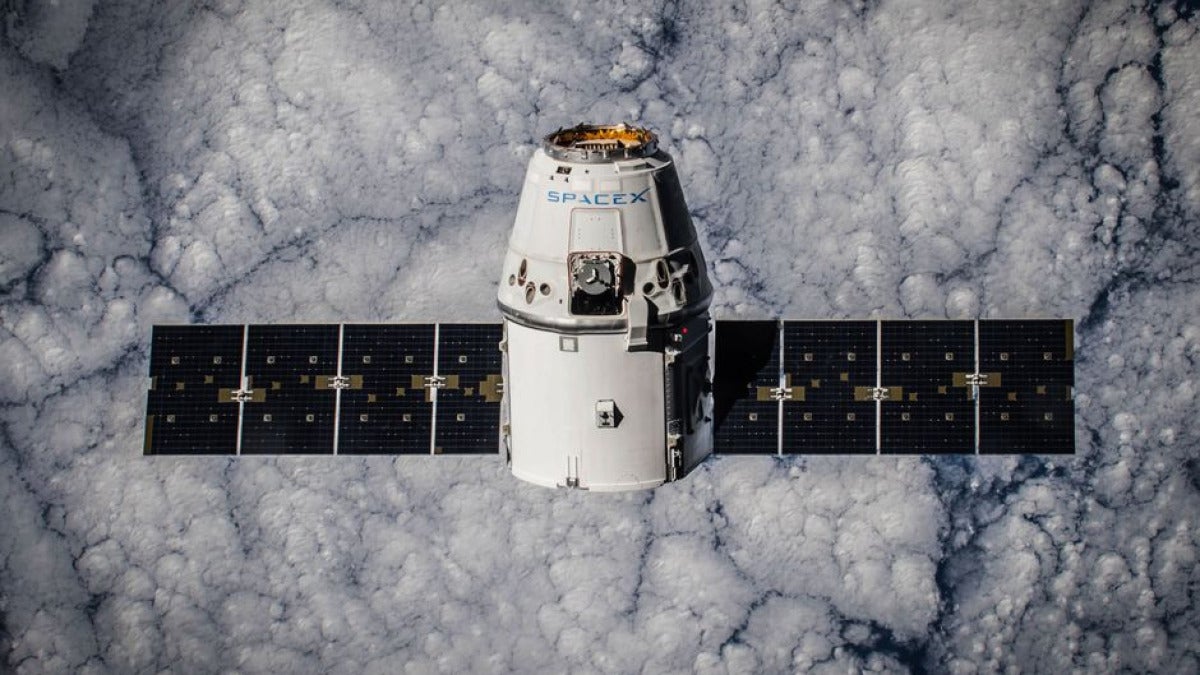
At 22:12 CEST, Isar Aerospace said its Spectrum rocket made orbit on its second flight from Andøya Spaceport, deployed its payloads, and became the first privately developed launcher to do that from continental Europe.

The 28-meter two-stage vehicle lifted off from Andøya Spaceport at 22:12 CEST on “Onward and Upward.” About four minutes later, according to Isar Aerospace, it had reached orbit. The flight also marked a rebound from last March’s first attempt, which crashed after about 30 seconds, followed by later weather, technical, and range delays.

Spectrum is built to carry up to 1,000 kg to low Earth orbit for dedicated small-payload missions and precise placement, not Falcon 9-style heavy lift. Isar Aerospace said this flight carried educational and startup satellites selected through the German Space Agency’s Microlauncher Competition as part of a European Space Agency (ESA) program. The timing, just days before French President Emmanuel Macron’s Paris space summit, also points to Europe’s push to rely less on non-European providers, with Rocket Factory Augsburg, PLD Space, Andøya Spaceport, and SaxaVord all part of that effort.

If you follow Europe’s launch market, keep an eye on Isar Aerospace. Founded in 2018, the company says it has raised €270 million, has an ESA deal worth about €200 million, gets 60% of its orders from defense, plans to produce 40 rockets a year near Munich, and has its manifest booked through 2028.

You can find mission details through Isar Aerospace’s official channels.
Dyson just announced new robot vacuums: UV stain detection arrives

Dyson has announced a new line of robot vacuums. The company says the new models bring UV stain detection, automatic vacuuming, and stronger mopping. For now, Dyson says the lineup will be sold through Dyson, though broader availability and pricing still haven’t been confirmed.

MyDyson Download

The headline feature is UV-based stain detection. Dyson says it helps surface dried spills, grime, and marks that can disappear on hard floors under normal light. The company also says the robots are built to spend more time on those areas, rather than just moving through a preset cleaning pattern.

That puts Dyson more squarely up against Shark, along with premium rivals such as Roborock, Ecovacs, Samsung, and iRobot. It’s pushing high-end machines with tougher scrubbing, powerful suction, and the kind of premium engineering it likes to lead with, in a market where self-emptying docks, advanced mapping, and mop washing are starting to look like standard features.

If you want a robot cleaner that can do more than a light daily wipe, and that has a better shot at sticky spots, kitchen splashes, and tracked-in dirt, this is one to keep an eye on.

For now, the new lineup will be sold through Dyson, though wider availability and pricing still haven’t been confirmed.

China’s solar capacity now tops coal for the first time

By the end of July 2026, China had installed 1,288 GW of solar power, just ahead of coal-fired capacity at 1,285 GW. Official Chinese energy data shows solar moving past coal on this measure for the first time, a symbolic shift for the world’s largest emitter and a clean-tech powerhouse.

Solar now accounts for 31.5% of installed capacity, according to the same official Chinese energy data. But installed capacity isn’t the same as generation. Solar runs far fewer hours than coal, so coal still produces more electricity. Even so, wind and solar reached 24.6% of generation in the first half of 2026, while coal fell to 49.7%, first time it has dropped below half, according to that same official data.

If you’ve been watching China’s EV boom, these numbers fit the broader picture. New energy vehicles made up 65.1% of July sales. Charging points were up 41.9% from a year earlier, reaching 23.68 million. Solar is also still being built even after feed-in tariffs ended, because it remains cheap and strategically important, according to official Chinese data.

None of this means coal is disappearing. Coal use has still edged higher as demand rises and gas prices stay elevated, and new coal plants along with long-term contracts still hold back renewables in what some describe as addition rather than transition. More storage should help. China had 136 GW of new energy storage at the end of 2025, up 84%, according to official Chinese energy data.

Firefox for iPhone now gets native ad blocking

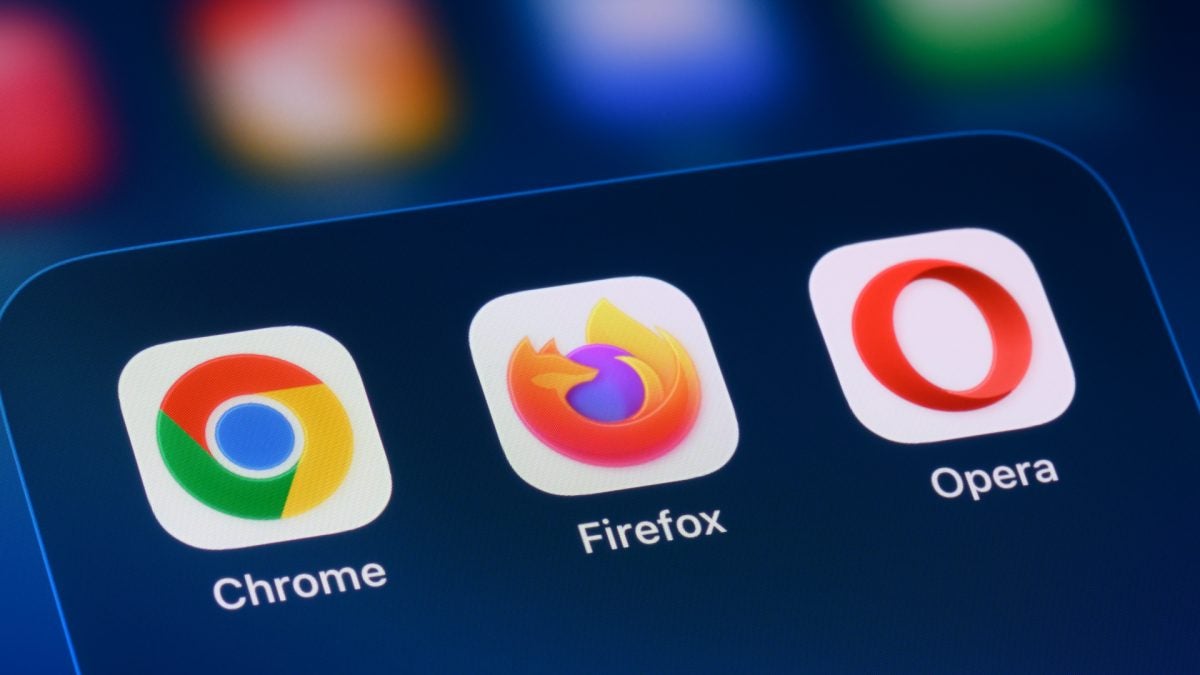
Firefox for iPhone and iPad got a new feature today: native ad blocking. Mozilla’s iOS browser now lets users turn it on worldwide, though you have to enable it yourself in Settings > Browsing > Ad Blocker. You can also see whether it’s active from the site menu. Mozilla ships it turned off by default, which sets it apart from some browsers that lean harder into privacy out of the box.

Mozilla Firefox Download

Mozilla says the blocker only works inside Firefox itself. It won’t block ads across the rest of your iPhone or inside other apps. The feature relies on EasyList, and it’s meant to stop third-party ad networks and exchanges, a lot of third-party ads at the network level, ad-related trackers, plus pop-ups and overlays.

Still, don’t expect every ad to vanish. Search ads on Google, Bing, and DuckDuckGo will still show up. Sponsored content on Firefox Home and the New Tab page also remains, and some ads are likely to get through anyway. EasyList is popular and widely used, but both user reports and academic research have questioned how well it performs on some international or non-English sites, and whether every filtering rule actually makes browsing better in day-to-day use.

If Firefox is your regular browser on iOS, this is probably an update you’ll want. Mozilla is playing catch-up here with Brave and DuckDuckGo, both of which already pushed harder on privacy for iPhone users. Apple’s App Tracking Transparency has already changed the shape of that race.

The update is live in the App Store. If you want broader blocking, though, you’ll still need iOS content filters or an app like Wipr 2.

Apple names John Ternus CEO: Tim Cook moves to executive chairman

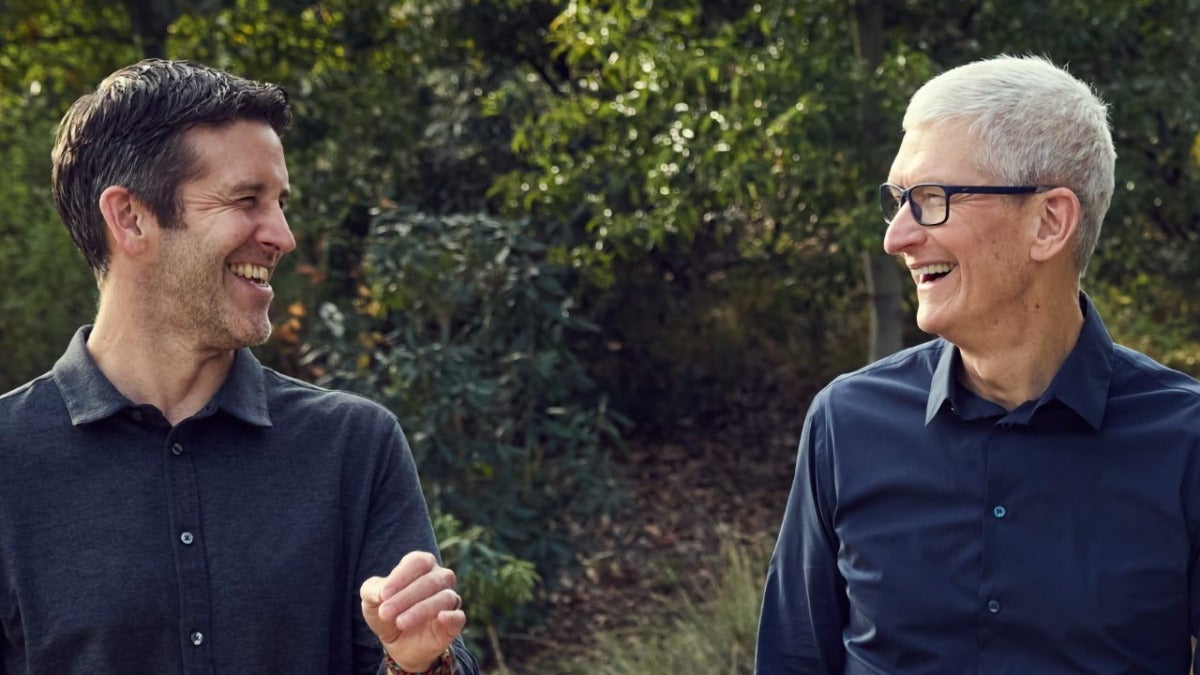
Apple is changing hands at the top. John Ternus will become chief executive officer on September 1, while Tim Cook moves into the executive chairman role after Apple laid out the succession plan on April 20, 2026. It’s the company’s biggest leadership change since Cook took over from co-founder Steve Jobs.

Over 15 years, Cook turned Apple from a company worth about $350 billion into one valued at more than $4 trillion. He also expanded the business well beyond the iPhone, building up wearables, subscriptions, and services along the way.

Ternus has been at Apple for 25 years and most recently served as Apple’s hardware chief. He helped lead development across the iPhone, iPad, and Mac, and he was deeply involved in the shift from Intel chips to Apple Silicon. That suggests Apple may tilt more toward product and engineering under his watch, while Cook stays on to provide continuity on regulation, policy, and the company’s global relationships.

The shake-up doesn’t end there. Reports that Apple Fellow Phil Schiller is stepping back from some App Store and event duties add another layer to it. Ternus also gets his first big test almost immediately at Apple’s September 9 event, where reports say the company is expected to unveil new iPhones, a foldable device, and a revamped Siri, all while pressure in China and supply-chain risks keep growing.

If you follow Apple, keep an eye on this. A smooth handover could shape the company for years.

You can watch Apple’s September 9 event on Apple’s website, Apple TV, and YouTube.

Google Maps now calls Lake Ontario ‘Lake America’ in the US

Google Maps has started labeling Lake Ontario as “Lake America” for people in the United States. In Canada, it still appears as “Lake Ontario,” and in many other places it shows up as “Lake Ontario (Lake America).” Google says the change came after the Geographic Names Information System (GNIS) was updated following an executive order signed by US President Donald Trump. It’s the same country-by-country naming approach Google Maps used earlier in 2025 for the Gulf of Mexico. Still, Lake Ontario is shared by the US and Canada, and a naming change on the US side doesn’t change Canada’s official name for it or resolve the international one.

Google Maps Download

The backlash was immediate. Canadian Prime Minister Mark Carney objected. So did Ontario Premier Doug Ford, who went as far as unveiling a “Lake Ontario. Now and forever” sign. New York Governor Kathy Hochul pushed back too, and reports say Vermont Governor Phil Scott did as well. Some Ontario government and business websites that embed Google Maps are now reviewing pages where the new label appears.

Critics have pointed out that “Lake Ontario” comes from the Wendat word “Ontari’io” and has been in use for more than 400 years. Apple Maps, as of now, hadn’t made the switch. MapQuest said it wouldn’t, either.

If you use Google Maps regularly, this matters for a pretty simple reason: it shows how digital maps now handle disputed or politically charged names based on where the viewer is. And yes, you can already see the label in Google Maps, both on the web and on mobile.

Google Play updates Android app RAM rules: cuts due by February 2027

Google Play has revised its guidance for Android apps, and the new line is tougher on apps that eat up too much memory. The stricter efficiency standards take effect in February 2027.

Android Studio Download

If you build for Android, you’re now expected to tighten up dynamic memory use, bitmap handling, and DEX code efficiency under Google Play’s updated guidance. In plain terms, that means cutting back on wasteful background activity, reducing oversized image footprints, and cleaning up code in apps that have gradually grown bloated over time.

Miss those new thresholds, and Google says the consequences could include lower Play Store visibility and publishing restrictions. For people using low- or mid-range phones, bloated apps are where the pain shows up first: reloads, lag, instability, and extra battery drain.

Android developers should keep an eye on this for another reason too. Google is responding to a wider DRAM squeeze, with J.P. Morgan estimating that DRAM prices could rise by more than 400% from early 2024 to late 2026. That kind of jump could mean phones ship with less RAM, prices go up, and IDC’s projected 16.7% drop in 2026 shipments lands hardest on budget devices and emerging markets.

The new Google Play Console tools are already available, so you can start checking for leaks, oversized assets, and inefficient runtime behavior now, before enforcement starts.

Google Calculator gets a new gradient icon: Google’s 2026 style reaches another app

Google Calculator just got a new icon. It brings the app into Google’s gradient-heavy 2026 design language, and it was one of the last Google apps still hanging onto the older flat look. The redesign trades that flatter style for softer gradients and rounder shapes, so Google Calculator now lines up with Gmail, Calendar, Drive, Photos, Maps, and the rest of Google’s refreshed app lineup. On your home screen, the whole set looks more consistent.

There still doesn’t seem to be any major new Google Calculator features here. This is mostly a visual update. Even so, it says a lot about the direction Google is taking, moving farther away from flatter Material Design and leaning more into blended colors, softer edges, and icons that don’t rely on such rigid blocks of color. That bigger shift matches Google’s Gemini-era branding, pushes the apps toward a more premium look, and should make them easier to tell apart after users kept pointing out that too many of the older Google icons looked almost the same at a glance.

If you care about Google’s apps looking like they actually belong together, this Google Calculator update is an easy one to pick up, even if people are still split on these shinier icons and Pixel Camera 11 still seems to be a few weeks away from a wider release. You can get the refreshed icon by updating Google Calculator for Android through the Google Play Store.

Samsung tests 6,000mAh Galaxy S27 Ultra battery: 7,000mAh prototype also explored

A new leak points to the first real battery bump for Samsung’s Galaxy S27 Ultra. Leaker Kro says Samsung has tested prototypes at 5,700mAh and 6,000mAh. That would break a long streak for the Galaxy S Ultra line, which stayed at 5,000mAh from the Galaxy S22 Ultra through the Galaxy S26 Ultra.

AccuBattery Download

For people who use Samsung’s top phone, that matters. Battery life has been one of the bigger complaints, and more screen-on time for gaming, video, AI tasks, and camera processing would make this a lot more appealing if that version actually ships. Kro also says Samsung explored a 7,000mAh prototype.

There was a catch. According to the leak, Samsung only got that 7,000mAh version to fit by removing the built-in S Pen and its silo. That’s a serious trade-off for a feature that’s been part of the Ultra identity since the Galaxy S22 Ultra.

The extra capacity could come from silicon-carbon cells, which have already been rumored for Samsung’s Galaxy Z Fold 8, or from stacked batteries. Leaked CAD renders also hint at a redesigned internal housing that could open up more room without making the phone thicker or heavier.

You still can’t get the Galaxy S27 Ultra, and Samsung hasn’t confirmed any of this: battery size, chemistry, charging speed, thickness, weight, or heat management. And even 6,000mAh would still leave it behind some Chinese rivals that have already crossed 7,000mAh.