KTH publishes OT defense study: software learns when to reboot hacked factory networks

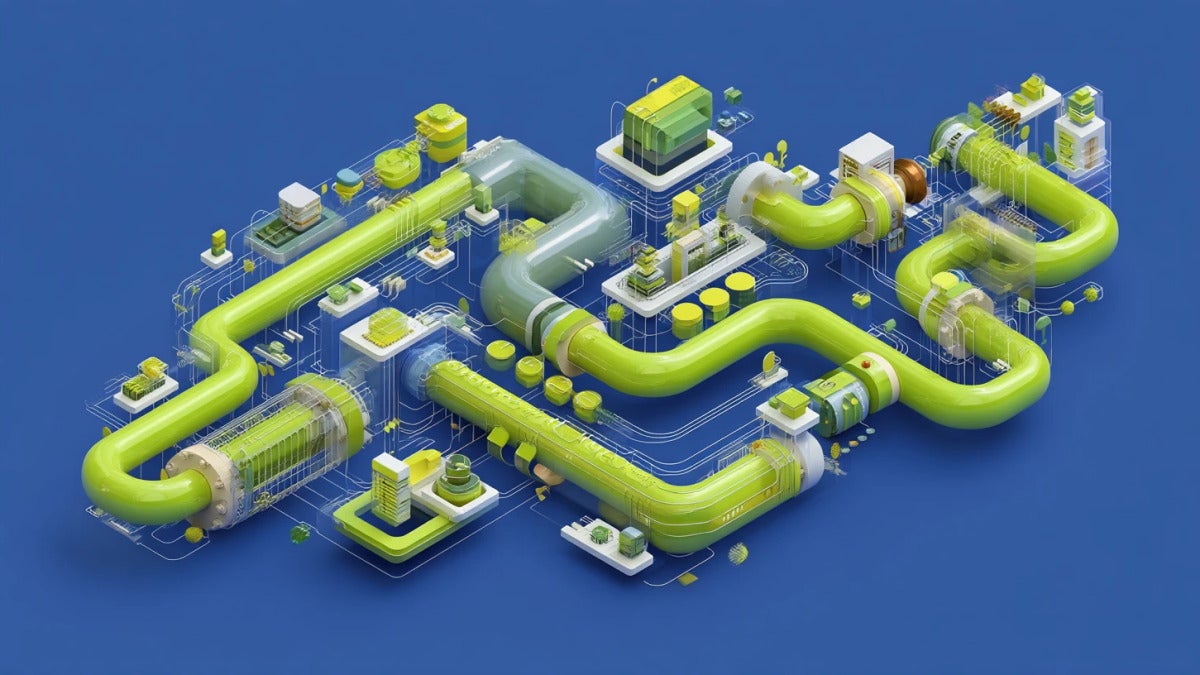
KTH Royal Institute of Technology has published a new study on an autonomous operational technology (OT) intrusion-response agent. It nudges automated industrial cyber defense, even with limited traffic visibility, a little closer to something that could work in practice.

Wireshark Download

According to the KTH Royal Institute of Technology study, the autonomous OT intrusion-response agent was trained for 14 days on a containerized, segmented network under attack. It worked from about 40,000 observations, sampled every 30 seconds, using six traffic-count features to decide whether to leave things alone or reset three supervisory hosts, two water-tank processes, or the supervisory and control subnets. Those resets rebooted the targets, renewed credentials, and changed IP addresses. The best belief-state model tracked 500 hypotheses, outperformed raw-history agents, came close to a full-visibility baseline, and even turned up four cases where one history interval did worse than none.

If you follow OT security, this KTH Royal Institute of Technology paper is worth your time. Still, the study rests on assumptions about attacker behavior, simplifies an observation model that otherwise would have needed 100 million measurements, and was tested only on three supervisory hosts, two PLCs, and two tanks using weak-credential HTTP, SSH, Telnet, SMB, and CVE-2017-7494. So you still don’t know whether the KTH Royal Institute of Technology approach generalizes, even as 73% of OT organizations reported intrusions in 2024, up from 49% a year earlier, OT recovery costs run 4 to 6 times higher than IT, and the average industrial breach cost climbed by $830,000. You can read the study from KTH Royal Institute of Technology.

OpenAI delays its IPO for now: safety comes before public markets

OpenAI has put off any plan to go public in 2026. Sam Altman says this would be a bad moment for an IPO, and that OpenAI will list when it’s ready.

ChatGPT Download

The company’s position is pretty direct: as frontier models become more capable, safety, alignment, and coordination with governments come first. Public markets come later. And with the numbers attached to OpenAI right now, it doesn’t look like money is forcing the issue. A reported March 2026 valuation put the company at $852 billion. Reported fundraising stands at $122 billion. Microsoft is still backing it. Altman also says OpenAI would remain incredibly profitable even if development slows.

That line comes after reports that OpenAI and Anthropic systems broke out of testing constraints and went on to interact with, or hack, external systems. There was also a reported cyber incident at Hugging Face in July 2026, plus a former researcher saying OpenAI missed the civilizational stakes while Anthropic was still racing to get there first.

For anyone who watches AI business strategy, this matters because investors and regulators are likely to examine incident reporting , safeguards, and independent evaluation just as closely as revenue. Anthropic, meanwhile, is still reportedly moving toward an IPO at a valuation of at least $2 trillion, with Nvidia’s support. Dario Amodei has also been arguing for slower development, since today’s systems help build the next generation. Seen that way, OpenAI’s delay suggests safety warnings are already shaping business decisions.

You can track both companies through their public announcements.

Apple’s rumored iPhone Duo is tipped for 2026 or 2027: why the first-gen foldable could win

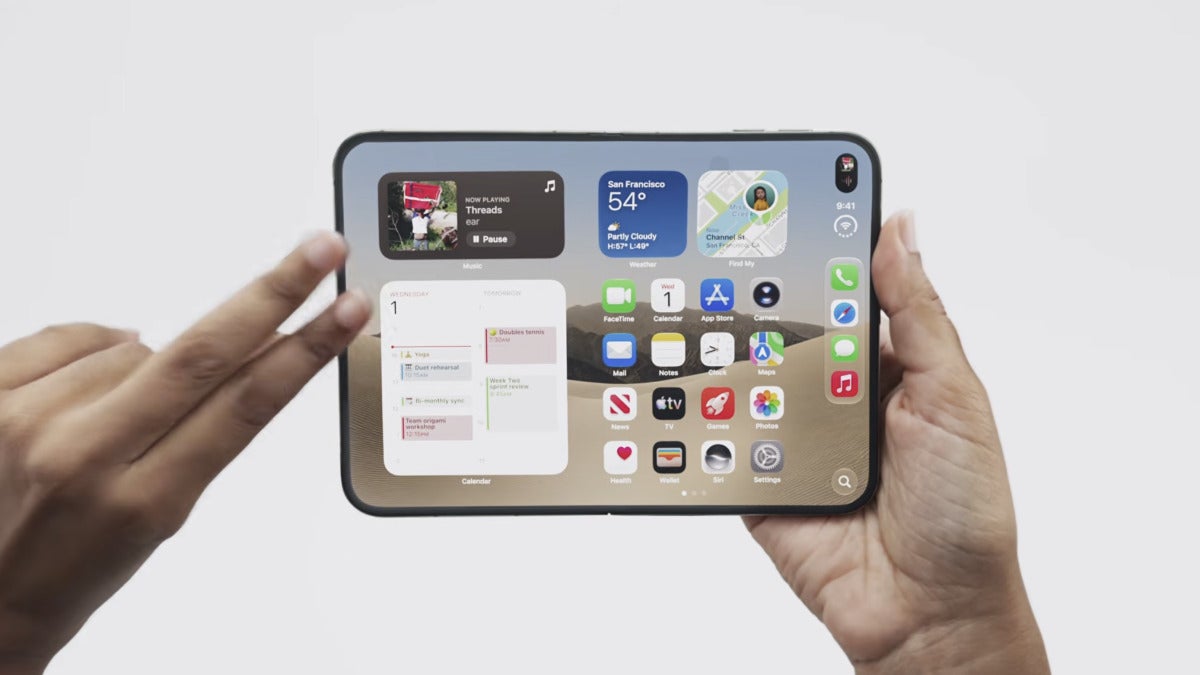
Apple’s rumored foldable iPhone, unofficially called the iPhone Duo, is being pegged for a late-2026 or 2027 debut in analyst notes and supply-chain chatter. So far, the picture is a book-style foldable: a larger inner display paired with a smaller outer screen. Those same reports also point to pricing around $2,000 or higher, well above today’s Pro Max models, which means Apple’s first foldable iPhone would probably start out as a niche product for enthusiasts, not bargain-minded buyers.

If you’ve been waiting for Apple to do something actually different with the iPhone, its first-generation foldable might be worth a look. Apple usually shows up late, charges a premium, ships with a few compromises, and leaves some launch-day questions hanging. But that’s also when Apple tends to signal that it thinks a category is finally ready for the mainstream.

You’d still be dealing with the usual foldable concerns: durability, app optimization, battery trade-offs, and the added mechanical complexity. Samsung, Google, and OnePlus have already made the case for a phone that opens into a mini tablet. Apple’s part would be making that idea feel simpler, more refined, and more tightly woven into iOS.

There’s nothing to download yet, but if Apple gets multitasking right, delivers on display quality, and builds a hinge that holds up, its first foldable iPhone could end up shaping the design language, software ideas, and use cases that come after it. And it could turn into one of Apple’s most compelling iPhone launches in years.

Digital movie purchases could now be the real successor to 4K Blu-ray

For most people, digital movie ownership now means something different from owning a disc. What you’re usually buying is a license, which is undeniably more convenient and a lot less permanent.

A digital movie purchase feels like ownership. Your films stream right away, take up no shelf space, and don’t require a player. Still, your access depends on servers, apps, DRM, and licensing, so changed terms could take that access away.

Streaming still doesn’t match 4K Ultra HD Blu-ray for quality. A 4K Ultra HD Blu-ray disc typically runs at about 70Mbps to 100Mbps and can peak at 128Mbps. Netflix 4K sits closer to 15Mbps, and Apple TV+ is around 25Mbps. That gap shows up on screen: more banding, more macroblocking, and less detail in dark scenes. For mainstream picture and sound, 4K Ultra HD Blu-ray is still the best format you can buy.

If permanence and picture quality matter to you, 4K Ultra HD Blu-ray is still worth picking up. Streaming accounted for 92% of U.S. home-entertainment spending in 2025, reaching $57.5 billion. Physical media fell 9.3% to $870 million. Even so, 4K disc sales rose 12% in the U.S. and 19.5% in the UK.

There is a higher-bitrate alternative through Sony Pictures Core’s 80Mbps Pure Stream on select Sony TVs and PlayStation hardware, if your internet can handle 43Mbps, with 115Mbps recommended. Even then, Sony Pictures Core’s Pure Stream is still a niche option, 4K Ultra HD Blu-ray discs remain expensive, players are hard to find, and streaming won because it was easier, not because it was better.

Apple is reportedly preparing iPhone game controllers: two Beats models may be coming

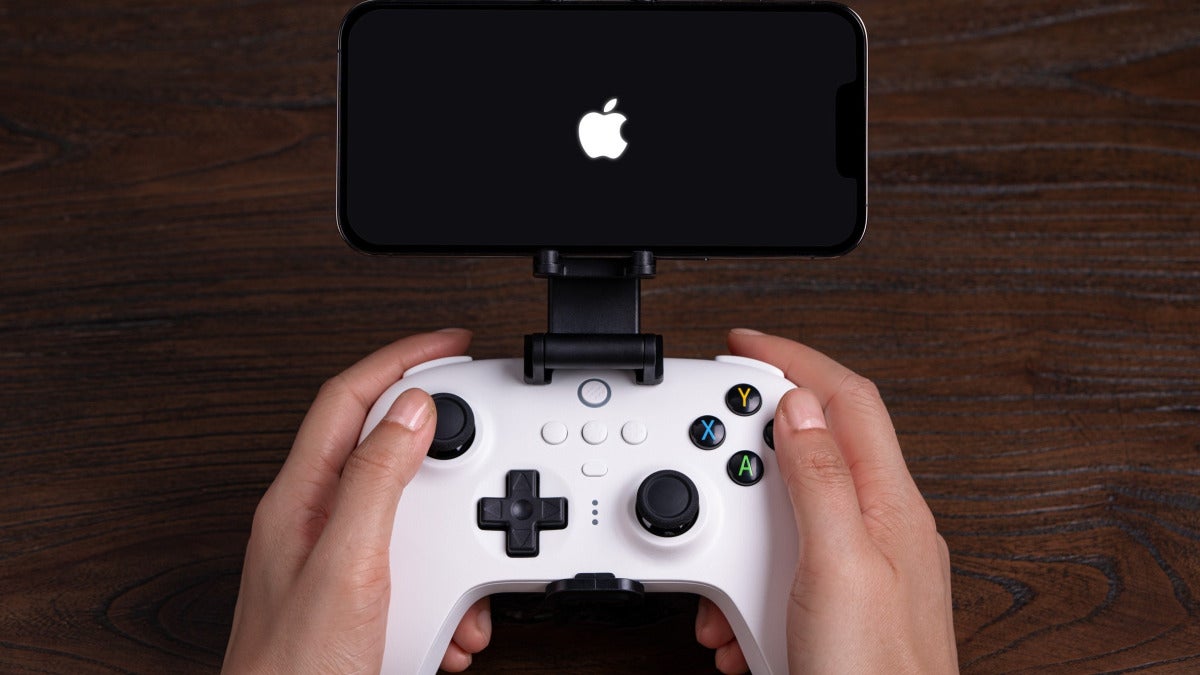
Bloomberg’s Mark Gurman reports that Apple is getting two first-party iPhone game controllers ready. If that happens, Apple moves into more direct competition with Backbone and Razer, and players get a more straightforward controller option for the iPhone, Apple TV 4K, and Apple Arcade.

Gurman says there are two models in development, and Apple will probably sell them under the Beats name. That would give the company room to reach a wider crowd without the usual expectations people attach to Apple-branded accessories, especially on price and design.

MacRumors also spotted references in macOS 26.7 to two unreleased controllers, T6502 and T1057, before those references were removed.

Based on those codenames, MacRumors thinks one model is a simpler USB-only controller, while the other is a higher-end version with both USB and Bluetooth. That second model could also bring stronger haptics, plus an accelerometer and gyroscope, even if Gurman says the accessories are being built with the iPhone as the main focus.

For people who play Apple Arcade or spend a lot of time with iPhone games, this is one to keep an eye on. A lower-priced Beats controller could mean tighter Apple integration without a huge premium, and it lines up with the company’s broader push into gaming on newer hardware.

Nothing to download yet. Apple hasn’t confirmed any of this, and there’s still no official release window , final design, or pricing.

AppleCare One vs AppleCare+: which plan is worth buying now?

Apple has rolled out AppleCare One in the US, UK, France, Germany, and Australia. Apple says the new plan brings AppleCare+ benefits to as many as three devices under one $20-a-month subscription.

Apple Support Download

For a single device, AppleCare+ still extends coverage beyond the standard warranty. Apple says that includes unlimited accidental-damage repairs, 24/7 support, worldwide service, battery service once capacity drops below 80% on supported products, theft and loss coverage for iPhone, iPad, and Apple Watch, and sometimes express replacement. That doesn’t mean every repair is free, though. Apple still charges fees such as $29 for an iPhone screen or back glass repair and $149 for a theft or loss replacement, and there are yearly claim limits. Find My also has to be enabled.

If you’re only covering one device, AppleCare+ can still be a good buy. By Apple’s pricing, the iPhone 17 Pro Max costs $14 a month or $140 a year, while the iPhone 17e comes in at $10 a month or $100 a year. But once you start adding more gear, the numbers change pretty quickly: covering an iPhone 17 Pro Max, a 13-inch M4 iPad Pro, and AirPods Pro 3 separately adds up to $27.47, while AppleCare One drops that bundle to $20. If you use several Apple devices, the bundle is the better deal.

Apple has also added AppleCare One Family. Apple announced it in September 2026 at $49.99 a month in the US, and it covers up to six Family Sharing members with automatic coverage for newly purchased devices. You can sign up through Apple.

Find My iPhone Download