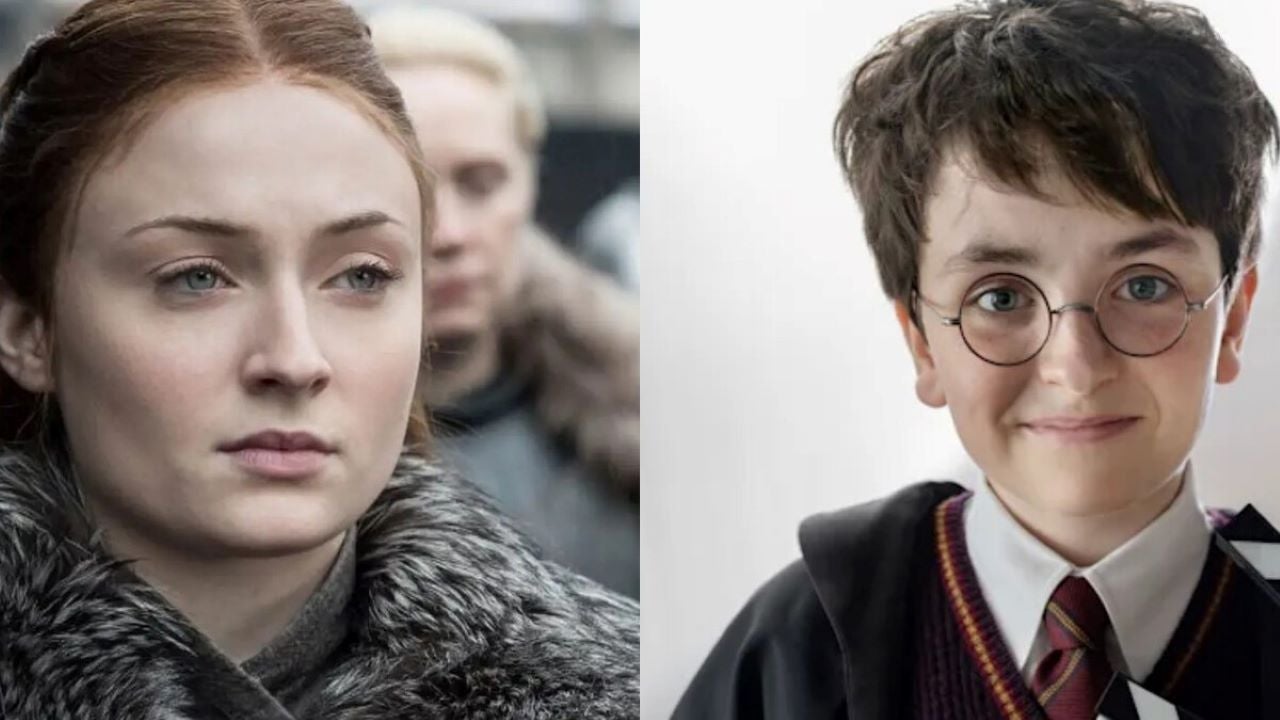
Sophie Turner, known for her role as Sansa Stark in ‘Game of Thrones’, has expressed her deep concern for the well-being of the young actors who will portray Harry, Hermione, and Ron in the new HBO series based on the world of ‘Harry Potter.’ The production, which plans to adapt each of the seven books over several seasons, has selected a cast mostly made up of novice performers, including Dominic McLaughlin, Arabella Stanton, and Alastair Stout.
Schools on set
The actress recalled her experience starting her career at the age of 13. In a recent interview, Turner emphasized the need to protect these young talents, suggesting that the challenge of growing up in the entertainment industry can be overwhelming, especially when facing the intense pressure of a project of this magnitude. The series has had one of the largest casting processes in recent history, with over 32,000 auditions conducted before selecting the leads.
Among the confirmed actors are Lox Pratt as Draco Malfoy, Alessia Leoni as Parvati Patil, and Leo Earley as Seamus Finnigan. Additionally, it has been revealed that Warner Bros. Studios Leavesden has built a temporary school on the filming site, which will allow young actors to balance their studies with work on the series over the coming years. This educational space, which will consist of portable classrooms, has a capacity for 600 students during peak periods and an average of 150 students, ensuring they can continue their formal education while committing to acting.
In a context where the well-being of young people in the industry is an increasingly relevant topic, Turner’s concerns resonate strongly, inviting reflection on how education and emotional support for younger performers are managed in a highly competitive and demanding environment.