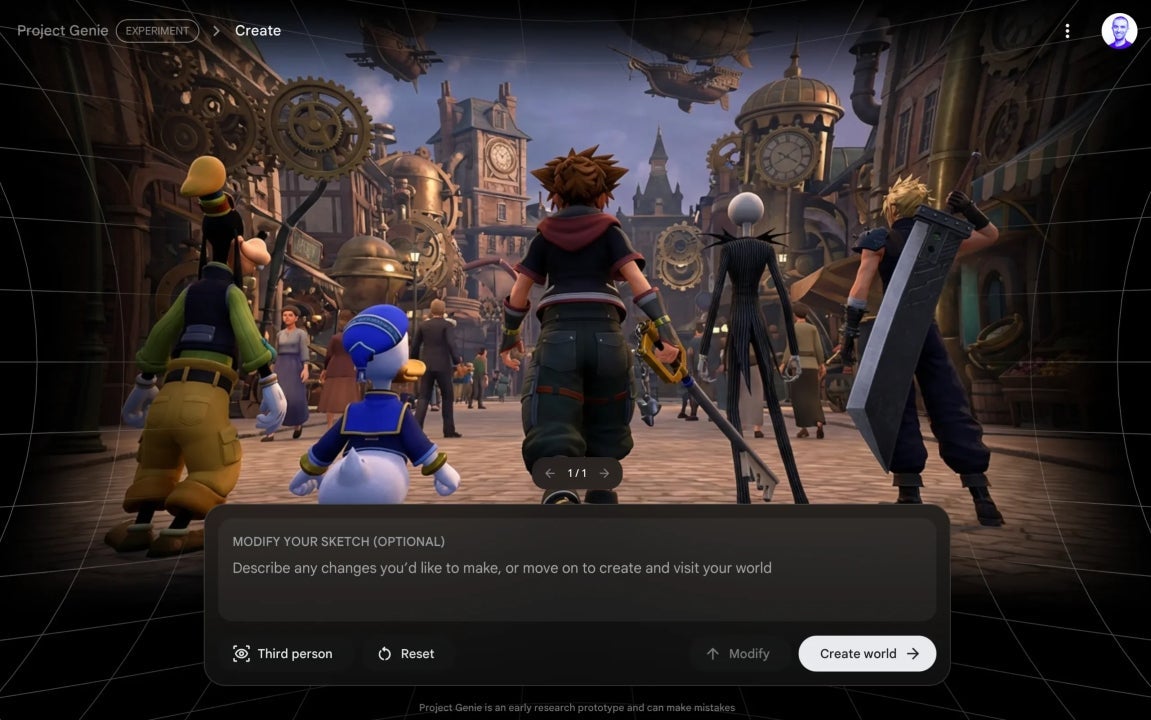
The recent presentation of Project Genie, Google’s innovative artificial intelligence tool, has revolutionized the creation of playable worlds, allowing users to automatically generate content from simple prompts or images. Since its launch last week, this technology has had a strong impact on the stock market, especially among video game companies, affecting giants like Unity, whose shares fell by 35% in a single day. Other companies like Nintendo, CD Projekt, and Take-Two also experienced declines, although to a lesser extent.
The CEO of Unity believes that human developers have nothing to fear
Matthew Bromberg, CEO of Unity, has made reassuring statements regarding the growing influence of AI in the video game industry. Despite the drop in stock prices, Bromberg believes that tools like Project Genie are not a threat to human developers, but rather an accelerator of creativity. In his statement, he emphasized that artificial intelligence could expand the possibilities for innovation, which represents an opportunity rather than a challenge.
Project Genie allows users to customize characters and define properties such as camera type or character movements while exploring a world that is generated in real-time, with a limit of 60 seconds. This approach has sparked debates about the potential reduction in the need for developers in the field, raising concerns in the gaming community. However, Bromberg argues that although AI produces visually rich environments, these probabilistic solutions still require the precision that Unity offers to ensure gameplay.
In response to the growing competition, Unity plans to integrate AI-based content generation with its own platform to ensure consistency, control, and monetization across all devices. Bromberg concluded that the collaboration between AI models and traditional game engines will expand the boundaries of innovation without replacing developers, reaffirming the importance of human talent in the creative process.