Can Apple run out of iPhone 16 because of Trump and the tariffs?

The tariff war initiated by former President Donald Trump has had a significant impact on the cost of imported products from China, with a levy reaching 145%. Although iPhones are temporarily exempt from these tariffs, uncertainty in Apple’s supply chain could result in a possible stock shortage in stores in the coming months. According to T.H. Tung, a Taiwanese businessman who has analyzed the situation, the disruption in the supply chain has forced Apple to move part of its production from China to India. Tech companies are preparing […]

The tariff war initiated by former President Donald Trump has had a significant impact on the cost of imported products from China, with a levy reaching 145%.

Although iPhones are temporarily exempt from these tariffs, the uncertainty in Apple’s supply chain could result in a possible stock shortage in stores in the coming months.

According to T.H. Tung, a Taiwanese businessman who has analyzed the situation, the disruption in the supply chain has forced Apple to move part of its production from China to India.

Tech companies prepare for the impact of tariffs

This adjustment aims to mitigate the effects of tariffs and ensure the availability of products for the U.S. market, although the viability of this strategy is a considerable challenge.

Although this relocation could eventually ease tariff pressure and meet demand, the immediate effects have led to a surge of purchases at Apple Stores, as consumers fear a shortage of units of the new iPhone 16 and other devices.

This phenomenon of “panic buying” has intensified due to the uncertainty surrounding the supply chain, which has been corroborated by analyst Mark Gurman, who warns of the possibility of shortages in the market.

In addition to Apple, other tech companies like Dell and HP also face the challenge of relying on suppliers affected by these tariffs. Manufacturers like Pegatron, which operate in countries like Vietnam and India, are also under pressure due to lower, yet still relevant, rates.

The current situation suggests that it will not be easy for these companies to adapt quickly, a process that requires long-term planning and could entail prolonged uncertainty in the technology sector.

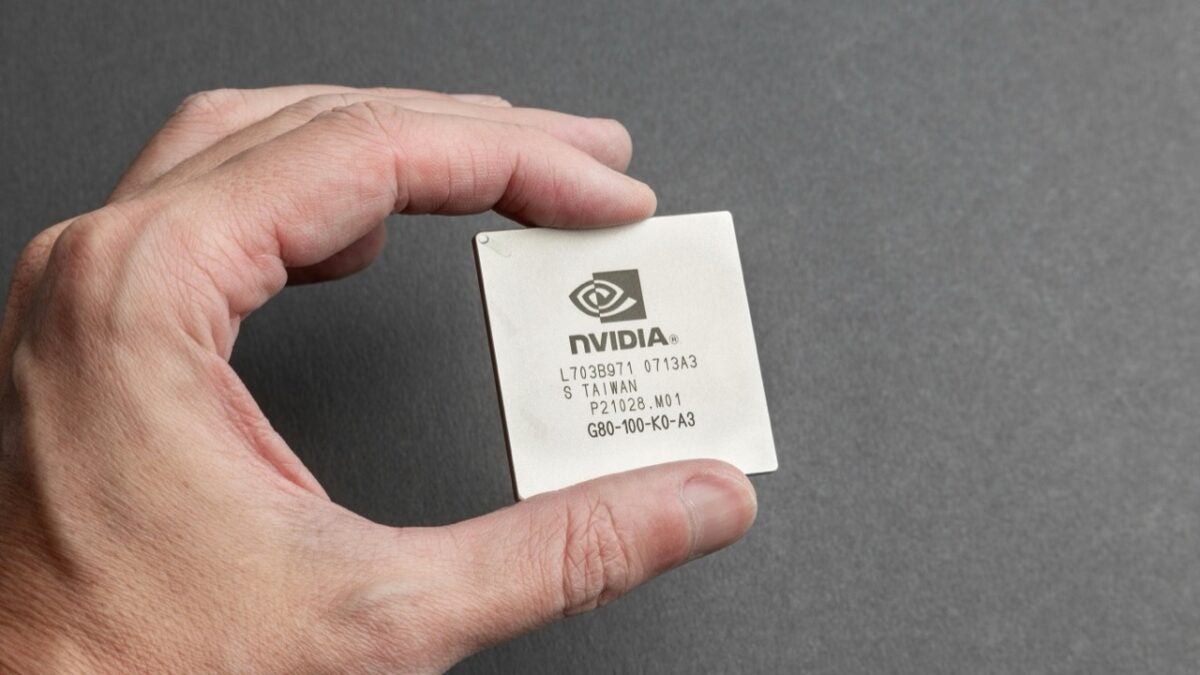
What is CUDA and what we can do with this Nvidia technology

CUDA is a fundamental technology developed by Nvidia that has revolutionized how graphics cards are used beyond gaming. Originally launched almost two decades ago, CUDA (Compute Unified Device Architecture) enables the parallel processing of complex tasks. Whether for gaming, video editing, AI model training, or scientific research, CUDA has become an essential tool, especially as the number of CUDA cores in GPUs has dramatically increased in recent years.

Understanding CUDA cores and their impact

A CUDA core is a SIMD (Single Instruction, Multiple Data) processing unit inside an Nvidia GPU. These cores allow for massive parallelism, executing the same instruction across different data points simultaneously. The more CUDA cores a graphics card has, the more capable it is of handling multiple tasks at once, making GPUs like the RTX 4090 and RTX 5090 ideal not only for gaming but also for professional workloads.

How CUDA technology is used today

Beyond its gaming applications, CUDA enables accelerated performance in fields like data science, video encoding, rendering, and AI training. Developers use programming languages such as C, C++, Fortran, Python, and Julia to create software that taps directly into the GPU’s power. APIs like Direct3D, OpenGL, OpenMP, OpenACC, and OpenCL are also supported, broadening its range of applications. Thanks to CUDA, tasks once limited to CPUs are now efficiently managed by GPUs, dramatically speeding up complex processes.

The future potential of CUDA

As the technology evolves, CUDA continues to unlock new possibilities in computing. From enhancing real-time AI processing to enabling faster scientific simulations, CUDA’s role in innovation is only growing. It is clear that Nvidia’s platform will remain a key player across various industries for years to come.

A battery-powered router? Looks like it’s possible

When a blackout took down much of the wired Internet in Spain on April 28, some tech-savvy users started experimenting with off-grid solutions to keep their routers running. While most homes lost connectivity even with backup power, a few clever ideas have shown that Internet access is still technically possible—if the telecom towers stay online.

Creative solutions to power a router during a blackout

One user on X, @carriwho, shared an image of his router powered entirely by AA batteries. By connecting eight 1.5V batteries in series, he recreated the 12V DC power supply needed for the router and ONT to function. While the solution is temporary—offering just two hours of connectivity—it proved that a router doesn’t need to be plugged into the wallto work.

Others suggested more accessible options. User @jeans_jnco demonstrated a setup using a power bank and a USB-C to 12V adapter cable with a built-in voltage converter. This method is both portable and longer-lasting, depending on the power bank’s capacity. The user claimed it “worked perfectly” and provided Internet access for several hours.

Some even tried using solar panels, though results varied depending on whether the ISP’s local node was still powered. As @SpacePizza22 noted, “router was on, but network was down.”

These home experiments show that alternative power sources like batteries, power banks, or solar panels can keep a router alive, assuming the ISP infrastructure remains operational. Though not viable in large-scale blackouts, such solutions can be handy for localized outages.

What do we know about the Great Blackout in Spain and Portugal?

The blackout that affected Spain and Portugal last Monday has been described as one of the worst in Europe, interrupting essential services for tens of millions of people. At 12:30 p.m. local time, Spain lost approximately 15 gigawatts of electricity, which represents about 60% of the country’s demand, according to Prime Minister Pedro Sánchez. Authorities are still investigating the causes of the blackout, which left much of the Iberian Peninsula without electricity since Monday afternoon. Intermittent signals preceded the worst power outage in Europe in years The company […]

The blackout that affected Spain and Portugal last Monday has been described as one of the worst in Europe, interrupting essential services for tens of millions of people.

At 12:30 p.m. local time, Spain lost approximately 15 gigawatts of electricity, which represents about 60% of the country’s demand, according to Prime Minister Pedro Sánchez.

The authorities are still investigating the causes of the blackout, which left a large part of the Iberian Peninsula without electricity since Monday afternoon.

Intermittent signals preceded the worst power outage in Europe in years

The operator of Spain’s electrical grid, Red Eléctrica de España, reported that two significant disconnection events had occurred before the blackout, with the second being the most damaging, causing interruptions from the French electrical system.

Additionally, sensors in homes in Madrid detected fluctuations in voltage hours before the blackout, suggesting problems in the electrical grid. These oscillations increased in frequency and magnitude, leading to a preliminary conclusion that the grid was experiencing instability. However, the exact root of the problem is still unknown.

The Supreme Court of Spain has initiated an investigation to clarify the causes, initially ruling out a possible cyberattack. Energy experts have pointed out that the high generation of renewable energy in Spain could have influenced the network’s vulnerability to fluctuations.

Although Spain is a leader in solar and wind energy, this raises questions about whether this dependence may have made the national electrical grid more susceptible to interruptions of this kind.

The interconnection of the electrical grid of Spain and Portugal with the rest of Europe through France plays a key role in the spread of problems. The system is designed to operate cooperatively, but a significant failure can trigger cascading blackouts in neighboring countries.

Surfshark launches a privacy-focused DNS service, the first of its kind

Surfshark has launched an innovative privacy-oriented DNS service, becoming the first VPN provider to offer such a solution. This free service promises not to log or track user activity, addressing a concerning privacy gap for Internet users. Unlike the DNS servers offered by Internet Service Providers (ISPs), which can collect and log user queries, Surfshark DNS operates under a strict no-logs policy. Say goodbye to tracking: Surfshark presents a free DNS solution The Domain Name System (DNS), […]

Surfshark has launched an innovative privacy-focused DNS service, becoming the first VPN provider to offer such a solution.

This free service promises not to log or track user activity, addressing a concerning gap in privacy for Internet users.

Unlike the DNS servers offered by Internet Service Providers (ISPs), which may collect and log user queries, Surfshark DNS operates under a strict no-logs policy.

Say goodbye to tracking: Surfshark presents a free DNS solution

The Domain Name System (DNS), which acts as an Internet phone book, translates domain names into IP addresses. Its proper functioning is essential for online browsing.

However, the DNS provided by ISPs are often subject to traffic monitoring, which could result in targeted advertising and unwanted tracking. Surfshark DNS aims to provide a safer and more private alternative, supported by security protocols such as DoT, DoH, and DoQ, which ensure a more confidential browsing experience.

Karolis Kaciulis, systems engineer at Surfshark, emphasizes that the new service is designed to help those looking to improve their online privacy, encouraging individuals and organizations to take steps towards safer browsing. Additionally, the use of Surfshark DNS can optimize network performance by avoiding overloads and providing a better understanding of geolocation, which can benefit the quality of the Internet connection.

However, Kaciulis also clarified that the use of Surfshark’s DNS in conjunction with its VPN is not recommended, as the latter already includes DNS protection. Surfshark plans to submit its no-logs policy to an independent audit to ensure its effectiveness and reinforce its commitment to user privacy.