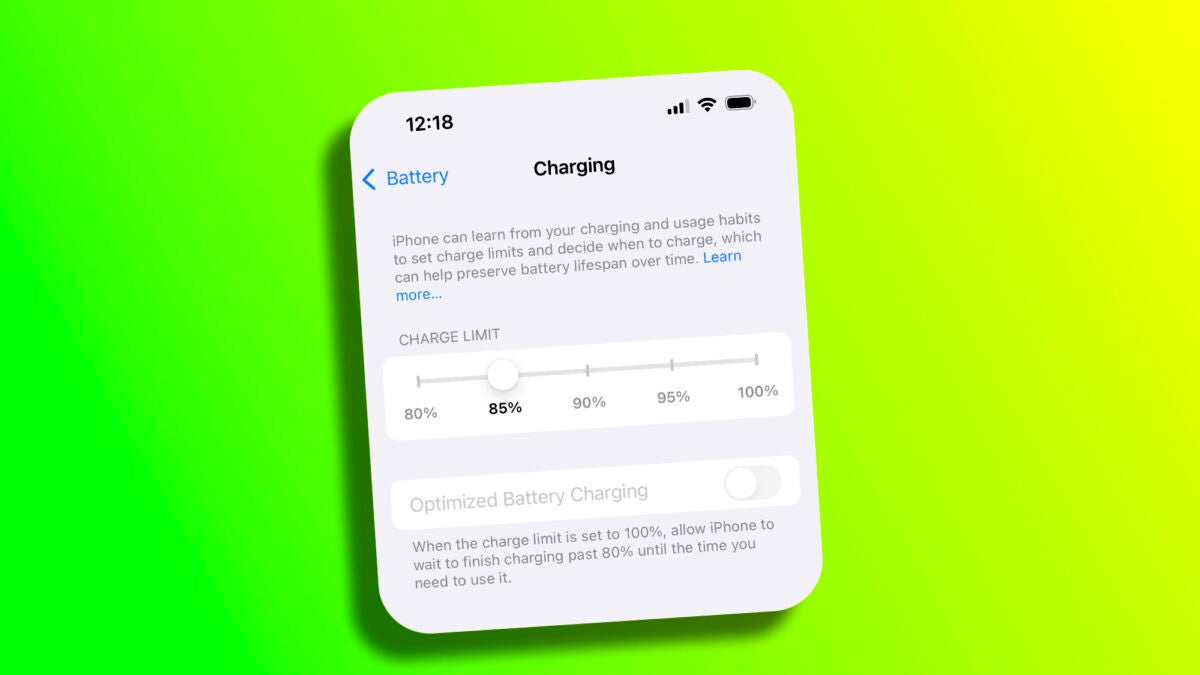
Battery management is a very important area for taking care of our devices. Apple takes a step forward in this field with the introduction of iOS 18, specifically for iPhone 15 users. This new operating system update maintains the option to limit charging to 80%, but it also adds new charging limits at 85%, 90%, and 95%. This is something that should not go unnoticed, as it has the potential to significantly improve the battery life of iPhones.

The importance of limiting battery charge: more options and reminders
Lithium-ion batteries, not just Apple’s but also those across the entire market, have an intrinsic characteristic of their chemistry: their ability to maintain charge degrades over time. One of the causes of this degradation is keeping the battery at 100% for long periods. Apple had already introduced a partial solution to this situation by offering us the possibility to limit the charge to 80%.
Now, with iOS 18, the possibilities are expanded by allowing iPhone 15 users to choose between charging limits of 80%, 85%, 90%, and 95%. It remains to be seen if future iOS 18 betas will expand these options to other iPhone models, such as the 14, for example.
In addition to these additional options, there is another new feature: the operating system’s ability to recommend a specific charge limit based on our iPhone’s recent usage habits. This recommendation is shown through a notification and can also be found in the Settings app under Battery and then Charging.
For now, we are in a first beta and cannot draw too many conclusions, but it is clear that with these measures, Apple aims to give us more flexibility in charging settings. Meanwhile, it also brings awareness to an option that not everyone knows about.
Overall, the new charge limit options in iOS 18 represent a significant advancement in iPhone battery management. By offering multiple limit options based on whether we want more or less charge, and personalized recommendations based on usage, Apple not only manages to extend battery life but also offers users more precise control over how charging is managed on our device.
