Several Tesla vehicles were set ablaze at a service center in Las Vegas, with reports indicating that arson may also be suspected in another incident in Kansas.
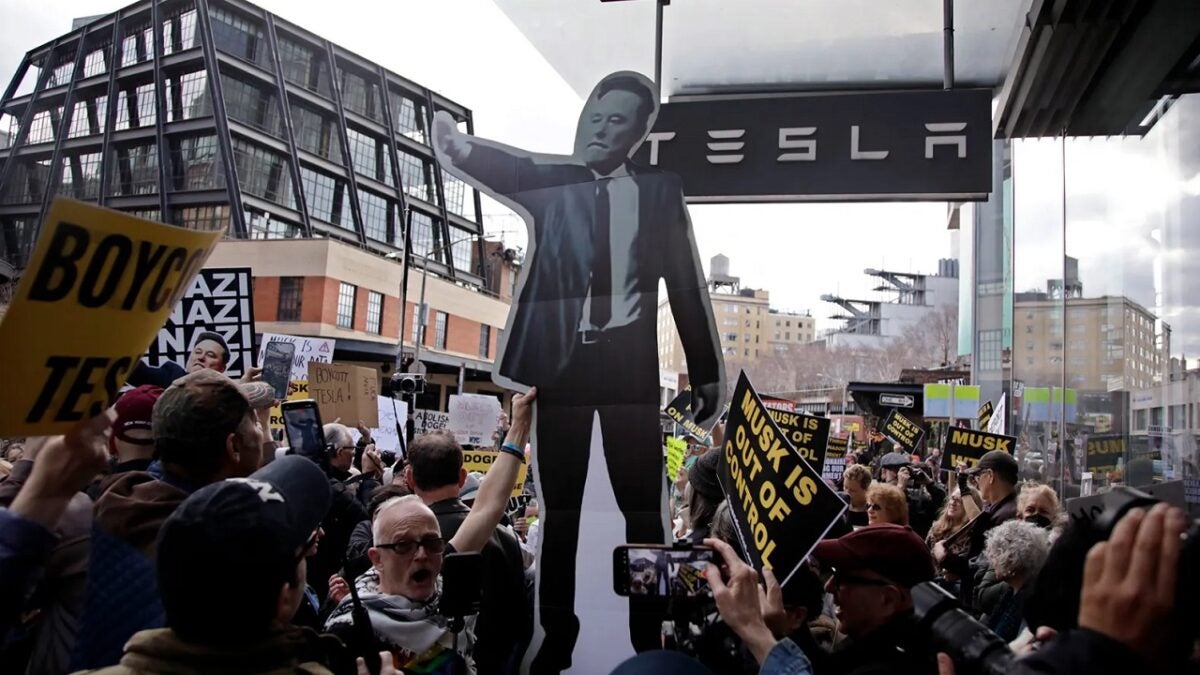
These events have raised alarming concerns as they coincide with a growing wave of protests directed at Tesla stores across the United States, driven largely by discontent towards CEO Elon Musk, who is perceived by some as becoming an oligarch.
Over 100 protests are planned in the coming two weeks, further amplifying tensions surrounding the electric vehicle manufacturer.
President Trump classifying these acts of vandalism as “domestic terrorism”
In Las Vegas, the local police department confirmed that an individual is believed to have intentionally set fire to multiple vehicles parked at the Tesla service center.
This incident has attracted the attention of the FBI, highlighting the seriousness with which law enforcement is treating these events. Similarly, in Kansas City, two Cybertrucks were reported to have burned at a Tesla location, and while arson is suspected, it has yet to be confirmed.
In addition to the fires, there has been a spate of vandalism at Tesla stores, including broken windows, graffiti, and damage to vehicles. Some lawmakers, including former President Trump, have proposed classifying these acts of vandalism as “domestic terrorism”, underlining the escalating nature of these confrontations.
However, reactions to these incidents have been mixed, with many voices advocating for peaceful protests and boycotts against Tesla, arguing that violence undermines the credibility of their movement.
While the Tesla Takedown movement garners attention, experts warn that destructive actions are counterproductive. Insurance can cover vehicle damages, but such violence detracts from the larger narrative of collective action against perceived corporate malfeasance. As investigations continue, the focus remains on the broader implications of these protests and their impact on Tesla’s public image.