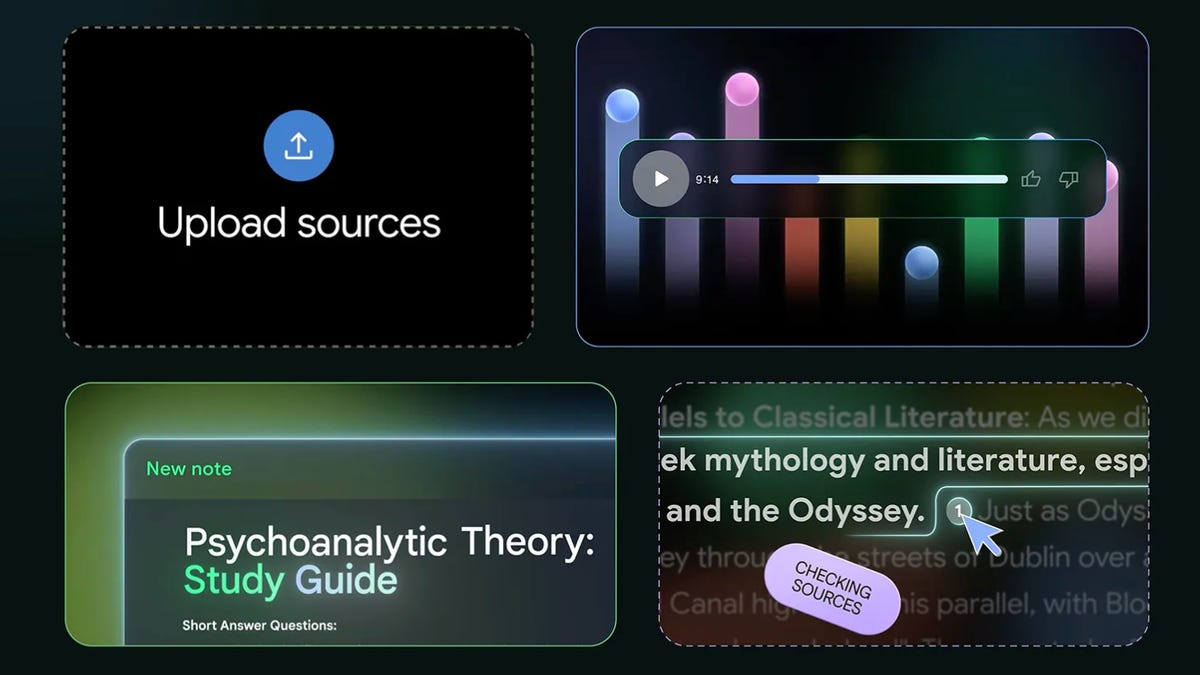
Atlas.org is now out as another option alongside Google’s NotebookLM. It’s built for students. Atlas Workspace, from the same company, goes wider and is aimed at general research rather than study support alone.

The market is moving that way fast. Education assistants are expected to grow from $2.21 billion in 2024 to $5.82 billion by 2030, and assistant software overall is projected to reach $21.11 billion, as more people look for quicker ways to pull together tabs, PDFs, and notes. NotebookLM still offers summaries, Q&A, and audio overviews, but the 50-source limit per notebook, thin integrations, reliance on Google Gemini, and the usual concerns about keeping research on Google’s servers leave room for more specialized tools such as Notion, Lexis+, Harvey, Scite, and Elicit.
Atlas.org comes from a team of current students, recent graduates, and former educators. On the student side, it offers study guides, quizzes, flashcards, lecture notes generated from recorded audio, homework help, and persistent topic workspaces. Atlas Workspace handles the broader research piece, with a centralized server-based database and semantic PDF maps built for cumulative work across multiple documents.
If you’re after student-first help, or research graphs rather than a stack of isolated notebooks, Atlas.org and Atlas Workspace seem like solid tools to test. I still wouldn’t treat either one as more than a first pass, though. Inaccuracies, outputs that are hard to audit, and weak sourcing are still real problems, especially in legal, scientific, and academic work. Atlas.org is available on iOS and Android, includes a free tier, and the Pro plan costs $18 a month.