Bain & Company’s gaming report is out: players warm to generative tools, but developers still have doubts

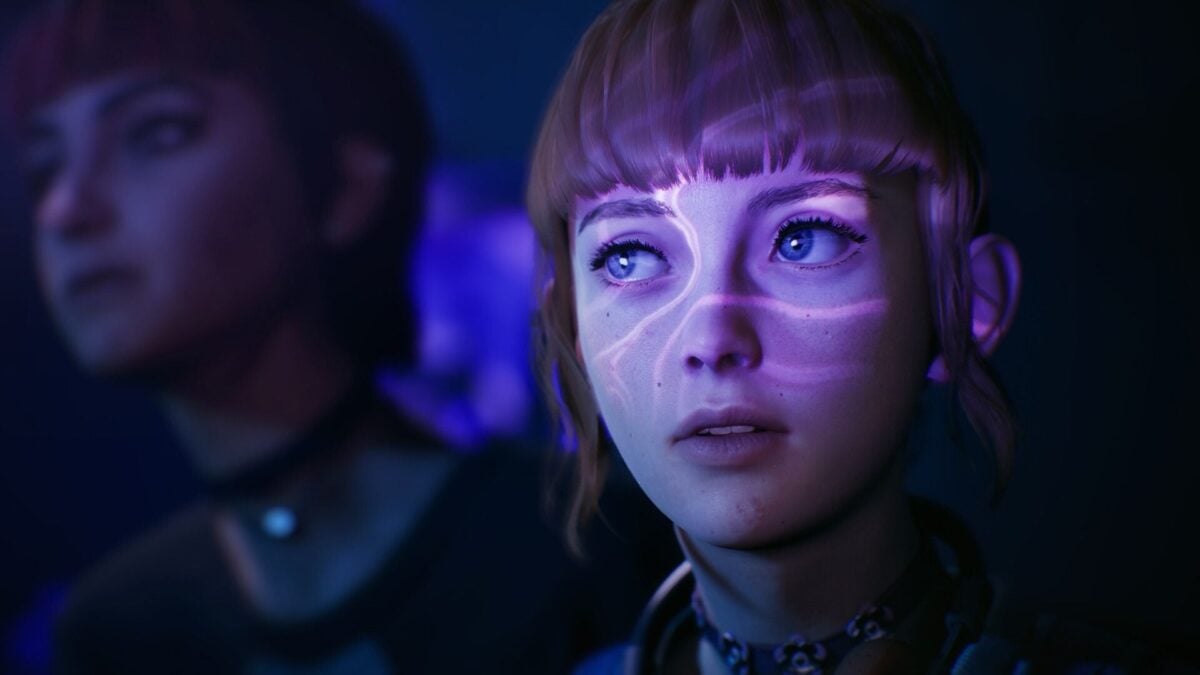
Bain & Company’s new gaming report landed today, and its takeaway is pretty straightforward: gamers are softening, at least a little, on generative AI tools, while executives are planning to use them across a wide stretch of game production.

Bain surveyed 25 executives and says that, within five to 10 years, these systems will touch more than half of development. The push isn’t mainly about slashing budgets, only 20% expect that. It’s more about speeding up workflows, automating routine work, and taking on the kinds of tasks that eat up labor. Bain says the biggest obstacles are pipeline integration, training data, and regulation.

Players, though, are all over the place. Quantic Foundry says 85% are negative. MIDiA says 60% don’t care as long as the game is good. Steam’s 2026 figures put 43% in the fine-with-it camp, while 8.1% say they won’t play at all. Developers are reacting more harshly: at the Game Developers Conference, 52% said generative AI is bad for the industry, and at Gamescom, 83% expect team changes while 30% want as little involvement as possible.

If you keep up with game development, Bain & Company’s report is worth your time. Critics of generative AI keep coming back to the same issues: quality, ethics, jobs, undisclosed assets or text, public apologies, and anti-generative clauses. Supporters are looking for something narrower. They want automation for repetitive work so creative staff can spend more time on the parts that actually need them.

Indies are divided. Asia, meanwhile, looks more open to it, at least by Bain’s numbers. The report points to 39.4% player interest in China and 60% studio use there, full adoption among Japan’s online-game companies, and 70% use in South Korea by late 2025.

You can read the report on Bain & Company’s site.

Marvel Tōkon: Fighting Souls is out now: 485,000 first-week sales

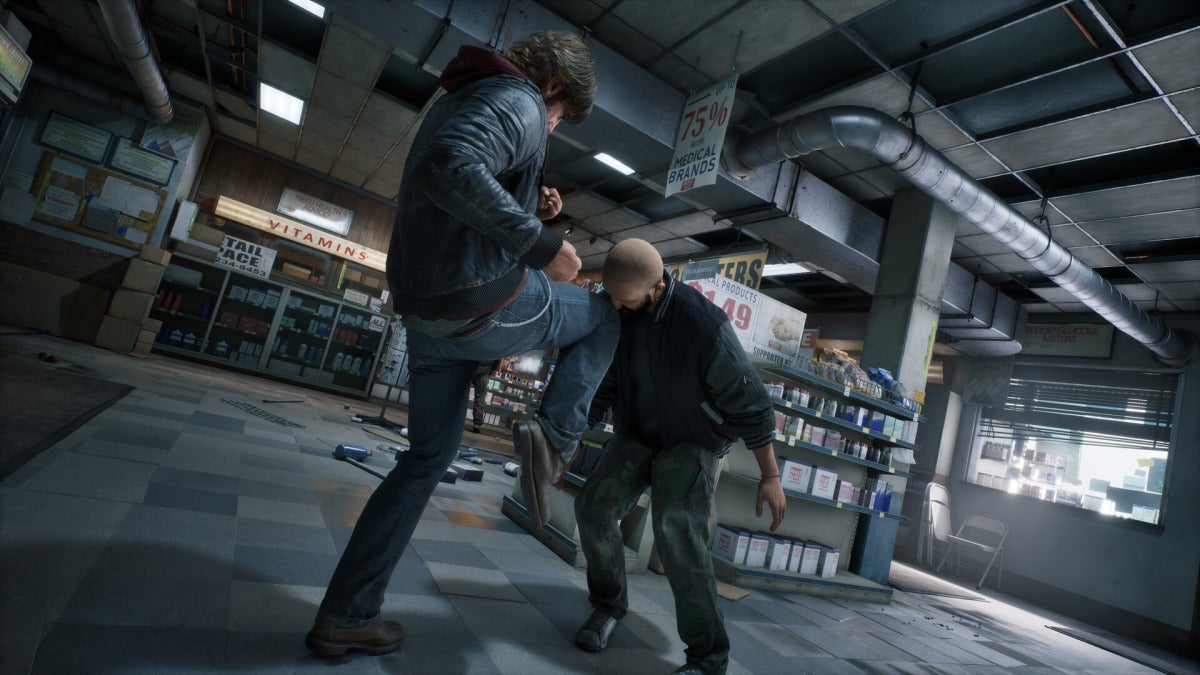
Marvel Tōkon: Fighting Souls, Arc System Works’ new 4v4 tag-team fighter published by Sony, is out now on PS5 and PC. In its first week, it sold roughly 485,000 copies.

For a brand-new 4v4 tag fighter, that’s a solid opening. It’s also the first major Marvel fighting game since Marvel vs. Capcom: Infinite in 2017. Still, next to the size of the Marvel name, Sony backing the release, and Tekken 8 moving about 1 million copies on day one, Marvel Tōkon: Fighting Souls looks a bit smaller than you might expect.

About 74% of buyers went with the PS5 version. PC lagged behind, and the reasons aren’t hard to find: stuttering, uneven frame rates, high CPU usage, weak word of mouth on Steam and social media, Sony’s required PlayStation Network (PSN) link, and no Steam Deck support.

If you mostly play fighters on console, Marvel Tōkon: Fighting Souls is still an easy recommendation. Critics have praised its anime-style visuals and combat system, which has depth without shutting newcomers out. On the PlayStation Store, user ratings sit at nearly 4.5 out of 5 across several thousand reviews. The CEO fighting game tournament has already pulled in 1,054 entrants for it, putting it behind only Street Fighter 6.

You can buy Marvel Tōkon: Fighting Souls now on PlayStation 5 and PC.

Oblivion Remastered could get more fixes: Bethesda eyes Switch 2 optimizations

Bethesda says it has heard the latest feedback around The Elder Scrolls IV: Oblivion Remastered after the game’s August 11, 2026 launch on Nintendo Switch 2, and it’s now looking at whether some of the optimizations built for that version can also make their way to PC, PS5, and Xbox Series X|S.

For players on PC, PS5, and Xbox Series X|S, especially PC, that’s a real point of interest. People are still talking about stuttering, uneven frame rates, crashes, and slowdowns that may be tied to a memory leak, and the PC version still hasn’t seen an update since July 2025.

The Nintendo Switch 2 release arrived on August 11, 2026 with support from Virtuos, plus a day-one patch that tackled gameplay, visual, and performance problems, including crashes, texture bugs, and animation issues. It also added touchscreen support, gyro aiming, and DLSS anti-aliasing, so this wasn’t just a basic port pushed onto new hardware.

If you play Oblivion Remastered regularly, keep an eye on this. The game has landed well, it has reportedly cleared 9 million players, and fans have been asking for a clearer roadmap. Bethesda still hasn’t shared a timeline, though, or a detailed patch plan covering every platform, and early player reports suggest the Nintendo Switch 2 version may need more work too.

You can pick up The Elder Scrolls IV: Oblivion Remastered now on PC, PlayStation 5, Xbox Series X|S, and Nintendo Switch 2.

Cerebras CEO reignites long-hours debate: a 38-hour week won’t build a great company

Cerebras CEO Andrew Feldman has kicked off the tech industry’s old argument about long hours all over again. In recent remarks, he said that if you think a 38-hour work week is enough to build a truly “extraordinary” company, you’re missing what that kind of effort actually demands.

Feldman later clarified that he wasn’t talking about policing the clock so much as a state of mind. His point, he said, was that founders and the first people building a company can get so wrapped up in the mission that work takes over “every waking minute.” The comment lands harder because of where Cerebras now sits. Coverage has described the company as being worth $49.5 billion, and reporting on Cerebras’s May 2026 IPO said the offering raised $5.55 billion and valued the company at roughly $56.4 billion on a fully diluted basis. There’s also a wider backdrop here: in 2026, Glassdoor reviews showed a 65% year-over-year jump in mentions of “burnout,” while research cited in that same coverage found that longer hours may boost output on the day itself, but often hurt performance the next day by cutting into sleep and recovery, which then chips away at both productivity and health over time.

If you pay attention to tech culture, this debate isn’t going away. Work weeks in the 43- to 52-hour range are still common, and in some circles even “996” remains part of the conversation, according to broader reporting on how the industry works. Sergey Brin has reportedly described 60 hours as a sweet spot, and Reid Hoffman and Lucy Guo have made versions of the same case. Critics push back for an obvious reason: founders sitting on enormous equity stakes are making a very different calculation from salaried employees. Marc Randolph and Jamie Dimon, for their part, have argued for a more balanced approach that leaves room for well-being too.

Feldman’s remarks, along with the wider coverage around them, are easy to find online.

Amazon’s $2 billion Gilroy data center is now approved: without a public vote

Amazon Web Services’ $2 billion data center in Gilroy, California, has been approved, and construction is already underway. The facility will span 438,500 square feet on a 56-acre site. Gilroy’s community development director signed off on the project through an administrative process under the City of Gilroy’s 45-year-old M2 General Industrial zoning, which allows “data processing establishments” with a staff-level Architectural and Site Review Permit rather than a City Council vote or public hearing.

AWS Console Download

The part drawing the most attention is the way the Amazon Web Services project got the green light. Gilroy’s community development director approved it administratively under that same 45-year-old M2 General Industrial zoning, using a staff-level Architectural and Site Review Permit instead of sending it to the city council or putting it through a public hearing.

For people who follow local development, that process is a big reason this has become a live issue. Many residents say they didn’t know what was being built until site work had already started, or until the 2024 environmental comment window had already closed. The City of Gilroy, though, says the full environmental review began back in 2022.

It’s not hard to see why the opposition has grown. Critics are zeroed in on the use of potable water rather than recycled cooling water, in a drought-prone area. They’re also raising concerns about heavy electricity demand and the long-term strain the project could put on local infrastructure. City officials say Amazon Web Services will pay for a new substation so the data center won’t overburden the grid.

The project is in Gilroy, where supporters point to roughly 250 jobs, construction activity, and new tax revenue. Critics say the number of permanent jobs may end up being fairly small. Beneath that argument sits a larger question: whether industrial zoning rules written decades ago still fit the needs and realities of modern data centers.

Viture Pro 2 smart glasses launch at $299: lighter, thinner design

Viture announced the Viture Pro 2 display glasses today. The big changes are easy to spot: the frame is lighter and thinner, and the launch price drops quite a bit to $299.

VLC media player Download

According to Viture, the new frame weighs 63g, making it 20% lighter and 16% thinner than the original Viture Pro. It also adds new temple padding and gives you a wider range of nose-pad adjustment. The core display specs are still here, with 1,920 x 1,080 per eye at up to 120Hz, but Viture has also bumped the field of view to 50 degrees and is using Sony micro-OLED panels rated at 1,600 nits. On top of that, it says smoother field curvature, new gamma tuning, and UltraClarity 3.0 should make the image feel more natural and ease eye strain.

If you’re looking for a tethered big-screen viewer, this seems like a pretty compelling option. Viture says you get a 146-inch virtual display, plus independent 0 to -5.00D diopter control, which could let some nearsighted users skip lens inserts entirely. There’s also USB-C support for a compatible phone, laptop, handheld, or console. The catch is the same as ever: you’re still attached to a cable, and long-session comfort is something that still needs to be proven in real use.

You can order the Viture Pro 2 from Viture for $299, or pay $378 for a bundle with the new $99 Mobile Dock Mini. Viture says the dock includes a 10,000mAh battery, comes in a design that’s 34% smaller and 30% lighter than the previous one, supports Nintendo Switch 2, and includes a magnetic adapter that can also serve as a hub for a TV or monitor.

Google tests Gemini Device Help for Pixel phones: a conversational way to troubleshoot

Your Pixel might soon be able to walk you through its own troubleshooting. Google appears to be testing Gemini Device Help, a conversational support feature for Pixel phones that would let you describe a problem in plain language and get step-by-step fixes right on the device, without digging through Settings or heading to the web.

Google hasn’t announced Gemini Device Help yet, and there’s still no launch date or any confirmed word on supported models, regions, or languages. Based on what this feature seems built to do, it could help with the usual stuff people run into: connectivity problems, battery concerns, overheating warnings, and storage issues. It would also build on the Device health and support tools, plus the Bluetooth diagnostics Google already offers on Pixel 6 phones and newer.

It also feels like the next move in Google’s broader Gemini rollout across Pixel. The company has already pushed Gemini into the lineup with Gemini Nano, Gemini Live, and integrations for apps like Calendar, Maps, and Keep. A feature like Device Help would fit right into that, especially on Pixel 9 and later, where Gemini is already the default assistant, by helping you make sense of diagnostic readouts and figure out what to do next.

If you already use your Pixel’s support tools with any regularity, Gemini Device Help is one to watch. It could end up being one of the most useful Gemini additions so far, particularly when Samsung already packs more than 24 diagnostic functions into the Samsung Members app. If Google can save people from hunting through menus or looking elsewhere for help with routine fixes, that alone would make it worthwhile.

If Google rolls Gemini Device Help out, you’ll get it on supported Pixel phones.

WhatsApp rolls out @all mentions: smarter polls and easier subgroups

WhatsApp is rolling out five new group chat features, the company says, including @all mentions, more capable polls, and a simpler way to spin off subgroups.

WhatsApp Download

The biggest addition is @all, which lets you notify everyone in a WhatsApp group at once, even if they’ve muted the chat. In groups larger than 32 people, though, only admins can use it, WhatsApp says, and if you don’t want those mass mentions breaking through, you can turn the alerts off. Polls are getting three useful changes too: you can set a closing time, hide voter names for more private responses, and edit the question for up to 15 minutes after posting. There’s also a new way to create a subgroup directly from an existing chat, handy for side projects, events, or narrower discussions that don’t need the whole group.

If you rely on WhatsApp for family chats, community groups, or work threads, this is the kind of update you’ll probably notice. Tools like these have been common for a while in Slack, Telegram, and Google Chat, but they land differently on an app with 3 billion monthly users, more than 100 billion messages sent each day, and recent additions such as Group Message History, member tags, text-based stickers, and event reminders, according to Meta.

The rollout is live now on WhatsApp, the company says.

Telegram Download

Netflix’s August 2026 lineup is here: Chucky, Fast & Furious and more horror

Netflix has unveiled its August 2026 slate. The big drop hits August 1, when six Chucky movies and the first seven Fast & Furious films land at once. A week later, on August 7, Ricky Gervais brings Alley Cats, a six-part adult animated sitcom. Then, on August 28, Netflix adds the crime thriller The Whisper Man.

Netflix Download

This month leans harder on familiar names than on prestige fare. The Chucky run arrives at a pretty smart moment, with the recent TV adaptation still in the mix and horror already getting a lift from the noise around Five Nights at Freddy’s 2 and M3GAN. Fast & Furious works just as neatly for Netflix: 25 years of franchise nostalgia, bundled into one very easy binge.

There are also a couple of Netflix originals pulling in different directions. Alley Cats looks like the oddball comedy play. The Whisper Man goes after the thriller crowd, with Adam Scott and Robert De Niro attached, Alex North’s novel as the source, and AGBO, the Russo Brothers-backed production company, behind it.

So if horror, action, comedy, and thrillers scattered across the month sounds good, this lineup is probably worth a look. Still, it’d be fair to want a little more on the international side, and a closer sense of how The Whisper Man stacks up against North’s book.

The August slate streams on Netflix, and the main licensed titles arrive first, on August 1.

NordVPN Download