The smartphone market has been undergoing a radical transformation over the past few years with the integration of generative artificial intelligence technologies. According to a recent report published by Counterpoint Research, it is expected that by the end of 2024, Apple and Samsung will dominate this segment, capturing more than 75% of the global smartphone market with AI features. This advancement is primarily marked by their strong presence in developed markets and their leadership in the premium smartphone segment.

Generative AI leads innovations and continues to grow
In recent years, innovation in hardware has begun to slow down, while the industry’s focus has shifted towards the functionality offered by generative AI. This technology allows devices not only to offer us greater performance but also to be capable of adapting to our needs and preferences in real-time.
The current applications of generative AI are already numerous. Writing tools, notification summaries, emails and websites, image and emoji creation, translation, photo editing, and integration into personal assistants like Siri are part of a constantly growing list.
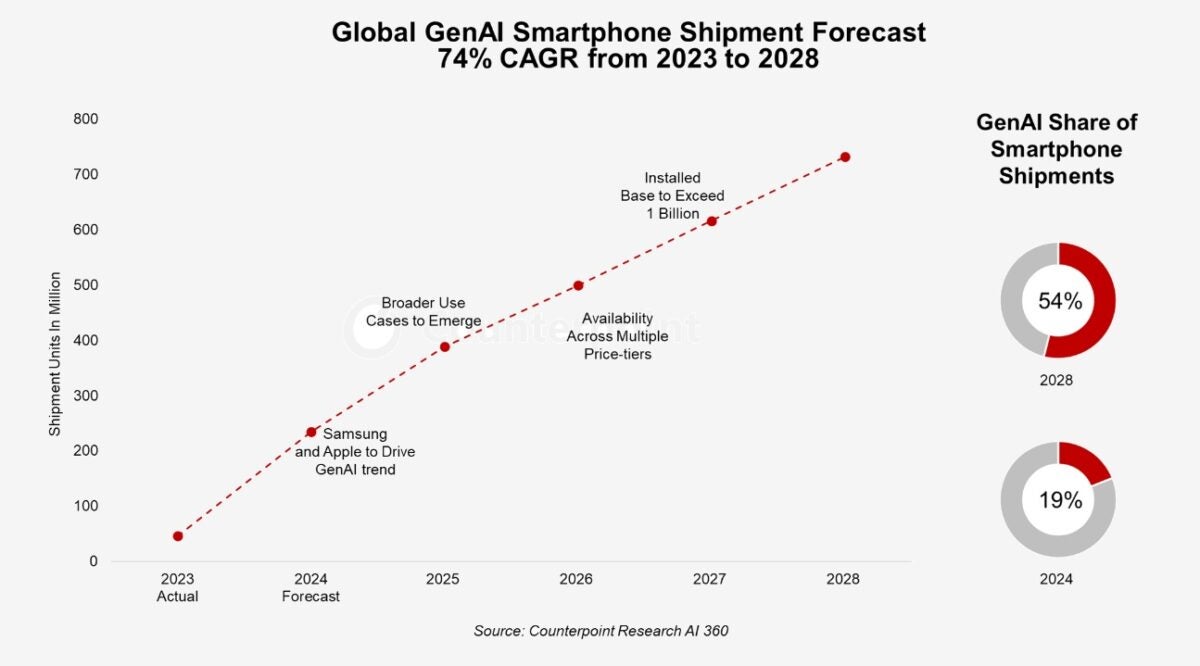
Since the launch of the first phone with artificial intelligence, approximately a year ago, its impact has been remarkable. According to forecasts by Counterpoint Research, the market share of these devices is expected to reach 19% in 2024, a very significant growth. However, the long-term outlook is even more impressive: by 2028, it is projected that phones with generative AI will represent 54% of the total market, with a sales volume exceeding 730 million units, more than three times the level expected for 2024.
As more manufacturers join the race for the generative AI market, the competition among them will intensify. Here it’s no longer just about offering superior technical specifications; the real battleground will be customization and specification, according to the study. Manufacturers that manage to differentiate themselves through the most efficient and useful implementation of AI in their devices will gain a long-term competitive advantage. This is something in which Apple often excels due to its control over hardware and software in its devices.
For now, we will have to wait, but it is clear that AI has come to change the way we use our devices. It has also come to change what distinguishes a device from one company from others. With this in mind, the figures from the study we are dealing with make perfect sense. Both Apple and Samsung have managed to position themselves as the undisputed leaders in this technological revolution. Their ability to attract early adopters and their strong market presence places them in an excellent position to continue leading the sector.
