Reacher season 4 is now on Prime Video: a hit despite fan backlash

Reacher season 4 hit Prime Video on August 12, 2026, and Amazon didn’t waste much time making its next move. The company has already renewed the show for season 5, and it’s still moving forward with a Frances Neagley spin-off. Since that August 12 debut, the eight-episode season has stayed in the conversation, even if the response has been more divided than usual.

Amazon Prime Video Download

This season adapts Lee Child’s Gone Tomorrow. It starts with Jack Reacher spotting a woman on a New York subway, deciding she looks like a suicide bomber, and getting dragged into a much bigger CIA and government conspiracy. That broader, messier story leaves behind the tighter revenge plots from earlier seasons, and the split shows up in the Rotten Tomatoes numbers: critics have it at 94%, while audiences are at 82%.

Some viewers see season 4 as one of the show’s weaker outings, pointing to plot holes, coincidences, and a story that feels less grounded. Other people put it down as the best season since season 1, mostly because the action hits harder and Alan Ritchson is so good in it. If what you want from Reacher is blunt, heavy-duty pulp rather than perfectly tidy political-thriller logic, this season will probably work for you.

Reacher himself is still the main attraction, and Lee Child’s original idea of the character, more force of nature than evolving protagonist, still comes through. That holds even with the modernization tweaks that may bother some book readers. Reacher season 4 is streaming now on Prime Video.

iPhone 20 rumor resurfaces: Apple may get its biggest redesign in years

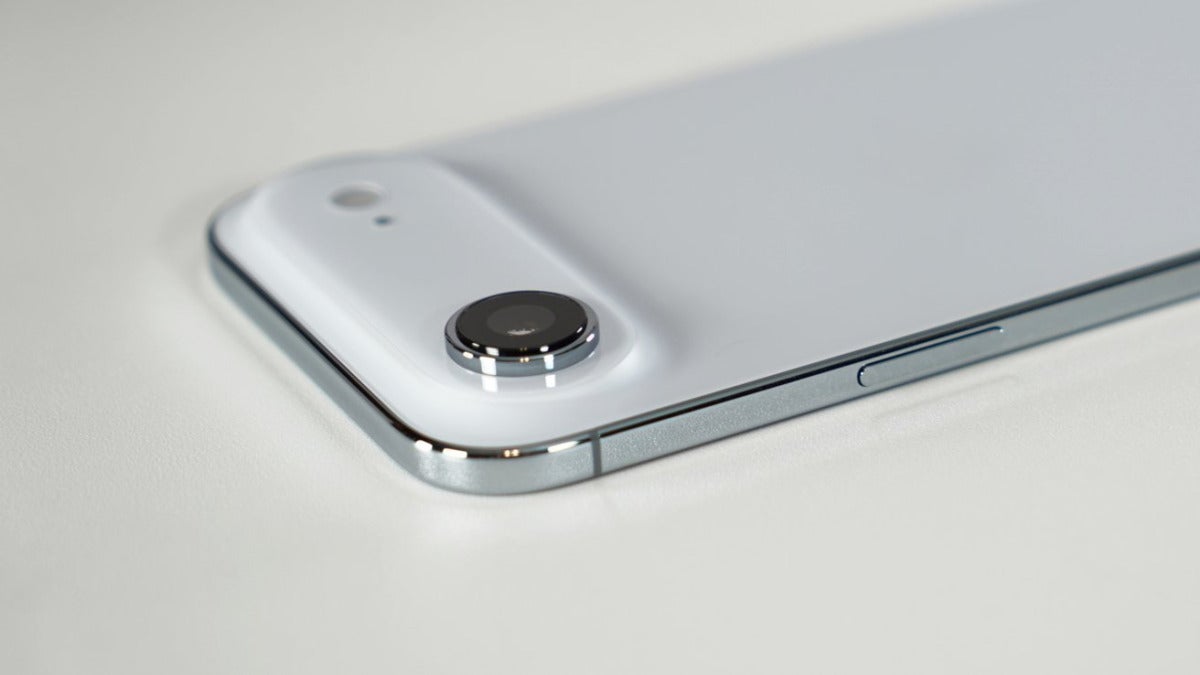
A Weibo leaker is echoing earlier reports that Apple’s rumored iPhone 20 could mark a rounded, glass-forward redesign, one that those same reports frame as Apple’s likely anniversary iPhone for 2027.

iTunes Download

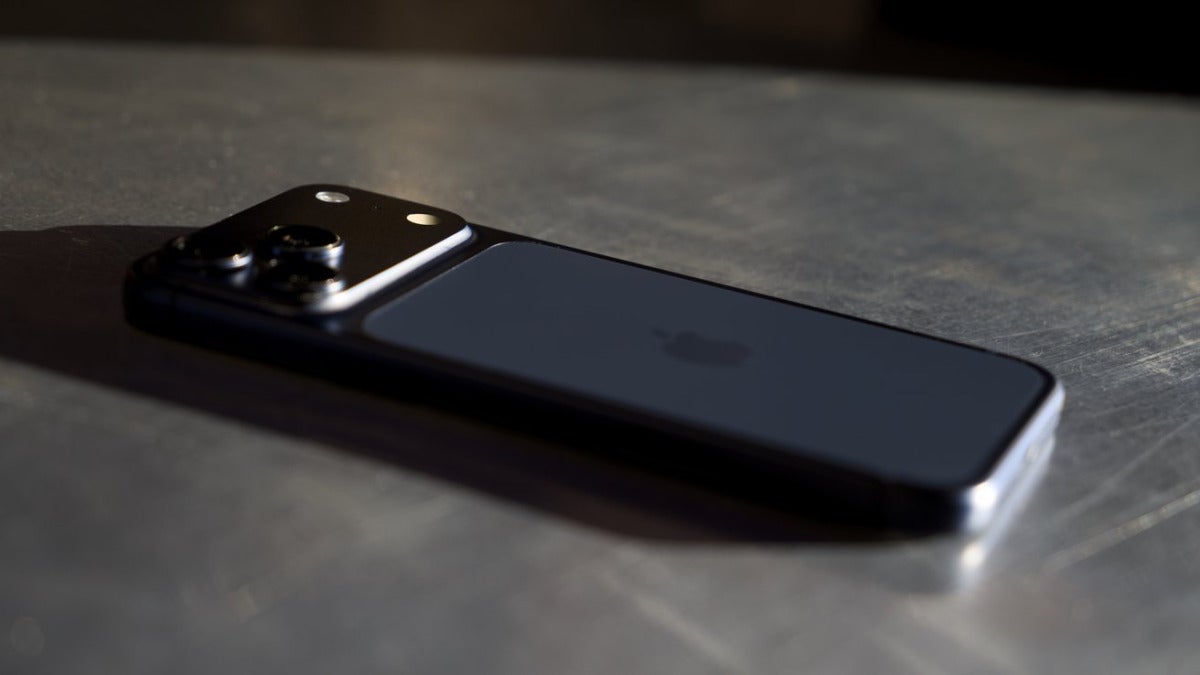
If that rumor holds up, Apple may be heading toward a softer, thinner iPhone with more glass visible around the edges. That lines up with the iPhone Air design language described in earlier reports, and it could even mean a curved, or possibly quad-curved, OLED panel. It would also pull Apple away from the flat-sided look it returned to with the iPhone 12, giving this anniversary model a much bigger visual change than the usual year-to-year update.

If you keep an eye on Apple hardware rumors, this one has a lot going on. Glass pairs nicely with wireless charging, it tends to feel more premium in hand, and it helps sell the edge-to-edge display look. But thinner hardware and more exposed curved panels come with tradeoffs too: structural concerns, steeper repair bills, and another round of right-to-repair criticism.

For now, all you can really do is follow the rumored iPhone 20 through Weibo posts and the reports that build on them. And Apple wouldn’t be stepping into completely new territory here. Samsung, Xiaomi, Oppo, and Vivo have already experimented with similar wraparound designs, at least according to those reports. If cover glass has gotten thin enough and strong enough, Apple may finally have the room to try one of its biggest iPhone redesigns in years.

iPhone 18 may cost $100 more: Apple reportedly calls hikes ‘unavoidable’

Apple’s iPhone 18 is looking more and more likely to arrive this fall with a higher price tag. Apple already pushed Mac and iPad prices up by 15% to 20% in June 2026, and reports say the company now sees higher iPhone pricing as unavoidable.

In June 2026, Apple moved the MacBook Air from $1,099 to $1,299 and the iPad Air from $599 to $749. Analysts now see a $100 bump for the iPhone 18: maybe a $100 bump, which would put the iPhone 18 Pro around $1,199, or as much as $250 to $300 on Pro models, which could take a top-end version to roughly $1,399.

The biggest headache is memory. Market data cited in those reports says DRAM and NAND prices jumped more than 80% in Q1 2026. Tim Cook reportedly described it as a “hundred-year flood.” Demand from data centers and high-performance computing has tightened supply, and some estimates now put iPhone 18 Pro Max materials at nearly $300 above the previous model. Memory alone has gone from about 10% of costs to more than a third.

If you’re thinking about upgrading, keep an eye on this. Rival brands have already raised flagship prices. The average selling price for smartphones in 2026 is projected to climb 21%, or about $98. Apple also made its first mid-cycle iPhone price increase in Japan in July 2026, and reports mentioned a $74 global price increase for the iPhone 17. Apple still has a few ways to play it: keep base models steady, push harder on storage tiers and Pro buyers, or eat part of the cost to hold on to market share.

We’ll know the actual pricing at the fall launch.

Nothing OS 5.0 gets an August 25 reveal date

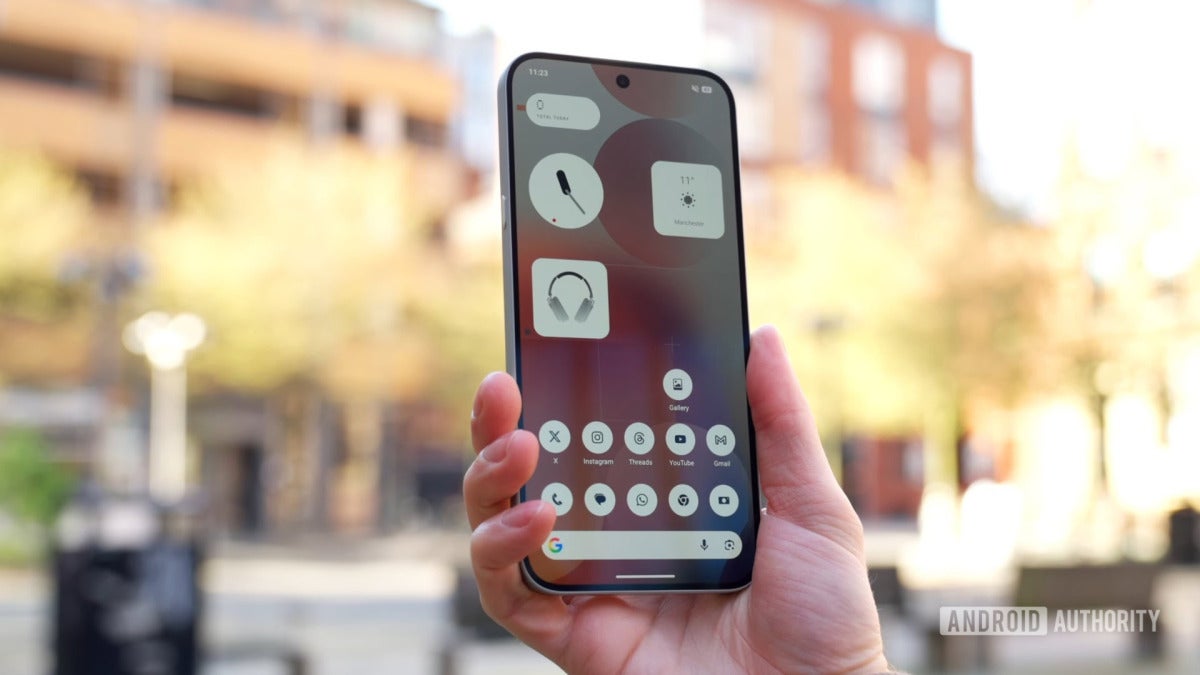
Nothing has started teasing Nothing OS 5.0, the company’s next big phone software update, and the teaser confirms it’ll share more on August 25, 2026. This version is expected to sit on top of Android 17 and should be Nothing’s next major phone release after Nothing OS 4.0. The teaser line, “More joy, every day,” hints at the direction: more personalization, better day-to-day usability, and a visual refresh built around animated gradients and a frosted-glass look that could give it a clearer identity next to other Android skins.

Nova Launcher Download

Underneath that new look, Android 17 is expected to bring the usual platform changes: floating-bubble multitasking, better memory management, tighter privacy controls, plus the standard round of performance and security improvements. Nothing will almost certainly put its own design layer over all of that.

If you’re using a recent Nothing phone, this is probably one to keep an eye on. A stable release is widely expected in November 2026, with the Nothing Phone (3) likely first in line.

There’s also a report that Nothing has already pulled in Nothing Phone (3) owners for a private pre-release test. For now, though, a public beta doesn’t seem likely.

Going by the current support roadmap, roughly ten devices should make the cut. That list is expected to include the Nothing Phone (4), Nothing Phone (3), the Nothing Phone (2a) series, and the CMF Phone 2 Pro. On the other side, the Nothing Phone (1), Nothing Phone (2), and CMF Phone 1 aren’t expected to get Android 17. The Nothing Phone (1) has also reached end of life for security patches.

The next official update comes straight from Nothing on August 25.

OnePlus 16 may finally bring a true 165Hz display

The OnePlus 16 is expected to arrive in late 2026. Recent leaks, along with reports and comments from OnePlus China general manager Liu Baoyou, point to a system-wide 165Hz display and a bigger push into gaming.

The standout rumor is the refresh rate. From what these leaks and reports suggest, 165Hz would apply across the system, including UI animations and more apps, rather than being limited to just a small number of games.

If that pans out, it would address the compromise tied to the OnePlus 15. That phone reportedly went with a 1.5K 165Hz panel because the materials and circuit technology available at the time couldn’t reliably combine QHD+ with 165Hz. The 185Hz talk is still speculative in the current round of leaks. There’s also mention of a new BOE X4 material, reportedly co-developed with OnePlus, that could be more efficient and possibly even tougher than Samsung’s M-series panels. That matters if you’re trying to run ultra-high refresh rates without draining battery life during longer sessions.

If you play a lot on your phone, this could be one to wait for. Liu Baoyou has also confirmed the development of Wind Chaser Gaming Core and E-Sports Triple Chip, which makes it sound like OnePlus is building an actual gaming flagship, not just a regular flagship with a few gaming features added on.

Other leaks point to a 9,000mAh battery, Snapdragon 8 Elite Gen 6 Pro, LPDDR6, and a 200MP main camera. That would be a step up from the OnePlus 15’s reported 7,300mAh battery.

The downside is availability. Based on the current leaks, the OnePlus 16 will probably be limited to China and India, with no release expected in North America or Europe.

Google Sheets rolls out better Excel imports: tables keep formatting

Google Sheets started rolling out a new update in August 2026, and Google says it makes Excel imports hold up better. The big change is that Sheets now does a better job preserving Excel table formatting and structural information, and it also improves pivot table imports. If you move .xlsx files back and forth between Microsoft 365 and Google Workspace on a regular basis, this is the kind of update you’ll actually notice. Tables should keep more of their styling and built-in behavior, rather than making you rebuild reports, budgets, sales trackers, and other shared files from scratch. Pivot tables, too, should arrive in a state that’s still useful, instead of flattening into static data.

Google Sheets Download

For businesses that still rely on Excel for long-established workflows but prefer Google Sheets when it’s time to collaborate in the browser, that takes some of the pain out of the handoff. It won’t fix every compatibility problem between the two platforms, but it should ease one of the more annoying ones.

It also lines up with Google’s larger effort to make Sheets feel like a real first-choice spreadsheet tool, not just the lighter alternative to Microsoft Excel. Real-time collaboration already gives it an edge for some teams, and Google has been adding things like natural-language editing features and Connected Sheets improvements. Better Excel imports matter for the same reason: people are a lot more willing to move files over when they trust those files will survive the trip.

Google says the rollout began in August 2026 for all Google Workspace customers as well as personal Google accounts. What Google hasn’t spelled out is how well Sheets handles the messier parts of Excel files, including locale-specific formats, advanced formulas, complex templates, or macros used in finance, research, and engineering work.

Microsoft Excel Download

Mark Zuckerberg’s superyacht: Alaska cruise ship makes rescue nearby

According to the U.S. Coast Guard, Wilderness Legacy went to help a stranded skiff near Farragut Bay on August 3, towing the 21-foot boat nine miles to sheltered water and giving it fuel after it ran out about 85 miles from Juneau.

The skiff had two women, a child, and a dog aboard. The Coast Guard sent out a marine assistance request at 9:56 p.m., but officials said the people on board were not considered to be in distress.

If you saw the online backlash, it picked up after passenger Michael Love said the captain of Wilderness Legacy told guests that Launchpad, Mark Zuckerberg’s 387-foot superyacht, hadn’t responded, even though tracking data reportedly showed Launchpad was closer and had slowed down before Wilderness Legacy stepped in.

A spokesperson for Mark Zuckerberg said neither Zuckerberg nor Priscilla Chan’s family was aboard Launchpad, and that the crew was on a different radio channel; since the Coast Guard had classified the incident as a non-distress call, SOLAS-style obligations were less clearly defined.

UnCruise owner Dan Blanchard said this kind of assist is common in remote Alaska, and that this was reportedly the second case involving a small cruise ship in two weeks; you can keep up with updates from UnCruise and the Coast Guard.