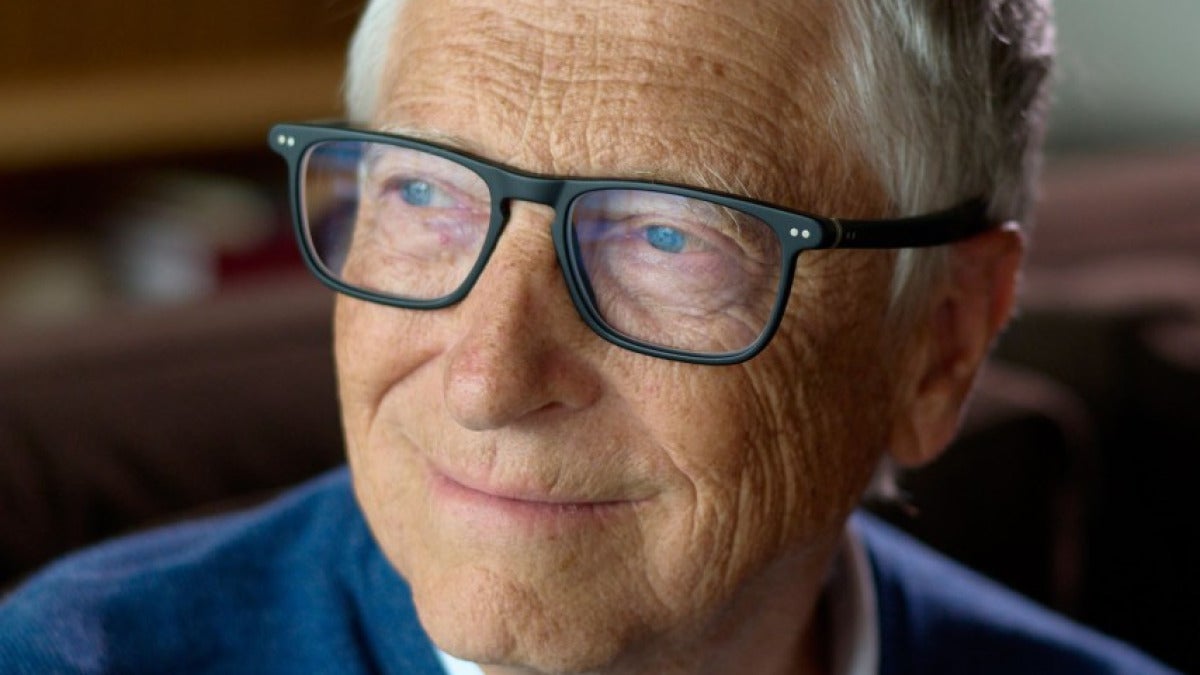
Bill Gates has sharpened his call for AI rules in 2026. He says the technology has moved past a few key thresholds, and the consequences are already showing up in fraud, cybercrime, hiring, and healthcare. He points to hacking, bioterrorism, and large-scale fraud, argues that some jobs should remain in human hands, and says the fight now is over who takes the risks, who gets the upside, and whether regulation shows up before the damage does.

He also says the dangers aren’t hypothetical anymore. Gates keeps coming back to hacking, bioterrorism, and fraud at scale, and the numbers around deepfake scams help explain why: attempts in 2026 were up more than 2,000% compared with 2022.
The policy picture he’s describing is uneven. The European Union’s AI Act brought in transparency rules on August 2, 2026. The US still had a patchwork approach. China, for its part, added ethics, registration , and security requirements in July 2026.
The labor data is mixed, but not hard to read. Goldman Sachs found slower growth in job openings across AI-exposed sectors in the US, Germany, and Australia starting in late 2022. The World Economic Forum, meanwhile, projected 85 million displaced jobs by 2026.
PwC found gains too: better productivity, higher wages, and in some cases more hiring. Still, new graduates are getting pinched as AI absorbs the kind of entry-level work people used to learn on.
If you follow AI policy, this is the part to watch:
Gates says some roles, diagnosis among them, should stay human even as AI spreads through medicine. By February 2026, the US Food and Drug Administration had cleared 1,357 AI medical devices and, as Gates notes, 81% of US physicians were using them, mostly for administrative work.
He’s also arguing that a few pieces of the debate still don’t get enough attention: developing countries, predictive policing, credit scoring, and the uneven effects on different groups. In his view, the argument has shifted. It’s now about who carries the risks, who captures the gains, and whether the rules arrive in time.
You can find Gates’s essays and interviews online.