Apple hasn’t raised iPhone 16 or iPhone 17 prices yet: the claims are still rumors

Right now, Apple hasn’t announced the iPhone 16, iPhone 17, iPhone 17e, iPhone Air, or iPhone 18 Pro. It also hasn’t confirmed any iPhone price increases, no matter what some reports are saying about Apple quietly bumping prices.

Apple Store Download

What those reports mostly hinge on is a $100 increase on several older iPhones. One example even lists an iPhone 16 at $799, then argues it’s a worse deal than a supposed iPhone 17e because the 17e would have more storage and a newer chip. Maybe. But until Apple actually launches those phones or posts pricing on its own site, that belongs in the rumor pile, not the news column. And yes, even if the same report says the iPhone 16 would still have better cameras and faster charging, that doesn’t make the pricing claim official.

Still, this is something to keep an eye on. Apple has been dealing with higher hardware costs, and multiple outlets have already reported that the iPhone 15 Pro Max cost more to build because of parts like the A17 Pro and the new telephoto system. Apple also gave us a pretty clear example with the iPhone 15 staying flat while the iPhone 15 Pro Max went up by $100. That suggests the company may attach price increases to higher-end features. I’ve been tracking these changes, and that explanation lands as a lot more believable than claims based only on shortages or on unverified iPhone 18 Pro Max battery numbers.

If you want confirmed pricing, check Apple’s official iPhone pages. That’s still the cleanest source. Future models could absolutely get more expensive, though, with semiconductor supply, geopolitics, tariffs, exchange rates, micro-OLED displays, and a bigger push into in-house Apple silicon all in the mix.


Trump promises $5,000 payments: if Republicans win the House and Senate

Ahead of the U.S. midterm elections, Donald Trump has floated the idea of sending every adult American citizen a $5,000 payment if Republicans take both the House and the Senate.

Speaking in Dallas, Trump called it a “dividend” and urged supporters to vote “as if I’m on the ballot,” even though he isn’t. Do the math and the plan lands somewhere around $1.2 trillion to $1.35 trillion for roughly 240 million adults, added to a national debt that’s already above $40 trillion.

Trump argues tariff revenue could help cover it. The numbers don’t come close. Gross customs revenue from January 2025 through June 2026 came to about $284 billion, and analysts say net revenue was closer to $118 billion once refunds and interest are counted, which still leaves a gap of about $1.08 trillion.

For anyone who follows U.S. politics closely, this is one to watch, mostly because it looks tailored to drive Republican turnout. Critics immediately called it vote-buying. Trump has tried versions of this pitch before too, including a $2,000 tariff rebate and a “DOGE dividend,” and neither of those ever became law.

There’s also the basic question of whether it could happen at all. Congress would have to approve it under the U.S. Constitution’s Appropriations Clause. Legal analysts are split. Economists are warning about inflation and larger deficits. Sen. Bernie Moreno has backed the idea, Democrats have brushed it off, and even some Republicans don’t seem comfortable with it.

Google Pixel Tablet disappears from the Google Store: the clearest sign yet it’s done for

Google seems to have quietly pulled the Pixel Tablet, its Android tablet, from sale today. The Google Store product page is gone, and the Tablets category has vanished from the Google Store in the US, UK, and Canada.

Google Home Download

Google hasn’t formally said the Pixel Tablet is discontinued. Still, with the recent out-of-stock notices, redirected listings, and earlier reports that Google had dropped a follow-up and that the company’s hardware team would stop making its own tablets, this is the clearest sign yet that the device’s run is over.

Google announced the Pixel Tablet at I/O 2023 and launched it in June 2023. It was a hybrid Android tablet and docked smart display, sold with a charging speaker dock for $899 and pitched as something you’d use on the couch, in the kitchen, or by your bedside.

If you already use the Pixel Tablet regularly, it’s still probably worth keeping. Google promised software and security updates through June 2028, even if Google’s patchy history with tablets, the competition from the iPad and Galaxy Tab, and the lingering problem of Android apps that still aren’t really built for tablets make this retreat hard to miss.

You can no longer buy the Pixel Tablet directly from Google. Amazon no longer lists it, and Best Buy says the Pixel Tablet is no longer available new. Google still has accessories up, including the case and charging speaker dock, though most of those are out of stock too.

What’s left is the Wasserstein Pixel Tablet Speaker Stand. That’s usually the kind of thing you see when a product is at the very end of its life.

Google Maps on Android Auto: some users are now losing the speedometer

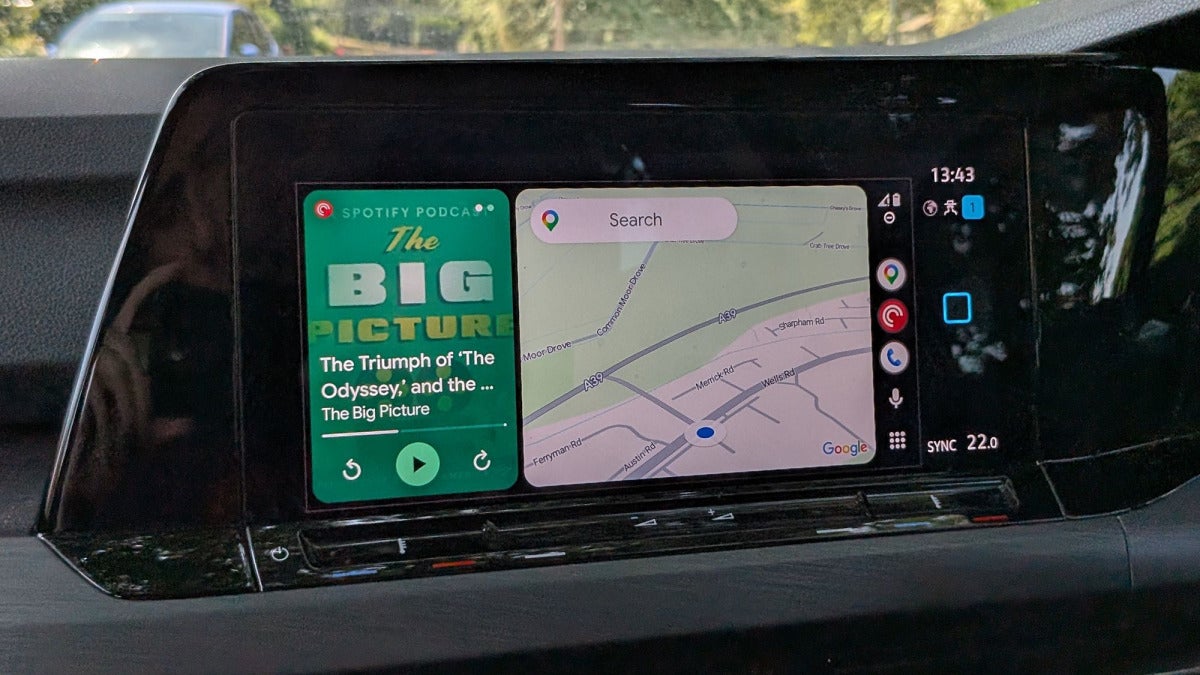
Google Maps on Android Auto seems to have picked up a strange intermittent bug: the speedometer disappears, and for some people the speed limit indicator disappears right along with it.

Google Maps Download

User reports make the whole thing harder to pin down. It can show up one day, then be gone the next. One phone has it, another doesn’t. People have floated a few theories, including a specific Google Maps or Android Auto version, account settings, a server-side test, or switching between beta and stable builds. So far, though, nothing’s been confirmed.

The timing makes it even more frustrating. The speedometer reportedly only started reaching beta testers in July 2026, and it still hasn’t rolled out to everyone. So some of you are losing a feature that only just arrived. At the same time, other complaints about missing stop signs, traffic lights, and live traffic point to a wider Google Maps rendering issue, and that may overlap with an older traffic bug.

If you use Google Maps a lot in the car, keep an eye on this. Google hasn’t acknowledged the problem, and it’s still not clear which phones , cars, versions, accounts, or regions are affected.

Google Maps and Android Auto are both available on Google Play. Until Google says something, all you can really do is try different versions or wait it out. That’s happening while Android Auto 17.3 and 17.4 are also rolling out to fix separate crashes and connection failures that have reportedly affected Waze users too.

Waze Download

DoppelCart now spans nearly 119,000 fake stores: checkout pages steal card data

Security firm Nebty says it has documented DoppelCart, a fake-shop network spread across 118,787 .shop domains. That works out to 2.72% of the .shop domains Nebty examined and, by Nebty’s count, makes it the largest fake-shop network ever publicly documented by number of domains.

Avast Free Antivirus Download

Nebty says the sites mimic 44,182 brands by copying product catalogs, logos, and images. In some cases, they even pull photos from the real retailers’ own infrastructure. The median brand showed up twice in the network, while some were cloned more than 30 times.

The technical overlap is hard to miss. Nebty researchers said 96% of the confirmed shops used identical build files and traced back to just 27 backends. On the payment side, the checkout pages are built to grab card numbers , expiration dates, CVVs, billing details, and even one-time bank codes through WebSockets.

If you buy things online often, this matters. Nebty says the operators lean on the usual trust signals, HTTPS, polished branding, and discounts as high as 65%, to get shoppers to drop their guard.

By Nebty’s estimate, DoppelCart is already larger than BogusBazaar, which was tied to roughly 75,000 sites. Add in reports of a 790% year-over-year jump in fake online store scams in Q1 2025, plus 80,000 fake stores spotted during the 2024 holiday season, and the pattern looks pretty clear: automation is speeding this up.

So far, there’s no public attribution, no statement from law enforcement, and no public response from the .shop registry, though some takedowns have worked. The practical advice is simple enough: check the URL carefully, be skeptical of ads and sponsored links, search the domain along with words like “scam” or “reviews,” use payment methods that include buyer protection, and stop right away if a checkout you don’t recognize asks for extra verification.

Nebty’s findings are available online.

Apple’s September 9 event starts at 1 p.m. ET: how to watch live

Apple has set its September 9 “Surprise and Shine” event for 1 p.m. ET / 10 a.m. PT in Cupertino. Going by the usual mix of reports and rumors, this is where Apple is expected to unveil its first foldable iPhone, the iPhone 18 Pro lineup, and new Apple Watch models.

YouTube Download

There’s a decent chance you’ll also see Apple hardware chief John Ternus take the lead in his first major keynote as CEO. He succeeded Tim Cook on September 1, with Cook now serving as Executive Chairman.

As for the foldable iPhone, the rumored names floating around are iPhone Ultra and iPhone Duo. Reports say it could come with a 5.5-inch outer screen and a 7.8-inch inner display, carry a price tag above $2,000, and possibly leave out a telephoto camera. Even so, it’s still being seen as a product that could help drive growth, even though Apple is arriving late to the category compared with Samsung, Huawei, Xiaomi, and other competitors, especially in China.

There could be plenty more on stage. Apple may also introduce the iPhone 18 Pro and iPhone 18 Pro Max, with an A20 Pro chip, a smaller Dynamic Island made possible by under-display Face ID, camera upgrades, and a sky-blue finish. Reports also suggest the standard iPhone 18 has been pushed back until spring 2027. Add in possible Apple Watch Series 12 or Apple Watch Ultra updates, plus the new M6 Mac mini and M5 Ultra Mac Studio, which are said to go on sale September 22.

If you usually follow Apple launches, this keynote looks like one to watch. Apple is expected to stream it on its official website, YouTube, and the Apple TV app, and if the company sticks to its usual pattern, a replay should be available soon after.

Apple TV Download

iPhone Duo leak: Apple’s $2,000 foldable could arrive in October

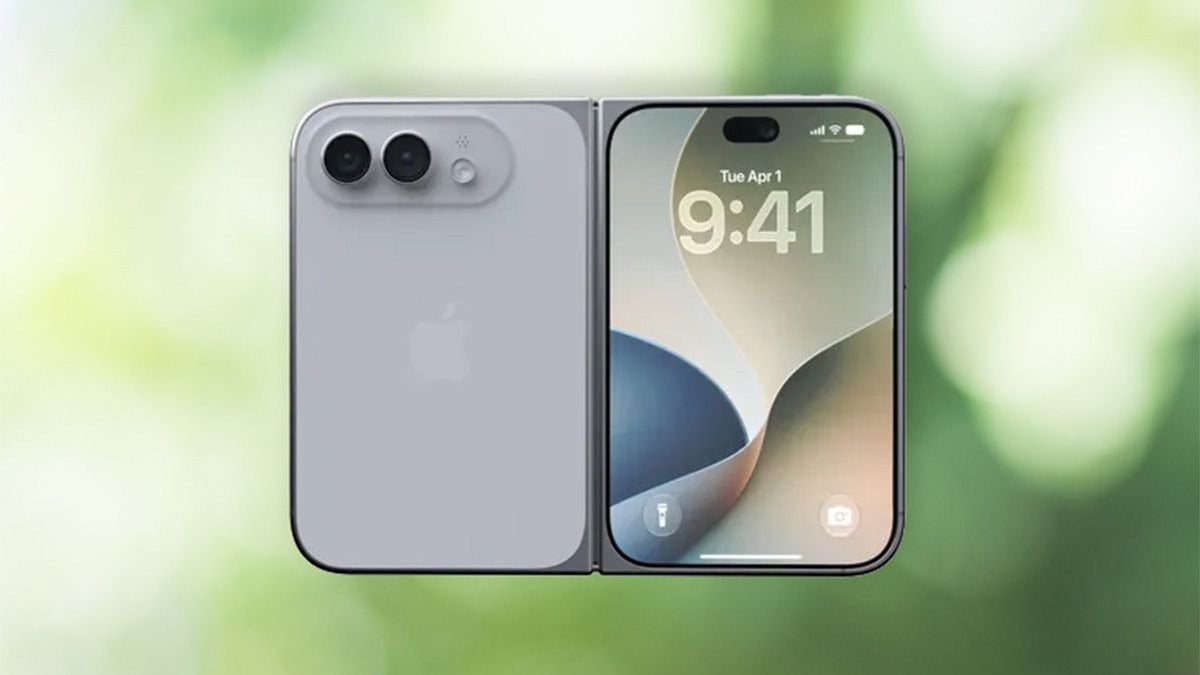
Apple is expected to unveil its long-rumored foldable iPhone on September 9. The name showing up most often right now is iPhone Duo. Leaks point to a book-style foldable design, a possible new naming direction, and a starting price of about $2,000 for the 256GB version.

The latest leaks also suggest Apple has moved past names like iPhone Fold and iPhone Ultra. iPhone Duo is the one that keeps coming up. Price-wise, the higher-capacity models could push much closer to $3,000, with some rumors even mentioning a 2TB option.

Those same late leaks sketch out a pretty specific hardware picture: a 5.5-inch outer screen, a 7.8-inch inner display, and an upgraded hinge meant to make the crease less noticeable. Apple Pencil support has also been mentioned, along with side-by-side multitasking and color options in either white or dark blue.

That would place Apple’s foldable iPhone right up against Samsung’s Galaxy Z Fold line, and very much in the ultra-premium part of the market. If you’ve been holding out for a foldable iPhone that leans a little more toward productivity, this one looks like something to keep an eye on.

For now, though, every detail here still sits firmly in rumor territory. Apple hasn’t confirmed the name, the price, the launch timing, or how wide the international rollout would be. Some reports are also still pointing to a delay in China tied to an eSIM-only design. So the safest bet is to expect more on September 9, with availability still rumored for October, or possibly November.

Motorola Signature 27 briefly shows up on US site: wider launch hinted

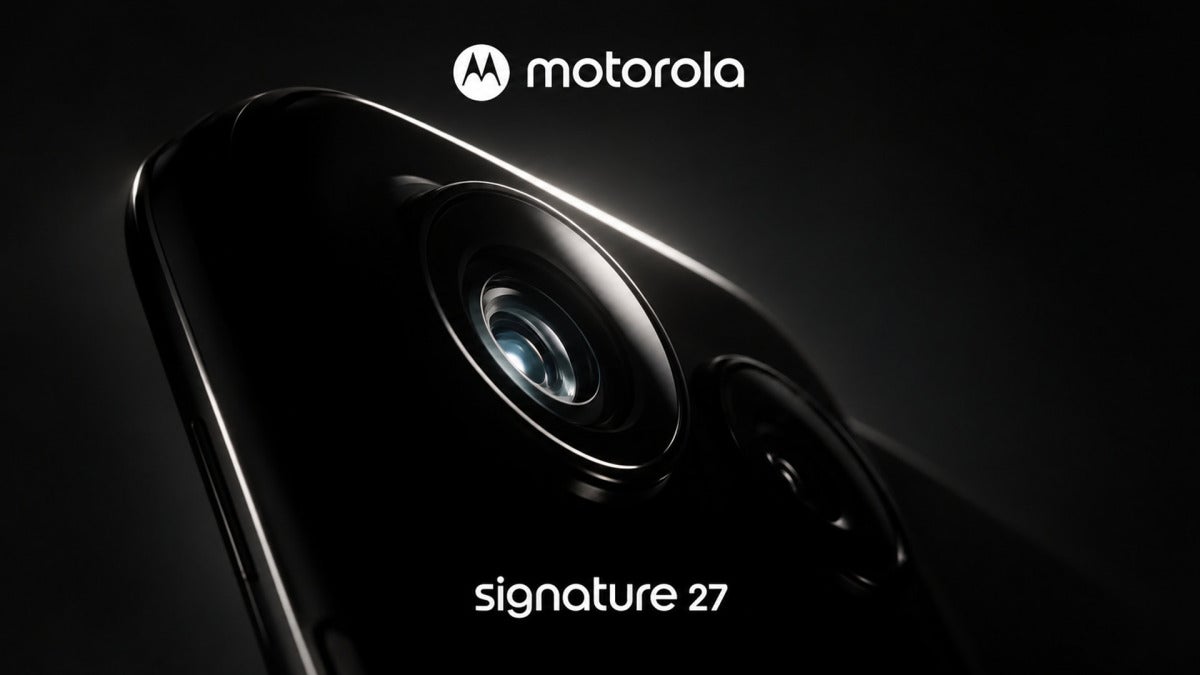
Motorola briefly teased its still-unannounced Signature 27 on its website, which points to a broader launch and, maybe, the first official US release for the Motorola Signature series. A pop-up showed up for a short time on Motorola’s US, EU, and UK sites, with a dark, shadowy look at the rear camera, the tagline “A new perspective is coming,” and a prompt asking for your name and email if you wanted updates.

Then it disappeared.

Because Motorola pulled the teaser soon after people noticed it, this looks a lot more like something that went live too early than a planned announcement. Still, the fact that the exact same teaser appeared across multiple regions is the strongest sign so far that Motorola isn’t done with the Signature line, and that it may finally bring it to the US. The first-generation Motorola Signature never did.

People who went through the sign-up flow also reported seeing a “Crystals by Swarovski” logo. That points to a fashion-leaning special edition, which lines up pretty well with the original Motorola Signature and its more premium styling.

If you’ve been hoping Motorola would finally bring the Signature line to the US, this one’s worth keeping an eye on. Motorola still hasn’t confirmed the specs, price, release window, availability, carrier support, or whether it would be sold unlocked or through carriers. Earlier reports said the first Motorola Signature launched in January 2026 with a Snapdragon 8 Gen 5, a 165Hz AMOLED display, and multiple 50MP rear cameras, so late 2026 or early 2027 seems like a reasonable guess for this one. For now, though, you can’t sign up anymore. The teaser’s gone.