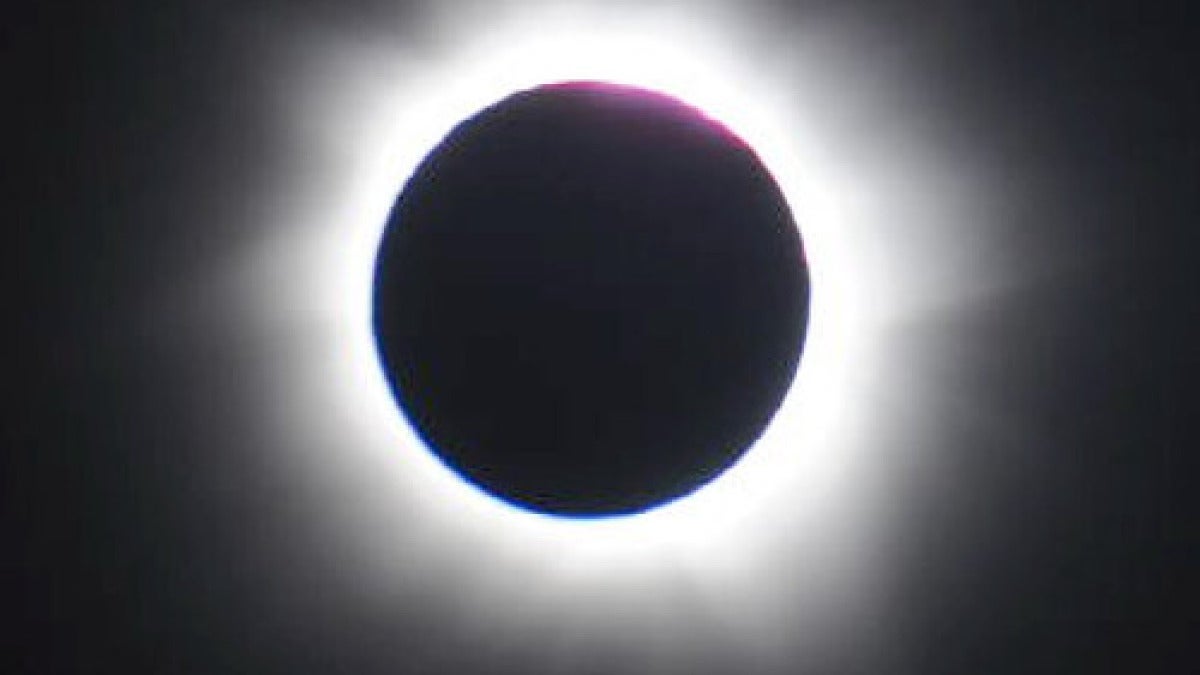
If you’re trying to find a solar eclipse live stream right now, you probably want one thing more than anything else: a stream that opens without a fuss and stays up for the total solar eclipse on August 12, 2026. That’s a lot less annoying than it used to be. NASA, the Exploratorium, Timeanddate.com, the European Space Agency, and Royal Observatory Greenwich all have free coverage today, mixing telescope feeds, maps, and live commentary in places you can actually get to fast.
Here’s a quick guide to the confirmed places showing today’s eclipse online, along with a few time-zone notes so you don’t have to start digging around before you hit play.
Pick the one that matches how you want to watch.
Where can you watch the eclipse live right now?
If you just want the short version, start here:
- NASA says coverage begins at 1:15 p.m. EDT. You can watch on NASA+, YouTube, Facebook, Instagram, Twitch, and X. This is the big official-style broadcast: scientists, live commentary, and plenty of easy ways to tune in.
- Exploratorium starts at 10:30 a.m. PDT / 1:30 p.m. ET, based on the Exploratorium schedule. It’s streaming on the Exploratorium website and YouTube, with a live telescope view from Spain.
- Timeanddate.com goes live at noon ET, according to Timeanddate.com. If you want live maps, animations, timing help, and commentary right next to the eclipse feed, this is a strong option.
- ESA starts at 7:30 p.m. CEST / 1:30 p.m. ET, the European Space Agency says, on ESA Web TV and YouTube, with a live feed from the Observatorio Astrofísico de Javalambre in Spain.
- Royal Observatory Greenwich begins at 1:10 p.m. ET / 6:10 p.m. UK time, according to Royal Observatory Greenwich. Open this one if you’re after a UK-focused partial eclipse stream.
Every option here has at least one free web or social stream.
What eclipse is being streamed today?
The main event getting live coverage today is the total solar eclipse on August 12, 2026, as identified by both NASA and the European Space Agency.
NASA and ESA show the path of totality crossing:
- Greenland
- Iceland
- Spain
- a small part of Portugal
- northern Russia
Outside that narrow path, a much bigger part of the Northern Hemisphere still gets a partial view, based on NASA eclipse maps. That includes parts of the northern U.S., most of Canada, much of Europe, and northwestern Africa.
So even if totality isn’t happening where you are, a live stream is still the easiest way to watch the whole thing play out.
NASA solar eclipse live stream: the easiest all-round option
If you searched for a solar eclipse live stream today from NASA, this is probably where you’ll want to start.
NASA says its live coverage starts at 1:15 p.m. EDT. You’ll get telescope views, plus commentary from scientists. The stream is available on:
- NASA+
- YouTube
- Twitch
- X
- Amazon Prime as one more option, according to NASA
For a lot of people, NASA is the first click for an obvious reason. It’s easy to find, it’s available in a lot of places, and there’s a good chance it’s already on a platform you use anyway.
Quick time notes for the NASA eclipse live stream
- Eastern Time: 1:15 p.m.
- Pacific Time: 10:15 a.m.
- UK: 6:15 p.m.
- Central Europe: 7:15 p.m.
Exploratorium eclipse live stream: best for live telescope views from Spain
The Exploratorium is offering a live telescope view of the total solar eclipse from Spain, starting at 10:30 a.m. PDT / 1:30 p.m. ET, according to the Exploratorium.
You can watch it on:
- the Exploratorium website
- the Exploratorium YouTube channel
If the part you care about most is the eclipse itself, seen through telescopes from the path, this is one of the best streams up today. It’s especially useful if you’d rather have a more direct observing feed and less of a broad event-style broadcast.
Quick time notes for Exploratorium
- Pacific Time: 10:30 a.m.
- Eastern Time: 1:30 p.m.
- UK: 6:30 p.m.
- Central Europe: 7:30 p.m.
Timeanddate eclipse live stream: best for maps, animation, and timing help
Trying to work out exactly when the eclipse peaks, or even which phase you’re looking at, used to be a pain. Timeanddate.com is now one of the quickest ways to sort that out while the event is still going on.
Its stream begins at noon ET, according to Timeanddate.com, and it includes:
- real-time animations
- live maps
- expert commentary
- timing guidance as the eclipse progresses
If you’re searching when to watch the eclipse today, or you’d rather leave one stream open that explains what’s happening as clearly as it shows it, this is a good one to keep running.
Quick time notes for Timeanddate
- Eastern Time: noon
- Pacific Time: 9:00 a.m.
- UK: 5:00 p.m.
- Central Europe: 6:00 p.m.
ESA eclipse live stream: a strong Europe-focused stream from Spain
The European Space Agency is running a live broadcast from the Observatorio Astrofísico de Javalambre in Teruel, Spain, ESA says.
Coverage starts at 7:30 p.m. CEST, which is 1:30 p.m. ET, and it includes a live feed from the observatory telescopes. You can watch on:
- ESA Web TV
- ESA’s YouTube channel
This is a solid pick if you want a Europe-based production, along with telescope views from one of the countries directly under the eclipse path.
Quick time notes for ESA
- Central Europe: 7:30 p.m.
- Eastern Time: 1:30 p.m.
- Pacific Time: 10:30 a.m.
- UK: 6:30 p.m.
Royal Observatory Greenwich eclipse live stream: the quickest UK-based watch
If you’re specifically looking for an eclipse live stream in the UK, the Royal Observatory Greenwich is the most direct place to go.
Its broadcast starts at 1:10 p.m. ET, or 6:10 p.m. in the UK, according to Royal Observatory Greenwich, and it focuses on the partial solar eclipse visible from the UK. In the UK, roughly 90% of the Sun will be covered, Royal Observatory Greenwich says, so for British viewers this is a major partial eclipse.
If you’d rather watch the event framed from a UK point of view, instead of through a broader international broadcast, this is the stream to open first.
Which eclipse live stream should you open first?
If you’re choosing between them, the quickest way to decide is pretty simple:
- Open NASA if you want the broadest official coverage and the easiest access across platforms.
- Go with Exploratorium if the first thing you want is telescope footage from Spain.
- Keep Timeanddate open if maps, timing, and visual explanations matter most to you.
- Pick ESA if you’re after a European observatory feed.
- Open Royal Observatory Greenwich if you’re in the UK, or if UK-focused commentary is what you want.
Honestly, there’s no real downside to running two streams at once, especially if you want one for the video and another for timing or maps.
If you meant the lunar eclipse live stream instead
A lot of people searching for eclipse streams are actually looking for the lunar eclipse, or the blood moon.
The most recent total lunar eclipse happened on March 2 to 3, 2026, according to Timeanddate.com. Visibility maps on Timeanddate.com show that it was visible in:
- Asia
- Australia
- North America
- South America
That put viewers in the U.S., including places like Pennsylvania and New Jersey, inside the visibility zone, weather permitting, according to Timeanddate.com.
Live coverage for that event came from:
- Timeanddate.com
- astrophotographer SunshineNate
If you were searching who will see the blood moon on March 3rd, the short answer is that much of the Americas, along with Asia and Australia, fell inside the viewing area for that total lunar eclipse, according to Timeanddate.com.
The next lunar event on the calendar is a partial lunar eclipse on August 28, 2026, according to Timeanddate.com.
Can you see the eclipse from your location?
If you’re watching online because you’re outside the eclipse path, you’re hardly alone. The total solar eclipse on August 12, 2026 is only total along a narrow track crossing Greenland, Iceland, Spain, part of Portugal, and northern Russia, according to NASA and the European Space Agency.
For everybody else, a stream is still the fastest way to catch the full shape of the event, especially if your local view is only partial or the weather isn’t cooperating.
So if all you needed was the fastest verified list of places to watch today’s solar eclipse live online, here it is, whether you want official commentary, telescope views from Spain, or a UK-focused stream. And if you’re also keeping an eye on the next moon event, the next lunar eclipse on the calendar is the partial eclipse on August 28, 2026, according to Timeanddate.com.