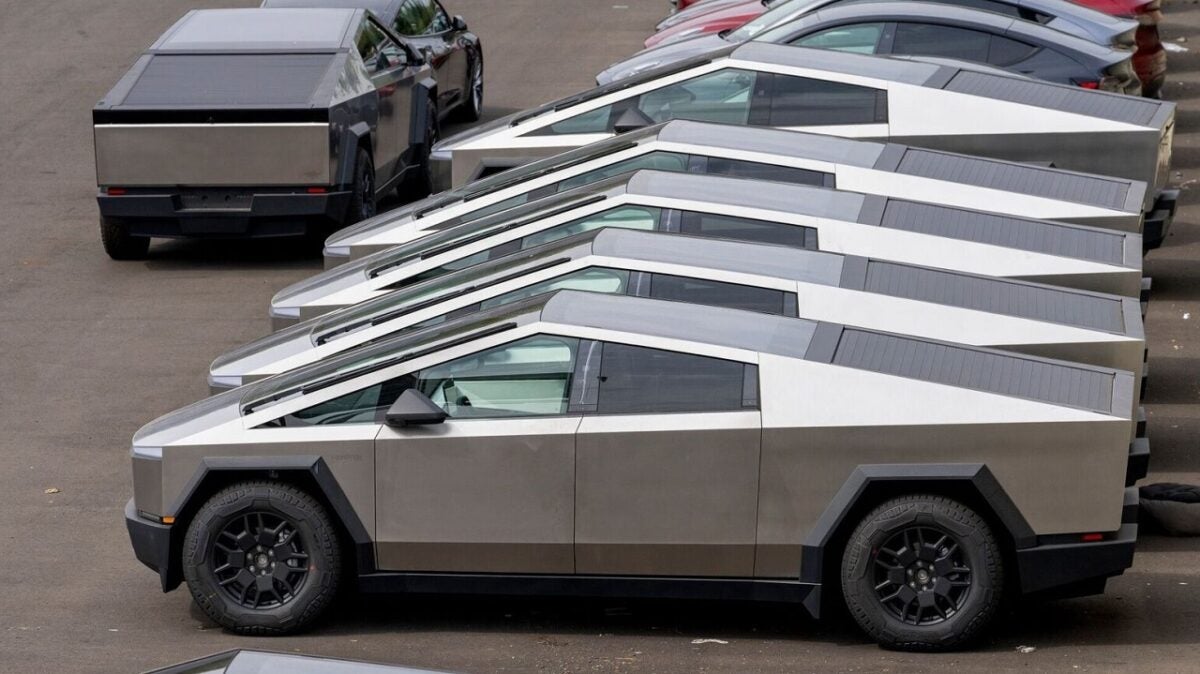
Tesla’s Cybertruck is off to a rocky start, with approximately 5,000 units sold in the first quarter of 2025, marking a decline from previous quarters despite ramped-up production efforts.
This figure stands in stark contrast to the company’s initial predictions, which included ambitious targets of up to 500,000 units annually following over a million reservations for the vehicle.
Analysts suggest that Tesla’s failure to disclose sales by model makes it difficult to assess the true performance of the Cybertruck, as these sales are bundled with those of the Model S, Model X, and the Tesla Semi.
Rivian’s R1S Outpaces Cybertruck as Consumer Preferences Shift
The disappointing sales figures come alongside criticism concerning the Cybertruck’s higher-than-anticipated price and a significantly reduced range compared to what was originally promised.
These factors appear to have dampened the vehicle’s market appeal, as customers reconsider their options in light of better-performing competitors like Rivian. The Rivian R1S SUV, for instance, has gained more traction than the R1T pickup on the same platform, indicating a potential shift in consumer preferences.
Rumors are circulating that Tesla may need to reconsider its design strategy, with suggestions that transforming the Cybertruck into a rugged SUV could draw in a larger customer base. This pivot aligns with Tesla’s previous mention of adapting their offerings based on market demands, even as CEO Elon Musk has been reluctant to fully admit the vehicle’s shortcomings.
The creative reimagining of the Cybertruck’s distinctive stainless steel appearance into an SUV format could resonate more effectively with consumers seeking functionality over novelty.
As the market evolves, it remains to be seen whether such a transformation will take place, but the current trajectory suggests that Tesla will have to make significant adjustments to maintain its competitive edge in the electric vehicle landscape.