High-demand concert tickets have always attracted fraud. But BTS’s 2026 world tour is operating on a scale that makes the usual precautions feel inadequate. Primary sales sold out within minutes, resale prices jumped to multiples of face value almost instantly, and millions of fans who missed the window are now looking for tickets anywhere they can find them. That is the exact scenario ticket scammers plan for. The demand is there, the desperation is real, and the willingness to take risks that you would normally avoid is higher than usual.

What has changed in recent years is how these scams are built. Fake listings have gotten harder to spot. The fake websites look legitimate. The social media accounts selling tickets have follower counts, posting history, and the kind of surface credibility that used to mean something. Understanding what you’re actually looking at when you run into one of these is more useful than any general advice about “being careful online.”
How Ticket Fraud Got More Sophisticated
The old version of this scam was fairly blunt. A seller on a classifieds site would offer tickets, take your money via wire transfer, and disappear. The signs were obvious to anyone paying attention: no history, no reviews, an unusual payment request.
Today’s operations are built on much more prep work. Fraudulent accounts on fan forums and social media are often created weeks before a tour is even announced. They participate in community discussions, build up followers, post legitimately for months, and then flip to selling fake tickets once demand is at its peak. By the time a buyer finds one of these accounts, it looks like any other member of the fan community. The credibility has been manufactured, and it holds up to a casual check.
On top of that, phishing websites are deployed to pull in fans who are actively searching for tickets. These sites don’t just take payment details; they collect login credentials that get resold and used in subsequent attacks. The immediate ticket fraud is often just the first step. Your email and password, once harvested, get bundled with data from other breaches and put to work somewhere else entirely.
The Specific Tactics You Will Run Into
Mirror Sites Built to Look Like the Real Thing
A mirror site is a fake website designed to look exactly like a legitimate ticketing platform. Weverse, Ticketmaster, and venue ticketing pages are the most common targets for BTS-related fraud. These sites copy the visual design, the layout, and often the domain name almost exactly, swapping one letter or adding a word like “official” or “2026.” If you land on one and enter your card details, those details go straight to whoever built the fake page. The ticket you thought you bought does not exist.
Countdown Timers and the “Only 3 Left” Trick
Artificial urgency is one of the most reliable tools in a scammer’s kit, and it works for a simple reason: when you believe you have seconds to act, you stop evaluating and start moving. Fraudulent listings routinely display countdown timers and warnings that availability is about to run out. None of it is real. The timer resets when you reload the page. The “last 3 seats” will still be there tomorrow. But the effect on decision-making is real, and scammers know it. If you notice yourself being rushed, that is the moment to slow down, not speed up.
Payment Methods That Cannot Be Reversed
Any seller or platform asking you to pay via bank transfer, cryptocurrency, or a peer-to-peer app without buyer protection is a red flag that should stop the transaction entirely. These methods are chosen by fraudsters for one reason: once the money leaves your account, it is functionally gone. There is no dispute process, no chargeback, no recourse. Legitimate platforms use secure, traceable payment systems that protect the buyer. The payment method alone is enough information to walk away.
How a Typical Scam Plays Out
It helps to see the mechanics in sequence. Consider a fan, Alex, who missed the primary sale and is looking for floor tickets. While scrolling through a fan community on social media, Alex finds an account with a substantial following and several months of posting history offering two tickets at a price above face value but well below the worst resale listings. The account responds quickly, sends what look like screenshots of valid tickets, and mentions a personal reason for not being able to attend.
Alex is asked to pay through a money transfer app, with the explanation that the platform’s fees make other options impractical. The payment goes through. The seller stops responding. The tickets, if they arrive at all, turn out to be invalid at the door. By the time Alex tries to reach the seller again, the account is gone.
Every piece of this, the established account, the reasonable price, the plausible story, the payment method, is a deliberate part of the setup. None of it is accidental. The goal is to move fast enough that the buyer doesn’t stop to verify anything.
Red Flags Worth Checking Before You Buy
Before completing any purchase outside of an official platform, run through these:
- The payment method excludes buyer protection. Wire transfer, crypto, or peer-to-peer apps with no dispute process are a hard stop.
- The domain doesn’t match the official site exactly. A single added word or swapped letter in the URL is enough to signal a fake site.
- The listing is creating urgency. Countdown timers and “only X left” messages are pressure tactics, not market realities.
- The price is unusually low. A seller in a high-demand market has no reason to underprice. If the deal looks too good, it probably is.
- The seller account has no independently verifiable history. Follower counts can be bought. Look for transaction reviews that can be confirmed somewhere other than the seller’s own profile.
How Avast One Free Antivirus Can Help Keep You Safer During a High-Risk Window
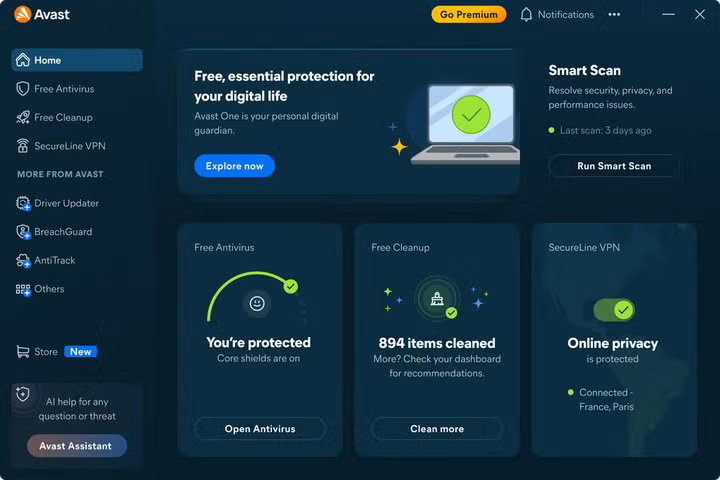
During a period like a BTS ticket sale, the volume of fraudulent activity spikes sharply. Scammers know that fans are actively searching, emotionally invested, and moving quickly. That is exactly when having a layer of automated protection running in the background is most useful. Avast One Free Antivirus is built to help address several of the specific technical risks that ticket fraud exploits.
Real-Time Protection Against Fake Ticketing Sites
Avast One’s web protection layer scans the sites you visit against continuously updated databases of known fraudulent and phishing domains. If you follow a link to a mirror site impersonating Weverse or Ticketmaster, the system is built to help flag it before you enter any payment details or login credentials. It runs in the background without any action on your part, like having someone check the ID of every website before you walk through the door.
Avast Assistant for Checking Suspicious Links
Fan communities are one of the primary channels scammers use to distribute fraudulent ticket links, precisely because they look trustworthy. Avast Assistant is an AI-powered tool integrated into the platform that can help analyze a link or message before you interact with it. If someone sends you what looks like a deal in a forum or over social media, running it through the assistant first takes about ten seconds and can help reduce the risk of interacting with fraudulent links.
BreachGuard for What Happens After
Even careful buyers sometimes end up affected by breaches at platforms they actually used legitimately. BreachGuard monitors whether your email addresses have appeared in known breach databases and can alert you so you can take steps such as changing passwords and securing your accounts. If a fraudulent site collected your credentials without your knowledge, this is how you find out in time to do something about it.
VPN for Purchases on Shared Networks
If you’re buying tickets while connected to a public Wi-Fi network, your connection may be visible to other people on the same network. Avast One Free Antivirus includes an integrated VPN built to help encrypt that connection and keep your financial data from being intercepted. Turning it on before you access any ticketing platform or payment page on shared Wi-Fi is a simple habit that removes a real risk.
A Practical Checklist for Safer Purchases
These steps won’t make fraud impossible, but they make it much harder:
- Stick to official channels only. Weverse, Ticketmaster, and links from Live Nation or the official BTS accounts. Any third-party platform needs independent verification before you enter anything.
- Turn on two-factor authentication. On your ticketing accounts, your email, and your social media. If your password gets compromised, 2FA helps keep the account locked.
- Check the URL before you type anything. It takes five seconds. One swapped character in a domain name is all it takes to end up on a fake page.
- Keep your security software updated. Avast One Free Antivirus and tools like it rely on current threat databases to help catch newly registered phishing domains. An outdated installation may not recognize the latest fake sites.
- Use a VPN on shared networks. If you need to buy from a public connection, activate a VPN first. Avast One’s integrated VPN is designed to help protect your data in exactly that situation.
Final Thought
Cybercriminals follow the money, and right now a lot of money is flowing toward BTS tickets. The conditions are ideal for fraud: intense demand, limited supply, buyers who are in a hurry and willing to take risks they would normally avoid.
Knowing how the scams work is a genuine advantage, and pairing that with tools designed to help catch what the eye misses makes the risk significantly more manageable. Avast One is free to download, requires no complicated setup, and starts working immediately. The few minutes it takes to install it are well worth it before you start searching for tickets.
Protecting yourself here is less about specialized knowledge and more about not being in a rush when it matters most.
