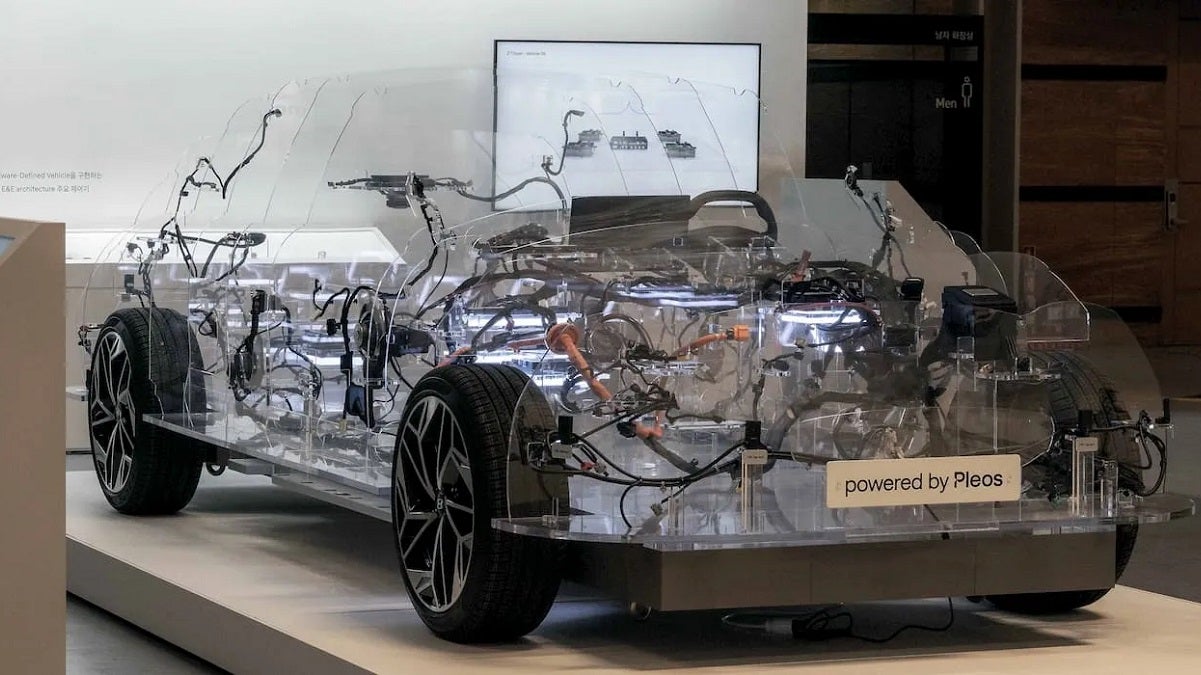
Hyundai Motor Group is undergoing a significant transformation, evolving from a traditional automaker into a leader in software-defined mobility.
At its recent developer conference in Seoul, the company unveiled Pleos, a revolutionary software brand and tech platform that promises to reshape the automotive landscape.
This move aligns with the increasing global demand for more sustainable and advanced vehicle options.
Revolutionizing the Roads: Hyundai’s Ambitious Cloud Mobility Vision
Named after the Greek word “Pleo,” meaning “more,” and “OS” for operating system, Pleos is poised to deliver a high-tech, connective experience across Hyundai, Kia, and Genesis brands.
According to Chang Song, President of Hyundai and Kia’s Advanced Vehicle Platform Division, Pleos signifies a pivotal shift towards providing a software-centered mobility experience. The ultimate ambition is to achieve “Cloud Mobility,” where all vehicle functions are interconnected through cloud-based software that continuously improves over time.
The Pleos platform integrates key features such as advanced autonomous driving capabilities, optimized route planning, and real-time data analytics. At its core, Pleos includes a next-generation infotainment system known as Pleos Connect, which will debut in Q2 2026.
This system is designed with a user interface similar to that of smartphones, incorporating multi-window functionalities and an AI voice assistant.
Looking ahead, Hyundai aims to roll out Level 2+ autonomous driving by 2027, using cutting-edge cameras and radar sensors combined with AI deep learning. The company intends to transform its vehicles into self-learning systems that continually adapt and improve. Collaborations with tech giants such as Samsung, Google, and Naver are instrumental in advancing these innovations.
With plans to have over 20 million vehicles equipped with Pleos technology by 2030, Hyundai is clearly positioning itself at the forefront of the future of automotive mobility.