Fortnite’s an awesome game… but is it too awesome? Specifically, has Fortnite become a tech addiction threat?
(Before going further, let us clarify: we’re not asking if Fortnite is good or bad. In fact, we’d argue it’s great! Still, too much of a good thing is almost always bad.)
The term “tech addiction” gained notoriety among professionals in past years. At it’s core, it begs the question: does a certain digital phenomenon – in this case, Fortnite – threaten to harm users by absorbing their time and thoughts?
Naturally, the definition remains broad, so we’ll examine tech addiction in more detail and define what it means exactly. After that, we’ll consider the specific dangers Fortnite poses, then end on what can be done to solve the problem.
Tech Addiction
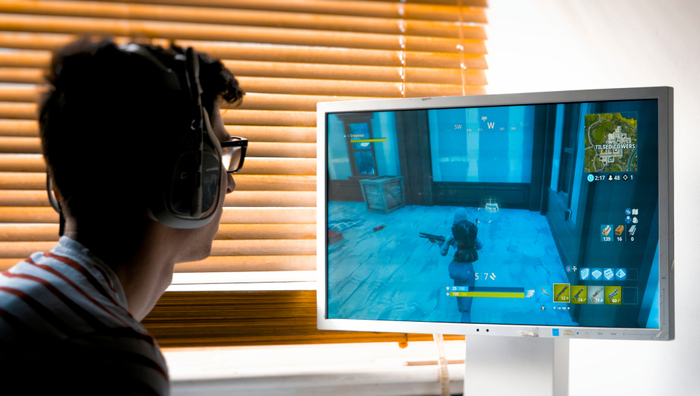
There are various opinions on the nature of this problem.
Anthony Wallace’s article, “It’s Time For a Serious Talk About the Science of Tech ‘Addiction'”, provides an interesting point. With input from psychologist Andrew Przybylski, Wallace likens tech addiction to the nutritional scare that caused millions of Americans to swear off all fat from their diets.
It seems that if anything, the problem is not getting rid of tech (or Fortnite) but helping those susceptible to balance their usage. In the end, Wallace says, “And if we can avoid the same mistakes that led us to banish fat from our food, we stand a decent chance of keeping our technological diets balanced and healthy”.
In regard to Fortnite, there’s admittedly a better chance of abstaining from the game than there is from technology in general. However, many kids may have friends who play, and may even connect to each other through the medium developed by Epic Games. The increasing connectivity makes Fortnite hard to avoid and remove, and the connections made can actually be a great boost to a positive mindset and self-esteem. There’s no need to throw it out completely if it can be managed.
That said, Mo Perry’s article “How to Break Free of Tech Addiction” offers a few more hands-on ideas. Perry argues that, unlike many other addictive substances like alcohol or cigarettes, technology and games are often created to hook users… yet are treated as if harmless. Consider this: Fortnite is available on mobile and after the Android release, there have been over 15 million downloads. Without considering whether there’s a chance of becoming hooked, millions of users have Fortnite at their fingertips around the clock. That’s an unprecedented occurrence!
For this article, we place tech addiction somewhere between the two articles. While Fortnite shouldn’t be thrown out altogether in most cases, users need to check their own thoughts. If you’re not sure what addiction looks like, consider this:
Right now, researchers aren’t ready to conclusively define gaming tech addiction, which leaves the burden of mindfulness the user. For the Fortnite player, this may be hard: we’re often too close to see how we’re being hurt!
So, ask yourself this: what do you want from life outside of gaming? Let that be your frame of reference! Fortnite can only hurt you if it’s actually distracting from something more important, whether that’s family, homework, a hobby, a job, or physical activity.
Why Fortnite?
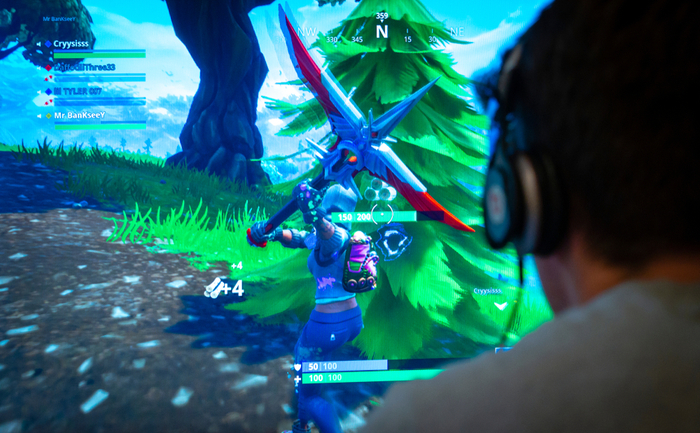
So, why have we focused on this game specifically? There are plenty of other exciting video games, what makes this one different?
Well, Fortnite has a few characteristics that make it particularly gripping, beyond anything seen yet. To name a few:
1. Competition/perishable skills
Playing Fortnite makes you want to win! From the very first time you gain that Victory Royale, there’s a taste of triumph that makes you want to get back in the game. However, there’s a problem here…
Fortnite’s skills don’t stick around. As we’ve mentioned in other articles, skipping Fortnite one day can dramatically reduce your muscle memory when it comes to firing accurately. Players often feel they must grind consistently to maintain and improve their skills, or even hire a tutor. Whether or not this is wrong, it shows how important Fortnite has become to many people.

Is there really anything wrong with paying for a Fortnite tutor?
READ NOW2. Friends/cross-platform play
Epic Games’s cross-platform play has sparked excitement on a whole new level. One doesn’t have to look far to find evidence of this:
Pretty epic day for me as a lifetime gamer. One nephew queued up from Xbox, one on his phone, my neice on my Switch, while I was on PC. I know this capability is some what old news, but it was still kinda surreal to me. from gaming
That’s pretty cool!
Still, at the same time, Fortnite may create a downward spiral: as the player becomes more involved, it becomes harder to stay present outside of the game. In turn, they rely more on the community within the game.
Now, remember that Fortnite places a huge pressure on every teammate to uphold their end of the bargain in “Squads”. This can mean a great deal of time playing solo to improve skills, even if you joined Fortnite to enjoy the company of others!

Secrets to master Fortnite’s Squad Mode
Read now ►3. Appealing mechanics
Many of the greatest applications – Facebook, Instagram, Gmail, etc. – are digital operant conditioning chambers: they use flashy icons, fun user interfaces, and periodic rewards, to give you flares of the pleasure hormone dopamine. Basically, they’re designed to be addictive.
Fortnite is all about fun and flashy and takes these traits to the max: everything from the sound and icons for winning a Victory Royale to the numbers which appear when you deal damage to enemies creates a mental “reward”, pushing you to keep going.
4. Endless Gameplay
Fortnite never ends. With 100 players on a huge map filled with various weapons and items, no game ever has or ever will be exactly the same. Not only that, but building makes the combat possibilities nearly infinite! Unlike many other mobile games – angry birds, for example – there are no levels, no way to beat or finish the game. Winning only encourages you to play again.
5. Ubiquity
Last but not least, one of the main issues with tech addiction is the fact that you can’t escape. Online, at school, even in the office, there’s bound to be someone talking about Fortnite. How do you control an addiction when, in some ways, it’s always there?
What to do
If Fortnite’s interfering with your ability to think about other things and concentrate outside of the game, there are a few techniques that can help.
1. Take a break
Schedule some time. Walk away from the computer, console, and phone so you can refresh your mind. Start small if needed, and then extend the amount of time as needed. Or, if it works for you, have many small breaks in between; it’s possible to set up the downtime however you wish!
Partially, this helps clear your mind from a driven state focused on productivity, allowing you to ask: why am I getting online? Consciously decide why you’re getting on your device, and shut down when your time is up or you’ve finished the action.
2. Set a time to play
Some people like to think of the human mind as having two parts: one that seeks pleasure, and another that follows discipline. It can be easier to hold off the pleasure-seeking side if you plan ahead to allow yourself free time later. Schedule much-needed downtime so you can fully be present during the middle of the day, at the very least!
3. Get involved
Don’t let the Epic Games community be your only community. There are always other options! At the very least, remember: if you realize you’re susceptible to addiction, it may be hard to build that first measure of determination needed to break free. If that’s the case, you’ll want others there to help!
In Conclusion
Fortnite tech addiction occurs whenever you don’t feel in control of your time or your thoughts, when thoughts of winning another Victory Royale bar you from being present in everyday situations. While the game itself isn’t bad, this mental overload certainly is! To improve the gaming experience, consider taking steps to fight the problem: take breaks, set schedules, or get involved in another community.
We hope this helps. Stay aware, and have fun!
