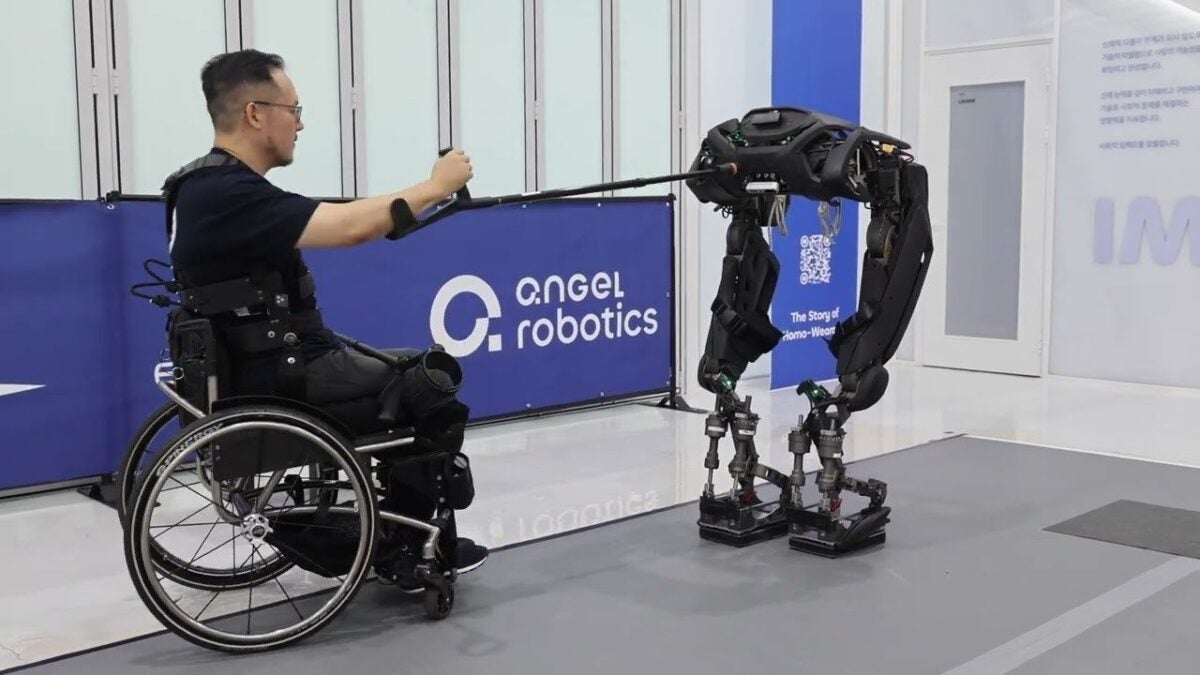
A group of South Korean researchers has developed an innovative wearable robot that could revolutionize the mobility of paraplegic individuals. The device, called WalkON Suit F1, is a lightweight exoskeleton that attaches to the user to provide assisted mobility, allowing them to walk instead of using a wheelchair.

Subscribe to the Softonic newsletter and get the latest in tech, gaming, entertainment and deals right in your inbox.
Subscribe (it's FREE) ►The project comes from the Exoskeleton Laboratory at the Korea Advanced Institute of Science and Technology (KAIST). Kim Seung-hwan, a team member and wheelchair user, demonstrated the prototype to Reuters. Weighing 50 kilograms, the suit uses 12 motors that replicate the natural joint movements of walking. Additionally, it includes sensors that process more than 1,000 data points per second to anticipate the user’s movements and maintain balance.
The exoskeleton stands out for its ability to adapt to the environment thanks to a camera vision system, which identifies obstacles and elevation changes. Another particularly innovative feature is that the suit can locate and attach to the user while they remain seated in their wheelchair. This facilitates its use in daily life and reduces the need for external assistance.
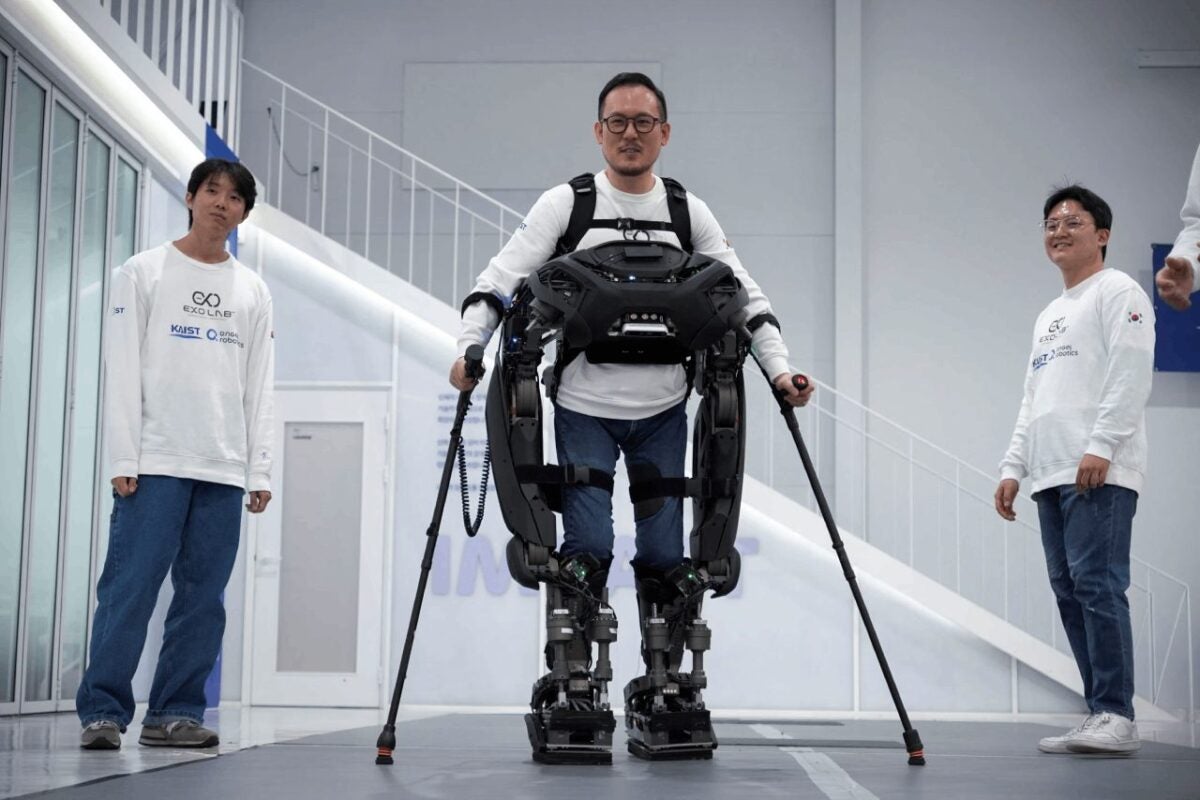
During the tests, Kim reached a speed of 3.2 km/h, climbed stairs, and performed complex maneuvers, such as climbing onto a bench sideways. Inspired by the technology of the superhero Iron Man from Marvel, the team led by Park Jeong-su designed the WalkON Suit to easily integrate into the daily routines of people with disabilities.
The success of this design was reflected in the Cybathlon 2024, held from October 25 to 27, where Kim won the gold medal in the exoskeleton category. In this international competition, the Swiss exoskeleton VariLeg Enhanced was also awarded, with a hybrid design that combines a wheelchair and assisted mobility, and the ChiangMaiU EXO 2 from Thailand, which stands out for its lateral movement capability.