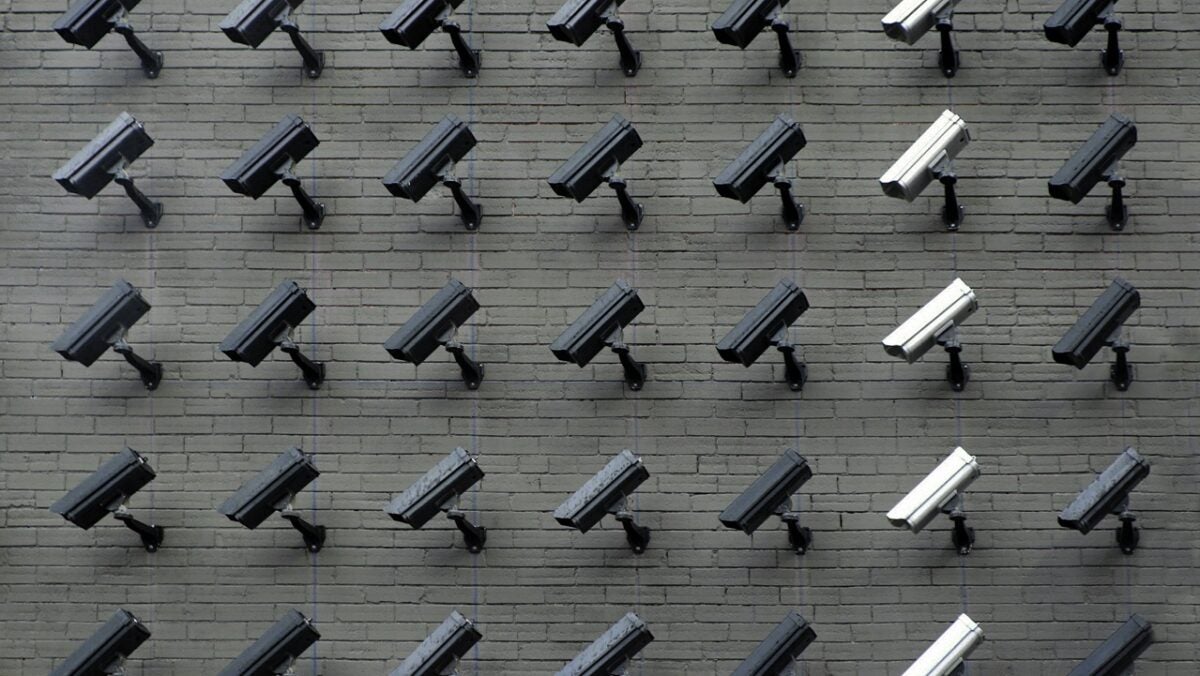
The Paris 2024 Olympic Games are the most important event of the year, not just in sports. The oldest sporting competition in history is a unique moment that occurs every four years and attracts the attention of billions of people. And this year, in addition to the athletes, we will have a second key player: artificial intelligence systems.

The problem is that in this case we are talking about an uncomfortable AI, an AI that goes beyond everything seen so far in surveillance and security. Both the French Government and the private companies in charge of the event will have more control and information than ever about everything that happens in the Olympic Games.
The global Olympic stage and international crowds represent such significant security risks that in recent years, authorities and critics have described the Olympic Games as ‘the largest security operations in the world outside the scope of war.’
Surveillance that goes beyond any event
The French government, along with the private technology sector, has taken advantage of this legitimate need to increase security as a reason to deploy technologically advanced surveillance and data collection tools.
Their surveillance plans to address these risks, including the controversial use of experimental AI video surveillance, are so extensive that the country has had to change its laws to make planned surveillance legal.
The plan goes beyond new AI-based video surveillance systems. According to the media, the Prime Minister’s office has negotiated a classified provisional decree that allows the government to significantly increase traditional covert surveillance and information gathering tools during the Olympics Games.
Among them are telephone intervention, geolocation data collection, communications and computer data, and the capture of larger amounts of visual and auditory data.
Preventive measures should be proportional to the risks. Critics worldwide argue that France is using the Olympic Games to gain surveillance power and that the government will use this ‘exceptional’ surveillance justification to normalize state surveillance throughout society.
At the same time, there is a legitimate concern for adequate and effective security surveillance. In the United States, for example, the nation wonders how the Secret Service’s security surveillance failed to prevent an assassination attempt on former President Donald Trump on July 13, 2024.
Companies that take advantage of AI in mass surveillance
Thanks to the recently expanded surveillance laws, French authorities have been working with artificial intelligence companies Videtics, Orange Business, ChapsVision, and Wintics to implement powerful AI video surveillance.
These have used AI surveillance during large concerts, sporting events, and metro and train stations during periods of high traffic, such as around a Taylor Swift concert and the Cannes Festival. French authorities claim that these AI surveillance experiments have gone well and that there is a green light for future uses.
The objective is for surveillance systems to immediately detect, in real time, events such as a crowd heading towards a door or a person leaving a backpack in a crowded corner, and alert security personnel. Pointing out these events seems to be a logical and sensible use of technology.
But the real legal and privacy issues arise from how these systems work and are used. How much data and what type of data needs to be collected and analyzed to identify these events? What are the training data for the systems, error rates, and tests for bias or inaccuracy? What is done with the data once collected and who has access to it?
There is little transparency to answer these questions. Despite the safeguards intended to prevent the use of biometric data that can identify individuals, it is possible for the training data to capture this information and for the systems to adjust and use it.
