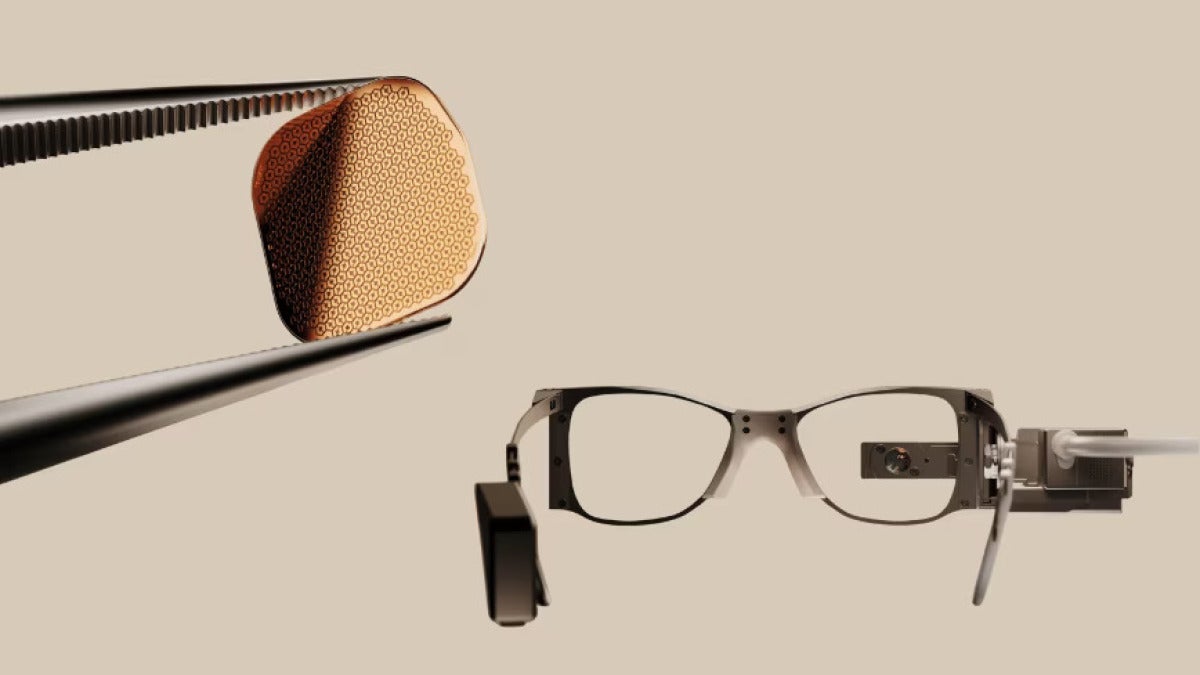
Science Corp.’s CE mark PRIMA retinal implant for geographic atrophy has picked up a CE mark from DEKRA, which means it can now be sold in 30 European countries. The company says the first commercial implant should happen in Germany in August 2026, with dozens more patients expected to receive it before the year is out.
PRIMA is aimed at geographic atrophy, the most advanced form of dry age-related macular degeneration. More than 5 million people live with it. It can take away the ability to read, recognize faces, or make out fine detail, even while peripheral vision remains. The treatments already approved for this condition mostly slow the disease down. They don’t give back sight that’s already been lost.
The system itself has two parts: a tiny wireless photovoltaic chip placed under the retina, and a pair of glasses fitted with a camera, a projector, near-infrared light, and zoom. The chip converts light into electrical signals that stimulate the retinal cells still left working. The goal isn’t normal vision. It’s limited “form vision,” enough in many cases for patients to make out shapes, letters, numbers, and short words.
Results so far are encouraging, though they come with limits. In a 38-patient study run across 17 sites in five countries and published in The New England Journal of Medicine, people using PRIMA gained an average of 25.5 letters, or more than five lines on an eye chart. Reading ability returned for 84% of them. Even so, vision was still nowhere near normal, landing around 20/400 in some cases, and the quality-of-life improvements weren’t the same for everyone.
For anyone who keeps an eye on vision-restoring implants, PRIMA is one to watch. The surgery is still delicate. The price could run into the hundreds of thousands. Reimbursement talks are still happening. Science Corp. acquired PRIMA from Pixium in 2024 and says it improves on Argus II. The company is also aiming for the US in 2027, backed by FDA Breakthrough Device and Humanitarian Use Device designations.
