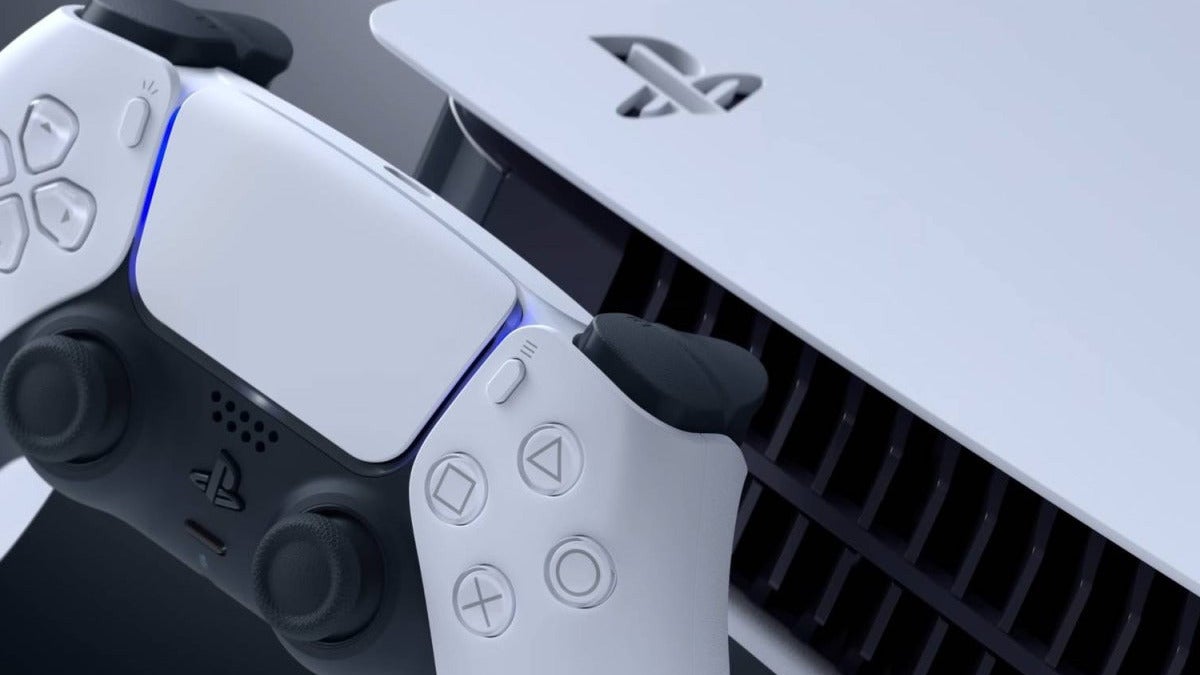
Sony has unexpectedly announced on its blog that, starting in January 2028, they will stop publishing their video games on physical media. The reason for this is to adapt “to consumer trends as their overall preference for digital media significantly surpasses that for physical discs”. This doesn’t mean they’ll stop releasing video games, but rather that “new games will be available on PlayStation Store and in stores only as digital downloads”.
They also wanted to make clear, moreover, that this won’t have retroactive effects, since “this transition is not going to affect games that have already been released or that will be released before January 2028 on disc”. Which makes us suspect that this has to do with PlayStation 6 and with its release being, at least for the moment, set for the end of 2027. Thus confirming that it would be an exclusively digital console.

All of this is serious in itself. Even if it might not seem like it. But it’s even worse with the other announcement they made immediately afterward on their blog. And Sony has announced an update to its PlayStation Store storefronts on PlayStation 3 and PS Vita that will close in July 2027.
This, which may seem logical given the age of the consoles—PlayStation 3 came out in November 2006 and PS Vita in December 2011—only shows how insidious Sony’s move is. All the games you’ve bought digitally on these consoles will no longer be yours. You won’t be able to download anything you’ve acquired over the years. If your hard drive fails and you buy a replacement or get a second-hand console, you won’t be able to download the games that are yours: they will have disappeared forever with the store. And that’s the problem.
Digital expiration dates
There is an argument in favor, which is that when we buy a digital game, we know we’re buying a license. Something with an expiration date. That we’ve had many years to play it on our PlayStation 3 or our PlayStation Vita. And that’s fair. Sony doesn’t hide the fact that what it sells us is a license to use: we don’t own the game. That said, why should we accept it?
Let’s imagine the same situation in any other part of life. That we bought a book and 20 years later someone from the publisher came and said we must hand over our copy of it, that it’s illegal for us to have it on our shelf. This would seem absurd to us, if not outright an abuse of power on the publisher’s part. Even if, when buying the book, we had accepted that we were acquiring a license to use the book, not the text itself, we would understand that the book, the physical object, is ours. And the same thing happens with digital games: we don’t own the game, the intellectual property, but we do own the digital copy, the playable copy of it. And taking away our ability to play it should not be possible.
However, Sony believes it should be able to do that. Not only with its games. This very week they confirmed that they will remove more than 550 Studio Canal films and series from PlayStation’s digital libraries with no refunds or compensation whatsoever. Once again, hiding behind the digital license and despite the fact that thousands of users have paid for that product, they will deprive them of something they’ve paid for.
Whether this is legal or not is irrelevant. There is no scenario in which, as consumers, we should allow this kind of behavior. Neither Sony nor any other company in the world has any right at all to decide to deprive us of what we’ve acquired.
Goodbye to outrageous discounts
Does this mean we must necessarily support physical media? Not necessarily. It means we need to stand our ground and say “enough”. This crosses a clear red line in a long series of anti-consumer decisions in the video game industry that we’ve already seen before in many other industries. We’ve seen how in music the jump to streaming has led to artists being paid crumbs compared to physical. In film and television, with the jump to streaming and digital, we’ve seen a preservation problem like we hadn’t seen since the 1950s. And in video games it seems both can happen.
Not only both, there can also be one thing unique to the medium: absolutely abusive prices. Sony has a complete monopoly over who can sell in its online store. With its recent change of policies in the store, it’s now harder to sell there, so thanks to this change it will be harder to publish on PlayStation. And given that no other digital stores are allowed, you can’t buy anywhere other than the PlayStation Store.
What does this lead to? Users being forced to buy at whatever price Sony dictates. Even if it’s abusive. For now they can fight it thanks to physical, which tends to get cheaper thanks to a combination of two factors: the fact that, by having several versions, they compete with each other, lowering the price, and the fact that the second-hand market exists, which means the product’s depreciation through use makes them cheaper. Which in turn forces digital games to drop in price faster, since the prices of physical games drop at a steady enough pace that digital ones have to do so too.
If we add together the fact that Sony has a complete monopoly over digital stores on its console and the absence of external pressure to lower prices, what is the most likely thing to happen to prices? What already happens with Nintendo’s digital games, which are in exactly that situation: they never come down in price and their discounts are ridiculously small. Directly affecting the consumer.
A world without physical games
All of this will also affect especially the habits of people who consume video games in particular ways. Some people buy video games, beat them, and sell them to buy the next one. There are those who only buy second-hand games. There are those who chip in together to buy a game. Many of them, most of them, because they can’t afford the price of games whose prices keep getting higher. Something that digital keeps putting more and more obstacles in the way of.
That’s not even counting the collecting factor. Or the factor of preserving the medium. Especially because the second would require talking about something very delicate: the only real preservation would involve companies allowing us to own games and emulate them however we wanted. Something we should have a right to, just as we have the right to scan a book and read it wherever we want.
What Sony is proposing is an anti-consumer measure that benefits no one and can cause us serious harm. If it doesn’t end up affecting video games very negatively in the medium to long term. That’s why it’s time to stand our ground and say no, that this move, without many other equivalent pro-user measures, isn’t something we can accept. Because otherwise, what Sony is going to do is going to have repercussions for users. And very negatively.
