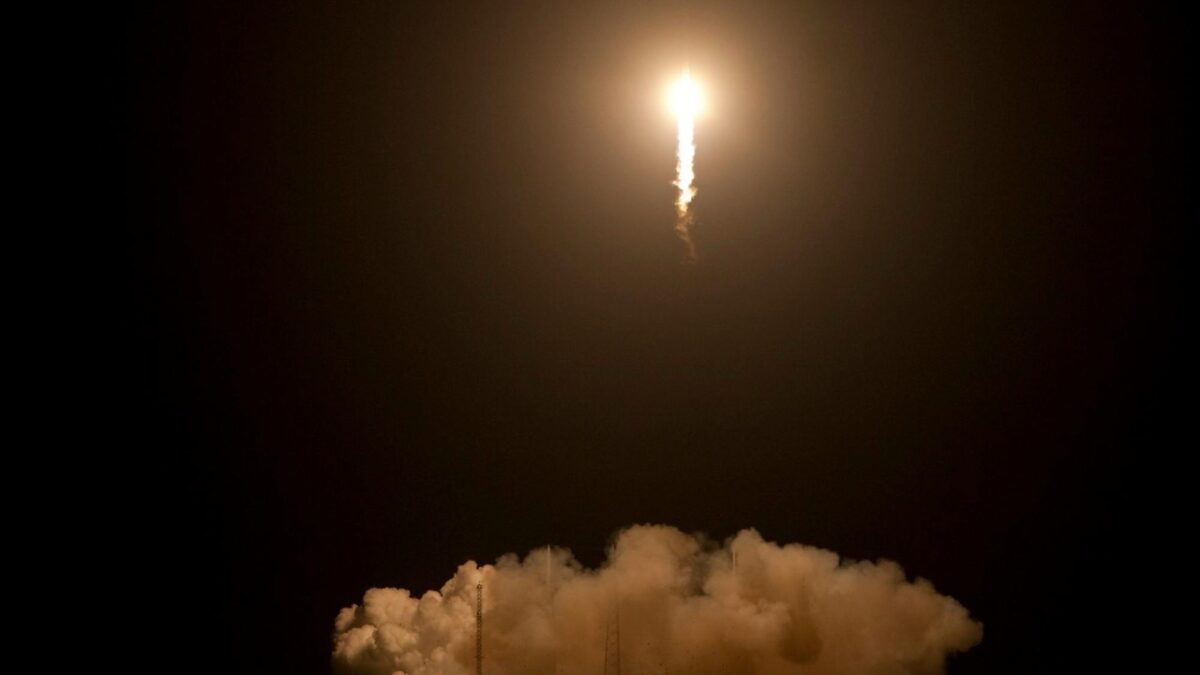
SpaceX has faced another major setback in its Starship program, as its latest test flight ended in a catastrophic explosion. Just like the previous launch, Starship 34 disintegrated mid-flight, raising concerns about the spacecraft’s reliability and engineering flaws.
Another explosion at the same stage of flight
The failure occurred eight minutes after liftoff, the same point where its predecessor, Starship 33, also lost control and exploded. This time, the spacecraft was traveling at 20,000 km/h, slightly slower than the previous test, but the result was identical: total destruction.
Initial investigations suggest that several engines failed during ascent, with at least three shutting down before a fourth exploded. The loss of control led to violent spinning, causing either structural failure or the activation of the flight termination system, which deliberately detonates the vehicle for safety reasons.
New version of Starship under scrutiny
Both Starship 33 and Starship 34 are part of the new Block 2 design, featuring a taller structure, larger fuel tanks, and enhanced thermal shielding. Despite these improvements, serious design flaws seem to persist, leading to back-to-back mission failures. SpaceX previously identified harmonic resonance vibrations as a key factor in the Starship 33 explosion, but it remains unclear whether the same issue caused this latest failure.
With two consecutive high-profile failures, SpaceX faces increasing pressure to resolve these problems before attempting another test flight. The company now has more critical data to analyze, but it must act fast to ensure Starship’s future success in space exploration.