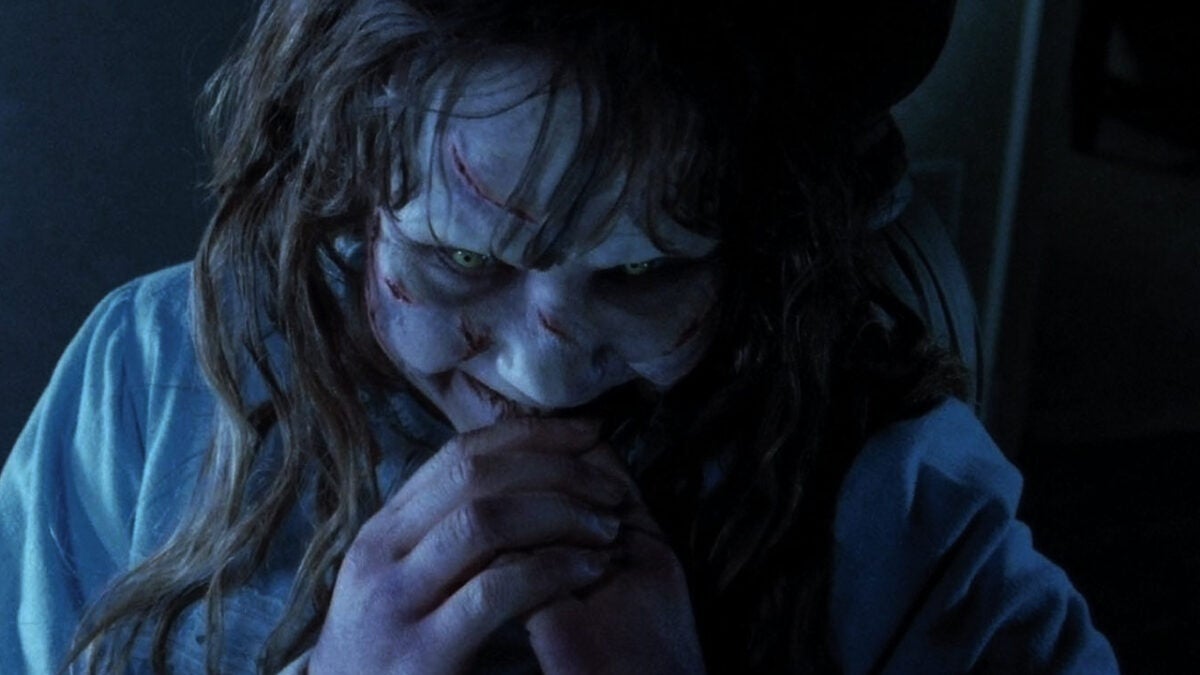
The Exorcist, released in 1973, revolutionized the horror film genre and established itself as a global cultural phenomenon. Directed by William Friedkin, the story of a possessed girl, Regan MacNeil, not only succeeded in frightening the audience but also generated multiple urban legends related to its production and screening. In a context where satanism was in vogue, the film transcended its cinematic language to become a cult classic.
A frame that seems to confirm its demonic nature
One of the most intriguing aspects of The Exorcist is the frame in which Regan’s face seems to transform into a demonic creature. This effect, linked to the demon Pazuzu, was attributed to subliminal editing techniques that Friedkin used in some sequences, generating debates among film enthusiasts and scholars. The legend suggests that in certain screenings, some viewers claimed to see this transformation, which has fueled the perception of the film as “cursed”.
In addition to the rumors about accidents and strange events during the filming, which included serious injuries to some actors, stories of viewers fainting and vomiting while watching the movie became popular. It is said that some theaters had ambulances on standby in case of incidents, which contributed to fueling the aura of a curse surrounding the work.
Despite the series of superstitions, experts like Professor Henry Ansgar Kelly have emphasized the importance of distinguishing between reality and fiction, reminding us that the story on which The Exorcist is based comes from a real case in 1949 and did not include the supernatural events dramatized in the film. As five decades since its release are celebrated, The Exorcist remains an unavoidable reference in horror cinema and an example of how urban legends can intensify the fascination with a cinematic work.