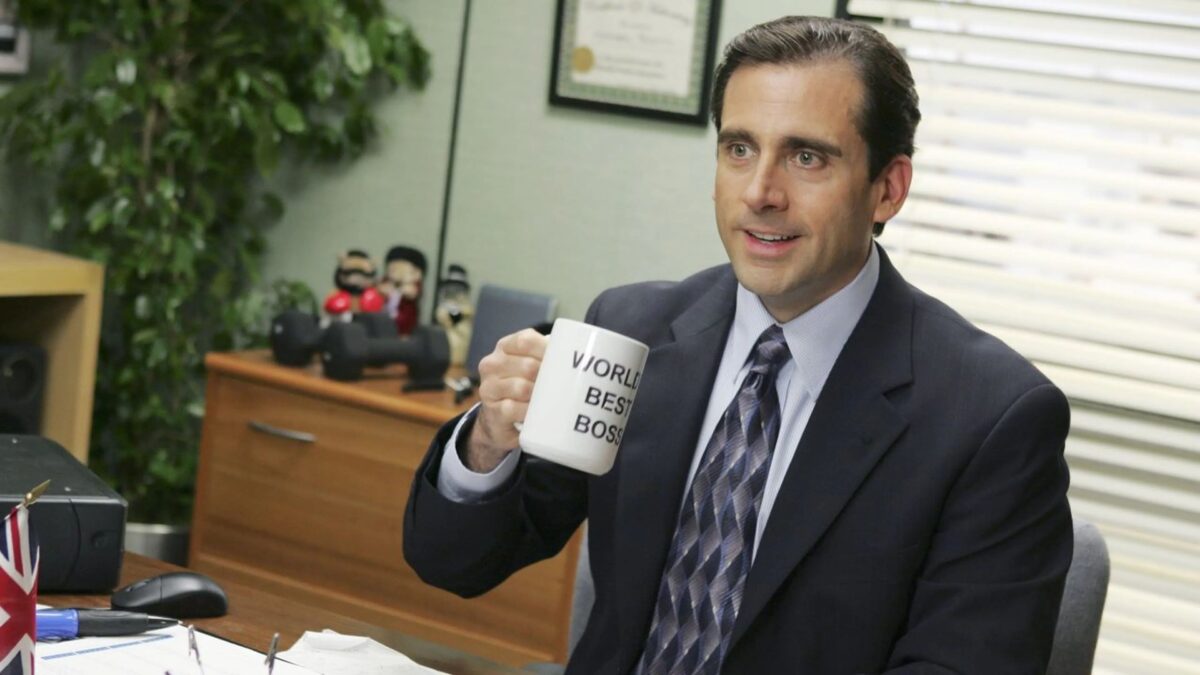
On March 24, 2005, the remake of The Office premiered in the United States, a series that was almost canceled after its first season. The pilot managed to attract over 11 million viewers, but the audience plummeted, dropping to less than 5 million in its sixth episode.
This drastic decline would normally have doomed the series; however, Kevin Reilly, then an executive at NBC, decided to advocate for a second chance, resulting in the renewal for a second season of 22 episodes.
A small change that meant success
One of the key factors for the revival of The Office was the evolution of the character Michael Scott, played by Steve Carell. At the beginning, Carell embodied an almost replicated version of the British character, a cruel and awkward boss who quickly became unappealing to the American audience.
As the series progressed, Carell began to adopt a friendlier and more eccentric approach, resulting in a significant increase in his empathy towards the rest of the cast and a more optimistic style of comedy.
The second season not only allowed for adjustments in the appearance and personality of Michael Scott, but also brought to light other characters who were previously invisible, such as Pam and Jim. This growth translated into an average audience of 8 million viewers, along with enthusiastic reviews that celebrated the new direction of the series. The introduction of multiple romantic storylines enriched the narrative, and The Office began to become one of the most beloved comedies on television.
Throughout its nine seasons, The Office offered memorable episodes, cementing its place in the history of television comedy. However, the series also faced challenges, the most significant being Carell’s departure in its seventh season, a moment that many consider the beginning of the show’s decline, which ultimately concluded on May 16, 2013.