Is Mastodon really the only alternative to Twitter?

As Elon Musk stepped in as the ‘Master Twit’ of Twitter, many followers are considering leaving the app nest and moving on to greener social pastures. With the current Twitter dilemma unfolding and making newsfeed headlines, followers have started migrating to Mastodon, but is this, in fact, the better alternative for Twitter?

Twitter DOWNLOAD

Let’s take a closer look at what the Mastodon fuss is about before giving up on tweeting altogether.

Mastodon DOWNLOAD

What is Mastodon?

Mastodon is a microblogging site founded in 2016 by Eugen Rochko, a German software developer dissatisfied with Twitter. But unlike other social media sites such as Reddit, Facebook, Twitter, etc., Mastodon is a nonprofit that aims to benefit the public instead of the shareholders.

Mastodon could be compared to Twitter, Discord and Reddit and seen as a hybrid of these social platforms:

  • Individual communities are referred to as “instances”, which appear like mastodon.social in a user’s URL bar – similar to Discord and subreddits.
  • Mastodon also features tabs for trending news and hashtags.
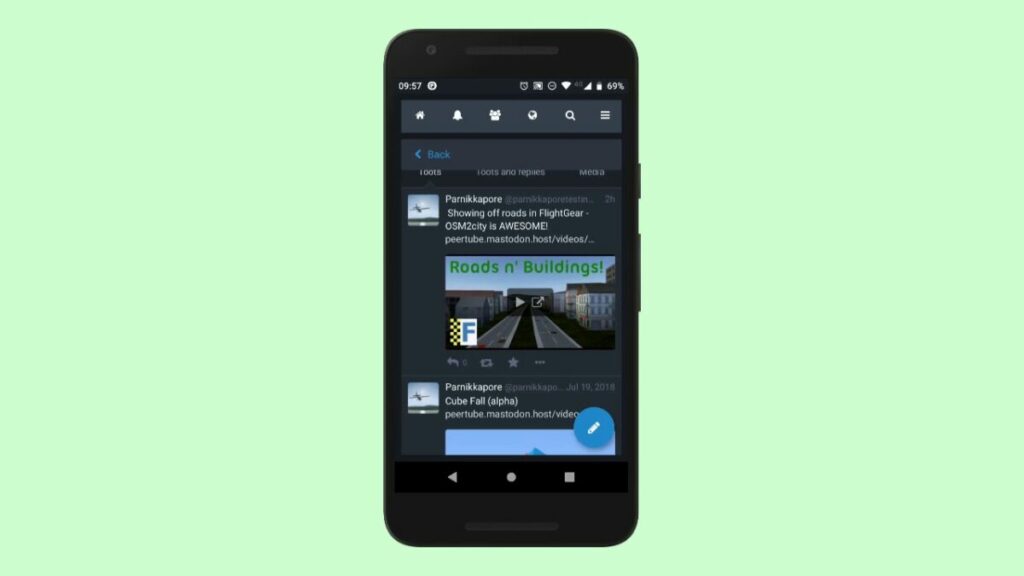
  • As with Twitter, you can follow accounts and people which appear similar when scrolling through content.
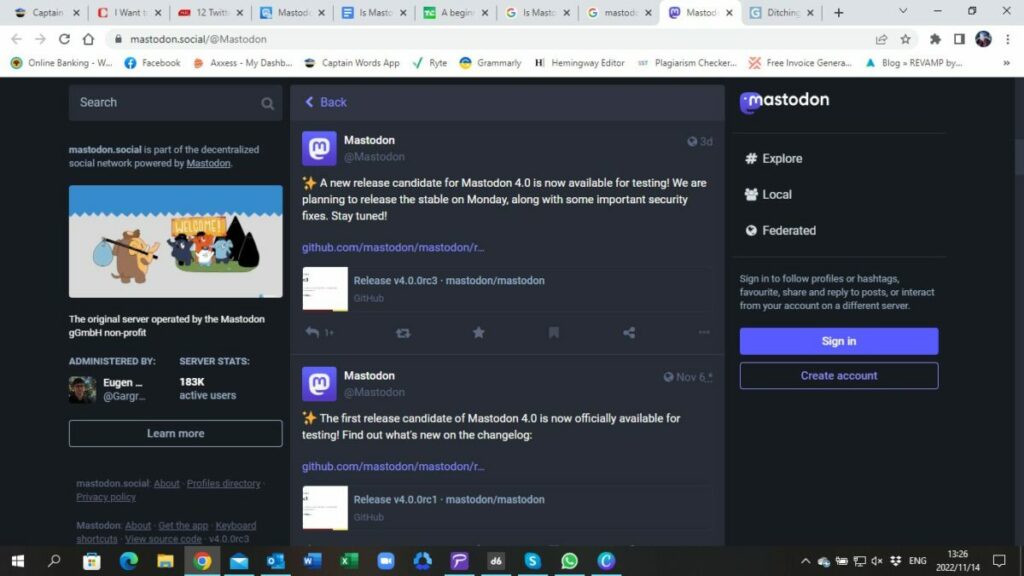
Is Mastodon really the only alternative to Twitter

Source: screenshot

What are the issues new users have with Mastodon?

Firstly it can be challenging to find a server to join, especially when people are swamping servers which can cause waitlist creation, and some of those running a server don’t make it easy to find the values and rules of their servers.

Maintaining servers also has significant technical and financial challenges, which grow with the increased activity and members. There is the possibility of membership fees to cover the server hosting costs.

The most considerable tension could be considered when favoriting, following and finding. It has come to my attention that help is needed once you locate someone to follow. It becomes a hassle for something that should be a simple action to complete. There seems to be a similar issue when boosting or favoriting a post. Searching and finding people to follow could be intimidating for new users adding to the frustration of starting anew with microblogging.

But with the possibility of a Twitter meltdown, should the frustrations continue growing, it makes sense to explore other potential Twitter alternatives.

Twitter alternatives to consider

Mastodon

Mastodon is an open-source alternative to Twitter which offers more control over conversations and what you see. It can be used as individual “instances, ” meaning you can access specifically designed versions, generally topic-themed. You can have an instance and run a social network as an open-source.

Mastadon DOWNLOAD
Mastadon icon

Discord

Discord, another alternative, is as straightforward as Mastodon and can set up a chat server for any cause. All topics and servers are available, which might be thought of as “live chat Reddit” in Discord. Even though Discord started as a chat forum for online gamers, it has grown beyond that, and now you can upload media, host video chats, record voice chats and much more.


Discord DOWNLOAD
Mastodon vs discord

Instagram

Most users that use Twitter can be found on Instagram, and many would consider it an alternative to Twitter. It also allows you to follow other accounts and supports hashtags. But more importantly, many users already use Instagram and are four times more active than Twitter.

Instagram is also very user-friendly, which could be a more obvious alternative.

Instagram DOWNLOAD
Mastodon vs Instagram

Gab

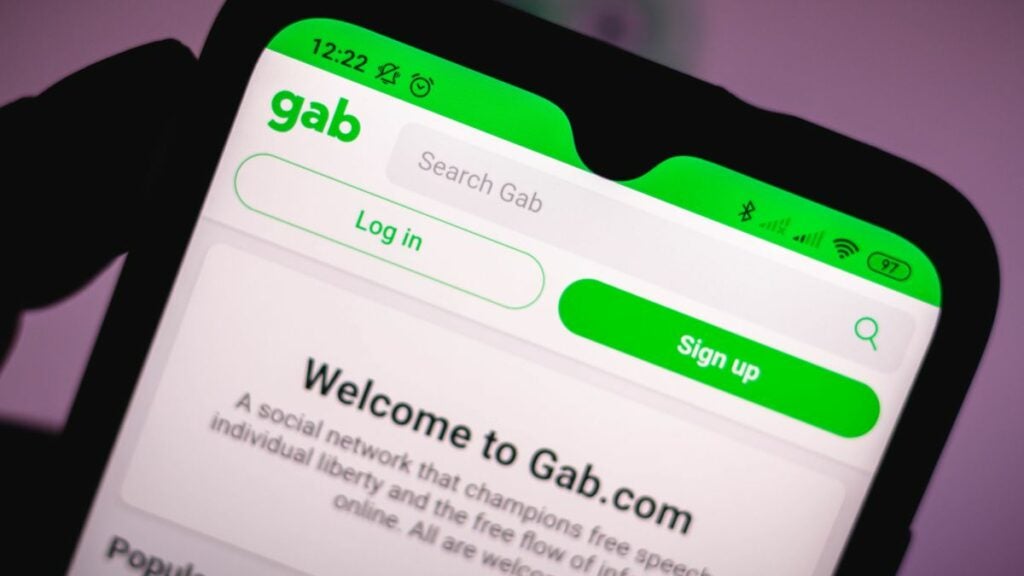
Gab chose a free speech-focused service and has become an “alt-right” alternative to Twitter. Although in 2016 Apple App Store banned Gab, in 2017, the app was removed by Google from the Play Store, stating: “demonstrate a sufficient level of moderation, including for content that encourages violence and advocates hate against groups of people.”

It is a shame, though, as it is a valuable platform with 300-character status updates and a UI that appears as a combination of Twitter and Facebook.
Mastodon vs gab

Parler

Parler is considered a more conservative social media platform. Creating an account and posting is quick and straightforward. You can also like (upvoted), share (echoed) and reply, which is the same as Twitter. 

Interesting fun fact: the rapper Kanye West purchased Parler in October 2022.

Parler DOWNLOAD
Mastodon vs gab

What is your alternative to Twitter?

Whether you have reached your limits with all the Twitter madness reaching newsfeeds or want to remain a “crawler”  and see the drama unfold is entirely up to you! But hopefully, these alternatives keep your spirits up instead of getting caught up in Elon Musk’s recent twitting decisions.

And although there are some hiccups with Mastodon, there were a few in Twitter’s early days, so only time will tell. With 474,000 new Mastodon accounts growing, Rochko said that Mastodon has increased to more than a million users that use the social network daily.

With a bit of patience, Mastodon could be a great alternative, but rather do your research before you take the final step of flying the Twitter nest. Ultimately we all use microblogging for different reasons, and you need to fit the best alternative to suit your needs. So whether you continue to tweet or would instead start tooting, I hope you find your followers easy and share posts wisely.

Twitter Bans Mastodon and Related Links are Considered Harmful

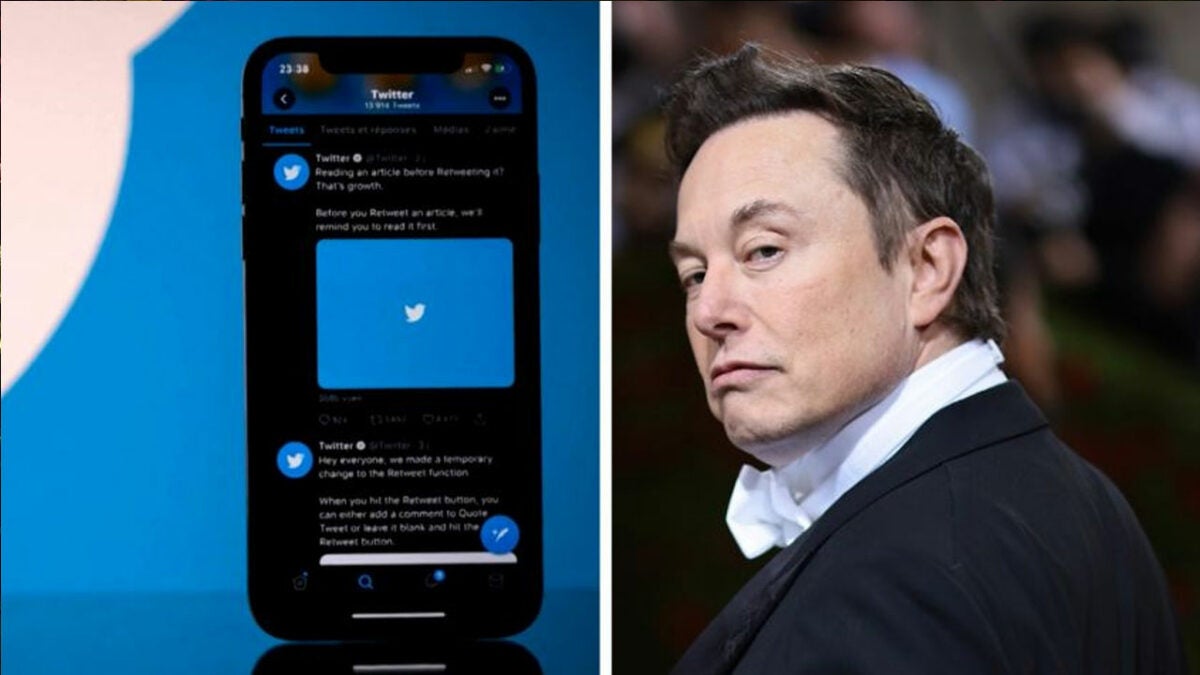
We’ve mentioned before that many Twitter users left when Elon Musk bought the platform and started making changes. Mastodon became a popular alternative, but it looks like Twitter is taking a stand against the competition. Mastodon’s official Twitter account is now closed, and links to the platform are indicated as harmful. 

The drama started early on Twitter yesterday. An account called ElonJet was sharing live locations of Musk’s personal plane. While Elon is welcome to free speech, one of the platform’s policies is that no one shares the live locations of anyone. It’s seen as breaching security and putting people’s lives in danger.

Not long after that, someone posted a tweet with a link to ElonJet’s account on Mastodon. Technically, they were still violating the safety policy, even if indirectly, with links to a different platform. Elon decided to take drastic measures, even posting that no one messes with his family.

What he did was ban the Mastodon account on Twitter. Also, any links posted on Twitter to Mastodon cause a message to appear that the content may be considered harmful. Basically, Twitter is saying that Mastodon doesn’t follow the same safety practices.

Twitter bans Mastodon 2

During all this drama, someone posted a short video of someone stalking them from another vehicle. The victim walked to the car and filmed the stalker with a hoodie and mask on, who was filming him back on his own phone. The victim proceeded to move to the front of the car to record the license plate.

Why is this important? Well, to normal people like us, it probably isn’t. However, Elon proceeded to share the video, asking if anyone knows who the culprit is. It sparked a mass of comments, specifically related to the ElonJet incident. Twitter had just banned the account for sharing a live location, and here Elon was doing the same thing.

There was a massive debate about it. Some commenters said that anyone has access to license plate information. Also, the live location of the incident wasn’t provided. Still, many used that situation to imply that Elon and Twitter have double standards.

Fediverse: Beyond Metaverse

If you’ve been paying attention to the latest social media news, you’ll know that platforms like Twitter and Facebook are hitting all-time lows. Millions of members are searching for other social networks now, with apps Mastodon becoming quite popular for its federations of interconnected servers. That’s where the Fediverse comes in.

Mastodon DOWNLOAD

In this guide, we’ll discuss what the Fediverse is and why it’s quickly becoming an alternative to Twitter and Mastodon. You’ll also see what the issues are with federated servers, giving you some idea if it’s a good move to these apps.

What is the Fediverse?

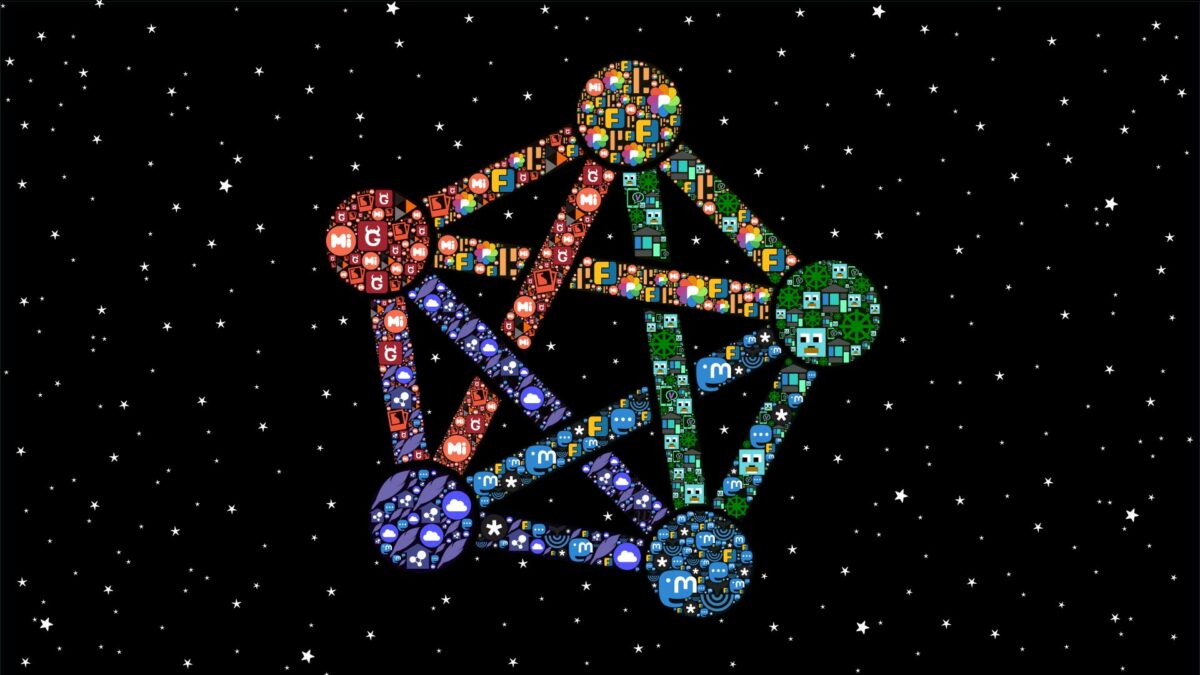
The Fediverse is a portmanteau of two terms; federated and universe. Essentially the Fediverse refers to the idea of decentralized networks of all kinds that can communicate with each other. For example, Mastodon is just one arm of the Fediverse. However, within Mastodon, you can interact with other arms of the Fediverse and vice versa. Think of the Fediverse as a web of interconnected services, servers, apps, and platforms. 

The rest of the Fediverse works very similarly to Mastodon, in that servers are called instances and that anyone can create a brand-new instance. Also like Mastodon, users who don’t want to create a brand-new instance can opt to simply create a profile within an existing instance. The subsequent profile will not limit the user to interacting exclusively with other profiles in the selected instance, but instead lets the user interact with any instance, associated application, or part of the Fediverse. 

On paper, the Fediverse sounds like the social media innovation we’ve needed. With it, users can:

  • Communicate only with their chosen grouping, whether this be friends, family, or other users with shared interests or proclivities. 
  • Gain access to an entire suite of social networking apps and services all connected to the federated network. 
  • Use social networking sites without the fear that their data is being harvested and used for profit. 

Unfortunately, it isn’t all sunshine and rainbows where the Fediverse is concerned. There are significant drawbacks. 

fediverse app what is it

The issue with federated social networks

With any fairly novel innovation, there are bound to be a few drawbacks. Some of these will be mere kinks in the fabric of the system that need to be ironed out, but others may be a little more serious and detrimental to the longevity of the system. Here are the drawbacks of federated networks. 

Connecting with others

It’s significantly more difficult to connect with other people when using a federated social network. If you don’t already know people who use the network, there’s little to no point in making the move to a service like Mastodon. In order for connection to be easy, you need to either have people interested in joining an instance you create, or you need to know people in the instance you want to join. 

Making connections within the federated social network ecosystem is difficult because you cannot import connections or lists of contacts from other services. You also can’t check your timeline for posts from distantly connected accounts, like friends of friends. You also cannot initiate searches for hashtags or posts as decentralized instances don’t have any posts saved in their local database. Additionally, not all instances are on the public web, and so cannot be found without considerable effort.

Fragility within the Fediverse

Because the Fediverse is composed of a network of software services and instances that are run from users’ phones, computers, and other devices, there’s little clarity on who ‘maintains’ the servers. In actuality, due to the use of the word ‘server’ as a precursor for the term ‘instance,’ it’s difficult to nail down how the servers are operated in the first place. Therefore, I don’t know where they are based or whose laws and jurisdiction they fall under. This is something that is incredibly important when a company or individual claims that a network is safe or secure. 

fediverse app what is it

Popularity

Many publications fall back on how people are ‘flocking’ to Mastodon as a way to try and convince more people to join. However, according to Mastodon’s official website, the platform currently hosts 1.8 million users. While this means that between the beginning of November and now, the platform has gained approximately 1 million new users, it also means that Mastodon is far from popular. Just to put that number into perspective, New York, literally just the city of New York, is home to almost 9 million people. Mastodon has 1.8 million users. In fact, the entire Mastodon population can fit into Manhattan, with room to spare. 

With these few users scattered across the globe, what are the chances of you being able to find an instance within which you’d feel at home? Slim at best. 

Is the Fediverse the future of social networking?

No. I refer to an extended comment by Davide Aversa, concerning the future of the Fediverse and Mastodon. 

‘I tried to jump on the Mastodon train several times; however, I was never really convinced by it. To be honest, I was never really interested in any open-source clone of popular commercial social networks. And like me, 99% of the non-technical people I know.’

‘At first, I thought the cause of this was that open source clones have the impossible task of breaking the inertia and attraction power of the “original” platform. After all, clones are built after the original platform became successful, and, therefore, they always start with a certain level of disadvantage. More importantly, though, they do not add anything to the user experience. So why should someone choose to go to some less populated and more inconvenient place to do the same things they already happily do?’

I am in complete agreement here. If the Fediverse and Mastodon are the future of social network, both utilities would need to be vastly different. Why are these novel platforms so concerned with cloning the existing model upon which social media is run? 

Social media, at present, is a collection of personally curated echo chambers that limit access to contrary opinions and the people that hold them unless you expressly search for them as I do. The entire business model of a modern social network is to fill your feed with the content that you’re most likely to interact with so that you keep using the app for longer. Endless scrolling. That’s what social media overlords want most of the time. This isn’t even a conspiracy.

Numerous psychologists and neuroscientists have weighed in on the damage that social media can do, and how effective the scrolling function is at essentially holding your attention for as long as possible. The more you use social media, the more ads you are shown, the more data you serve up on a silver platform, the more predisposed you become to using social media even more. It is an addiction, one that has taken lives, destroyed relationships, and led to untold instances of violence. 

If we want a truly open and free social networking experience, we need to create it from the ground up, not base it directly on the toxic systems currently in place.

On the topic of toxic systems, if a group of people want you to leave a social network because its new owner introduces free speech, there’s a problem with that group of people. If this same group of people tries to encourage you to join a network that actively seeks to prevent the presence of law enforcement, you need to ask yourself why. And, lastly, if proponents of a particular movement, stance, or ideology refer to anyone with mildly dissenting opinions as a Nazi, why should they be considered a credible source or a voice of reason.

Twitter, Facebook, Instagram, and every other social media platform currently available, won’t last forever. But, they aren’t likely to be replaced by the Fediverse, at least not in its current iteration. The future of social networking may be open-source, but it likely won’t be the modern echo chamber extreme known as Mastodon. Heck, social media may even be dying.

If you’re not sure about this app, you can check some alternatives to Twitter and Mastadon.