Perhaps it’s hard for you to believe it (especially if you didn’t live through that time), but back in the day Mortal Kombat became more famous than Street Fighter. The continuous complaints from parents and the gaps in the news made it so that there wasn’t a child in the world who didn’t want to try this over-the-top fighting game, where you could rip out your opponent’s spine and blood almost splattered on your face. And the proof that it became more famous than Capcom’s saga is in the release of its two movies in the mid-90s: Street Fighter grossed 99.4 million dollars while Mortal Kombat took in 122 million. Obviously, after the success, they started preparing the sequel at full speed. They were late.
Absolute fatality!
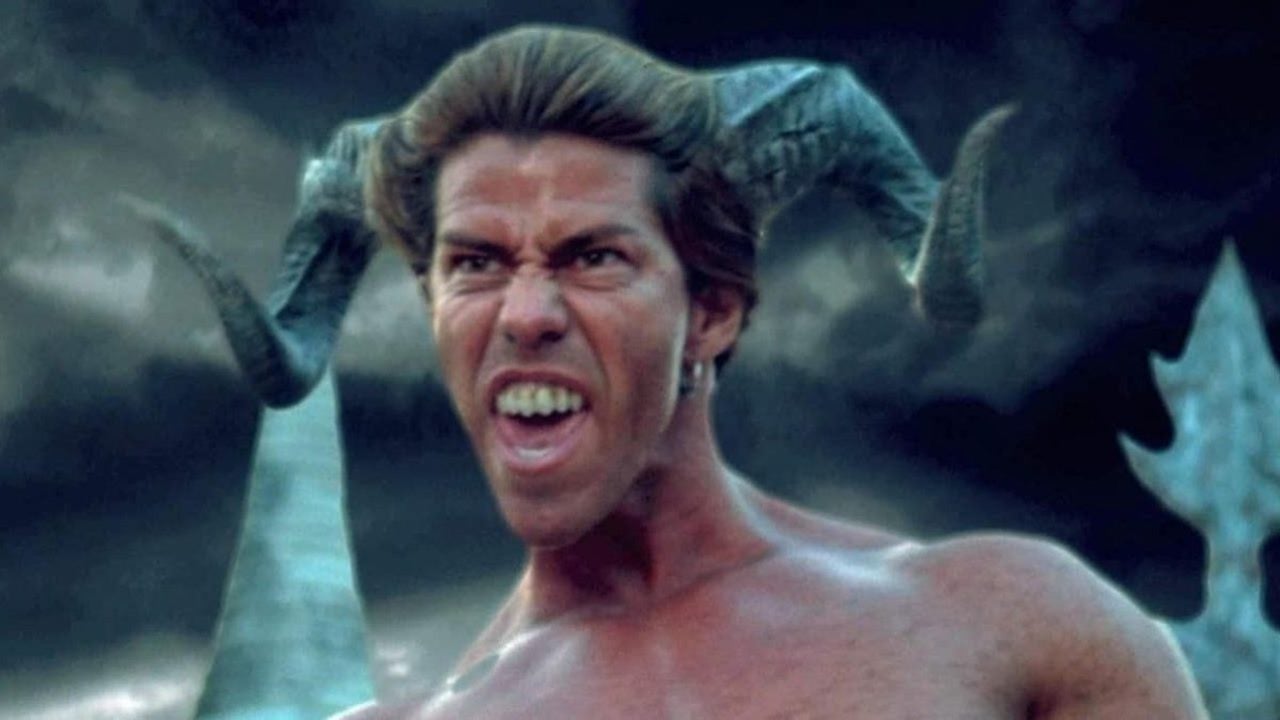
The second part cost 10 million more than the first, but they changed the director, screenwriter, and a large part of the cast. Christopher Lambert, for example, was out of the project, and no big name replaced him: Who needs a big name when you have Scorpion, Sub-Zero, or Mileena? Well, apparently everyone, because Mortal Kombat Annihilation grossed less than half of its first part, a meager 51.3 million dollars that didn’t even cover expenses. A complete disaster.
In this sequel, the power of Animality was introduced, using the storyline of Mortal Kombat 3 as a basis, which in 1995 had been the most popular arcade game and performed excellently on Super Nintendo and Sega Mega Drive. The problem is that, despite the success, there was not a great enthusiasm surrounding it and, in fact, it can be considered the beginning of the end of the saga’s popularity. Mortal Kombat Annihilation inherited too many characters and plot threads, which combined with poor special effects resulted in a chaotic mess.
The idea of its producer was to go for more: more fights, more special effects, more of everything. The result is evident: some consider it one of the best examples of trash cinema, and with some reason: its characters are completely empty, the fights are interchangeable, and one never really understands what is happening, even if they are a fan of the saga. For the two creators of the game, Ed Boon and John Tobias, this movie was the worst moment in their history with the franchise, and they have certainly faced quite a few setbacks along the way.
In fact, it was so bad and yielded such poor results that a third was immediately canceled, despite having everything ready to start filming right after the release of Annihilation. It ended so poorly that it began a journey of rewrites, directors, and various nonsensical paths. They even ended up asking fans which characters should die, in a state of absolute desperation. In 2009, Warner acquired the rights to Mortal Kombat, only to leave it in limbo until 2021, when the reboot was finally released successfully, leading to its second (now indeed, many) sequel.
The director of this aberration, John R. Leonetti, who was the director of photography for the first Mortal Kombat, would eventually find glory with the release of Annabelle in 2014. The problem is that he has never managed to achieve a release of that caliber again, settling for mediocrity of all kinds like (oh) The Butterfly Effect 2. In short, life dealt him a fatality in every sense. Fortunately, the saga was able to rise again after this almost mortal blow, but it took more than two decades.