Spike Lee has come to the defense of the biographical film about Michael Jackson, titled Michael, produced by Lionsgate, in light of the criticism that has arisen due to the omission of the child sexual abuse allegations in the narrative of the King of Pop. During a recent interview with CNN, Lee shared that he enjoyed the film very much and that he watched it twice, highlighting his appreciation for the cinematic work. It ends before what they accuse him of The American director argued that the film concludes in 1988, a period that precedes the first child abuse allegations that […]
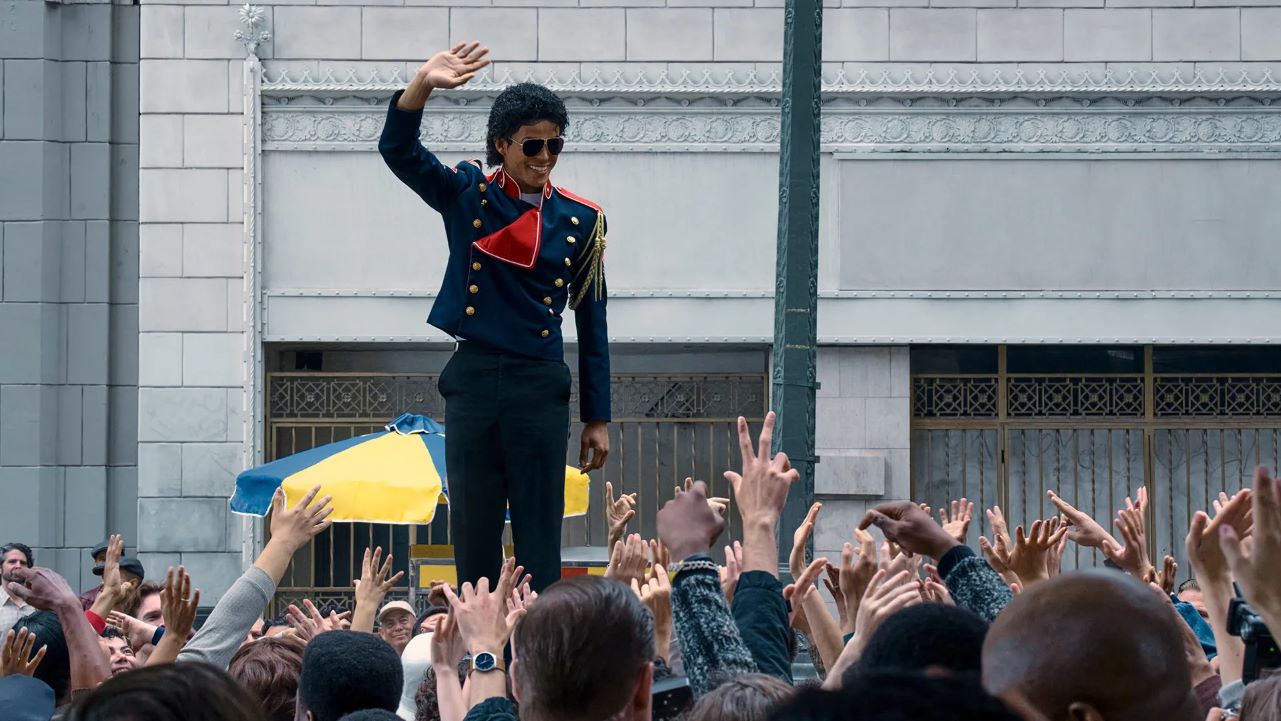
Spike Lee has come to the defense of the biographical film about Michael Jackson, titled Michael, produced by Lionsgate, in light of the criticism that has arisen over the omission of the child sexual abuse allegations in the narrative of the King of Pop. During a recent interview with CNN, Lee shared that he enjoyed the film very much and that he watched it twice, highlighting his appreciation for the cinematic work.
Ends before what they accuse him of
The American director argued that the film ends in 1988, a period that precedes the first allegations of child abuse that emerged in 1993. According to Lee, this temporal cut is significant, as it is not deemed relevant to include events that did not occur within the same timeframe of the artist’s representation. The film focuses on the early years of his career and does not address issues that occurred later, Lee stated, thus justifying the creators’ decision.
Despite the focus on Jackson’s artistic career, critics have insisted that it is essential to also address the dark episodes of his personal life. The controversy is not limited to this biopic; Michael Jackson’s legacy remains a subject of debate and deep analysis, especially in the context of the multiple accusations that arose after his death. While Lee praises the film, others believe that the adaptation of his life should include a broader and more comprehensive perspective.
With the release of Michael, Lionsgate has sparked renewed interest in the life of the iconic artist, but it has also opened the door to questions about how public figures are represented in contemporary culture. The narrative of the King of Pop remains complex, and Lee’s comments only emphasize the polarization that still exists around his figure.
Hollywood gathered at the iconic Dolby Theater on Saturday night to pay tribute to one of its most beloved legends, Eddie Murphy, who received the 51st AFI Life Achievement Award, the highest honor awarded by the American Film Institute. The ceremony brought together prominent figures from the film industry, who celebrated the career and impact that Murphy has had on comedy and cinema. Who hasn’t laughed out loud with him? Spike Lee, renowned director and close friend of Murphy, was the one to present this prestigious award. […]
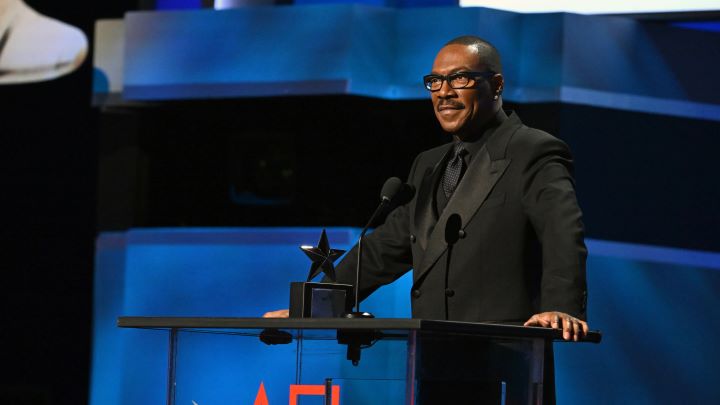
Hollywood gathered at the iconic Dolby Theater on Saturday night to pay tribute to one of its beloved legends, Eddie Murphy, who received the 51st AFI Life Achievement Award, the highest honor bestowed by the American Film Institute. The ceremony brought together prominent figures from the film industry, who celebrated Murphy’s career and the impact he has had on comedy and cinema.
Who hasn’t laughed out loud with him?
Spike Lee, a renowned director and close friend of Murphy, was the one to present this prestigious award. During his emotional speech, Lee praised Murphy for his authenticity, highlighting his unwavering commitment to being true to himself throughout his career. “Eddie has always prioritized his authenticity, something that is fundamental in the entertainment industry,” Lee stated, emphasizing the positive influence Murphy has had on generations of comedians and artists.
Eddie Murphy’s career spans over four decades and has left an indelible mark on the film industry. From his iconic performances in classic comedies like “Beverly Hills Cop” to his acclaimed role in “Dreamgirls,” Murphy has demonstrated his versatility as an actor and comedian. His ability to connect with the audience, both through his humor and emotional depth, has established him as a true icon in Hollywood.
The AFI Award for Lifetime Achievement not only marks a milestone in Murphy’s career but also highlights the importance of authenticity and commitment in the entertainment industry. As the ceremony concluded, it became clear that Eddie Murphy’s legacy will continue to inspire future artists to follow their own path and to stay true to themselves in an ever-changing world.
I understand it, of course I understand it. Akira Kurosawa is one of the three best directors in the history of cinema, and, since we have been without enjoying his genius for more than 30 years, in the absence of a new Kurosawa, there are a few who have decided to copy him. Or, rather, to create on what has been created, taking his cinema and giving it a little twist so that it remains, in one way or another, original. Not long ago, Oliver Hermanus adapted the great masterpiece of the director, Ikiru (Living) to the United Kingdom with Living. The result was, more than poor, unnecessary, but the hunt […]
I understand, of course I understand. Akira Kurosawa is one of the three greatest directors in the history of cinema, and, since we have been without enjoying his genius for over 30 years, in the absence of a new Kurosawa, there are a few who have decided to copy him. Or rather, create upon what has been created, taking his cinema and giving it a little twist so that it remains, in one way or another, original. Not long ago, Oliver Hermanus adapted the great masterpiece of the director, Ikiru (Living) to the UK with Living. The result was, more than poor, unnecessary, but the floodgates were opened… And of course, Spike Lee has taken up the baton.
Yeah yeah, Kurosawa oh yeah
In 1963, Kurosawa created Hell of Hate, an absolute marvel that is part of his five best works alongside Seven Samurai, Ikiru, Dersu Uzala, and Rashomon. Over six decades, the film has been revered by critics and cinephiles around the world, and rightly so: the suspense builds gradually as only a master could do, culminating in an absolutely unrepeatable third act that has inspired films like Parasite, representing class struggle in modern Japan like no one else. It is a vibrant, necessary, unique, exemplary film. A masterpiece, indeed.
It’s not that the movie, which is also an adaptation of the novel The King’s Rescue by Evan Hunter, hasn’t been adapted before: there’s a Japanese television series, a Bollywood remake and there were even rumors of a version scripted by David Mamet and directed by Martin Scorsese. But of course, Spike Lee, as good as he is (and he is), is not Martin Scorsese, and From Heaven to Hell, his particular tribute to the Japanese master, is a small great nonsense only for those who want to understand it.
Lee, the author of fabulous films like Do the Right Thing, Malcolm X, or Summer of Sam, already had a terrible clash with Asian cinema with his particular remake of Old Boy, the masterpiece by Park Chan-Wook. However, after showing the world that he still had a storyteller inside him with things to say thanks to BlacKkKlansman and Da 5 Bloods: Brothers in Arms, he has decided to team up with Denzel Washington to tell his vision of Kurosawa’s story. A man, in his ivory tower, whose son is kidnapped on the same day he risks everything he has to close the most important deal of his life. Is it entertaining? Of course. Is it necessary? Certainly not.
This is Lee’s third remake, and he has finally learned something after the previous two: not to replicate the films he wants to pay homage to shot for shot and to make them his own. There is no doubt that From Heaven to Hell is a production that is entirely Lee’s, but it is also one that is far inferior to the original work, and one can only wonder why. To what extent does ego come into play and what was the need to take an immortal work, completely change the third act, and turn it into something more interesting than a remake per se, but still unnecessary. No matter how much A24 and the Cannes Film Festival are involved.
Spike Lee is a great director, but if he stands next to Akira Kurosawa, he will always be overshadowed in any position: it’s not that From Heaven to Hell is a bad movie; it’s that it pales in comparison to the greatness of The Hell of Hate. Lee shows that he is still capable of telling a story about the themes that matter to him, but for that, he should stand on his own. After all, there is only one thing worse than a bad movie: one that has no reason to exist. Fortunately, on Apple TV+ you can see for yourself if that’s the case.
Denzel Washington and Spike Lee have established a professional relationship that has marked the career of the renowned actor in the film industry. Since their first collaboration in Mo’ Better Blues 35 years ago, they have formed a notable creative combination, bringing to the screen deep and complex stories that explore the African American experience. Their recent film, From Heaven to Hell, reiterates this connection and is available to stream through SkyShowtime. A gem about jazz and the complexities of human relationships The new joint work focuses on the life of a jazz trumpeter, Bleek Gilliam, […]
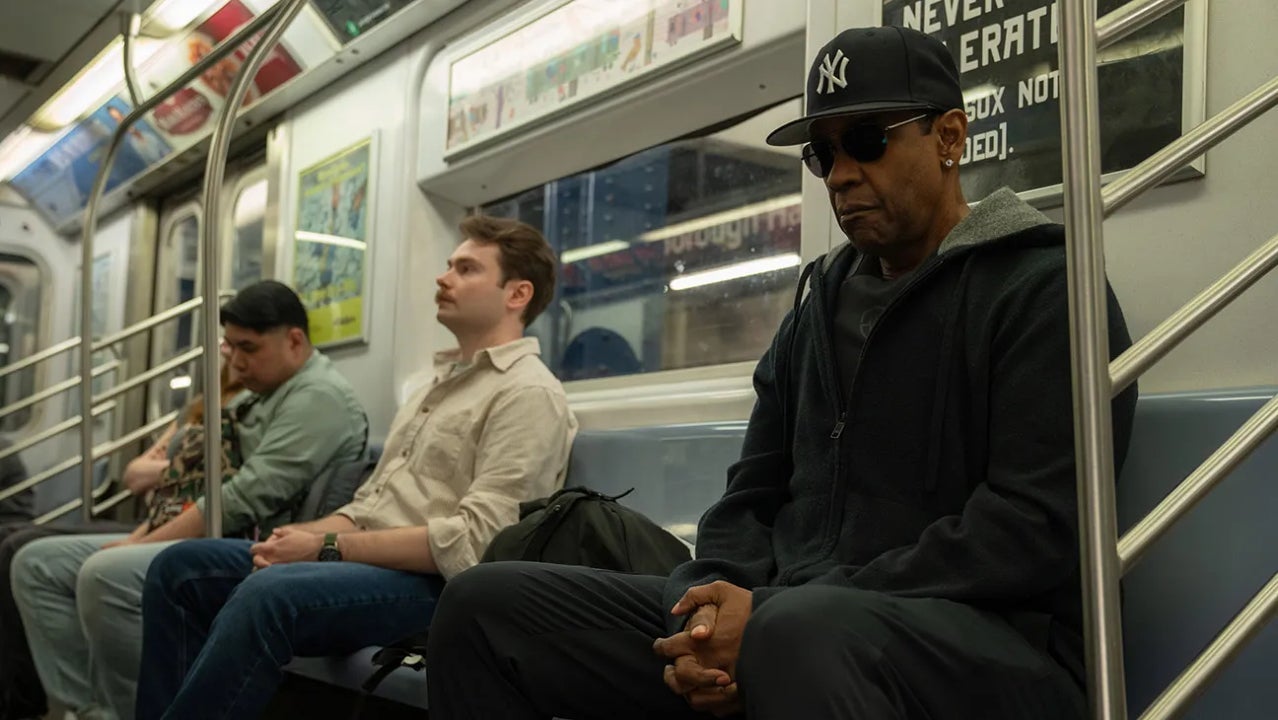
Denzel Washington and Spike Lee have established a professional relationship that has marked the career of the renowned actor in the film industry. Since their first collaboration in Mo’ Better Blues 35 years ago, they have formed a remarkable creative combination, bringing to the screen deep and complex stories that explore the African American experience. Their recent film, From Heaven to Hell, reiterates this connection and is available to watch streaming through SkyShowtime.
A gem about jazz and the complexities of human relationships
The new joint work focuses on the life of a jazz trumpeter, Bleek Gilliam, who, after years of dedication and effort in his musical career, faces both personal and professional challenges. He finds himself at a complicated crossroads: his manager and childhood friend encounters problems, and he must choose between two women who have captured his heart. Through this narrative, Spike Lee uses his cinematic approach to portray the reality of life in African American neighborhoods, integrating jazz music as a common thread that brings the story to life.
The film not only addresses the complexity of interpersonal relationships in the context of a successful career, but it also delves into the emotional dilemmas of the protagonist, a territory where Washington excels with his charisma and acting depth. The connection between the director and the actor has evolved, allowing them to explore a range of emotions and complex themes that resonate with contemporary audiences.
With From Heaven to Hell, Washington and Lee continue to innovate in American cinema, providing a rich narrative that invites reflection on the passions and conflicts in an artist’s life. This collaboration stands as another gem in their long history together, marking another milestone in the artistic journey of both.
Akira Kurosawa is one of the greatest Japanese directors in history. Not just Japanese. He is one of the greatest directors in history. Few directors have had not only his influence but also his recognition, popularity, and career. He is an absolute institution in every possible sense and a true rara avis. One of those indisputable directors whose even lesser-known films are worth discussing in depth. Or imitating with enthusiasm. That is what Spike Lee must have thought when approaching his new film, as he has decided to make a remake and reinterpretation of a […]
Akira Kurosawa is one of the greatest Japanese directors in history. Not just Japanese. He is one of the greatest directors in history. Few directors have had not only his influence but also his recognition, popularity, and career. He is an absolute institution in every possible sense and a true rare bird. One of those indisputable directors whose even lesser-known films are worth discussing in depth. Or imitating with delight.
That is probably what Spike Lee thought when approaching his new film, as he has decided to make a remake and reinterpretation of one of Kurosawa’s most prestigious films: High and Low, or The Hell of Hate. A film perhaps not as famous as his samurai movies, but considered one of his greatest masterpieces.
Based on the novel King’s Ransom by Evan Hunter, Kurosawa presents us in The Hell of Hate with a very interesting premise: a businessman struggling to control the shoe company of which he is part of the board decides to make a purchase financed by third parties with all the savings of his life. But this coincides with a great personal tragedy. In a way. A person in serious financial trouble mistakes his chauffeur’s son for his own son, demanding a ransom of 30 million yen, which is a large part of his savings, putting him in a terrible personal situation. Does he value his career more or the life of an innocent child, even if he is not from his family?
The movie is a masterpiece, which you can also watch on Filmin, both technically and narratively. By holding up a mirror to Japanese society of the time, it seeks to show the existing conflict between human and economic values and the differences between social classes. All of this with great success.
Being a box office and critical success, it was also an absolute success outside of Japan. Considered one of Kurosawa’s great films, it was nominated for Best Foreign Language Film at the Golden Globes and was part of the Official Selection at the Venice Film Festival in 1964. Two notable achievements for a Japanese film of the time, even considering it was Kurosawa.
His Reinvention of Spike Lee: A Strong Contender for the Oscars
The remake and reinterpretation by Spike Lee closely follows the film, while giving it a contemporary twist. Replacing Toshiro Mifune with Denzel Washington, the movie follows a music producer who seeks to buy the majority shares of his record label, only to discover that his son has been kidnapped. Although like in the original, he will soon find out that the one who has been kidnapped is his son’s best friend, the son of his driver and best friend. This will lead him to the same situation we experienced in the original film: are personal and professional ambitions worth more than the life of a child?
Released on August 22 in theaters in the US, the film has been critically acclaimed. With a 90% on Rotten Tomatoes, it is one of the highest-rated films of the year. Something that should already spark our interest.
Now premiering on AppleTV+, there is no reason not to give a chance to one of the films with the greatest potential to become one of the movies of the year. Especially when it is a strong contender for the Oscars, both due to its release dates and because it has been backed by critics. And if you don’t want to have to rush to catch up on everything you’ve missed when it gets nominated in a few months, now is the perfect time to watch this From Heaven to Hell.
Spike Lee has stated that he will probably not collaborate with Denzel Washington again after their fifth joint film, titled Highest 2 Lowest. During a press conference at the Cannes Film Festival, Lee expressed that their creative partnership has been a blessing, but this could be the end of the road. “I don’t know if we’re going to make more [films]; I think this is it: five,” the director said. A reinterpretation of an absolute classic of Japanese cinema, Highest 2 Lowest, which premieres in theaters on August 22 and will be available on Apple TV+ on September 5, […]
Spike Lee has stated that he will probably not collaborate with Denzel Washington again after their fifth joint film, titled Highest 2 Lowest. During a press conference at the Cannes Film Festival, Lee expressed that their creative partnership has been a blessing, but this could be the end of the road. “I don’t know if we are going to make more [films]; I think this is it: five,” the director said.
A reinterpretation of an absolute classic of Japanese cinema
Highest 2 Lowest, which premieres in theaters on August 22 and will be available on Apple TV+ on September 5, is a reinterpretation of the classic film High and Low by Akira Kurosawa. Since their first collaboration in 1990 with Mo’ Better Blues, the pair has worked on iconic works such as Malcolm X, He Got Game, and Inside Man. However, Lee has noted that Washington’s recent comments about a possible retirement have influenced his decision to end this fruitful collaboration.
Denzel Washington has given hints about his future in the film industry, mentioning that he plans to retire after completing certain projects. Among them are a historical drama about the Carthaginian general Hannibal and an adaptation of his Broadway production, Othello. Additionally, he has expressed interest in participating in Black Panther 3, although there are no guarantees of his inclusion in the project. Nate Moore, the film’s producer, has also expressed his desire to have Washington in the Marvel Universe, although it is still unknown how the plans will develop.
Despite his possible retirement, Washington has clarified that he will not completely leave cinema, but will reduce his workload and focus on projects that interest him. “I am not retiring. It’s not like everything will end on June 5,” the actor clarified, leaving the door open for future selective collaborations.