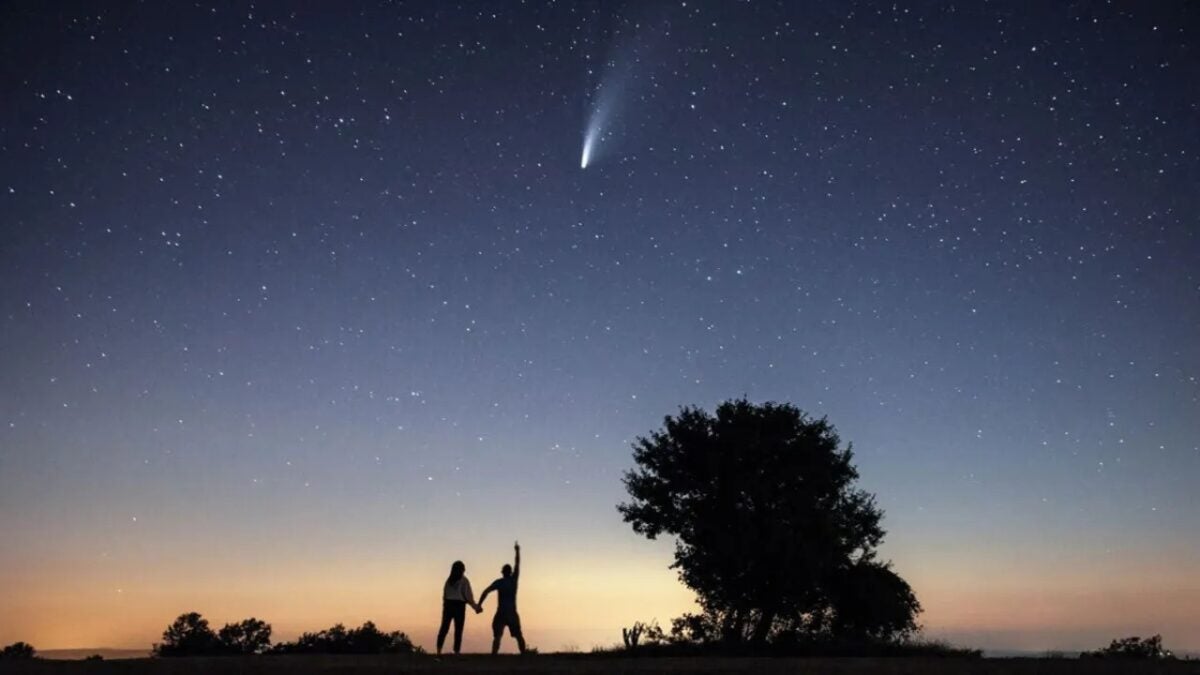
The comet C/2023 A3 (Tsuchinshan-ATLAS) promises to be one of the most spectacular celestial attractions of 2024. Discovered on February 22, 2023 by the Asteroid Terrestrial-impact Last Alert System (ATLAS) in South Africa, this comet has captured the attention of astronomers and night sky enthusiasts, who predict that it will be as bright as the planet Venus.

According to Space.com, the Tsuchinshan-ATLAS was initially mistaken for an asteroid until it was correctly identified thanks to images captured by the Purple Mountain Observatory (Tsuchinshan) in China. This comet, currently located beyond the orbit of Jupiter at almost 1.090 billion kilometers from the Sun, will approach our star on September 27, positioning itself at a distance of less than 58 million kilometers, a similar distance to that of Mercury.
Later on, on October 12th, Tsuchinshan-ATLAS will come as close as 71 million kilometers to Earth, which could cause its brightness to increase significantly. According to estimates, this comet could reach first or second magnitude, becoming a notably bright object in the western night sky by mid-October 2024.
In recent years, other comets like C/2022 E3 (ZTF), known as the “Green Comet”, and 12P/Pons-Brooks, nicknamed the “Devil’s Comet” due to its eruptions of brightness and gaseous appendages, have briefly captured the public’s attention. However, these comets proved difficult to observe without the ideal conditions of darkness and suitable equipment.
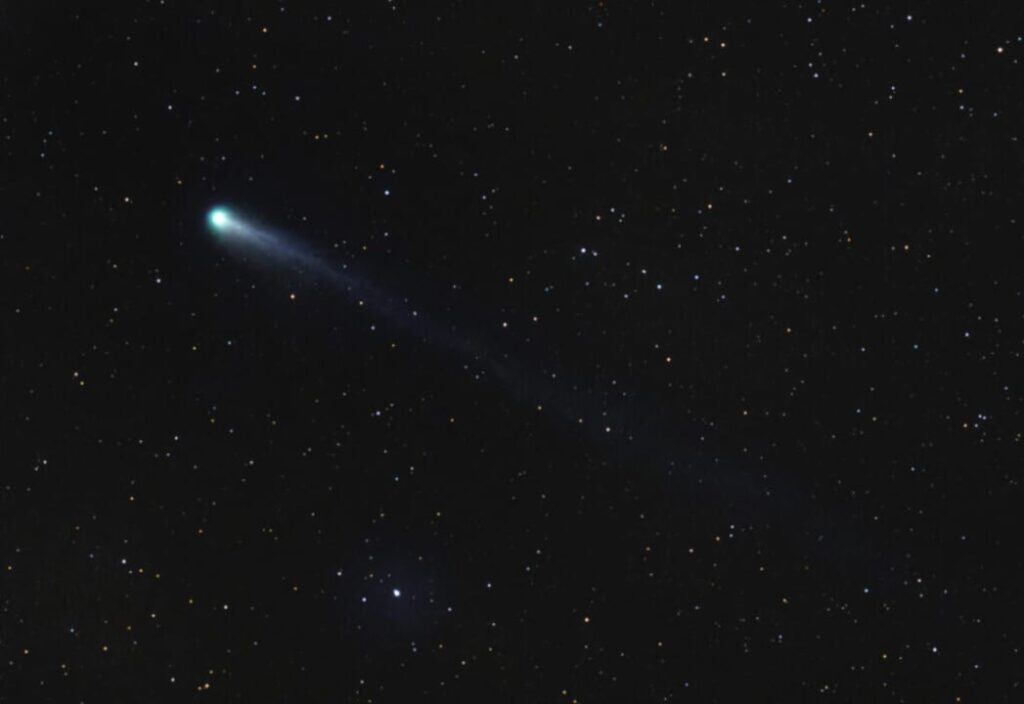
Unlike these comets, Tsuchinshan-ATLAS has the potential to be easily visible to the naked eye, making it an accessible celestial event for everyone. However, its brightness depends on several unpredictable factors; if its luminosity decreases or stops, the show could fade away.
Observers in the northern hemisphere will have to wait to see the comet, as it will be too far south this summer. It will be visible in the morning sky before sunrise for those living in Australia, New Zealand, and South America. Reports from these regions will be crucial in determining whether Tsuchinshan-ATLAS will become the dazzling spectacle promised. Meanwhile, the astronomical community and enthusiasts eagerly await this potential celestial wonder.
