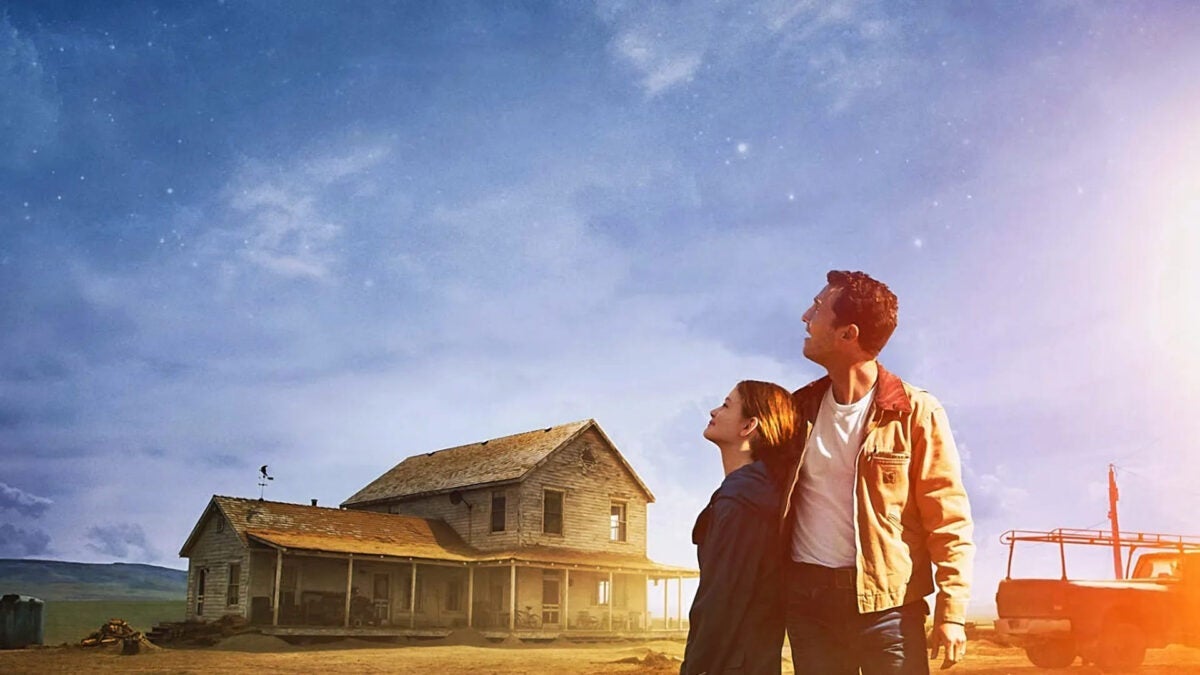
Interstellar, released eleven years ago, is considered one of the most outstanding works of Christopher Nolan. However, its production story reveals an intriguing path, as the project was initially conceived by producer Lynda Obst and physicist Kip Thorne, with Steven Spielberg directing. Spielberg left the project in 2008 after establishing a new deal with Reliance, which left the film without a director until Nolan joined in 2012.
It’s a movie that hits Spielberg very hard
With his arrival, Nolan rewrote the script to focus on themes of fatherhood, one of the most significant changes was changing the gender of the protagonist’s child. In his version, Murph became a daughter, which allowed the director to explore more deeply the emotional dynamics between father and daughter, played by Matthew McConaughey and several actresses throughout the film.
The changes made by Nolan were profound: the presence of China, which in Spielberg’s version had a leading role in the conquest of space, was almost eliminated. Likewise, he discarded a romantic subplot between Cooper and Amelia, played by Anne Hathaway, which allowed the story to focus more on exploration and family bonds. Other narrative elements, such as the scene where the protagonist wakes up on a desolate planet, were transformed to provide a more prominent impact on the approach to space as an opportunity for humanity.
The final version of Interstellar diverged significantly from Spielberg’s initial vision, not only in terms of narrative but also in its emotional content and themes. With these changes, Nolan established Interstellar as a milestone in contemporary science fiction, capturing both the imagination of the public and the critical appreciation that endures to this day.