
In 2025, Facebook (Meta) remains one of the world’s most popular social media platforms, but it has also become fertile ground for scammers looking to take advantage of unsuspecting users.

While the platform has invested heavily in detection systems, cybercriminals are constantly refining their techniques to blend in with the everyday clutter of posts, ads, and private messages. The result is a notable increase in fraud that puts both financial security and personal privacy at risk.
A telling statistic confirms this: 14% of all threats blocked on Facebook last year were linked to technical support scams. Under the guise of a genuine help message, many criminals use fake “assistance hotlines” to intimidate users into paying for non-existent services- or, even worse, granting them remote access to their devices.
And the fraud doesn’t stop there; fraudulent technical support is just the tip of the iceberg. Scams on Facebook are appearing in increasingly creative and hard-to-detect forms. In this report, we will examine the main types of scams, explain how to spot them, and show you the protection tools that make all the difference.

The Facebook Fraud Ecosystem
Facebook offers the perfect environment for scammers: millions of daily active users, a constant flow of personalized ads, and a direct messaging system that facilitates contact. In this context, scams proliferate on several fronts:
1. Investment and Cryptocurrency Scams
Ads featuring fake celebrity endorsements promoting “miracle” investments in cryptocurrencies or pyramid schemes are becoming increasingly common. These advertisements typically redirect users to professional-looking but fraudulent websites, where the user is asked to deposit a small initial amount, which will then multiply… into losses.
2. Non-existent Job Offers
Capitalizing on job insecurity, cybercriminals publish attractive job listings with high salaries and minimal requirements. To apply, the victim is told to pay “administrative fees” or hand over sensitive personal information, such as bank account numbers.
3. Romance and Confidence Schemes
Fake profiles seeking to initiate a relationship are one of the oldest forms of social media fraud, and Facebook remains fertile ground. After gaining the victim’s trust, the scammer invents medical emergencies or urgent business trips to ask for immediate money transfers.
4. Technical Support Scams
As mentioned, this is one of the fastest-growing types of scams. The user receives an ad or message that appears to come from Facebook or an associated service. The warning usually flags a critical issue with the account or device. The next step involves calling a fake phone number, where a supposed agent asks for money or remote access.
The sophistication of these traps is so high that even digitally savvy users can fall for them, especially when combined with messages that perfectly mimic the platform’s actual notifications.
Why We Fall for the Trap
Scammers on Facebook exploit two core human factors: urgency and trust.
- Urgency: Messages often convey that the problem is immediate (“Your account will be suspended in 24 hours,” “Your computer is infected”), forcing users to make quick decisions without taking time to think.
- Trust: They use logos, well-known brand names, or fake profiles of friends to generate credibility.
In an environment where digital interaction is constant, it is difficult to distinguish the authentic from the fake, especially when the interface perfectly imitates Facebook’s visual elements.
The Consequences of a Facebook Scam
Falling for this type of scam doesn’t just mean financial losses. It can also have long-term consequences, affecting your work and personal life:
- Identity Theft: Personal data such as full name, address, or credit card number can be used in future frauds.
- Loss of Access: If the user hands over credentials, the scammer can hijack the account and extort their contacts.
- Malware Installation: Many fraudulent links download infected files that open the door to more severe attacks, such as ransomware.
- Emotional Distress: The shame or fear after being deceived can affect the victims’ mental health.
Because of these severe risks, prevention and technological protection are crucial.
How to Protect Yourself from Facebook Scams
The good news is that there are habits and tools capable of drastically reducing the risk of falling into a trap.
- Be Skeptical of Offers That Are Too Good to Be True
If an advertisement promises quick financial gains or jobs with disproportionately high salaries, it’s most likely a scam. - Always Verify the Sources
Never call phone numbers received in suspicious ads or messages. Look for the information on the company’s or service’s official website. - Do Not Share Sensitive Information
Facebook will never ask for your passwords, security codes, or card numbers via message or phone call. - Use Reliable Security Solutions
This is where protection from tools like Avast Free Antivirus comes into play, acting as a safety net against the most common threats on Facebook and other social media platforms like Instagram or TikTok.
How Avast Free Antivirus Helps Stop Facebook Scams
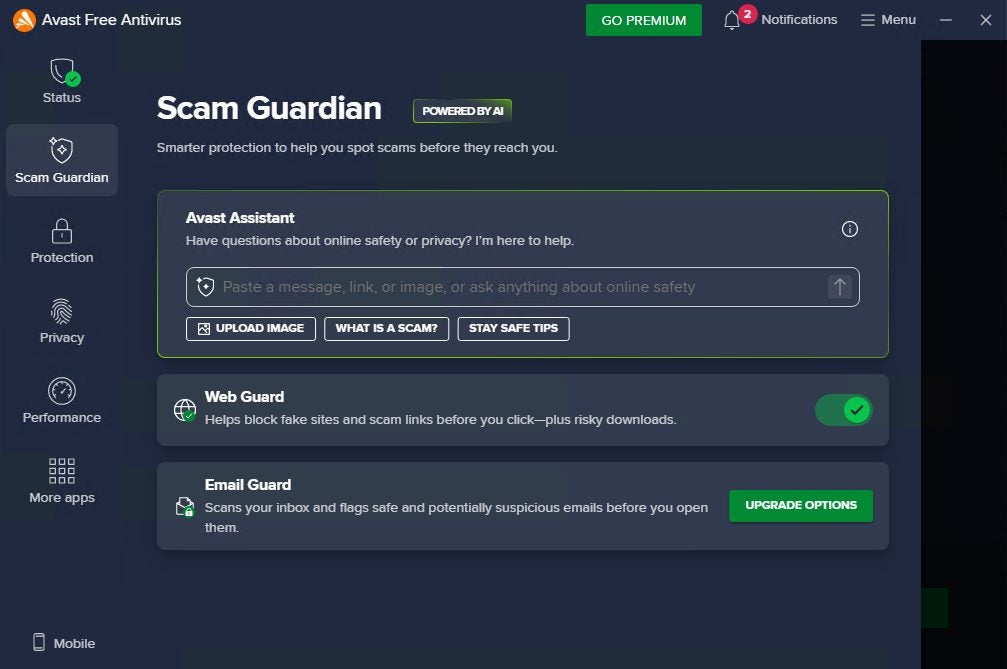
The evolving tactics of scammers demand active defenses that go beyond simple personal caution. Avast Free Antivirus integrates several layers of protection specifically designed to stop the most frequent types of digital fraud:
- Scam Guardian and Web Guard: These help block access to known technical-assistance scam pages before the users engage with them.
- Behavior Shield: This detects and stops suspicious activity in the browser, such as pop-ups that mimic Facebook or other social media direct message notifications.
- File Shield: This analyzes downloads attached to suspicious ads to prevent the installation of malware disguised as legitimate documents or applications.
These protections work quietly and in real-time, offering a free and trusted layer of defense against one of the most widespread threats in the digital world.
Using Avast Free Antivirus can help reduce the risk of scams on Facebook and enhance your online security.
The Future of Social Media Scams
Looking ahead, experts agree that fraud on Facebook and other social media platforms will continue to increase in sophistication. Artificial intelligence, for instance, is already being used to generate fake profiles with digitally created photographs or to draft convincing messages without grammatical errors.
This means the line between what is real and what is fake will become increasingly blurred, reinforcing the need for a combination of digital education and technological protection.
Conclusion: Your Security is at Stake—Trust Avast
The hidden scams on Facebook are not a temporary phenomenon; they are a persistent threat that has taken on new dimensions in 2025. From investment fraud to fake technical support lines, cybercriminals are looking to exploit the trust of millions of users.
Prevention starts with healthy skepticism: questioning overly attractive ads, verifying sources, and avoiding sharing sensitive data. But the human factor is not always enough, and that’s where solutions like Avast Free Antivirus offer crucial support.
With features like Scam Guardian, Web Guard, Behavior Shield, and File Shield, Avast Free Antivirus helps detect and block many fake pages, malicious downloads, and fraudulent pop-ups. It’s an extra layer of free security that makes browsing Facebook a calmer experience.
In a digital world where every click can hide a risk, investing in prevention is the smartest decision. And in this case, protecting yourself costs nothing.
