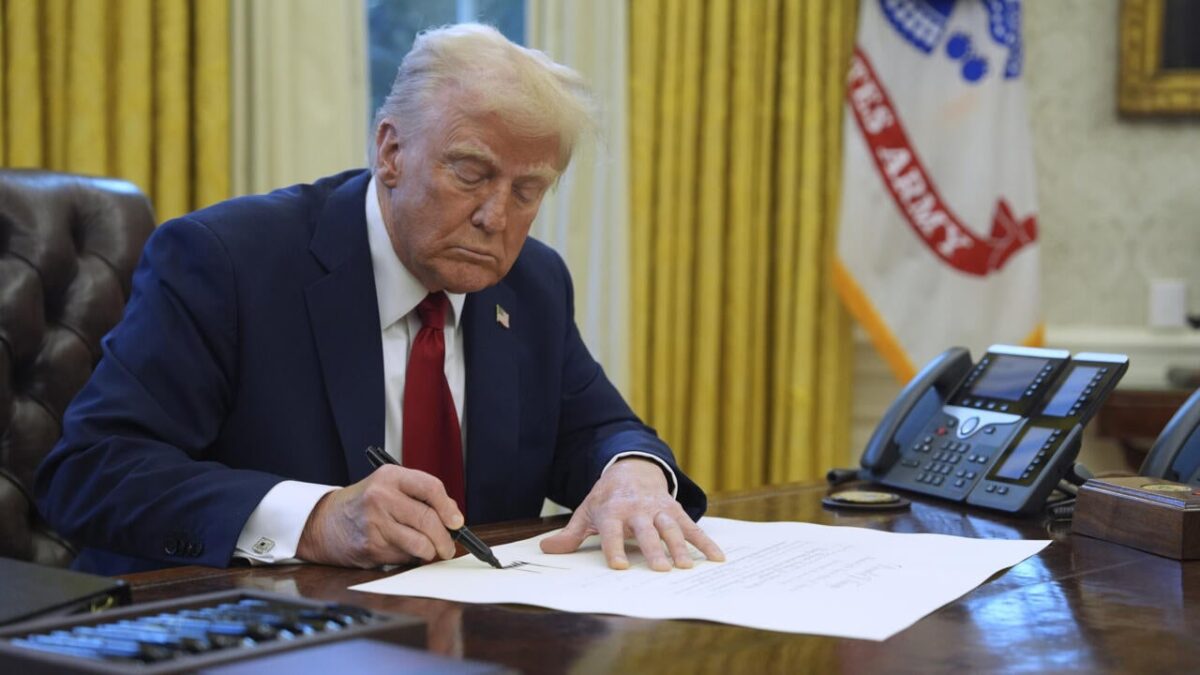
The United States government is preparing to launch a trade war that will affect Canada, Mexico, and China, which could cause chaos in international economies and an increase in video game prices. Although Mexico has received a one-month extension before being affected, the Entertainment Software Association (ESA) warns that this measure could have serious consequences for the video game industry and consumers, negatively impacting one of the most prominent entertainment sectors in the country.
The ESA points out that, although video games are mainly distributed digitally and are mostly exempt from tariffs, essential hardware –including PCs, consoles, and peripherals– will be subject to taxes that could significantly increase prices for players. This is reflected in a recent projection that places total video game sales at 58.7 billion dollars for 2024, with declines in hardware and console sales, which amounted to only 4.9 billion dollars, compared to 6.5 billion dollars in 2023.
Expectations are not good for the video game under these circumstances
The uncertainty generated by the possible imposition of tariffs has raised concerns about future consumer spending in the industry. Mat Piscatella, executive director of Circana, commented that his initial forecast for spending in 2025 was 61.5 billion dollars, but it will now be revised due to the current circumstances. Although the full scope of this trade war and its impact on the video game sector is uncertain, it is feared that it could negatively influence both production and consumption.
Additionally, the issue of tariffs creates an atmosphere of uncertainty that could hinder the continuous growth of the industry, leaving video game publishers waiting for clarity in an environment marked by economic and commercial volatility.