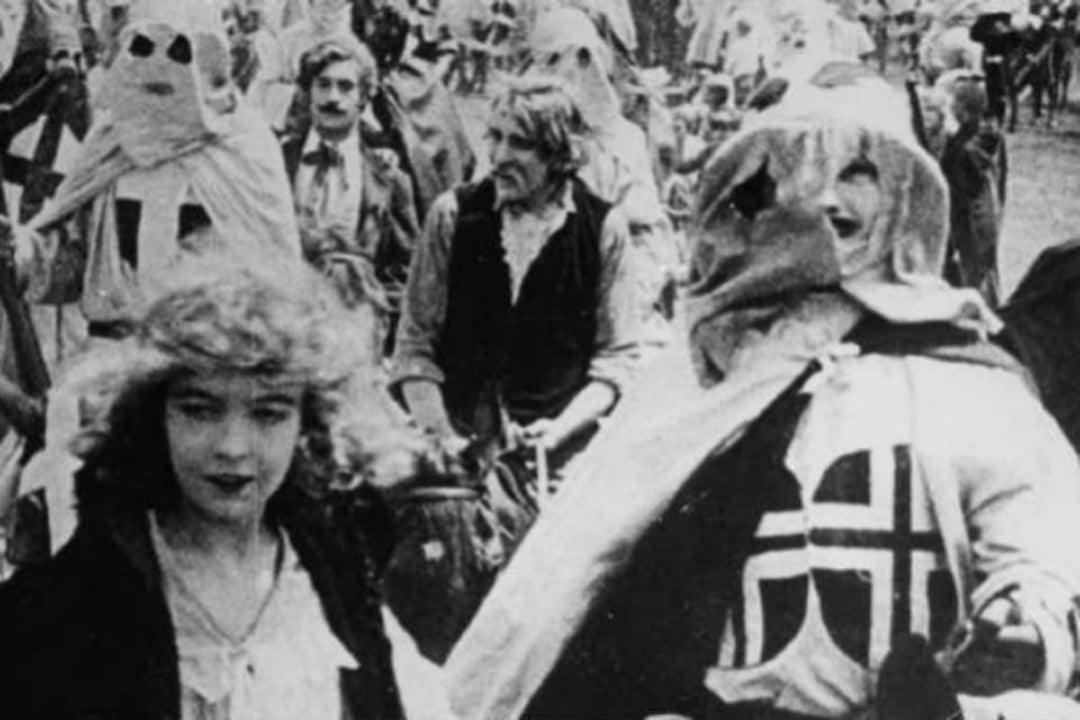
Released in 1915, The Birth of a Nation, directed by D.W. Griffith, is considered a masterpiece of cinema that marked a milestone in visual storytelling, but it is also one of the most racist films ever produced. This film glorified the Ku Klux Klan, offering a positive representation that helped boost the group’s popularity in the following decades, even featuring associated merchandise ranging from hats to aprons with their symbols. Despite its success, the KKK has seen a notable decline in its membership, dropping from 6 million members at its peak after the film’s release to approximately 6,000 today.
A milestone of problematic cinema
Interestingly, the representation of the KKK has been changing in popular culture. As time has passed, more recent cinematic works have begun to delegitimize the figure of the KKK and have addressed its history critically, marking a shift in the cultural narrative. For example, in Forrest Gump, directed by Robert Zemeckis, there is a brief homage to Nathan Bedford Forrest, a historical figure who was one of the first members of the KKK. Although the film only dedicates a few seconds to this representation, it is interesting to note that the original work by Winston Groom delves deeper into Forrest’s story, an approach that Zemeckis chose to omit, perhaps to avoid diverting attention from the main plot.
Despite the dark legacy left by The Birth of a Nation, culture and public reception have evolved substantially. Today, the media is cautious about associating with the KKK, recognizing the shift in general perception regarding racism and the importance of critiquing narratives from the past.