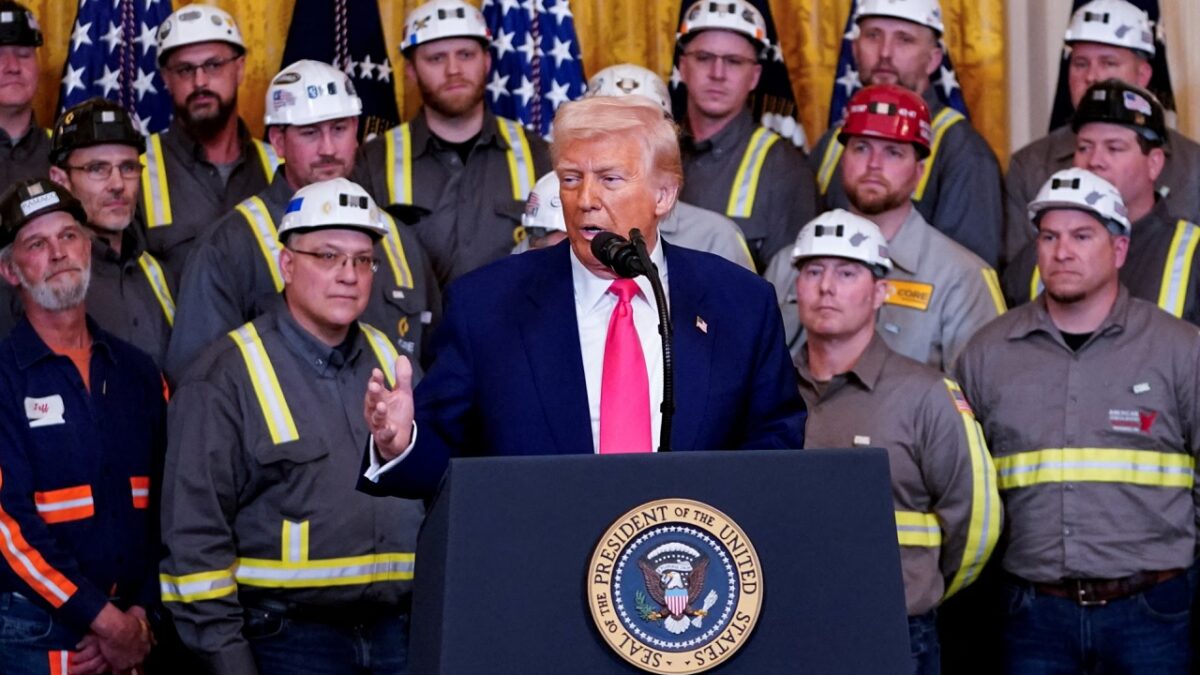
Former President Donald Trump is anticipated to sign executive orders aimed at revitalizing the struggling U.S. coal industry, a move that critics deem outdated and environmentally detrimental.
The new directives will allow certain coal-fired power plants, originally set for retirement, to remain operational by citing increased energy demands due to data centers, electric vehicles, and artificial intelligence.
In addition to keeping aging plants online—many of which are around 53 years old—the orders will require federal agencies to identify coal resources on federal lands, lift barriers to mining, and ease coal leasing processes.
Trump’s Executive Orders Aim to Revive U.S. Coal Industry Amid Environmental Criticism
The executive actions also aim to revamp the former Obama administration’s coal leasing moratorium on federal lands, promoting new coal extraction initiatives. This strategy appears to resonate with the coal and mineral industries, which have welcomed the recent regulatory rollbacks by the Environmental Protection Agency.
However, experts argue that the revival of coal is fundamentally impractical. Coal is widely recognized as the dirtiest fossil fuel, responsible for approximately 460,000 premature deaths between 1999 and 2020 due to its harmful emissions.
Moreover, coal generation has dwindled in the U.S., reaching a historic low of 15% of total electricity generation in 2024, while renewable sources like solar and wind outstripped coal’s production capacity.
The Energy Information Administration forecasts that a staggering 93% of new energy added to the U.S. grid in 2025 will derive from renewable sources, including solar, wind, and battery storage. This shifts the focus from traditional energy to cleaner alternatives, illustrating the growing feasibility and necessity of transitioning to sustainable energy sources.
In light of this, critics including Kit Kennedy, managing director of the Natural Resources Defense Council, have ridiculed the notion of coal’s resurgence, suggesting that antiquated policies are ill-suited for a future driven by clean energy.