Rockstar Games has published the official box art for Grand Theft Auto V, their sandbox game coming out on September 17th. It shows the three protagonists, Michael, Franklin and Trevor. Unlike the screenshots released last week, there appear to be no revelations we can glean from this artwork.
The inclusion of a dog is likely to cause controversy with groups like PETA, who have previously complained about Super Mario’s abuse of animals, but a GTA game without controversy just wouldn’t feel right, would it?
Firefox 20 will be available to download later today, as version 21 moves into Beta testing. It has two major new features – per window Private Browsing, and a new download manager.
Private Browsing allows you to use the internet without your browser saving any information, cookies and so on from sites you visit. In Firefox 20, you can open a Private Browsing window while keeping your other normal window open, a feature already available in Chrome.
Here’s how it worked when first introduced to the Nightly Build last year:
The new download manager is a bigger deal, as Firefox’s old manager was really in need of a refresh.
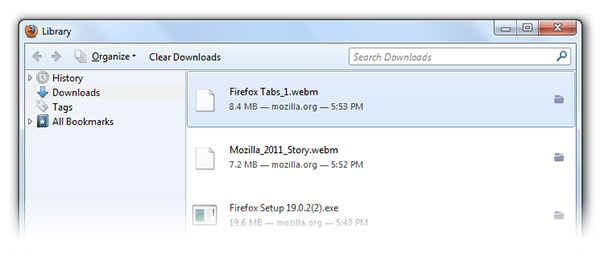
Firefox 20 adds a neat download button next to the Home button, which shows you the last three downloads when clicked. The icon changes to a progress bar when you are downloading. Clicking ‘Show All Downloads’ opens a new window, but with a completely redesigned ‘panel based’ download manager.
The first beta of Mac OS X 10.8.4 (build 12E27) has been released to developers. It apparently includes only minor bug fixes, and no new features or major fixes.
Apple indicate that the this beta focuses on the same areas as the previous one – graphics drivers, Wi-Fi and Safari. As with other OS X betas, 10.8.4 is intended for members of the Apple Developer program, not the public.
This beta arrives two weeks after OS X 10.8.3 was release to everyone. That had bigger fixes and improvements like Boot Camp support for installing Windows 8, utilizing the Mac camera for redeeming iTunes gift cards, and Safari 6.0.3.
GDC 2013 has finally wrapped up and we’ve got tons of news, previews, and gameplay from the conference. For one week every year, the video game development community gathers in San Francisco to take a look at the future of game development. We got to play innovative games like Framed and even got a chance to try out the Oculus Rift virtual reality goggles.
My first introduction to Anomaly was the iOS version of the game. I didn’t know that 11 bit Studios’ original release of Anomaly on desktops had a commander that players controlled. This commander could perform commands like healing or setting up fake radars to draw the attention of the alien towers. This is the big difference with the Anomaly series. The game evolved from being a simple tower defense to what 11 bit calls a “tower offense” game.
The core gameplay for single player remains the same. You are moving through a level, guiding your units to achieve an objective, but units now have a morph ability giving a secondary mode of attack. Depending on the unit, you could start with a tank and transform into a walker. While the tank has a wider range for attack, the walker has limited range, but increased attack power for closer towers. This mechanic makes the strategy of Anomaly 2 different because the secondary unit mode can heavily impact the result of the game.
Senior writer, Pawel Miechowski, demoed a bit of the game and showed off features that would be found in the multiplayer mode. As a small developer, 11 bit is working on balancing the multiplayer portion of the game so players don’t have significant advantages or disadvantages, depending on which side they’re playing. Continue reading “GDC 2013: Anomaly 2 multiplayer bridges tower defense and offense “
Witching Hour Studios is an independent developer out of Singapore. Ian Gregory Tan is the Creative Director at Witching Hour Studios and he came to GDC 2013 to show off his new game, Ravenmark: Mercenaries. Their original game, Ravenmark: Scourge of Estellion, was a single-player turn-based strategy (TBS) game where you controlled an army throughout a 30 hour single player campaign.
Taking influences from Final Fantasy Tactics: War of the Lions, Fire Emblem, and other older TBS games, the sequel moves beyond single player and introduces a focus on multiplayer gameplay. There is still a single player part of the game, but is in the form of smaller battles called “Contracts,” where you play against the AI. The improvements of Ravenmark: Mercenaries are apparent from the beginning with fully animated battles, which were lacking from the original game.
A TBS game is a hard sell on mobile devices because of the necessity of asynchronous multiplayer. Witching Hour’s multiplayer is a bit different. While there is a turn replay system allowing you to see the last turn, Ravenmark; Mercenaries will also allow you to take a turn ahead before you’ve seen your opponent’s turn. It’s a different gameplay system which could actually ruin your chances for victory if you think too far ahead. The studio took us through the mechanics of the single and multiplayer which you can watch below.
Video games are often viewed as escapism but sometimes a video game comes along and completely obliterates that misconception. Pipe Trouble is a mobile game for Android and iOS tablets that does just that by merging politics and video games. The game was created by Pop Sandbox to raise awareness of the ecological costs of natural gas development in British Colombia, Canada.
The game has recently been getting a lot of bad press for allegedly promoting eco-terrorism. The premise of the game is to help develop a natural gas pipeline with the least ecological impact. If you build a pipe through a lake or trees, protestors begin to picket your pipeline, sometimes causing damage to the pipeline. Critics slam Pipe Trouble for encouraging eco-terrorism but that’s not the case, according to its developers. We spoke with Alex Jansen from Pop Sandbox and he emphasized that Pipe Trouble is meant to be over-the-top satire. Jansen wants players to learn more about the current controversy with pipelines in BC and to come up with a conclusion by themselves.
Pipe Trouble is a fun game with whimsical cartoon graphics. The gameplay is very challenging as you have to please both environmentalists as well as the energy companies. Use too many resources to build around the landscape and you’ll go into debt. If you build through trees and lakes, you’ll have to face the wrath of protests, injunctions, and fines. I found the game to be very nuanced about the way it presents each side of the argument. Pipe Trouble doesn’t push a political agenda in players’ faces, but instead calls for critical thinking and evaluation of both sides of the argument.
At the end of the day, Pipe Trouble is actually a very fun and challenging game. It has an awesome score created by Toronto punk band, Fucked Up. It’s a shame that the game got so much bad press that it had to disassociate itself from the David Suzuki Foundation, a Canadian organization that works to preserve nature. Pop Sandbox originally intended for part of the proceeds from Pipe Trouble to be donated to the David Suzuki Foundation.
Pipe Trouble has been out on both iOS and Android for a while. You can learn more about the game here.
One of the best parts about the Game Developers Conference is seeing prototype games that break the gaming paradigms that we’re used to. I already wrote about Framed, a touch-based comic book puzzle game, which was one of the most innovative games I saw at the conference. Muse falls under this category as well since it combines a thumping electronic soundtrack to an exploration driven game.
Muse is a very different type of game that doesn’t have a clear objective for the player. Hell, there’s not even a heads up display (HUD) to track points or your position on a map. All of this leads to a minimalist experience and that’s exactly what Muse’s creator, Yossi Landesrocha, wants. Instead of taking players through a scripted journey, Muse rewards exploration with an ever growing, layered soundtrack. Players control a glowing orb on the screen. Running into different shapes will generate different tones so you can create your own unique, layered soundtrack.
Collaboration will play a big part in Muse, allowing players to work on a soundtrack together. Finished soundtracks can then be exported on social media or within the Muse community itself. We didn’t get a chance to try the game with multiple players so this functionality remains to be seen. However, we did get a chance to play a very early build of Muse, which turned out to be a very buggy experience. The game uses Intel applications on Android and iOS which will turn your phone into a controller. The accelerometer controls are a great idea but there was a ton of latency from what we saw at GDC which could be attributed to the massive amount of people using different wireless networks in the Moscone Center.
Still, Muse is an interesting game that has a lot of good ideas. Developer, Current Circus, hopes to have the game out by mid-2013, which doesn’t leave the team much time to polish the experience. The game is only planned for a PC release at the moment.
One of the more developer-focused demos that I saw at GDC 2013 was for Intel’s Perceptual Computing SDK. This software developers kit is for creating gesture-based commands with a specifically designed webcam. Somewhat like what the Kinect and new PlayStation 4 Eye, the Intel Perceptual Computing software will allow you to control computers through the use of gestures, voice, and eye tracking.
It’s an interesting development for software and in some ways, its going against touch controls for Windows 8. Barry Solomon, from Intel’s Visual Computing Product Management Software and Solutions Group, explained that the SDK currently uses a webcam designed by Creative to work with the SDK and that they are looking beyond Windows 8 and into new ways for interaction.
Perceptual Computing is still early in development and it’s going to be some time before the software is integrated with Intel hardware.
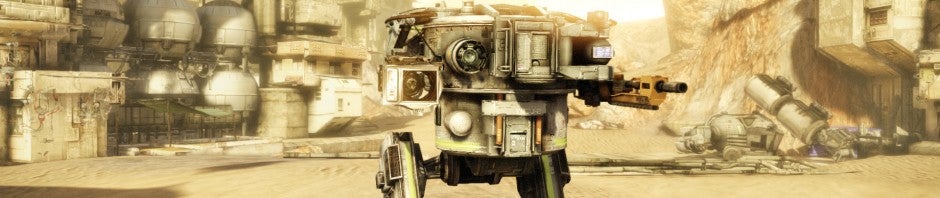
I had been playing a bit of the open beta in Hawken before I met with Adhesive Games and Meteor Entertainment at the Game Developers Conference. The mech action game was a lot of fun, offering a lot of customization and solid gameplay. With both keyboard and mouse as well as gamepad support, it’s easy to jump into the game and learn the basics.
The big difference with Hawken is that the game isn’t a one level game. Multiplayer maps are multi-tiered so you have to look vertically as well as horizontally to find your enemies. The hovering ability gives players the chance to attack from above as well as escape from combat quickly. There are still some balancing issues in the game, but Hawken is presenting a multiplayer mech action game for fans who have been missing the ability to jump into a customized mech and play against other players online.
In the meeting with the Hawken team at GDC 2013, we saw an update to the game, which adds a healing class mech (The Technician) and new level destruction mechanics. Adhesive is also adding new levels. As an added bonus, we got a hands-on with Hawken on the Oculus Rift virtual reality goggles.





![GDC 2013: Anomaly 2 multiplayer bridges tower defense and offense [video]](https://articles-img.sftcdn.net/auto-mapping-folder/sites/3/2013/03/Anomaly2-600x198.jpg)