Activision tries to shut down YouTube videos explaining cheats for Call of Duty: Advanced Warfare

Cheating in online multiplayer games can be a real problem. It upsets the playing field, and while some players profit, they do so at the expense of other players’ enjoyment.

Activision has a new tactic in the fight against cheaters – taking down YouTube videos that explain cheats, exploits, and glitches in Call of Duty: Advanced Warfare. Eurogamer reports that game video network Machinima has discovered Activision issuing copyright notices against any videos highlighting game glitches that can be exploited by players.

While some YouTubers have claimed that Activision is censoring them, Activision says that it doesn’t censor videos of gameplay, just those showing players how to cheat. As Eurogamer points out, there are still many glitch and exploit videos online – it seems as fast as Activision takes action against them, more pop up in their place.

While this is one strategy against cheaters, of course Activision and developer Sledghammer Games also have a responsibility to find and patch glitches that players exploit in Call of Duty: Advanced Warfare, to ensure it remains fun for as many players as possible.

Source: Eurogamer

Related Stories

Call of Duty: Advanced Warfare review, future looks familiar

Watch the hilariously bad funeral scene from Call of Duty: Advanced Warfare

Kevin Spacey talks about being in Call of Duty: Advanced Warfare

Follow Jonathan on Twitter: @jonathanriggall

Facebook at Work: should the social network quit while it’s ahead?

Every time Facebook releases a new app, product, or service, I sigh. Facebook’s come a long way since graduating from college, but Zuckerberg has never ceased to give up hope that Facebook can become the be all, end all of communication. The company’s even resorted to buying some of the biggest names in communication (WhatsApp, Instagram) in order to have control of the market. But from one project to the next, Facebook continues to disappoint when it comes to adding innovative products or services to the market. When will Zuckerberg stop? It doesn’t look like anytime soon.

His next venture is Facebook at Work, an all-in-one solution to the problem of workplace productivity. Will it succeed? Given Facebook’s track record of misguided attempts at recreating already popular social apps, I’m not very confident. See for yourself.

Facebook Deals (April 2011- Aug 2012)

The little known Facebook deals appeared in only 5 US cities as a way to compete with Groupon and Living Social, providing coupons and deals for local businesses. If you’re wondering why it never came to your city, it’s because the project closed just 4 months after it’s launch.

Level of success: FAILURE

Messenger (Aug 2011-)

Messenger was the first addition to Facebook’s set of apps back in August 2011. It stood as an optional stand-alone app to better optimize the Facebook messenger experience. In July 2014, Facebook completely removed Messenger from its mobile app, forcing users to download Messenger separately (and angering many in the process). Since November, Facebook’s pedaled backwards a bit, once again allowing Messenger access from Facebook’s Android app. Over the years, Messenger has gained enough functionality to be considered a messaging app on it’s own, with the ability to make voice calls, video chat, and share photos and video.

Rank in Google Play: #1 in Communication, #2 Overall in US

Rank in App Store: #1 US Social Networking, #4 Overall in US

Level of success: HIGH

Camera (May 2012- May 2014)

If you’ve never heard of Facebook Camera, you’re not the only one. The app was released for iPhone in May 2012 as a competitor to the then already booming Instagram (which curiously, Facebook had just purchased). It did basically the exact same thing as Instagram: photo feeds with the ability to like or comment, tag a person, add a location, or add filters. It’s biggest caveat was that there was no discovery function, only showing you photos from your friends, essentially making it a lesser Instagram. It got barely any buzz and just as little protest when it was killed off in May 2014, but some of its token features, like the image picker, have since been integrated into Facebook’s mobile app.

Rank in App Store, May 2014: #304 in US Photo and Video

Level of success: FAILURE

Facebook Pages Manager (May 2012-)

If you manage any Facebook pages, there’s an app for that. Facebook Pages Manager is a separate app that lets you– you guessed it– manage Facebook pages. It’s a bit of a niche app, as not everyone is a page manager or administrator, but it’s still around and useful if you need to manage a page on mobile.

Rank in Google Play: #2 in US Business, #498 Overall in US

Rank in App Store: #6 in US Business, #358 Overall in US

Level of success: MODERATE

Poke (Dec 2012- May 2014)

The innocuous Poke became a standalone app from Facebook in 2012. What started as a joke (and then continued to be one), the app was Facebook’s first attempt at a direct competitor for Snapchat, letting you send self-destructing images, videos and messages to your Facebook friends. Alas, Poke proved to be no real competitor for Snapchat and hung around longer than expected in the App Store until it was quietly removed, along with Camera, in May 2014.

Rank in App Store, May 2014: #469 in US Social Networking

Level of success: FAILURE

Home (April 2013-)

Almost like an Android Launcher, Facebook released Home in April 2013 for HTC and Samsung devices, bringing your Facebook News Feed to the home screen of your Android device. It was basically designed for super heavy Facebook users, with Chat Heads being one of the key takeaways from the app. The concept was a bit murky, and while it’s still around, there has been no added support for other Android devices, and no update since 2013. It looks like Facebook may have abandoned Home.

Rank in Google Play: #229 in US Social Apps

Level of success: LOW

Paper (Jan 2014-)

Once Facebook execs realized just how many people were consuming their news via Facebook, the social network released it’s own news app in the form of Paper. Having been released with a lot of hype for iPhone and exclusively in the US in January 2014, Paper mixes stories from your News Feed and other news categories of your choice to offer a more personalized news experience. The app itself is fully functional, with swipe gestures that streamline the Facebook experience, but it still doesn’t compete with the simplicity and ease of use of news aggregators like Feedly or Flipboard. While still around, the app’s been stagnant since its launch over a year ago. With still no word about an international or Android launch, I wouldn’t be surprised if this one quietly died too.

Rank in App Store: #31 in US News

Level of success: MODERATE

Mentions (July 2014-)

Unless you’re a celebrity or star athlete, you probably won’t know about Mentions. It’s an iOS-only app made specifically for verified public figures using Pages, letting them (or their wranglers) see what fans are saying about them and join in on the conversation. I can’t vouch for it’s usefulness because sadly, I am not an important public figure, but if in your News Feed you mention something about a celebrity and they happen to respond, that means they’re probably using the app. Think of it as Twitter mentions for Facebook. Because it was only launched in July in the US, whether or not it’s viable or useful has yet to be seen.

Rank in App Store: #184 in US Social Networking

Level of success: MODERATE

Slingshot (June 2014-)

Facebook’s 2nd attempt at a Snapchat competitor (or 3rd, if you consider it’s attempt to  buy Snapchat) came in June 2014 in the form of Slingshot for Android and iOS. Much like Poke before it, Slingshot lets you share self-destructing messages. The novelty of it is reciprocity. To open a message, you have to send one yourself first, supposedly encouraging more sharing. Or not.

Since it’s launch, Slingshot has removed the share-to-unlock requirement of the app, and although it’s an attractive, properly functioning alternative to Snapchat, the numbers show that it can’t compete with the real thing.

Rank in Google Play: #317 in US Social Apps

Rank in App Store: #522 in US Social Networking

Level of success: LOW

Rooms (Oct 2014-)

Rooms is Facebook’s attempt at recreating the 90’s chat room of yesteryear, letting you use an ambiguous identity to contribute to rooms about different topics accessible only via QR codes. The contribution is largely based on images, and the chat is fairly limited. Personally, I’m not a big fan of the app so far. It’s been rumored that Facebook saw an opportunity in the market with the success of Yik Yak, the anonymous hyper-local ‘news’ app that has been taking college campuses by storm, but not much has been said post-launch.

Rank in App Store: #273 in US Social Networking

Level of success: LOW

Groups (Nov 2014-)

Facebook’s latest addition to the app world is Groups, a standalone app that lets manage your Facebook groups to create a private space for sharing with family and friends, almost like your very own private News Feed. The app looks nice enough, but whether or not people use groups enough to justify a separate app (or want one) is another question. So far, it’s doing okay, but the jury’s still out on this one.

Rank in Google Play: #33 in US Social, #469 Overall in US

Rank in App Store: #20 in US Social, #167 Overall in US

Level of success: MODERATE (so far)

Facebook at Work (Jan 2015)

Not so much an app as it is a new Facebook experience, Facebook is planning to launch Facebook at Work early next year. In what many have cited as the time wasting properties of Facebook, the company is hoping to create a kind of workspace to connect colleagues on projects in real-time, without having to worry about the distractions of cat videos or vacation photos. It’s like a combination of LinkedIn and Google Drive services that aim to make collaboration in the workplace easier, as well a place to make contacts. It’s potential has also been compared to Microsoft’s Outlook and Lync for services.

Level of success: TBD

Yes, quit while you’re ahead

Some you may use, others you may have heard about, while some have quietly drifted away in obscurity, but there’s no denying one common thread: Snapchat, Instagram, Twitter, Linkedin, Yik Yak, and the like– Facebook’s app’s aren’t so much new innovations as they are attempts to recreate already successful apps that it couldn’t manage to buy, banking on the Facebook name to carry it forward.

Facebook at Work doesn’t seem much different. The potential key to its success, presumably, could be a melding of all of the above mentioned services (LinkedIn, Google Drive, Outlook and Lync) into one huge place for productivity, an usual approach for Facebook in that it could actually add value, instead of further saturating an already full market with another clone. We’ll have to wait until next year to see how it works, but based on its track record, I won’t hold my breath.

I do have to give it to Facebook though: they’ll try anything once (or twice). I guess when you have enough money, failure is an option.

*Note, app rankings are via App Annie and correspond with the rankings as of the day of publication.

Related articles:

Best free messaging apps

What’s all the yakking about Yik Yak?

Why Rooms is not the future of anonymous chat

Follow me on Twitter: @suzieblaszQwicz

Monument Valley: Forgotten Shores comes to Android

The premium update for Monument Valley, Forgotten Shores, is now available on Android, after its recent release for iOS.

Monument Valley: Forgotten Shores costs $1.99 as a purchase within the original game. It adds eight new chapters to the original game’s ten.

When the update was released for iOS, some users complained it was not free, and punished the developers by leaving one-star reviews on the App Store. That score, however, has again returned to an impressive 4.5 stars. The protest provoked its own backlash, with developers arguing that they deserve to be paid for their hard work. Many other people agreed, especially when the game concerned is one of the best mobile games of recent years, and the cost of Monument Valley: Forgotten Shores is so small.

Download the excellent Monument Valley for Android and iOS.

Related Stories

Farming Simulator 15 available today for Mac OS X

Malware being spread through Steam chat

GTA V’s first person mode makes it more controversial

Follow Jonathan on Twitter: @jonathanriggall

Sophisticated malware Regin probably used by US and UK spy agencies

As we reported yesterday, Symantec uncovered one of the most complex and sophisticated pieces of spyware ever this weekend, called Regin. Now, it appears that it was this software that was used to infect networks of the European Union, most likely by the NSA (American National Security Agency).

In a further discovery, it seems that Regin might even date back as far as 2003, although malware bearing that name wasn’t discovered until 2011. Of course, neither the US’s NSA nor the British GCHQ will confirm (or deny) having used or being the authors of this spyware, but a report in The Intercept has collected a lot of evidence that points in this direction.

A former NSA hacker, Jim Penrose speaking at the Cyber Security Summit in New York, suggested that most computer users should not be directly worried or threatened by this type of spyware. According to Penrose, just like criminals, governments will only use their best tools against the most valuable and important targets. If you’re doing something that governments would be very interested in, then it’s more likely you might be targeted. Most people will not, although they might justifiably be concerned that their governments possessed technology that could so easily spy on its citizens.

Sources: ZDNet, The Intercept, The Guardian

Related Stories

Regin – the software that’s been spying on users since 2008

WhatsApp, Facebook Messenger, Skype? What are the most and least secure messaging services?

Report: iOS has the best mobile security

Follow Jonathan on Twitter: @jonathanriggall

Regin – the software that’s been spying on users since 2008

Security company Symantec has discovered an advanced trojan used for spying, called Regin. A complex piece of software, it has “been used in spying operations against government organizations, infrastructure operators, businesses, researchers, and private individuals,” says the firm. Regin is described as “truly groundbreaking and almost peerless.”

Regin has existed in two forms. The first existed from 2008 till 2011, and then a second version emerged in 2013. While many institutions were infected by the spyware, almost half of Regin’s victims have been private individuals. Symantec is unsure exactly how Regin spreads, but it may be through fake versions of well known websites, or browser and application exploits (the type we report on regularly).

Regin is ‘highly customizable’, but has been seen to capture screenshots, take control of cursors, steal passwords, monitor traffic, and recover deleted files. Symantec reports that it is very hard to detect, and even when detected, very hard to see what it’s doing. The company is continuing its analysis of Regin and says it will report any further discoveries it makes about Regin’s capabilities.

Should you be worried about Regin? The geographical spread of its targets is broad, but almost half of discovered infections are concentrated between Russia and Saudi Arabia, with eight other countries (Pakistan, Austria, Belgium, Iran, Afghanistan, India, Ireland and Mexico) making up the rest. That Regin has been undetected for so long makes it conceivable that there could be other spyware out there also monitoring individual’s computers. As we reported last week, some governments do use spyware to monitor individuals like journalists and human rights defenders, and people connected to these professions are most at risk.

The best defense against spyware and malware is to keep your software up to date, be vigilant about what links you click, and be very skeptical about links and files from unsolicited sources.

Related Stories

Malware being spread through Steam chat

WhatsApp, Facebook Messenger, Skype? What are the most and least secure messaging services?

Report: iOS has the best mobile security

Follow Jonathan on Twitter: @jonathanriggall

Android vulnerability leaves some password managers open to sniffing

If you’re using a password manager on your Android phone or tablet, you will want to pay attention to this vulnerability. The problem is inherent with Android itself but affects password managers that utilize the clipboard to fill in passwords.

The vulnerability isn’t new and shouldn’t come as a surprise. Researcers discovered the bug back in early 2013 but nothing has been done about it since. But recently, an app called ClipCaster has made its way onto the Google Play Store that allows the app to sniff usernames and passwords stored in the Android clipboard.

ClipCaster is a proof of concept that this vulnerability exists and works. The app doesn’t require any permissions so a victim will be none the wiser that his or her passwords are being sniffed out. There’s no functionality behind ClipCaster other than to expose vulnerable password managers on Android.

While password managers like LastPass are affected, others that don’t utilize the clipboard are not. LastPass responded, saying that the vulnerability is not with its own app but a problem with Android itself.

“This is an any clipboard activity problem [his emphasis] and impacts any password manager involving the clipboard (100% of them)—the way all password managers have consistently allowed you to enter your password into other apps since Android has existed. This demonstration is aimed at LastPass, but it’s the whole of Android that must be addressed,” said Lastpass CEO Joe Siegrist speaking with Ars Technica.

Lastpass for Android combined

Android password managers which use their own browsers, browser extensions, or software keyboards are unaffected by this bug. This means LastPass users can stop this bug by disabling the “autofill” feature using the Lastpass secure browser or software keyboard instead.

You can also protect yourself by only installing trusted apps, meaning apps you find in Google Play since Google checks those apps for malicious code. Still, some malicious apps may fall through the cracks so use your best judgement. Now is also a good time to install a mobile antivirus program like Lookout or AVG to monitor your phone for vulnerabilities.

Android does have a security feature called “sandboxing” that would render this attack useless but it would also stop password managers from working properly. Basically, sandboxing isolates an app from interacting with other apps, protecting it from sniffing. However, sandboxing password managers would make the apps extremely limited and difficult to use.

There’s no need to panic about this vulnerability, but Google and app developers should work together to implement a fix. Just use your best judgement about the apps you install and you should be safe.

For more information about how to protect yourself online, check out my in-depth guide.

Source: Ars Technica

Related Stories

Detekt looks for government spyware on your PC

Malware being spread through Steam chat

End to end user encryption coming to WhatsApp

Critical Windows bug was hidden for 19 years

Follow me on Twitter: @lewisleong

Goat Simulator, Facebook, Beam Messenger and Firefox in The Softonic Minute

Goat Simulator becomes an MMO, Facebook released yet another new app, Beam Messenger lets you see typing in real-time, and Firefox ditches Google. See this week’s hottest software news in The Softonic Minute.

Default player

<!–
By use of this code snippet, I agree to the Brightcove Publisher T and C
found at https://accounts.brightcove.com/en/terms-and-conditions/.
–>

<!–
This script tag will cause the Brightcove Players defined above it to be created as soon
as the line is read by the browser. If you wish to have the player instantiated only after
the rest of the HTML is processed and the page load is complete, remove the line.
–>
brightcove.createExperiences();

Goat Simulator goes MMO in upcoming update (trailer)

If you bought Coffee Stain Studios’ Goat Simulator, you’ll now have another free update to the tongue in cheek game. Goat MMO Simulator takes the game into a fantasy Massively Multiplayer Online environment for yet more goat-aided destruction. Click through to see the trailer for the new patch.

Download Goat Simulator for Windows | Mac

Facebook releases new Groups app for collaboration

Facebook is concentrating on bringing your closest friends and families together by releasing its new Groups app. With the new Groups app, you can have a dedicated place to keep in touch with friends or to share things with people with the same hobbies. Continue reading…

Download Facebook Groups for Android | iOS

Beam Messenger lets you watch what your friends type in real-time

Are WhatsApp’s blue ‘message read’ confirmation checks too much for you? Then Android-only Beam Messenger will terrify you! Much like Google Wave (remember that?), instead of telling you when someone is typing a message, with Beam you can actually see the other person typing their message. Continue reading…

Download Beam for Android

Firefox removing Google as its default search

For a decade, the default search engine for Firefox has been Google. From December, the default search for Firefox will change depending on your region. Continue reading…

Download Firefox for WindowsMac

Make sure to check out all of our past Softonic Minutes.

Follow me on Twitter: @suzieblaszQwicz
What’s all the yakking about Yik Yak?

With a name like ‘Yik Yak’ (and an actual yak as the app icon), you’d be hard pressed to figure out exactly why the app is making waves across US college campuses.

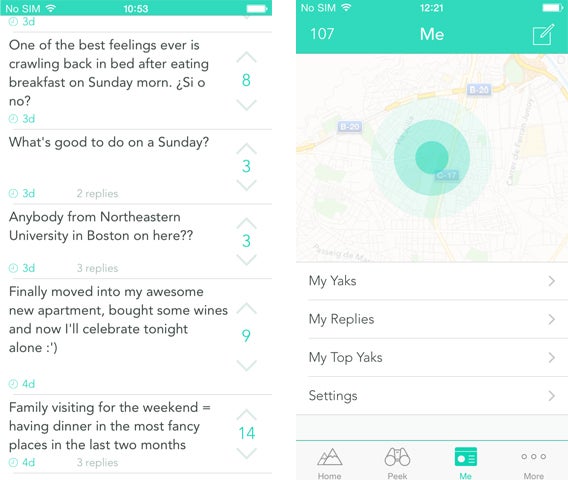
Simply put, Yik Yak is to the college community what Secret was to the tech community: a way to share things anonymously with people in your ‘network’. The difference with Yik Yak is that the network is physical, limited to a 1.5 mile radius from your location.

Having gained huge popularity since it’s debut last year, Yik Yak has seen the beginnings of apps like Facebook and Snapchat. It’s currently one of the top 10 social networking apps in the App Store and has just gotten another $75 million in funding. But despite its success, it’s also seen a lot of controversy.

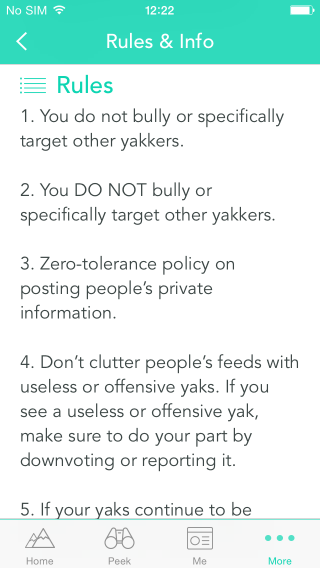
With anonymity comes the typical sense of freedom to post derogatory, nonconstructive and damaging things, just because you can get away with it. As a result, Yik Yak has experienced no shortage of media coverage blasting the app for encouraging bullying among high school and college students.

Once again, it looks like a social app is redefining the high school and college experience (think about college life before Facebook), but is it doing more harm than good this time around?  Let’s take a closer look at Yik Yak to find out and to see if, like Facebook, it can survive off campus.

What is Yik Yak?

Like a combination of Secret and Whisper with a bit of Twitter thrown into the mix, Yik Yak is an anonymous social network that lets you post updates to a Twitter-like news feed to people within a 1.5 mile radius to read. Twenty-three year old developers Tyler Droll and Brooks Buffington call it a “virtual bulletin board” for college campuses, but are hoping that it’ll eventually turn into a hyper-local news source.

How does Yik Yak work?

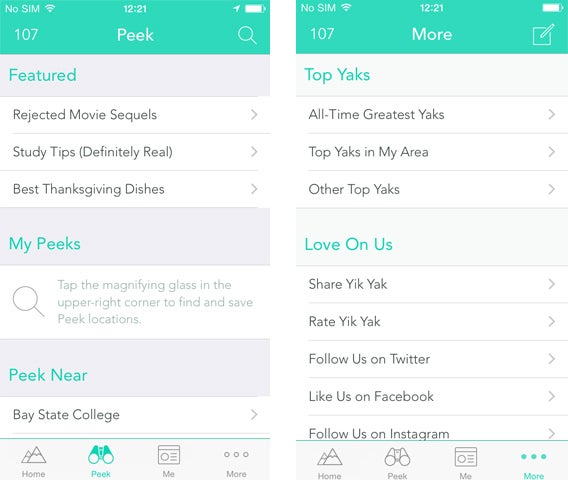
The app is simple. No login or registration is necessary. Simply download the app, and you’ll have access to a feed of posts– known as Yaks– within a 1.5 miles of you. Similar to Reddit, posts can be up or down voted; up votes mean posts get more visibility, while enough down votes can get a post removed from the app. You can also anonymously comment on posts. Similar to Twitter, posts are limited to 200 characters. although unlike Twitter, they expire after 100 days.

While you can only see ‘Yaks’ from people in your 1.5 mile vicinity, there’s a section for Featured posts with trending topics, a Top Yaks section for the most popular posts, and a section called Peek Near, a voyeuristic look– without the ability to comment or post– at what’s going on at colleges across the US.

Why is it so popular?

Like Facebook and Snapchat before it, Yik Yak has found a rampant following among high school and college students, the implicit seal of approval for a social app. Kids see it as a way to anonymously share things going on around campus, and because it’s linked to where you are at the time, you end up contributing to a very local network. More than revealing some big secret to a bunch of strangers, Yik Yak is a kind of sounding board to vent frustration about things which people around you might actually understand.

With little promotion, the developers have said that they targeted heavy users on campuses to help spread and promote the word about the app. It worked.

Why all the controversy?

While anonymity is the draw of the app, it’s also what’s been causing the biggest controversy. Plain and simple, kids can be mean. What’s supposed to be a ‘virtual bulletin board’ has turned into a public hub for bullying, bigotry, and bomb threats. High schoolers have been particularly guilty of using the app for evil instead of good.

Imagine this: A student anonymously posts a derogatory comment about another student, identifying them by name, and immediately, whether its true or not, the entire school knows the rumor. Yet no one takes the blame, because the comment was posted ‘anonymously’. Not surprisingly, this has already happened in countless schools across the country.

Far more damagaing are the ‘anonymous’ threats sent via Yik Yak, which have forced school lock downs pending investigation into their legitimacy. While there’s so far been no merit to most of these threats, there have been real repercussions for those students involved.

What are the developers doing to control it?

Threats and bullying are clearly not the intention that developers Droll and Buffington– themselves recent university graduates– had for the app, and they’ve been working both proactively and reactively to alleviate some of the tension that it’s caused in schools.

In terms of threats, Droll and Buffington have cooperated with authorities, like in the case of a threat made at the University of Albany, SUNY, to identify the students involved.

It’s mostly kids venting about classes or finals, making dumb jokes, or posting drunk confessions.

Proactively, they’ve been working to keep Yik Yak out of high schools altogether. They’ve implemented geo-fencing to prevent the app from being accessed in high schools, meaning that if you’re on or around high school grounds, you can’t post anything or see feeds. A lot of it has been done voluntarily by Droll and Buffington after hearing reports of bullying and threats across the country, and with the help of Maponics, who had already mapped out 85% of highschools in the US, they were able to quickly implement geo-fencing in many schools across the country.

There’s also a bit of what Droll and Buffington call ‘self-policing’, in which posts that are negative or offensive get downvoted, and subsequently removed from the feed, although it’s still unclear as to how many down votes something needs before it gets removed. There’s also the option of flagging inappropriate yaks.

What’s the future of Yik Yak

Like Facebook before it, Yik Yak is taking a page from the social media book of success, targeting college students first in the hopes of building upon this success to expand beyond college campuses. Droll and Buffington have been vocal about the fact that they see Yik Yak as more of a “hyper local news source” than just a sounding board for angsty high schoolers and drunk college kids. For now though, those drunk college kids are still their target market, which is painfully obvious from the promotional video below.

It’s hard to say whether or not Yik Yak could have a future outside the college bubble, especially when you look at the kind of stuff being posted: it’s mostly kids venting about classes or finals, making dumb jokes, or posting drunk confessions. Obviously, it’s not all dangerous, but it’s also not all that useful. The question is, do you care as much about strangers complaining on the subway as you do about people sitting next to you on campus? The local community feel about Yik Yak seems like it’s most valuable feature (along with anonymity), and it could be hard to recreate in the ‘real world’.

Who knows if anyone will actually care.

As far as a hyper-local news source, it’s 1.5 mile radius could be more of a detriment once the app ventures off campus. You’ll only get ‘news’ if you’re in a very specific area, and to be honest, Twitter and messaging apps like WhatsApp have already got the breaking local news thing pretty much covered.

Yik Yak’s biggest point of contention is its anonymity, both a selling point and a potential threat. Right now, the app is still causing a lot of controversy because of the apparent attraction of sharing non-kosher thoughts anonymously to people who might actually know what you’re talking about. Beyond that, as we’ve seen with the seemingly forgotten Secret and Whisper, once it goes out into the real world, it could get boring, fast. Who knows if anyone will actually care.

Then again, Facebook started in the same way, and look where it is now. There are many who hope the app’s buzz is just a fad. Only time will tell.

Related articles:

Why Rooms is not the future of anonymous chat

‘Anonymous’ social networks like Secret fail to provide anonymity

Fitness apps and location tracking: risk or reward?

Follow me on Twitter: @suzieblaszQwicz

Farming Simulator 15 available today for Mac OS X

Giants Software’s successful Farming Simulator 15 is coming to Mac, two weeks after the game’s release on PC, with more platforms to come in 2015. Mac owners will be able to jump into their tractors from 12pm (EST), 9am (PST) and 6pm (CET) today.

Farming Simulator 15 boasts an all new graphics and physics engine, although as I found when reviewing it, the basic gameplay is almost unchanged, and it still feels disappointingly lifeless. That has not discouraged almost half a million people downloading the game for PC already. If you own the PC version, you can get the Mac version for free, which is a nice touch.

It’s a good week for simulator fans, as we’ve also seen the release of Construction Simulator 2015, the latest in the series that puts you in control of heavy construction machinery, if that’s your thing. If it’s not, hold on a little while and you can play ‘I am Bread‘, a bread simulator of sorts from the creators of Surgeon Simulator. If that’s not enough, I’ll remind you that Goat Simulator’s latest update adds an online multiplayer mode.

Download Farming Simulator 15

Download Construction Simulator 2015 for PC

Download Goat Simulator for PC and Mac

Related Stories

Goat Simulator goes MMO in upcoming update (trailer)

Euro Truck Simulator 2 1.14 update now live

I am Bread – the next game from Surgeon Simulator creators

Follow Jonathan on Twitter: @jonathanriggall

Facebook messenger for iOS updated with improved photos, maybe

Facebook Messenger has been updated to version 16.0 for iOS, which brings long awaited improvements to photos taken within the app.

The ability to take photos and videos within Facebook Messenger has been there for a while, but its implementation was rudimentary. Now Facebook says that you can adjust the focus and lighting in photos, as you can with the standard iOS camera app. This update also fixes “issues with sending messages”.

We tested the new update on an iPhone 5S, and noticed no change at all with photos. Changing lighting/focus is either very very sublte, or doesn’t work. Compared to the native iOS camera app, it’s very very poor.

This week we discovered that on Android, Facebook is again allowing you to send messages from within the main Facebook app, where previously users were forced to use the separate Messenger app as on iOS. Whether this is a test, or a sign that the social network will allow users to choose to use Messenger in the future is unknown, and we have had no comment from the company yet. Facebook Messenger caused a lot of controversy, but many of the complaints, like battery or resource drain, were actually misplaced.

Download Facebook Messenger for iOS.

Related Stories

Best free messaging apps

WhatsApp, Facebook Messenger, Skype? What are the most and least secure messaging services?

Telegram deleted private chats now removed from both devices

Follow Jonathan on Twitter: @jonathanriggall