Whisper, the transcription tool developed by OpenAI and based on artificial intelligence, is lying a lot. Too much. According to several experts in the technological field, this tool is prone to “hallucinate,” meaning it invents text fragments or entire sentences, which can have dire consequences in sectors such as healthcare.

Subscribe to the Softonic newsletter and get the latest in tech, gaming, entertainment and deals right in your inbox.
Subscribe (it's FREE) ►A group of researchers and developers consulted by Associated Press explained that Whisper, used in multiple fields, tends to generate erroneous transcriptions that include fabricated content and even racist comments.
This becomes even more problematic when its use extends to high-risk areas, such as transcription of medical consultations, where a failure in accuracy could directly affect patients’ health. “No one wants a misdiagnosis,” stated Alondra Nelson, former director of the White House Office of Science and Technology Policy, who believes that greater reliability should be required for this type of technology.
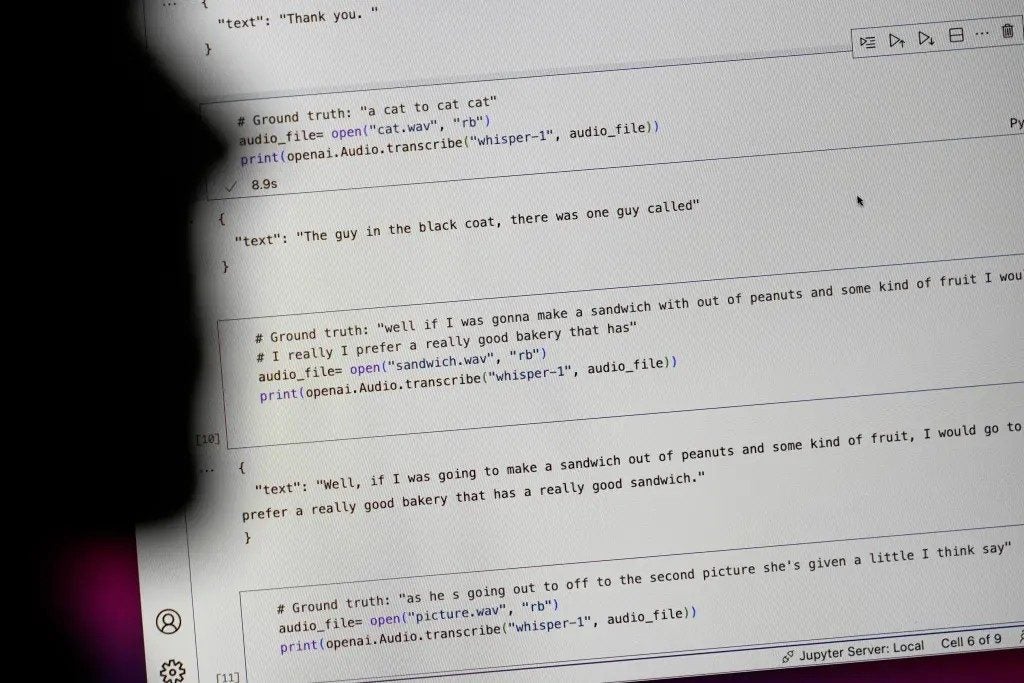
The scope of the problem is considerable. A recent study detected 187 hallucinations in more than 13,000 clear audio fragments, and in another analysis, a researcher from the University of Michigan found hallucinations in 8 out of 10 inspected transcripts. Furthermore, the errors are not limited to long or low-quality fragments; they also occur in short and well-recorded audios. A machine learning engineer claimed to have found errors in half of the 100 hours of transcripts he analyzed.
These failures have led experts and advocates for the ethical use of artificial intelligence to call for the U.S. government to regulate the use of these tools. Christian Vogler, a deaf academic from Gallaudet University, points out that Whisper is also used to caption videos for deaf people, who are especially vulnerable to transcription errors. According to experts, resolving these bugs should be a priority for OpenAI before Whisper is implemented in systems and applications that require high precision in their operation.