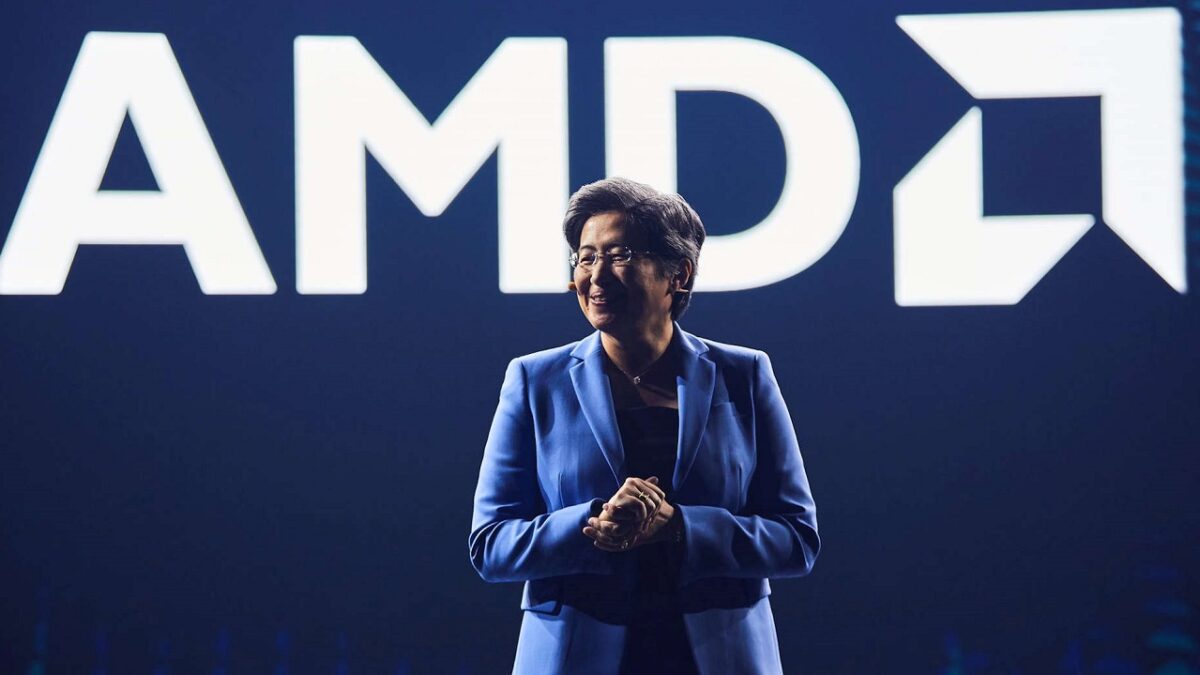
AMD has unveiled its latest range of processors at Computex 2024, with the AMD Ryzen 9000 series desktop processors leading the way.

The AMD Ryzen 9000 series processors are the continuation of the AMD 7000 series processors launched in 2022 and, according to AMD, they offer a 15% higher performance than their predecessors.
The 9000 series uses the next-generation AMD Zen 5 architecture, a major step up from the Zen 4 cores used in the Ryzen 7000 series compared to the Zen 4 cores used in the Ryzen 7000 series.
According to AMD, the Ryzen 9000 series will double the instruction bandwidth, the L2 to L1 data bandwidth, and the L1 to FP data bandwidth, and will also improve AI performance thanks to AI and AVX512 performance.
Zen 5 will be 16% better in IPC than the current Ryzen 7000
In various applications, from games to creative content, the new Zen 5 chips should improve IPC by 16% compared to Zen 4, which directly translates into faster performance and increased responsiveness on the PC.
The Ryzen 9000 series lineup will include the following chips with general specifications per chip:
The absence of 3D V-Cache variants and a Ryzen 9800X is notable, although it is planned for these chips to be available later this year or early next year. According to AMD, the Ryzen 9000 series processors will be available starting in July 2024, although their price is currently unknown.
It is also worth mentioning that the Ryzen 9 9900X has an approximately 50 W lower TDP than the Ryzen 9 7900X, so there have also been some efficiency improvements, which is always an advantage.
While the new Zen 5 cores may be equipped with new hardware and features, the Ryzen 9000 series does not seem to have a dedicated NPU, so any AI work on these chips will have to be done the old-fashioned way—with the graphics card.
AMD gains ground against Intel Arrow Lake
These new AMD Ryzen chips have managed to surpass Intel in the market with their next-generation desktop processors, which undoubtedly should help give AMD a boost for a few months while we all wait for the Arrow Lake launch towards the end of the year.
Taking into account that Intel has not yet announced Lunar Lake, it could be a while before Intel can reach the market with its latest desktop silicon, giving AMD quite a wide field to run on its own for a while.
This is undoubtedly because the Ryzen 9000 series processors will be compatible with any AM5 motherboard, so if you have the latest generation Ryzen chip and want to upgrade it, you won’t have to buy any additional equipment to do so.
All Ryzen 9000 chips will support (only) DDR5, and there will be dedicated support for PCIe 5.0 for graphics cards and NVMe SSDs at the same time, so you won’t have to sacrifice the speed of PCIe 5.0 SSDs when PCIe 5.0 graphics cards are finally introduced.
