
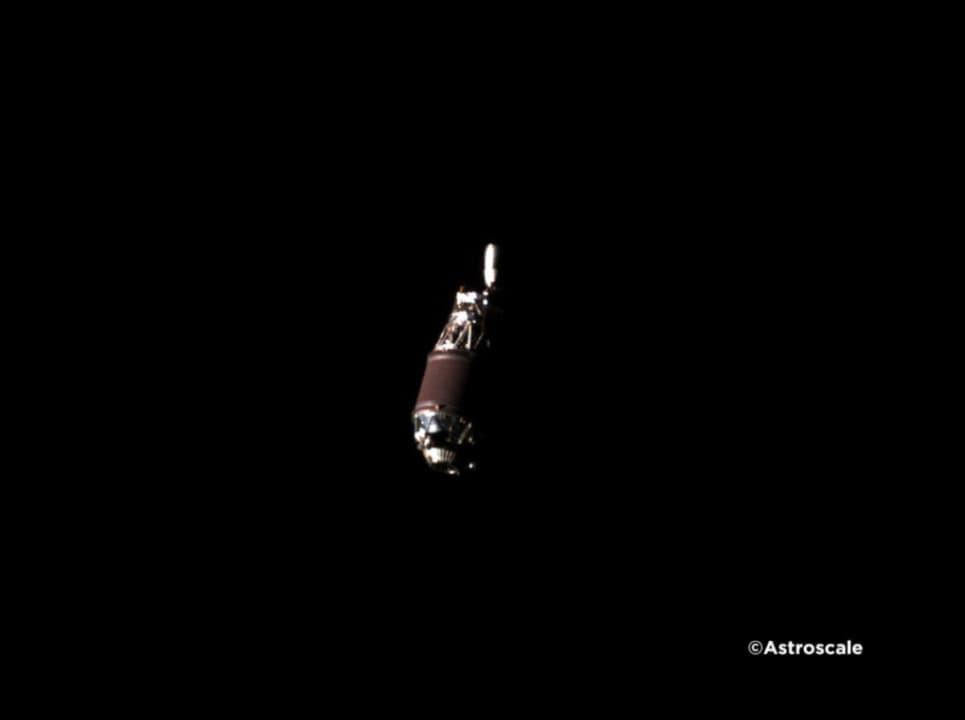
Astroscale, a Japanese orbital debris removal company, has carried out a crucial mission in the fight against space junk. Using their satellite ADRAS-J, the company successfully approached an abandoned rocket orbiting the Earth, marking the first time that images of space debris have been captured through a rendezvous and proximity operation.

The mission is part of the “Commercial Debris Removal Demonstration” project by the Japan Aerospace Exploration Agency (JAXA), which seeks solutions to clean up dangerous debris from Earth’s orbit. Space junk is a growing problem, as low Earth orbit is saturated with millions of man-made fragments, such as rocket parts, inactive satellites, and debris from past collisions.
With the upcoming mission, Astroscale will “remove and put into orbit the rocket body using its own robotic arm technologies,” the company said in a statement. The current objective, a large piece of space debris from a rocket launched by Japan in 2009, will serve as a test for future missions. Yamamoto Toru, leader of the Japanese mission, highlighted the importance of succeeding in this task to apply the techniques to other similar debris.
Collisions, both accidental and intentional, can create debris and increase the risk for spacecraft in orbit, according to the NASA. Past incidents, such as the deliberate destruction of the Chinese spacecraft Fengyun-1C in 2007 and the accidental collision between a US spacecraft and a Russian one in 2009, have contributed to the growing population of orbital debris.
The International Space Station has had to maneuver on more than one occasion to avoid close impacts from high-speed debris, and recent events, such as the Russian missile strike against the Cosmos 1408 satellite, underscore the urgency of addressing this problem. Astroscale’s mission represents an important step in the right direction to tackle this global challenge and protect the future of space exploration. However, there is still much work to be done.
