
For years, cybersecurity was almost invisible to the average user. Antivirus software ran quietly in the background, updates happened without much notice, and complex detection systems worked far away from everyday view.

In 2026, that reality has changed completely. Security is no longer a hidden technical layer buried deep in digital infrastructure. It’s now a visible, tangible, everyday part of how we use our devices and apps.
And users are noticing. Messaging apps that limit who can contact you, operating systems that tightly control how apps access your data, and social platforms that apply stricter protections by default. What used to be optional is now standard. This isn’t accidental. It’s a direct response to how digital threats have evolved – an evolution we’ll explore throughout this article.
The new threat landscape: invisible, large-scale attacks
The shift in platform security design is driven by a clear trend: modern cyberattacks no longer rely on obvious tactics like classic viruses or poorly written scam emails. Today’s attacks are engineered to look legitimate.
Among the most relevant threats in 2026 are:
- Malicious apps disguised as legitimate tools
- Fake updates that quietly install spyware
- Hyper-personalized phishing built on leaked personal data
- AI-generated scams at massive scale
- Financial fraud spread through messaging apps
- Account takeovers using advanced social engineering
The defining factor is scale. Attacks are no longer aimed at isolated individuals – they’re built to reach millions at once. That forces platforms to adopt preventive security measures, not just reactive ones.
WhatsApp and secure messaging: less exposure, more control
Messaging apps are now one of the primary attack vectors. That’s no surprise: they contain private conversations, personal data, links, files, and contact lists. For many users, a large part of their digital life lives inside WhatsApp.
That’s why WhatsApp has significantly strengthened its security approach recently, introducing structural changes designed to reduce attack surfaces:
- Limits on unknown contacts: Interaction from unverified or unrelated numbers is increasingly restricted, reducing mass phishing and malware campaigns.
- More granular privacy controls: Users have finer control over who can see their photo, status, last seen, or add them to groups.
- Stronger spyware defenses: Improved detection of exploits delivered through calls or seemingly harmless files.
The result is a messaging environment where digital contact requires more context and verification, dramatically reducing the effectiveness of automated attacks.
iOS: security built into architecture and ecosystem control
Apple continues to rely on a vertically integrated security model, where hardware, software, and services are designed together under a single framework.
Key features that continue to evolve include:
- Enhanced Lockdown Mode: Originally designed for high-risk users like journalists, executives, and activists, it’s now more accessible and configurable, limiting features that are commonly exploited.
- Stricter app permissions: Apps must better justify access to sensitive data, while users get clearer visibility into what’s accessed and when.
- Reduced tracking: Anti-tracking technologies keep expanding, making it harder to build behavioral profiles without explicit consent.
Android: global-scale security and proactive detection
Android faces a different challenge: enormous diversity in devices, manufacturers, and configurations. To address this, Google has leaned into a distributed, intelligence-driven approach.
- Advanced malicious app detection: Google Play Protect now analyzes real-time behavior, not just known signatures.
- Scam protection in communications: The system flags common fraud patterns in SMS, calls, and notifications before users interact with them.
- Anomalous behavior monitoring: Apps attempting sensitive actions outside normal context can be automatically blocked.
This model prioritizes early detection, stopping threats before they fully execute.
Meta (Instagram and Facebook): social security and identity protection
Social networks are prime targets for impersonation, romance scams, and large-scale social engineering. With over a billion users worldwide, Meta has reinforced its defenses with:
- Advanced systems to detect fake accounts
- Stricter verification for high-reach profiles
- Early alerts for impersonation attempts
- Improved encryption for private messages
- Stronger protections for minors and vulnerable accounts
Cybersecurity here goes beyond account access – it extends to the user’s entire social environment.
A conceptual shift: security no longer depends solely on the user
For years, the advice was simple: “Don’t click suspicious links. Don’t download unknown files.” In 2026, that advice still matters—but it’s no longer enough. Many modern attacks don’t look suspicious at all. They look completely normal.
This has triggered a fundamental shift: security systems are now designed with the assumption that users can make mistakes. As a result, platforms aim to:
- Block threats before users ever see them
- Limit damage if interaction does occur
- Detect suspicious behavior even after compromise
Why additional protection still matters
Despite major advances, there’s a structural limitation: each platform primarily protects its ecosystem.
- An operating system protects the device.
- An app protects its environment.
But real users live across multiple ecosystems at once. This is where dedicated security solutions remain essential.
Tools like Avast Free Antivirus are built to cover that cross-platform gap, helping detect threats that originate outside any single environment – external downloads, files shared between apps, malicious websites, fraud campaigns, and potentially dangerous software.
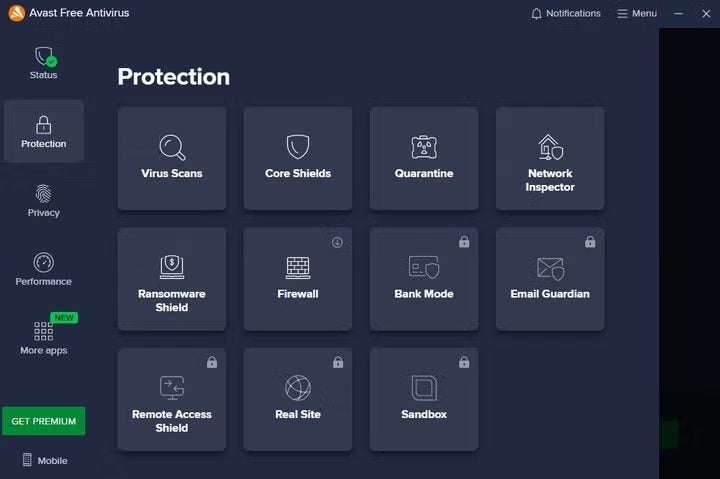
Modern attacks are often hybrid. A user might receive a link via messaging, download a file through a browser, and run it outside an official app store. These scenarios require extra layers of monitoring and analysis.
That’s why solutions from Avast Free Antivirus go beyond traditional malware detection. They also help identify:
- Fraudulent activity
- Digital scams
- Advanced phishing
- Potentially unwanted software
- Suspicious behavior in real time
In this way, Avast Free Antivirus complements native platform security with a broader, more holistic view. Just like wearing a seatbelt is essential – but having airbags makes you even safer – a modern antivirus adds an extra layer that strengthens overall protection.
Balancing security and digital freedom
One of the most active debates today is the balance between protection and control. Users regularly feel platforms are more restrictive than before.
And in numerous instances, they are. But that restriction reflects a reality: the sophistication of modern cybercrime makes a fully passive security model unworkable.
The future points toward:
- More security enabled by default
- Greater automation in threat detection
- Less reliance on user technical knowledge
- Deeper integration between system security and external protection tools
Security that fits into everyday life
In 2026, digital security is no longer a niche topic for IT teams or tech-savvy friends. It’s part of daily life, seamlessly integrated into how we use our smartphones and apps.
- WhatsApp limits suspicious contacts.
- iOS reduces attack surfaces.
- Android detects threats in real time.
- Social platforms work to protect identities and interactions.
This ecosystem reflects a simple truth: threats are no longer exceptions—they’re part of the digital environment. In that context, combining built-in platform security with specialized solutions like Avast Free Antivirus are becoming the most effective strategy. Modern protection doesn’t rely on a single barrier but on multiple layers working together.
Today’s users don’t just need to be cautious. They need technologies specifically designed for a digital world where attacks are silent, scalable, and increasingly challenging to distinguish from legitimate activity.
The good news is that the industry has recognized this shift. And everything suggests that cybersecurity will continue to evolve—not as an obstacle to digital experiences, but as a core element that allows us to enjoy them with confidence.
