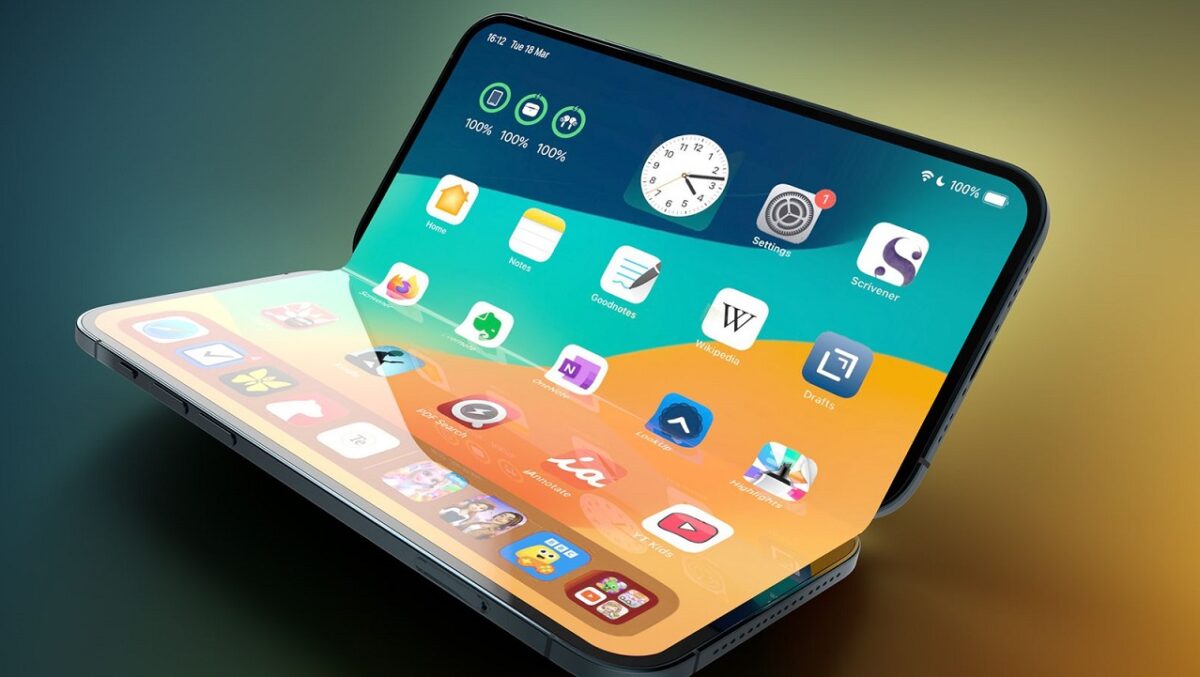
Apple has decided to delay the launch of its highly anticipated iPhone foldable due to concerns about the available materials that would ensure the quality feel that characterizes its devices.
The company wants to ensure that the new model does not have visible creases or wrinkles to the touch, which represents a significant challenge in the design of foldable phones.
According to reports from China, Apple is testing ultra-thin flexible glass (UFG) panels, an innovative material that adjusts its thickness according to the area of the screen, thus allowing for a continuous surface with no noticeable blockages.
The goal is to defeat Samsung on its own turf
This development could make a substantial difference, as conventional ultra-thin crystals (UTG) tend to deform over time and are prone to generating visible wrinkles at the hinge area.
Currently, Apple is in the design and manufacturing validation phase, which indicates that the core hardware of the iPhone has been finalized.
This stage is critical, as it allows the company to evaluate high-risk components, such as the new flexible glass, without disrupting the production schedule. Rumors suggest that Apple’s first foldable iPhone will be unveiled in 2026, alongside the iPhone 18 Pro models.
The price of this device is expected to be around 2,000 euros, which would place it above any other iPhone released to date. Apple aims to launch a device that is not only a new foldable model but also redefines the standard in its category.
With a more square design compared to the current foldables from Samsung or Motorola, experts believe that Apple could once again demonstrate that arriving late to the market is not an obstacle to its success.